• Home
  • About
  • Big Board
  • NCAA
  • International
  • Miscellaneous

Dean On Draft

~ NBA Draft Analysis

Dean On Draft

Monthly Archives: August 2020

More Round 2 Hidden Gems

28 Friday Aug 2020

Posted by deanondraft in NCAA

≈ 1 Comment

Tags

jordan nwora, malik fitts, paul reed, reggie perry, tre jones, zeke nnaji

I have already written about my three favorite sleepers in round 2, but that’s just scratching the surface. Round 2 is littered with all sorts of interesting prospects this year. This draft may have the smallest disparity between prospects slated to go round 2 vs its underwhelming lottery picks that I have ever seen. Let’s look at a few more possible sleepers who may carve out solid NBA careers, once again sorted by current ESPN ranking:

33. Zeke Nnaji

191117_bkb_vs_newmexicost_chook_19

Nnaji is a somewhat boring big prospect, as he provides good interior scoring and rebounding, but has ordinary steal, block, assist rates to go with a pedestrian 7’1″ wingspan and decent but not great athleticism.

What makes him interesting is that his flaws run parallel to fellow Arizona alum Lauri Markkanen. Lauri had even worse steal, block, assist rates, and wingspan, but he made up for it with good lateral mobility. For productive big men, ability to potentially defend in space can help atone for lack of defensive playmaking abilities.

Obviously Nnaji doesn’t have Lauri’s elite shooting ability for a big man, and isn’t the same tier of prospect. But he does offer some shooting potential, making 76% FT and 5/17 from 3 as a freshman.

He also does traditional big man things like interior scoring and rebounding better than Lauri. He is smooth and coordinated which makes him a reliable interior finisher in spite of lacking high end explosiveness.

Even though he is boring on his surface, he has a number of strengths that accumulate and no glaring weakness. There are questions about his defense and shooting, but that’s true for most prospects. He has good intangibles, and if he is successfully develops his 3 + D, he is going to be a solid player.

36. Tre Jones

46e09982-38a9-4909-a69f-4e0799d2f3fc.sized-1000x1000-1

Jones is also a boring mold of game managing PG who plays smart and avoid mistakes, similar to his brother Tyus.

It’s not clear if he is better or worse than Tyus. Odds are he is approximately the same. He doesn’t have the creation or defensive potential to have a big upside tail, but he does have good odds of being an efficient high end backup to low end starting PG like his brother.

It’s understandable why a player like that would slide to round 2, but it feels like he is sliding a bit too far for a prospect likely to be a useful role player.

44. Jordan Nwora

2019-20, BKCM, Men’s Basketball, Virginia, UVA

Much like Aaron Nesmith, Nwora offers good shooting and an NBA body, and that’s about it.

But Nwora is slightly bigger, at 6’7.5″ he is an important 1.5″ taller and his 6’10.5″ wingspan is half an inch longer. He also seems slightly more athletic, and his physical edge shows in his superior rebounding.

3PA 3P% FT%
Nwora 10.9 0.394 0.785
Nesmith 11.7 0.41 0.825

Nesmith is also 13 months younger so he gets the clear edge in shooting.

Otherwise both guys have similar steal, block, assist, and free throw rates. They really are similar prospects, and it largely comes down to Nwora’s slight physical advantages vs Nesmith’s slight shooting advantage. How do we choose between the two?

One argument would be that Nwora can easily become the better NBA shooter, but the difference between 6’6″ and 6’7.5″ is significant and Nesmith can never make up that gap. Even though Nwora’s percentages are slightly worse, he appears to have the quicker release on his shot which makes it harder to buy into Nesmith’s advantage for a skill that is extremely high variance to begin with.

The flipside is that Nesmith is lauded for his work ethic and leadership, so teams deciding between the two may favor his intangibles. But Nwora is the son of the Nigerian national team coach and seems to have good intangibles as well, so it’s not a clear advantage for Nesmith based on the limited information available.

Ultimately they are very close and it’s not clear who is the better prospect. The short answer is that they belong in the same tier, which is the sign that the massive gap between their current #44 and #10 rankings should be closed significantly.

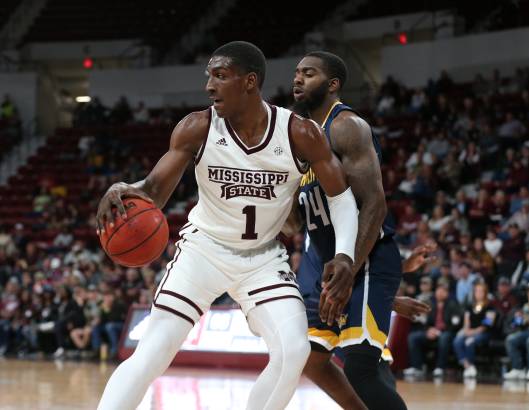
49. Reggie Perry
bfea9e19-b710-4aae-9d3c-19b36baeada4-perry

Perry brings a fascinating offensive skill set to the table for a 6’10” player, as he does a bit of everything. He can handle, pass, and shoot, as well as do traditional big man things like score inside and he is an excellent rebounder.

Granted, his skills are still in development. He showed big offensive improvements as a sophomore, but was still turnover prone with 3.0 assists vs 3.7 turnovers per 40. And he shot a solid 76.8% FT, 32.4% from 3, but had a low 3PA rate and still needs to improve his range. But he only turned 20 in March, and has a nice baseline for skill for a young big to build on.

Defensively, Perry faces questions similar to Vernon Carey. He has a 7’0.5″ wingspan, and while he is a decent athlete, his lateral mobility and ability to defend in space are in question. He is currently slotted in round 2 because there’s some chance he gets roasted on defense in the NBA.

But he also has a chance of defensive competence. If he can learn to hold his own on that end and develops his offensive skills well, that will accumulate to a good player.

Perry is yet another 2nd round big who isn’t that different from Obi Toppin. He lacks Toppin’s explosive finishing ability, but is much more well rounded offensively, better rebounding, and has slightly better dimensions and hope of competence on defense.

Even though both are technically sophomores, Perry is two full years younger and likely has more upside to develop into a complete player.

Ultimately it’s confusing how Toppin’s flaws get overlooked while Perry gets jammed in the back end of round 2. Is explosive finishing that rare of a skill compared to motor, physicality, and perimeter skill? It typically isn’t valued that high, and even though it’s a significant advantage, Perry chips away with a number of smaller advantages that add up.

It’s plausible that Obi is nevertheless the better prospect. But it isn’t consistent to ignore his flaws while stashing Reggie Perry and Vernon Carey in the round 2 dumpster in spite of their flaws not being any worse.

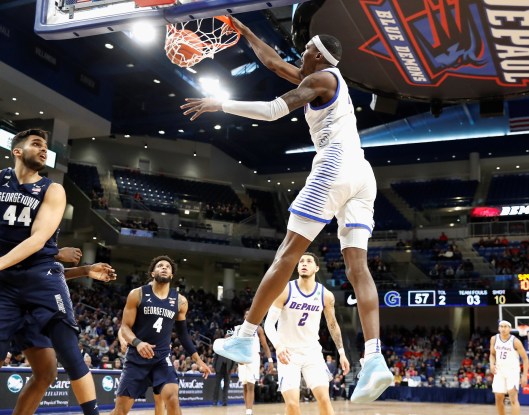
51. Paul Reed
sw54640

Reed is a limited offensive player who has spent his NCAA career mired on a horribly coached DePaul team. He is likely going to be a low usage role player in the NBA, so his lack of NBA hype is understandable.

That said– there is much to like about him. In spite of his offensive limitations, he still has a passable shot, making 73.9% FT and 33% 3P over his DePaul career. He has a low 1.9 3PA per 40 minutes, so his shot still needs improvement but it’s not broken.

Other than that he is capable of finishing and has an OK enough 2.0 assists vs 2.9 TOVs per 40 such that he won’t be a significant impediment to an NBA offense if his shooting comes around.

And he offers excellent defensive potential. He is 6’9″ with 7’2″ wingspan with good athleticism. He anchored the #56 defense for DePaul as a junior (close to Leitao’s best ever which is #47) and posted excellent 3.4% steal, 9.4% block, 11.2% ORB, 25.8% DRB rates.

Reed had excellent on/off splits on both ends. DePaul averaged 0.97 vs 0.90 points/possession with him on and turned to mush with 0.83 vs 1.03 with him off.

He isn’t perfect on D, as he is mistake prone on this end, and it remains to be seen how well he can guard NBA perimeter players. But his length, athleticism, and steal rates all suggest that he had a great chance of success, especially once he is freed from the shackles of Dave Leitao’s coaching.

He appears to be a role player in the mold of guys like James Johnson, Moe Harkless, and Andre Roberson. All of those guys were solid returns on first round picks, so why is Reed mired deep in round 2?

My best guess is because he slid through the recruiting radar as a 3* prospect being young for his class and limited on offense, and spent his NCAA career on a perennially bad team. The interesting in draft comparison is Precious Achiuwa, who is currently slated to go #9.

Unlike Reed, Achiuwa was a 5* recruit because he was very old for his class and showed more handling and scoring ability than Reed. But now that they are both in school, even though Achiuwa is a freshman and Reed is a junior, he is only 3 months younger. They have very similar physical profiles with nearly identical dimensions, and their statistical distributions are similar as well:

Pts Reb Ast TOV Stl Blk 2P% FT% 3PA FTr
Precious 28.4 19.4 1.7 5.0 2.0 3.4 0.514 0.599 2.3 0.507
Reed 26.7 18.8 2.9 4.0 3.3 4.5 0.551 0.738 3.2 0.227

Most advantages point toward Reed. His assist:TOV suggests he is more likely to be able to play the perimeter in the NBA without being a disaster. His FT% and 3PA rate more optimism for his shooting. And his superior steals and blocks suggest more defensive upside.

On the flipside, Precious has a significant free throw rate advantage and is a bit tankier and more physical. He also does have a better handle which gives him slightly more offensive upside in the instance that he improves his myriad flaws on that end. And his significant RSCI edge may not be 100% attributable to scouts being tricked by age. After all, Reed had a breakout junior year and it’s easier to take Precious #’s at face value.

Like Nwora and Nesmith, the two likely belong in the same tier and are very close considering their disparity in current hype and stock. Reed is more likely to be useful because he is currently a better team player, but Achiuwa has a bit more home run potential.

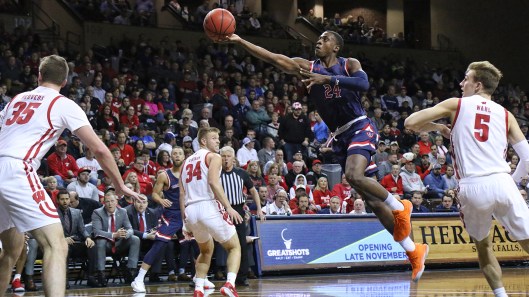
78. Malik Fitts
1malik

Fitts projects to be undrafted because he turned 23 in July and he’s merely a good but not great player. He started his career as a 3* recruit for South Florida, and after an underwhelming freshman year he transferred to Saint Mary’s where he played well for two seasons.

On one hand, he is an unheralded recruit who never performed well in NCAA until he was 21. But he does a number of things well that should translate to the NBA as a 3 + D wing.

He is 6’8″ with 6’11.5″ wingspan, a good body and athleticism, and he rebounds fairly well. He also has the mobility to defend the perimeter and a solid steal rate, which suggests good potential for versatile NBA defense.

He also is a good shooter, making 40.7% from 3 and 78.6% FT in his two years at Saint Mary’s. And he can handle, and is capable of getting to the rim and finishing.

It’s not that he just slightly checks the boxes, he clearly is a competent handler and shooter and has physical tools to defend multiple positions in the NBA. Those are the 3 most important qualities for a role playing wing, and Fitts brings them all to the table.

Even we compared him in these 3 areas to top 5 prospect Deni Avdija, Fitts is clearly better in all 3. Deni is 3.5 years younger and could surpass Fitts handling and shooting longterm, but Fitts current advantages are so significant he should be considered the favorite to be more skilled longterm. And Fitts physical tools will always be a notch better than Deni.

But of course this doesn’t make him necessarily a better overall prospect than Deni. Deni is known for his basketball IQ, and in spite of his youth is already a much better passer than Fitts who is prone to tunnel vision and has an ugly 2.1 assists vs 3.3 turnovers per 40 for Saint Mary’s. He is also not a lockdown defensive player in spite of his tools, as he is mistake prone and struggles to defend the pick and roll.

This significant IQ/vision advantage for Deni makes him the overall better prospect, but Fitts’ edges in skill and tools makes it much closer than an UDFA should be to a top 5 prospect.

For an undrafted player, Fitts’ flaws aren’t backbreaking. IQ and vision are slippery to assess– interestingly he had a better assist rate as a freshman for South Florida when the rest of his game was much weaker. Perhaps his vision is fine, and NBA coaching is able to mitigate his mistakes in which case he should be a solid role playing wing.

Fitts’ age inhibits his upside, he’s not going to be a slam dunk steal of the draft. But his upside doesn’t seem all that much lower than the younger and similarly flawed players that are currently getting lottery hype.

Round 2 Hidden Gems

27 Thursday Aug 2020

Posted by deanondraft in NCAA

≈ 4 Comments

Tags

devon dotson, jahmius ramsey, vernon carey

Thus far I have written about the top 4 prospects in the draft and the limited upside of many of the lottery candidates. Overall the draft is looking incredibly weak on the top, but on the bright side there are quite a few hidden gems who are currently slated to go in round 2.

For now let’s run through the three players listed as 2nd rounders who most obviously belong in round 1:

31. Jahmi’us Ramsey

jahmius-ramsey

After Zhaire Smith and Jarrett Culver built up significant hype playing for Chris Beard at Texas Tech and were big disappointments early in their career, it seems that nobody wants to draft a Red Raider anymore.

But there aren’t any major coaches whose prospects consistently bust. Most coaches have some prospects do well, others disappoint, and there’s no reason to doubt Chris Beard’s ability to produce NBA talent based on a sample size of two.

This is especially the case since unlike Culver and Smith who were 3* prospects, Ramsey was the #30 RSCI recruit and is less likely to be a mirage produced by good coaching.

Ramsey is a bit of an awkward mold, as he is a bit small for a shooting guard at 6’4″ with a 6’6″ wingspan. He is a good but not great athlete, and with his limited size he struggled to finish at the rim and only made 64.1% of his free throws. And he averaged just slightly more assists (2.9) than turnovers (2.6) per 40 minutes. It’s easy to see why people are hesitant to jump on board with him as an undersized SG even without the Texas Tech concerns.

But there’s quite a bit to like. He made 42.6% of his 3’s on a decent 3PA rate. While he likely ran hot on 3P% in light of his free throws, he may have also ran cold on his FT% given that he only had 78 FTA compared to 141 3PA. He is very young having turned 19 in June, and if his shot is real he has quite a bit of potential as a scorer.

And he complements his scoring ability with solid rebound, steal, and block rates. Let’s compare him to a few similar prospects:

Age ORB DRB STL BLK Height Wingspan
Jah’mius Ramsey 18.5 3.0 12.3 2.5 2.5 6’4 6’6
Jamal Murray 18.8 4.9 11.1 1.6 0.9 6’4.25 6’6.5
Gary Harris 18.8 3.9 8.6 3.1 1.1 6’4.5 6’6.75
Brad Beal 18.4 4.7 18.2 2.5 2.6 6’3 6’8

Physically these guys are all similar. Beal has the best length and his rebounds and blocks hint at the best athleticism, so it’s no surprise that he was the most coveted prospect of the group. But Ramsey is likely the 2nd best athlete, and while his wingspan is slightly lower than the others, it was last measured in 2018 and may have grown since.

Offense per 100 possessions:

PTS AST TOV 3PA 3P% FT%
Jah’mius Ramsey 28.3 4.2 3.8 9.8 42.6 64.1
Jamal Murray 33.3 3.7 3.9 12.8 40.8 78.3
Gary Harris 29.3 4 3.2 11.1 37.6 78.8
Brad Beal 26.5 4 3.8 9 33.9 76.9

Murray stands out as the best shooter of the crop with a great 3PA rate with the 3P% and FT% to back it up. No surprise that he was close behind Beal as the second best prospect of the group.

But really the only thing here that separates Ramsey from the pack is his FT%…which is such a small sample. He went 50/78, if instead he went 55/78 that puts him at 70.5% and it’s not a major flag for an 18 year old guard.

Granted, he wasn’t a good free throw shooter in AAU, but it’s possible he made a big leap, and it’s possible that he continues to make big leaps. If he becomes a good longterm shooter, he is probably going to be a good NBA player.

Gary Harris is a good comparison in terms of value, because he had a better shooting signal, but Ramsey has a bit more upside due to his superior athleticism. Harris was a good return on a #19 pick in a better draft than this one, so it doesn’t make much sense for Ramsey to be mired in round 2.

If Ramsey’s shot turns out to be a dud then he likely will be too, but he’s young, it looks mechanically good, and there’s no strong reason to bet against it. And if becoming a good shooter is all it takes for him to become a slightly better Gary Harris or slightly worse Jamal Murray or Bradley Beal, then he obviously belongs in round 1.

32. Vernon Carey

carey

Imagine that there is a #5 RSCI freshman who posts a 34.1 PER as the best player on a top 5 team while not turning 19 until the end of the season in February.  Then imagine that almost every other highly rated freshman in the class disappointed with thin hopes for the future in a draft with limited upperclass talent.

Typically, the one highly rated freshman who exceeded the hype would be the obvious #1 overall pick, and we would move on to debating #2. But not in 2020, where being a relatively unathletic big is considered to be a debilitating wart and Vernon Carey is projected as a 2nd rounder.

Anti-Okafor Bias

This is in part exacerbated by the tale of Jahlil Okafor, who shares a number of parallels to Vernon Carey. He was also an elite recruit for Duke, and led an excellent team that eventually won the championship in points, rebounds, and blocks. He largely lived up to the hype in college and was considered the favorite for #1 overall until the emergence of Karl-Anthony Towns and D’Angelo Russell dropped him to #3.

But on top of being in an archaic mold, Okafor also failed to translate his excellent NCAA production and has been a complete flop in the NBA.

Now it’s completely reasonable to view similar prospects through a skeptical lens. Low post scoring is not nearly as valuable as it used to be, and teams are now playing smaller lineups, emphasizing speed and skill over size and interior scoring.

That said, Okafor was a completely sane #3 pick by an intelligent GM just 5 years ago. Since there are no KAT or DAR level prospects in this draft, Vernon Carey would have been the clear #1 overall choice if this was 2015. While it’s fair to reduce the value of such a prospect in accordance with the evolution of the game, it seems like a massive overcorrection to drop Carey out of the first round. He is a different prospect than Okafor who will translate differently, develop differently, and is likely slightly better overall pre-draft:

Pts Reb Ast TOV Stl Blks 2P% 3PA FT%
Okafor 34.9 17.1 2.6 5 1.5 2.9 66.4% 0 51%
Carey 39.2 19.3 2.1 4.5 1.6 3.5 59.0% 1.5 67%

They are near doppelgängers statistically, except Carey has a significant edge in FT% and he shot 8/21 from 3 as a freshman while Okafor did not attempt any 3’s. And Carey was 2 months younger.

There’s no guarantee that Carey translates as poorly offensively and is as bad as Okafor defensively. He can do much better in both regards, and if he develops an outside shot to boot, it will look silly for being this low on him.

Can Vern Fit in the Modern NBA?

Plodding bigs are going out of style, but they are not extinct yet. Looking at this year’s playoff teams many of them start below the rim bigs, many of who slid in the draft: Brook Lopez, Marc Gasol, Myles Turner, Jarrett Allen, Nikola Vucevic, Ivica Zubac, Nikola Jokic, Rudy Gobert, Jusuf Nurkic. And Draymond Green missed the playoffs after being a mainstay in 5 straight finals.

Granted, Carey does have an underwhelming 7’0″ wingspan which is inferior to the aforementioned bigs, and he isn’t a passing savant like the biggest round 2 steals in Draymond, Jokic, and Gasol. So there are reasons to be skeptical that he will actually look like the correct #1 overall in retrospect.

Stylistically he is most similar to Enes Kanter, which is one of the least sexy molds in the modern NBA. But Kanter is the poster child for lead feet, and he was nevertheless able to start for a Portland team that went to the West Finals last year, and is now playing playoff rotation minutes for Boston. If Carey happens to develop into a better defensive player and/or shooter (both are very low bars to clear) while being similar in other regards, that’s a useful player.

Kanter was the #3 overall pick in 2011. The game is evolving, but let’s not quit on bigs this aggressively. There is still value to being large and good at basketball.

Ultimately it’s a tricky question how much to precisely de-value a player like Carey for his archaic mold. On one hand, he is sub-optimal centerpiece even if he hits his upside, and it’s difficult to justify taking players like him in the top 3 given the risk that he either flops completely like Okafor or is heavily flawed like Kanter in spite of his productive box score.

But how far can he reasonably be dropped? It’s unlikely that he flops as hard as Okafor, and it’s pessimistic to project his flaws to be as extreme as Kanter’s. Carey is really good at basketball in a draft where the lottery is full of guys who fit a modern mold but just aren’t that good and need to overachieve in order to have a decent NBA career.

Why Not Take Him at the Toppin of the Draft?

The most direct comparison for Carey among lottery prospects is Obi Toppin, who currently is ranked #4 on ESPN’s mock. Obi has similar dimensions (Carey is approximately 1″ taller and longer). Toppin is much more vertically explosive and better at finishing, but other than that Carey destroys him.

Carey is a much better rebounder and a better shot blocker. Both struggle to defend in space, but Carey has more hope of learning long term because he is 3 years younger and Obi’s vertical explosiveness has not translated to lateral competence. Toppin is the slightly better shooter and passer now, but Carey is a favorite to surpass him in both in 3 years. And in spite of Obi’s super athleticism, Carey has more skill in the paint as he was able to score more points at just slightly lower efficiency in spite of the age gap and tougher competition.

And to cap it all off: Carey was a top 5 recruit while Obi was a 20 year old redshirt for a mid-major team. Obi is getting more attention because of his athleticism, but he has an incomplete athletic package since it doesn’t translate to defense, and collectively Carey is the clearly superior talent.

It’s difficult to say exactly how heavily to de-value Carey’s elite statistics and pedigree due to his dated mold. But it is difficult to justify ranking Obi Toppin above him, given that Obi shares his key flaws and brings fewer strengths to the table.

If Carey was the top 5 prospect and Obi was the early 2nd rounder, that would make much more sense than their current rankings . Which isn’t to say it would be accurate to flip them, but it would at least feel sane. For now, let’s conservatively say that Carey belongs in the lottery at least slightly above Toppin, and Carey ranking so much lower is a major inefficiency in the current rankings.

35. Devon Dotson

usa_today_11789037.0

As a sophomore, Dotson was the best player on the clear best team in college basketball. He had a great argument for best player in the country, as he ranked #2 behind just Luka Garza for kenpom.com Player of the Year.

But unlike Garza, Dotson is an athlete who can create his shot offensively and make plays defensively. There are no glaring concerns about his ability to translate his game to the NBA. Having turned 21 earlier this month in August, Dotson is reasonably young for NCAA two way stud with NBA athleticism.

Dotson is currently mired in round 2 because he is a small PG at 6’2″ with 6’3.25″ wingspan, and there are questions about his passing and shooting for such a small guy.

He only made 33.2% of his 3’s in his two years at Kansas and is more of a slasher than shooter at this stage. But he made 80.8% FT, so there is potential for him to develop into a good distance shooter in time.

The more concerning flaw is his lack of elite passing ability, as he only averaged 4.5 assists per 40 in his two years at Kansas, and is currently a combo guard in a small PG body.

Bill Self Guards Rarely Rack Up Assists

Fellow Kansas alum Devonte’ Graham went #34 overall in 2018, and looks like a possible steal after his breakout sophomore season as the starting PG for Charlotte. At the time I thought Graham was a reach at #34 overall, because he did not show the potential as a creator to seem close to an NBA caliber floor general.

His first season as a starter for Kansas was when he was a sophomore who turned 21 late in the season, where he posted a paltry 16.9% usage and 19.1% assist rate. As a 22 year old junior, he hardly improved with 18% usg, 19.2% assist. Then finally as a 23 year old senior, he took the reins to the offense with Frank Mason departed and posted a respectable 23.9% usage and 31.4% assist rate.

Any starting caliber NBA point guard should have showed MUCH more creation and passing ability before turning 23, and being that much of a late bloomer is typically a major red flag. Yet just 2 years later, here is Graham taking on an even greater role for an NBA offense with 24.8% usage and 35.3% assist rate with decent efficiency.

Graham’s senior season was the only Self player to post an assist rate above 30% other than Aaron Miles in 03-04 and 04-05. He doesn’t try to build an offense around one point guard, he typically likes to run point guard by committee.

Graham is a rare example of breakout passing regardless of coaching, and it’s not likely that Dotson follows the same arc. But the mere possibility is attractive, as Dotson was a better NCAA player than Graham and is a better athlete with more NBA upside.

Reasons For Optimism

Dotson posted a 3.5% steal rate as a sophomore, the best steal rate by a Kansas player since Mario Chalmers in 2008. For his career he was 2.9% vs 2.5% for Graham. This indicates that he may have the feel and vision to develop his passing longterm.

Further, Dotson’s on/off splits are great. Kansas 2P% was 57.2% with Dotson on the floor and 46.4% with him off. That is in part because of his own stellar finishing. And they forced 19.7% turnovers with him on the floor with a slightly lower defensive eFG% vs 12.0% with him off.

These are huge splits for stats that typically do not see such variance when a player leaves the floor. And offensive 2P% and defensive TOV% are the team level stats that a high IQ point guard can impact the greatest. Given that this also came for the clear #1 team in the country, this could be a hint that Dotson makes team level impact beyond the box score.

It’s Going Down, I’m Yelling Kemba

Dotson developing into an NBA 3 point shooter and a quality passer are far from given, but they also are both firmly in the realm of possibility. And if he does both, that leaves only his lackluster dimensions inhibiting his upside. But there have been plenty of players with similar dimensions to become quality NBA PGs by having great speed and athleticism:

Height Wingspan Draft Slot
Devon Dotson 6’2 6’3.25 TBD
Chris Paul 6’1 6’4.25 4
Kemba Walker 6’1 6’3.5″ 9
Ty Lawson 6’0.5″ 6’0.75″ 18
Kyle Lowry 6’0 6’2 24
Tony Parker 6’2 6’4 28

These players all had various strengths that Dotson lacked, but that’s some excellent value relative to slot on all of them.

He isn’t the defensive pitbull that Lowry was, as his offensive rebound and steal rates pale in comparison. But Lowry slid in the draft due to being very raw offensively, as he attempted a meager 18 3PA as a sophomore and had a similarly low assist rate and completely lacked Dotson’s ability to get to the rim and finish.

Tony Parker is interesting, because he made a career of getting to the rim and finishing which is also Dotson’s specialty. Parker wasn’t a great passer when he entered the league, and he never developed a 3 point shot. Dotson is likely going to be a better shooter, and may not be all that much worse at passing if he develops similarly well.

The other interesting comp is Kemba Walker, because they have an eerie number of parallels: they have nearly identical dimensions, they were similar RSCI (Kemba #15, Dotson #20), both are speedy and excel at getting to the rim, both have a winning pedigree (Kemba for winning an NCAA title and Dotson for being best player on best team in season w/o tourney), and both showed major improvement over NCAA college career

Also we can neatly compare their career NCAA stats since their average age weight by minutes is near identical (Dotson is 23 days older):

ORB% DRB% STL% BLK% FTr 3P% FT% 3PA/40
Kemba 3.6 10.5 3 0.7 0.474 0.326 0.783 4.2
Dotson 2.1 10.2 2.9 0.4 0.458 0.332 0.808 3.9

Kemba has an advantage in ORB%, perhaps indicating a slight athleticism advantage, and other than that they are basically twins.

They also both had big breakouts in their final college season, so let’s compare those numbers pace adjusted per 40.

Pts 2PA 2P% 3PA FT% AST TOV
Kemba 26.1 13.9 0.471 6.2 0.819 5 2.5
Dotson 20.8 10.2 0.541 4.7 0.836 4.6 2.8

Kemba stands out as better with greater scoring and assist volume and lower assists and higher 3PA rate.

Dotson was much more efficient inside the arc, and he likely could have stretched his usage. And as mentioned previously, Bill Self suppresses assists in a way that Jim Calhoun doesn’t (even Ben Gordon averaged more assists per 40 in each of his 3 seasons at UConn), so Dotson could actually be the slightly better passer here. And he was 3 months younger

Ultimately it’s close, but Kemba gets the clear edge for his pullup shooting advantage that he was able to build on to become good NBA point guard. It’s super unlikely that Dotson is ever able to match Kemba’s volume and efficiency from 3, and ultimately this comp is a big longshot for him. After all, it was a longshot that even Kemba became himself based on pre-draft.

But it’s fun to note because the parallels are strong, and Kemba was an excellent return on a #9 overall pick. Dotson may be able to carve out his own brand of overachievement that comes in a more efficient mold that fits into a wider range of lineups.

Bottom Line

At a glance Dotson is a warty upperclassmen who seems like he makes sense as a fringe first rounder, but if we really dig into him he is littered with reasons for optimism.

Expectations need to be tempered, because he still is a little guy who likely is not a floor general or high volume 3 point shooter. But if things develop well for him, he has a decent upside tail which is more than can be said for most prospects in the draft.

And even if things don’t develop perfectly, he can have a career as a helpful role player on winning teams. The benefit to his mold is that if he is not meant to be an offensive hub, he pairs well as a secondary creator next to a number of star wings: Luka, Giannis, LeBron, Simmons, Harden, Kawhi. He doesn’t need to hit his upside to be a useful piece on a contending team.

Even though Dotson isn’t a lottery pick on paper, it is easy to see him providing value for a lottery pick longterm. It’s difficult to say exactly where to place him, but he has potential to be anywhere from a nice role player pickup to monster value in late round 1 or early round 2.

2020 Draft: This Lottery is Really Bad

25 Tuesday Aug 2020

Posted by deanondraft in NCAA

≈ 5 Comments

Tags

aaron nesmith, deni avdija, isaac okoro, obi toppin, precious achiuwa, saddiq bey

It’s difficult to analyze this draft without getting frustrated by the lack of exciting prospects. Like any draft, there are inevitably a few hidden gems. But looking through ESPN’s current top 10, half of them do not belong in a typical lottery.

I recently wrote no hot takes this year, but before diving in, let’s clarify the definition. I will still share my contrarian views, and rank the prospects different from consensus accordingly. But the goal is to be more level headed while trying to consider how I may be wrong, and only stray heavily from consensus when it seems painfully obvious.

Anyhow, here are 6 players slated to go top 12 that my past self would call lock busts who belong nowhere near round 1. As of now I am still trying to discern exactly where to rate each of them, and perhaps in this draft a few of these guys might actually belong in the lottery.

So for now let’s list them out by ESPN ranking and walk through the causes for concern and possible paths to quality NBA careers in spite of their flaws:

4. Obi Toppin

usa_today_14111483.0

Obi has one really big strength– he is an explosive athlete and finisher, making 69% of his 2P in two years at Dayton.

And that’s his only real strength. His passing and shooting are OK, and his 7’2″ wingspan and explosiveness give him a chance at defensive competence. But there are a number of concerns.

First, he was playing in an ideal system to post the statistics he did. Even during his redshirt year, Dayton had the 2nd best 2P% in NCAA led by freshman PG Jalen Crutcher. It’s not just Obi– the whole team feasts on easy interior shots. Obi is a great finisher regardless, but he likely would have posted a less outlier 2P% in a different offense playing against tougher competition.

While he shot 41.7% from 3 in his two years at Dayton, that was only over 103 attempts. He didn’t have a great 3PA rate and his 70.6% FT is only OK for a prospect who turned 22 in March.

Similarly, he has nearly as many assists as turnovers which is decent for a 6’9″ big, but considering his age it’s only OK.

And in spite of his physical tools, he may be an absolute turnstile on defense. He doesn’t move well laterally, and has underwhelming blocks for a big. He may be too stiff to guard the perimeter and too small to guard the paint.

Toppin had a curiously low 6.4% offensive rebound rate for a player with his size and athleticism. It’s worth wondering if he is lacking in motor and/or toughness, as he also has a pedestrian free throw rate.

Toppin played in a highly favorable environment to pad his stats and has a number of scary flaws. Considering that he redshirted as a sophomore aged freshman for a rebuilding mid-major team, there’s a serious concern that he’s an ordinary offensive prospect who is a disaster on D.

What is especially crazy is that he is currently ranked above Onyeka Okongwu. They have similar dimensions, but for a prospect who is 2 years 9 months older and played in a much more favorable offense, his offense isn’t that much better. It really isn’t clear who is the better offensive prospect between the two: 26.4 usg 122 ortg vs 23.4 usg 119 ORtg.

Even if we give Obi a slight offensive edge, Okongwu easily makes up for it with a monstrous advantage on defense. There is simply no defense for choosing Obi over Onyeka.

Where does this leave Obi? It’s tough to say. He has similar #’s to Montrezl Harrell with slightly better passing and shooting but worse ORebs, FT%, and 2″ less length. If you get a different flavor of Harrell in this lottery, that’s a favorable outcome.

That said, Harrell went in round 2 in a much deeper draft, and there’s no clear reason to value Obi higher as he is not guaranteed to share similar success. Harrell was great value in round 2, and there’s a good chance Obi would be as well, but his true value likely lies somewhere in the middle of where he is rated and Harrell was chosen.

Edit: Obi’s wingspan is actually 6’11”, not 7’2″ which is being commonly reported. This explains his pedestrian steal + block rates, and puts a dent in the likelihood he can overcome his lateral issues defensively.

5. Deni Avdija

avdija_deni_euro_200325

Deni’s appeal is that he brings a little bit of everything. He is 6’8″, can shoot a little, handle a little, pass a little, move reasonably well on defense, and just turned 19 in January.

But on the flipside, he doesn’t bring much of anything. He has a meager 6’9.5″ wingspan, is lacking in strength, and is only an OK athlete. He doesn’t get many steals or blocks, and there’s a limit to his defensive upside even though he is considered solid on that end.

And there are major concerns about his shooting. He takes a good rate of 3PA, but only has made 33% while shooting a gross 59% from the line. If we include his 18-19 numbers drop to 31% 3P and 55.6% FT. He is still young with time to improve, and he may be better from three than free throws, but there is serious concern that he will never be a decent shooter.

His best quality is likely his passing, with a good assist to turnover ratio for his size and youth, averaging 3.7 assists and 2.9 turnovers per 40 this season. But his passing impact is limited by his low usage rate, as he posted just 21% usage in BSL and 15.6% in Euroleague.

His Euroleague performance is especially concerning when you consider the low level of competition in BSL. He has posted merely a 10.5 PER in 371 Euroleague minutes this year, raising the concern that he may lack the skills and physicality to make any significant impact against higher levels of competition.

Ultimately it seems like the hope is that he improves his shooting and provides quality defense and a willingness to move the ball and avoid mistakes as a 6’8″ wing role player. And it’s easy to see him develop into a passable role player, especially as wings become more essential toward filling out NBA lineups.

But he has a huge downside tail if his defense and shooting flop, he is not going to be playable. And even if they become decent, what other meat is there on his profile to make him collectively above average? He needs to vastly improve his handle and scoring, otherwise he’s a very boring 3 + D prospect who may not even be good at either 3 or D.

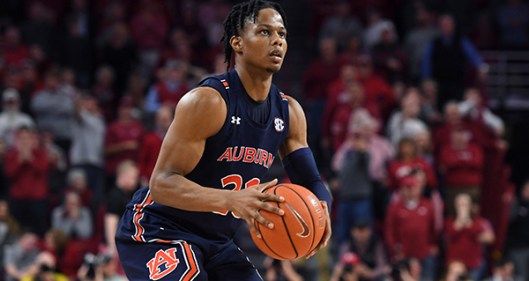
8. Isaac Okoro

okoro_isaac_aub_200224

Okoro’s selling point is that he is custom built to guard James Harden 1 on 1. He has a great frame and quickness, and projects to be a good man to man defensive player. He’s like a bigger and better Luguentz Dort, who seems like possibly good value for an UDFA.

I say “possibly” because who really knows how to value Dort. He’s a guard who posted 7.6 PER and -3.7 BPM as a rookie. He may stick around for an NBA career, but there’s still a relatively low cap on his upside, even though his man defense thus far has looked about as good as one could have hoped.

Further, there is more to defense than locking down Harden. Okoro is only 6’6″ with a 6’10” wingspan, which makes him a bit too small to guard stars like LeBron James, Luka Doncic, and Giannis. His lack of length shows in his pedestrian steal rate, and his team defense likely doesn’t measure up to his reputation as a man defender.

And curiously, he has a terrible 8.8% defensive rebound rate which looms as a stain on his resume for a player with his tools. Although this is somewhat mitigated by a solid 6.4% offensive rebound rate, it doesn’t sit well for a prospect who projects to be a one way defensive guard.

So he really needs to amount to *something* offensively to justify a top 10 slot. As a freshman for Auburn, he had an average usage rate, barely more assists than turnovers (2.6 vs 2.5 per 40), and mediocre shooting 29% 3P on low volume, 67% FT. There’s not much to work with on this end.

If there is something to build on, it’s his 60% 2P and good free throw rate. He has a limited ability to attack off the dribble, but when he did he showed good footwork and finishing, and didn’t shy from contact.  He is a good athlete and still only 19– perhaps building on this is his path to offensive decency.

But it’s a relatively thin path for a top 10 pick. He is similar physically to Justise Winslow who was clearly better as an NCAA freshman yet hasn’t been able to amount to much offensively in the NBA. Okoro’s only real advantage over Winslow is better interior scoring, so perhaps he can parlay that into a similar or slightly better NBA player in spite of his disadvantages. But lots of times he’s going to be a dud offensively who just doesn’t bring enough size to the table defensively to make his offense worth stomaching.

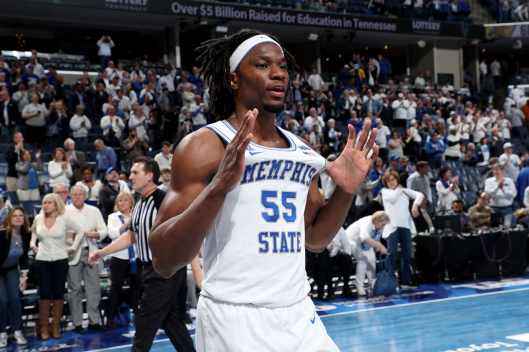
9. Precious Achiuwa

https3a2f2fbehindthebuckpass.com2fwp-content2fuploads2fgetty-images2f20172f072f1212229814

Achiuwa’s Memphis team summarizes his NBA prospects– very good defensively, awful offensively, and ultimately overhyped.

He is 6’9 with 7’1.5″ wingspan with good athleticism. He was a very good rebounder with good steals and blocks for the #5 defensive team in the country. There’s quite a bit of potential for him on this end as a small center or a big wing.

But the only problem is that you need to stomach his offense. He only made 60% FT, and shot a low rate of 3PA (13/40). He also had a horrible 1.3 vs 3.7 assists vs TOVs per 40. And in spite of his size and athleticism he posted a pedestrian 51% 2P because he loves to chuck mid-range shots. Collectively he was a high usage player with dreadful efficiency.

And to make matters worse, he is an old freshman, turning 21 in September. This makes it difficult to forgive his flaws and gamble on his tools and defensive playmaking anyway.

Even if develops a passable shot, that assist:TOV likely rules him out from being an adequate perimeter player offensively. Precious needs quite a few things to go right to be able to fit in an NBA offense without being incredibly harmful.

And the thing is it’s not like he’s a GOAT tier defensive prospect. He has merely shown good playmaking potential, but still is prone to getting lost.

One interesting aside: Okungwu, Toppin, and Achiuwa all have similar physical profiles and are projected to go in the #4 thru #9 range. Except Obi and Precious are one way prospects, and if you combine their good side of the balls into one prospect, it’s STILL not clear if that prospect is better than Okongwu. Onyeka is the such the obvious gem in the rough here.

Anyhow, at some point it makes sense to roll the dice on Precious tools and hope he learns how to not trainwreck the offense whenever he steps on the floor and live up to his defensive potential.  Where that it is hard to say, because his offense looks very rough right now.

10. Aaron Nesmith

5c3fdc89414bb.image_

Nesmith has an NBA body at 6’6″ with a 6’10” wingspan, is a good shooter, and has good intangibles, and that’s about the extent of his goodness.

He isn’t a good ball handler or passer, and he isn’t a good athlete or defensive player.  He’s just a shooter, so how far can that really go?

It depends on how good he becomes at shooting. With modern emphasis on 3’s, it has become increasingly common for players to make a high rate of 40%+ 3PA.

I had a similar critique of Buddy Hield, and this past season he made 39.4% 3P on 15.1 3PA per 100 possessions. Reggie Miller in his career made 39.5% from 3 on 7.1 3PA/100. Miller. 15 years ago Miller was the all time 3 pointer leader, now we have Hield more than doubling his rate of attempts at a similar percentage. That can atone for quite a few deficiencies.

Hield isn’t the only one. Steph Curry is the obvious example of an overpowered 3.  Seth Curry and especially Duncan Robinson have gone on to improbably useful NBA careers because of their elite 3P% on high volume. JJ Redick has aged very well into his 30’s by increasing both his 3PA rate and 3P%. Even Doug McDermott finally had a good season this year by posting a career his 3P% with a huge spike in his 3PA rate.

In recent years, making an outlier impact on shooting with a great 3P% and 3PA rate is becoming increasingly possible, so being a one dimensional shooter doesn’t cap a player’s upside as much as it used to. So the big question is– how likely is Nesmith to become an outlier shooter?

Shooting is difficult to predict with loads of randomness, so the short answer is “not very likely”. But it’s worth discussing the possibility. If we stick to the Hield comparison and look at their career college shooting numbers, they are very close:

3PA/100 3P% FT%
Nesmith 11.7 41.0 82.5
Buddy 12.3 39.0 83.6

And it looks even better for Nesmith considering that he is leaving for the draft at 2 years 10 months younger than Hield. Buddy was a huge underdog to become an elite NBA shooter based on his NCAA statistics, but his elite work ethic enabled him to make a huge leap as an NCAA senior and continue to build on that in the NBA.

Nesmith is also known for great work ethic and leadership, so why can’t he follow Buddy’s trail of defying the odds to become a great shooter?

The major concern is that Nesmith has a relatively slow release, whereas Buddy had a lightning quick trigger. This is going to make it difficult to consistently get off quality attempts vs NBA defenses, let alone at the insane rate that Buddy attempts and makes them.

Further, the bulk of Nesmith’s good shooting came against horrible competition. As a freshman he shot 33.7% on 11 3PA per 100, and as a sophomore he shot 52.2% on 13.1 3PA/100. This may indicate some level of improvement, but Vanderbilt played one of the softest non-conference schedules in the country, and then after one SEC game vs Auburn Nesmith injured his foot and missed the rest of the season.

It’s difficult to say how much was genuine improvement vs simply happening to get hot vs weak low major opponents who don’t have the size or athleticism to challenge his slow-ish release.

While his intangibles and work ethic cannot rule out the possibility that he learns to be a 40%+ NBA shooter on good volume, it’s not necessarily something that is wise to bet on. And if he becomes a 37% shooter on an ordinary 3PA rate, he’s not going to be more than a fringe rotation player because he doesn’t offer enough otherwise.

12. Saddiq Bey

960x0

Rodney Hood’s long lost twin brother enters the 2020 draft with similar stock to Hood in 2014, since going #21 in 2014 is similar to #12 in 2020.

Both guys are 6’8″ with good efficiency and shooting in medium usage roles, great assist to turnovers, and underwhelming rebounds, steals, and blocks.

Even though Hood was a solid return on the #21 overall pick, it’s still arguable that he was overdrafted. For Utah he worked out about as well as he possibly could have, and he was still merely a decent role player. On other teams he has regressed and become an ordinary bench player.

Now Bey’s best case scenario is likely around the Utah version of Hood. But his worst case is quite a bit lower, because he is slow and his shot is a big question mark. He made 41.8% of his career 3P at Villanova, but his 3PA rate was pedestrian, as was his 72.8% FT. He has wonky shooting mechanics, and there’s some risk his 3 point shooting at Villanova was largely luck. Hood has become an above average NBA shooter, and the same cannot be assured for Bey.

Bey’s biggest advantage over Hood is 2.5″ greater wingspan at 6’11”, and Villanova tends to produce intelligent role players. So it’s not difficult to envision him as a useful pro like the Utah version of Hood. But that’s not the sexiest upside given his risk of having below average shooting and lacking the athleticism to guard anybody in the NBA.


Draft Predictions Retrospective

24 Monday Aug 2020

Posted by deanondraft in Miscellaneous, NBA

≈ 3 Comments

hi-res-0024df4f53d645a8046a3eefd4e9c64c_crop_north

The draft is super hard to predict. Over my 6 years of blogging about the draft, I have made some good predictions and some bad ones. The predictions that sting me the most are the ones where I went too far pushing a “hot take.” The idea was nothing was at stake anyway, and if a contrarian opinion proves accurate, being more aggressive makes it look better in retrospect.

What I learned is that it’s extremely difficult to predict the next 15 years for a 19 year old kid. I have been wrong so many times, it now seems pointless to ever make any bold proclamations. It only makes my analysis less accurate, since more bold statements = more opportunities to be wrong. All I can do is look at the available information, assess the various possibilities for each prospect, and make an attempt at estimating their value.

The best thing I ever wrote questioned if Luka Doncic was the best prospect ever. The best part about the writeup is that I didn’t make any definitive statements, I merely presented facts and asked questions in an attempt to interpret it. The questions have since proved to be relevant, so I will focus on keeping that tone going forward

Anyhow, just for fun I will go back and review my year by year predictions since we have it all on record:

2014

This was my first year where I put the most effort, and also by far my best year. I was highly bearish on Jabari Parker and Andrew Wiggins as the top 2 picks.

I correctly rated Joel Embiid as the #1 overall pick, with Dante Exum, Aaron Gordon, and Marcus Smart rounding out the top 4. Some people may say Dante Exum at #2 looks bad in retrospect, but seeing that Embiid is the only real star at the top of the draft I don’t feel badly about it. I likely should have placed him at #4 below Smart and Gordon but this was a relatively minor miss for a shot at a mystery box.

I also correctly rated non-lotto bigs Jusuf Nurkic and Clint Capela above Parker + Wiggins at #5 and #6, which felt insane to do at the time yet somehow worked out.

I also had Nikola Jokic and Spencer Dinwiddie as 2nd round steals at #16 and #17 respectively.

I also had a few misses. Tyler Ennis piqued my interest but #9 was far too high for him. And while I feel I raised valid concerns about Julius Randle (#23), Zach LaVine (#35), and Rodney Hood (#57), I ranked all of them too low. But then after watching summer league, I actually noted that these were all of my opinions I felt worst about.

This was the season where I watched by far the most basketball both pre-draft and summer league, and really committed myself to understanding as much as possible. In retrospect I think my analysis was about as good as possible, and I may not ever analyze a draft this well again.

2015

This draft I gave much less effort than 2014 and it shows. I was far too low on Kristaps Porzingis (#12), Myles Turner (#20), Devin Booker (#22), and Terry Rozier (#50).

I also was sky high on Justise Winslow which hasn’t fully worked out, nor has it been a disaster. I ranked him #3 on my big board, and in the article I said I thought he was a better prospect than Jahlil Okafor and Emmanuel Mudiay which has proved to be accurate. But he also hasn’t nearly lived up to the massive potential I saw in him.

The bright side of this season was the only other player I wrote about: Josh Richardson. When he wasn’t even on the top 100 of anybody’s rankings, I wrote about how he was the hidden gem of the draft and ranked him #30.

I also had Larry Nance and Norman Powell as possible second round steals ranking them #32 and #33 respectively when they were getting relatively little attention (Nance going #27 was a big surprise). At least finding a few late steals somewhat salvaged this draft.

2016

This year was an unmitigated disaster. I had Ingram > Simmons, which is starting to look defensible, but Simmons is still the better talent and player and was the obvious #1.

I had Dragan Bender #3 which I don’t fully regret with such other few interesting options available, but I was too nevertheless too high based on a tiny sample of FIBA when he was 16.

Most notably I ranked Jamal Murray #12 and Buddy Hield #24 which is just awful considering how many terrible players I ranked ahead of them including #6 Deyonta Davis and #8 Timothe Luwawu. I was putting pretty low thought into my rankings, and in fairness I updated shortly after the draft to make all of these drastically more sane.

I did have a couple of decent ideas in the mix, with Dejounte Murray at #13 and Fred VanVleet #42 as a couple of later steals. But I don’t think this does much to salvage a bad overall ranking where I got too many things wrong.

2017

I was far too high on Lonzo Ball. I would still rank him #1 in retrospect because his strengths were so attractive, but I was far too dismissive of his flaws and downside risk.

I was also pretty high on most of the rest of the top 7. Fultz has flopped for somewhat unpredictable reasons– who could have known he was such a headcase? But then other than that Tatum, Fox, Isaac, and Markkanen all look pretty good while Josh Jackson has flopped.

I was correctly bearish on Dennis Smith Jr and ranked him #10, below OG Anunoby who I had #9. I had Donovan Mitchell #11 and I should have had him above DSJ.

Jarrett Allen at #27 was a small mistake and Bam at #28 was a big mistake.

This wasn’t my worst draft year, but it wasn’t my best either.

2018

This draft was so close to being good! I had my famous article on Luka, was bullish on Shai Gilgeous-Alexander, and had Josh Okogie and Kevin Huerter as solid 1st round picks when they weren’t in the consensus top 40.

But then I ruined it with too many hot takes. I still believe Trae Young is highly overrated and is not a player that I would want to build an NBA team around, but it’s clear that he has enough unique talent to be worth a top 10 pick. I went overboard on slandering him by ranking him 15th.

I also massively overhyped Jaren Jackson Jr. He was obviously the correct #2 prospect, and still is a very good one, but I made him 1b to Luka’s 1a which looks really bad in retrospect. I did ponder if he had GOAT upside, and frankly I don’t think it was a totally insane question. But he was so much less proven than Luka at the time, I really analyzed him through an excessively optimistic lens.

Also Zhaire Smith at #5 is a horrible take. I thought it was a good idea to gamble on athleticism, but he obviously had some big question marks that I glazed over too lightly.

Mikal Bridges at #18 was maybe a few slots too low. But I don’t feel too badly about this bc he still isn’t that exciting. We’ll see how he develops over the next few years.

I did correctly rate Jerome Robinson (#58) over Michael Porter Jr. (#9) as a horrific pick, and I had Gary Trent (#27) as a solid round 2 sleeper. I was too low on Mitchell Robinson, however, having him at #34.

Ultimately I feel that my analysis for this draft started off well, but I ended up taking too many unnecessary positions that were against the grain just to be different. I’d rate my analysis this draft collectively as OK, but nothing special.

2019

I didn’t even do a full writeup for this one because I didn’t feel like it. And it’s too early to say much about this draft with so much left to unfold, but so far my rankings look pretty good.

I was a huge bull on Ja Morant and PJ Washington. So far PJ looks like a one of the more solid guys outside of the top 2, and Ja looks like a future star.

It’s still too much to say about Ja, but I would still bet quite a bit that he goes on to have a better NBA career than Trae Young.

I was very low on DeAndre Hunter (#29) and Darius Garland (#19) who appear to be huge mistakes as top 5 picks.

And I had Terence Davis #39, which looks good for a UDFA.

I seem to have have underrated Cam Johnson at #38.

Other than that I didn’t have any strong opinions and we need more time to let things unfold. But I feel that I took fewer unnecessary bold positions than normal and overall I did a pretty decent job this year.

Conclusions

I have had ups and downs at predictions. I have had some good ideas that led to good predictions, and some slightly less good ideas that led to bad predictions.

I don’t know if I will ever replicate my 2014 performance where I was intently watching every top prospect in both NCAA and summer league.  You can really get to know a prospect by watching a player repeatedly in a number of situations.

Since then I haven’t been watching as much, but I still believe there is enough available information to make decent broad strokes predictions between stats, scouting reports, youtube videos, etc.

My goal moving forward will be to be wrong as infrequently as possible. While it’s impossible to be right about everything, it’s easy to not be wrong by simply not taking firm positions when the answer is uncertain. I will still inevitably miss the mark plenty of times, but but by being more humble about the limits of my prediction capabilities the misses should grow to be less frequent and less severe over time.

Let’s see how the next 6 years compare to the first 6!

2020 NBA Draft: Who Should Go #1?

21 Friday Aug 2020

Posted by deanondraft in NCAA

≈ 2 Comments

This year’s draft is exceptionally weak at the top. There is no real prize that should go #1 in an average draft. Rather there’s a cluster of players who should typically go in the #3 to #8 range. In my opinion there are 4 players in the class that could reasonably considered for #1 overall this year.

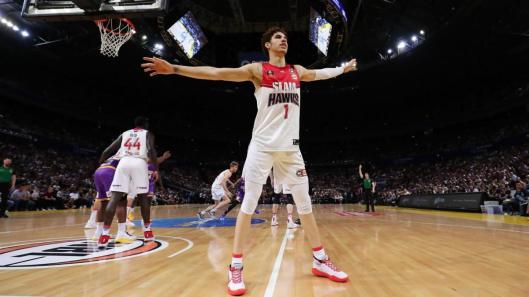
4. LaMelo Ball, 6’7″ PG

lamelo-ball-4

Lonzo’s younger brother is a tricky one to solve, because he has such a small sample of statistical performance against any known competition.

Their father Lavar says that LaMelo is the best prospect of his children, as he has more natural scoring abilities than Lonzo. Also he is 1″ taller, and may be slightly more strong and athletic.

Lonzo has been a significant disappointment relative to expectations, as he crushed statistical models with his freshman performance at UCLA. I personally believed he was a future star, but instead he looks like a quality young role player whose unique strengths make him useful, but his significant flaws limit his value.

How LaMelo’s basketball IQ precisely compares to Lonzo is unclear, but he does rack up similar triple double statistics and have a similar propensity for full court assists. It’s plausible that he is a slightly rich man’s version of his brother with less pronounced flaws, which could make the difference between being a quality role player and a star.

But there is also significant downside. Lonzo was much more statistically proven pre-draft, as he elevated a UCLA team to massively outperform their talent level by stuffing the statsheet even better than LaMelo, as he had slightly more steals, significantly more blocks, and a much better eFG 66.8% vs 44.6%.

Lonzo also did this over a larger sample of 1263 minutes vs 407 minutes vs LaMelo, against a more known level of competition playing in the Pac-12 that is also likely tougher than professional Australian basketball.

LaMelo has a similarly broken shooting form to Lonzo, and given his poor Australian shooting there’s no clear evidence he is going to be notably better as a scorer than Lonzo. And there’s no clear evidence that his basketball IQ is on Lonzo’s level, as he was an extreme outlier in that regard.

LaMelo compounds his lower steal and block rates with a reputation for indifference on defense that Lonzo didn’t have. One of the main reasons why Lonzo has been useful in the NBA is because of his defense, and there is no assurance that LaMelo will match his performance given his current mentality on that end.

It’s difficult to do a perfect comparison between the brothers because LaMelo has just 13 games in a league that isn’t quite the same as NCAA, but they share a similarly weird mold. But I would say that Lonzo has the meatier profile with outlier good efficiency, defense, and proven performance vs known competition whereas Melo’s slight physical and ball handling advantages aren’t as clear or significant.

There’s a sliver of star potential for Melo, but more likely is he going to be similar to or worse than Lonzo since there’s no clear proof that he either has the remedy for Lonzo’s weaknesses or matches his strengths. And if the statistically superior Ball already disappointed us once, why buy the hype on a slightly different and likely worse version?

It’s easy to see what a better ball handling version of Lonzo would be worth a #1 overall pick, but the bust risk is far too significant to be worth chasing that sliver of upside in the top 3, even in a weak draft.

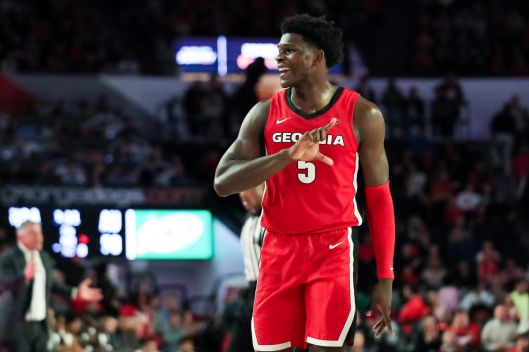
3. Anthony Edwards, 6’5″ SG Georgia

1208941100.jpg.0

Edwards is a young shooting guard who just turned 19 on August 5 and offers a bit of everything.

He has a good frame and athleticism, and solid 6’9″ wingspan. He is capable of creating a high volume of shots, as he can get to the rim, takes a high volume of 3’s, and makes 77% of his free throws. He only shot 29.4% from 3, but given his youth, FT%, and 3PA rate it’s easy to see him shooting much better than that long term.

Other than that, he’s just OK. He has some passing ability, but isn’t a natural point guard or decision maker. He also has a competent level of rebounds and blocks, but nothing that suggests defensive star.

And while his physical profile is good, his dimensions are a bit small for a wing and his athleticism is very good but not elite.

Edwards doesn’t have any single glaring flaw, but he is ordinary in a few too many categories to be an exciting #1 pick. His closest NBA comp is fellow Georgia alum Kentavious Caldwell-Pope.

It’s not a thrilling comparison for #3 overall, but KCP was likely underdrafted at #8 in the similarly weak 2013 draft, and he hasn’t improved much from age 22. If Edwards happens to have a better development trajectory, he could be a good player and perhaps a fringe all-star.

But he could also develop worse as he is very young and raw, and his median outcome is at best slightly better than KCP.

Edwards is the most bland player with the least interesting upside in consideration for #1. And there is some argument that Ball should go ahead of him. But I am giving him the edge over LaMelo because he has a thicker sample of statistical competence and doesn’t have the glaring disappointment of a highly similar brother on his resume.

2. James Wiseman, 7’0″, C

james-wiseman

Wiseman has similar evaluation challenges as LaMelo, as both are weird prospects with thin samples of statistical goodness.

In fact, Wiseman looks like he belongs nowhere near the top 3 based on his biggest statistical sample from AAU, where he posted poor rebound, steal, and assist:TOV ratios for such a highly touted prospect.

But he has exceptional physical tools, as he is 7’0″ with 7’5″ wingspan, and excellent frame and agility for a big man. Further, he complements this with excellent intangibles. He learned to speak Mandarin at his private school, which indicates some level of off court intelligence.

Having turned 19 in March, he is the prototype for a player capable of massive improvements. And he showed huge improvements in the glimpses we have seen since high school.

It started at the Hoop Summit, where he posted 12 points, 8 rebounds, 6 blocks on 6/8 FG in 22 minutes and looked far better than expected based on his AAU sample.

He continued the trend in his 3 game NCAA sample where he played like a clear #1 overall pick, and he almost certainly improved significantly from his AAU self.

Most notably over the 4 games he went from a poor rebounder to a beast on the glass. And he was a highly effective finisher who avoided turnovers, and made a respectable 22/32 FT (69%) between the four games. If he can finish inside, develop an outside shot, protect the rim, hold his own on switches, and be a solid rebounder, that sums to quite the useful player.

But even after including the Hoop Summit, this sample is only 91 minutes with 47 of those minutes coming against two terrible low major teams. It’s difficult to say precisely how much he improved. He would have significantly regressed over a larger sample against better teams, and nobody knows how good he really is since there is such a wide range of performance between his AAU and Hoop Summit + NCAA samples.

He still had just 1 assist and 1 steal in his 91 minutes between NCAA and Hoop Summit, so he likely has some vision/instincts flaws. And we still cannot take his rebounding for granted, and seems to have some level of motor issues as well as an unproven shot. So there’s a clear downside risk in Wiseman with so many unanswered questions.

But he has a highly useful mold, and will be good if his blanks are filled in adequately. Taking Wiseman top 2 overall is a big gamble with such limited sample of statistical goodness, but it is also a sane gamble given his intersection of physical tools, intangibles, and improvement from high school to college. He needs a number of things to go right for his upside to hit, but so does everybody else in this draft.

In spite of the risks that come with Wiseman, I rank him above Ball and Edwards simply because he has a fatter upside tail. All 3 guys have clear downside and underwhelming median outcomes for top 3 candidates, so thickest upside tail wins.

1. Onyeka Okongwu, 6’9″ PF/C

usc_trojans_m_basketball_onyeka_okongwu

Okongwu’s NBA role is difficult to discern, as he is an undersized  center in a league moving away from bigs, but he brings quite a bit to the table.

He has good physical tools with a 7’2″ wingspan and good athleticism and agility. This gives him the versatility to defend multiple positions.

He used his physical gifts well as an NCAA freshman, posting 1.6 steals and 3.5 blocks per 40 while anchoring Andy Enfield’s best defense ever.

In 7 seasons of USC and 2 at Florida Gulf Coast, Enfield prior best defense ranked 84th in 2P% and 80th overall. This was until Okongwu anchored the #18 defense with #7 defensive 2P%.

Okongwu had the assistance of a couple of decent bigs, but he posted 50% of the team’s total blocks while also being a close 3rd in steals. He was the clear heart and soul of the defense, and deserves significant credit for USC’s big defensive leap.

He was also excellent offensively in spite of being surrounded by inefficient players with limited creation ability. USC posted a dreadful 0.86 points per possession with Okongwu off the floor. The team was sorely lacking in offensive talent and would have had a dismal season without Onyeka.

With him on the floor, they posted a respectable 0.98 points/possession, as he led the team in usage and was by far the most efficient player on the roster. He is an excellent finisher, scoring 62.1% inside the arc while rebounding well offensively cleaning up 12.4% of his team’s misses.

He only shot 1/4 from beyond the arc, but his 72% FT offers hope of being able to develop a jumper long term as he is still only 19.

And he showed traces of passing ability with 1.4 assists vs 2.6 turnovers per 40. This isn’t a great assist:TOV, but for a 19 year old big in a dreadful offense it is decent enough.

From most angles, Okongwu looks like a promising prospect. He is a versatile and impactful defensive player as well as an efficient offensive player with a decent baseline of skills to build on. The only lingering question is: what is his NBA role?

The answer depends on how he develops in the NBA. But we consistently see tweener bigs with good length and ability to guard multiple positions as draft steals: Bam Adebayo, Pascal Siakam, Draymond Green, Paul Millsap, Robert Covington. Questions about his NBA role will quickly evaporate if he fulfills his potential.

Okongwu at worst should be a useful defensive player who is an efficient garbageman offensively. At best he develops his shooting and perimeter skill and becomes a two way star with elite defensive impact and versatility. It’s a favorable range of outcomes, and there is no clear reason why he should not succeed.

Considering the myriad warts, questionable upside, and limited proof of statistical goodness of the other prospects at the top of the draft, it’s hard to see how any of them belong above Okongwu. He has the physical tools, he has by far the best numbers, he fits a modern mold, and he doesn’t have any major warts that impede his path to greatness.

He is currently slated to go just 6th overall on ESPN, but if he slides that far there are decent odds that looks silly in retrospect. Everybody slated to go ahead of him has serious downside and probably less upside as well. Not even trying to drop a hot take here, Okongwu seems like the best prospect in the draft and unless I’m missing some major concern it seems somewhat obvious.

Top Posts & Pages

  • Is Luka Doncic The Best Prospect Ever?
    Is Luka Doncic The Best Prospect Ever?
  • Jalen Green vs. Franz Wagner: How Much Should Creation Be Valued?
    Jalen Green vs. Franz Wagner: How Much Should Creation Be Valued?
  • The Joel Embiid Experience: Does Starting Late Help or Hurt His Future?
    The Joel Embiid Experience: Does Starting Late Help or Hurt His Future?
  • 2023 Draft Preview
    2023 Draft Preview
  • How Good Are the Thompson Twins?
    How Good Are the Thompson Twins?
  • I'm Switching to Substack
    I'm Switching to Substack
  • Reactions From The Combine
    Reactions From The Combine
  • 2016 Final Big Board With Writeups
    2016 Final Big Board With Writeups
  • The Draft Starts With Defense: The Curious Case of Doug Mc-No-D
    The Draft Starts With Defense: The Curious Case of Doug Mc-No-D
  • Jusuf Nurkic: The Bosnian Boogie
    Jusuf Nurkic: The Bosnian Boogie

Recent Comments

deanondraft's avatardeanondraft on Summer League Scouting: Cade…
Noble's avatarNoble on Summer League Scouting: Cade…
deanondraft's avatardeanondraft on 2023 Draft Mid-Season Boa…
cloudsean's avatarcloudsean on 2023 Draft Mid-Season Boa…
deanondraft's avatardeanondraft on Summer League Scouting: Cade…

Create a free website or blog at WordPress.com.

Privacy & Cookies: This site uses cookies. By continuing to use this website, you agree to their use.
To find out more, including how to control cookies, see here: Cookie Policy
  • Subscribe Subscribed
    • Dean On Draft
    • Join 57 other subscribers
    • Already have a WordPress.com account? Log in now.
    • Dean On Draft
    • Subscribe Subscribed
    • Sign up
    • Log in
    • Report this content
    • View site in Reader
    • Manage subscriptions
    • Collapse this bar
 

Loading Comments...