• Home
  • About
  • Big Board
  • NCAA
  • International
  • Miscellaneous

Dean On Draft

~ NBA Draft Analysis

Dean On Draft

Category Archives: Uncategorized

Post-Draft re-rank

29 Monday Jun 2015

Posted by deanondraft in Uncategorized

≈ 8 Comments

So now that the draft is complete, it is time to re-rank the prospects with new information that has come to light:

1 Karl Towns
2 D’Angelo Russell
3 Justise Winslow
4 Jahlil Okafor
5 Emmanuel Mudiay
6 Mario Hezonja
7 Kristaps Porzingis
8 Willie Cauley-Stein
9 Stanley Johnson
10 Frank Kaminsky
11 Kelly Oubre
12 Rondae Hollis-Jefferson
13 Trey Lyles
14 Myles Turner
15 Delon Wright
16 Bobby Portis
17 Sam Dekker
18 Devin Booker
19 Kevon Looney
20 Cameron Payne
21 Tyus Jones
22 Justin Anderson
23 Jerian Grant
24 RJ Hunter
25 Terry Rozier
26 Nikola Milutinov
27 Rashad Vaughn
28 Chris McCullough
29 Larry Nance Jr
30 Josh Richardson
31 Jarell Martin
32 Richaun Holmes
33 Norman Powell
34 Montrezl Harrell
35 Jordan Mickey
36 Olivier Hanlan
37 Cedi Osman
38 Dakari Johnson
39 Arturas Gudaitis
40 Pat Connaughton

I imagine that most sharp NBA teams had 1. Towns and 2. Russell, and I agree with that.

I am all in on Justise Winslow. Even if his height was mildly disappointing and he shot poorly in workouts, there is still so so much to like about his profile. It was mostly bad GM’s that passed him up while one of my fave GM’s in Danny Ainge was trying to trade up for him every step of the way starting at #4. He has such clear two way upside with a high floor to boot, I cannot fathom that it was remotely correct for him to slide that far.

I softened my anti-Hezonja and Porzingis stance because they both do have great tools and I don’t feel strongly enough any of my 8-12 prospects to place them ahead of either. I still have my doubts about them, but there’s no reason they cannot be real good. I wish I could have stronger feelings on these two and Mudiay, but all I can do is stash the trio in between the big 4 NCAA studs and everybody else.

I dropped Kelly Oubre to 11. I believe he is underrated due to his combination of freshman stats and physical tools, but there is little that stands out about him other than his superficial appeal. He cannot create his own shot and he does not have good basketball IQ, so I have slightly tempered my expectations of him.

Rondae Hollis-Jefferson is the second biggest steal in the draft behind Winslow. His offensive limitations are a big concern, but his combination of physical tools and defensive acumen is so elite that they are worth stomaching. I am surprised at how many smart FO’s passed him up with non-lotto picks, but once upon a time Daryl Morey drafted Marcus Morris ahead of Kawhi Leonard so I’m sticking to my guns that RHJ slid way too far.

Myles Turner still feels bleh to me but I’m interested to see how well Frank Vogel can mitigate the limitations of his gait by playing him in the Hibbert role. I could see him having a successful career in Indiana.

It feels like no matter who I rank 22 or 23 it feels too low. I ended up placing Justin Anderson and Jerian Grant in those slots, and both are solid prospects to me. Truthfully you could rank my 13-23 tier in any order and it would seem fine to me.

RJ Hunter feels perfect at 24. I could jumble up my 5-12, 13-23, or 25-40 in any number of orders but RJ makes the perfect dividing line to bridge the gap between my top 23 and the rest.

I bumped up Terry Rozier a long way from 50 to 25. I remain unimpressed with his offensive skill set, but he does have the length and frame to guard SG’s. Further, it is possible that the Celtics can parlay his elite first step into a nice slashing game with better coaching, spacing, and skill development. I appreciate the athleticism + defense strength tandem in prospects so this pick may not be historically bad. That said, his current offensive package is highly worrisome for a 21 year old 6’2″ player, and I suspect the Celtics are being overly optimistic about his growth potential by taking him at #16. So it’s still a reach in my book.

Everything else is generally smoothened given NBA opinions. I figure this will look better than my average big board because I am not taking huge positions for no reason and am focusing on my more confident reads. So we’ll see how this works. Really don’t feel like I have much insight to offer this year other than it being comical that Winslow slid to #10 and RHJ being a possible big time steal late. All of the prospects are at least decent and I don’t think consensus is all that far off base.

2015 Draft Recap

27 Saturday Jun 2015

Posted by deanondraft in Miscellaneous

≈ 25 Comments

One of the best parts of the draft is that no matter how advanced statistical predictions become, there will always be a slippery human element that cannot be perfectly priced. This is a downside to making at home evaluations as interviews and workouts are needed for full information, and three first round talents in Christian Wood, Cliff Alexander, and Robert Upshaw went undrafted. But it also makes for stunning surprises on draft night that are fun to assess in retrospect, and it is new information that can be used to re-assess pre-existing perceptions. Here is my recap of the draft:

1. Minnesota: Karl Towns

Timberwolves convert the layup and suddenly their future is not looking bad.

2. LA Lakers: D’Angelo Russell

The Lakers nail the most important decision of the draft. They could have bungled this pick by taking any of Okafor, Porzingis, or Mudiay, but they made the correct pick who was not obvious to everybody. These are the type of decisions that can alter a franchise’s future, so the Lakers are the big winners of the draft by getting this one right.

3. Philadelphia: Jahlil Okafor

The Lakers’ gain comes at the expense of the 76ers, who were set to draft D’Angelo Russell #3 overall. Instead they settle for Jahlil Okafor, who crowds their big man rotation and is an inferior prospect. Sam Hinkie is not building a team, he is assembling a portfolio of liquid assets and Okafor will maintain trade value if he scores efficiently as a rookie. I would have preferred to see Philly trade down for Winslow+, but it would have been difficult to execute for a substantial haul, and it is possible that Hinkie perceives Okafor as the superior prospect independent of trade value.

4. New York: Kristaps Porzingis
5. Orlando: Mario Hezonja

I don’t want to be too aggressively anti-Euros because I am not certain that neither of these guys are really good, but I feel like they are both big mistakes to take over Justise Winslow among a handful of other prospects. If I had to pick one to excel, it would be Hezonja. While Mario seems a bit overhyped to me, I cannot pinpoint anything that strongly caps his upside and it is fine to take him over any non-Winslow prospect. Porzingis has more disconcerting red flags, less upside, and more potential to look like a comically bad pick a few years down the road.

6. Sacramento: Willie Cauley-Stein

Even though I rated Cauley-Stein above Porzingis and Hezonja, this pick is arguably even worse. He is not a good pairing with DeMarcus Cousins, and if the pick was only made because Cousins is going to be traded that does not make the situation any rosier. Further it sounded like everybody was scared off by his ankle and he would have slid to the teens– if they are so locked in on him, why not trade down? Horrible pick by a horrible organization.

7. Denver: Emmanuel Mudiay
8. Detroit: Stanley Johnson

These picks were fine values in a vacuum, but it was nevertheless a mistake to pass on Winslow. Mudiay is the most defensible pick in the 4-9 range, it is possible my critique of this pick will look bad in the future. Stanley over Winslow is more clearly bad– Stanley is a better shooter but Winslow is better at everything else.

9. Charlotte: Frank Kaminsky

Michael Jordan allegedly turned down a massive haul of picks from Boston for this pick. It is amazing that after all of his awful draft picks that he hasn’t reduced his self-confidence in his talent evaluation skills. I wonder if it ever occurred to him that his draft picks consistently bust and that maybe this one is not all that special when he is getting offered way too much from a successful GM who wants somebody else. He should have taken Winslow before whatever Ainge offered, but doing neither and taking Kaminsky is laughable.

If the Pistons took Winslow, this pick would actually be pretty good. Since they instead took Stanley, the Frank pick was a big failure.

10. Miami: Justise Winslow

Miami wins the draft.

11. Indiana: Myles Turner

If Hibbert is on the way out, this is a great landing spot for Turner since Vogel has proven capable at maximizing the shot blocking ability of a center with mobility challenges. I still don’t love the pick, but I can see Turner succeeding in Indiana so I am now less bearish on him than I was pre-draft.

12. Utah: Trey Lyles

Lyles is a fine pick here. As a Jazz fan I would not be particularly excited nor disappointed.

13. Phoenix: Devin Booker

After making my favorite pick in the late lotto last year in TJ Warren, Ryan McDonough followed up with a pick that I don’t like as much. But even though I ranked him #22 on my big board I don’t hate the pick, I would have ranked Booker 6 slots higher before 2 slots lower. Just goes to show how much vastly reasonable minds can differ when the draft runs so deep and there are so many angles of information to examine.

14. Oklahoma City: Cameron Payne

Much like the Devin Booker pick, I have this as a reach by 9 slots according to my big board but I don’t necessarily hate it for OKC. I feel that it’s a slightly bad pick but Payne does have a uniquely appealing flavor to him, and I am more interested in seeing how he pans out than I am making confident projections of his future. I suspect he’s overvalued here but I am a fan and don’t want to root against him.

15. Washington (via ATL): Kelly Oubre

I had Oubre as the BPA and I do not believe he would have slid to 19, so I like the Wiz giving up two 2nds to move up for him. Good move, good pick.

16. Boston: Terry Rozier

Danny Ainge’s biggest draft strengths and weaknesses were on full display last night. When there is a slam dunk pick to be made, he makes it and he correctly tried to pay up to acquire Justise Winslow in a trade every pick from 4 to 9. But once Charlotte declined, Ainge showed his weakness of reaching for busts when no clear BPA exists (see: Marcus Banks, Fab Melo, JR Giddens, maybe James Young). I rated Rozier 50th on my big board, and in retrospect that is far too low given his athleticism and defense baseline to go along with a competent jump shot. He is 1″ shorter with 1″ longer wingspan than Avery Bradley, and it is well within reach for him to become a similar caliber player which is not a terrible outcome for the #16 overall pick.

Of course the point of the draft is not to avoid bad outcomes, it is to achieve great outcomes. The Celtics already have two young, undersized 3 + D SG’s and adding a third one who upgrades neither is of little value to a team that got swept in the first round. It’s clear that they are gambling on Brad Stevens being able to parlay Rozier’s great first step and work ethic into an effective NBA slasher. The value of Rozier as a prospect largely hinges on the value of his slashing upside, and there is a coherent argument to be made that he has enough to be an acceptable selection at #16 overall. I still believe it was a reach given how limited his PG skills and decision making are for a 21 year old, but a less egregious one than my initial big board would indicate.

17. Milwaukee: Rashad Vaughn

This pick is a bit of a reach and I do not particularly like it, but Vaughn is young and can score. I suppose the Bucks believe a likely inefficient chucker has more value on a team with great defense and horrible offense.

18. Houston: Sam Dekker

This pick is solid– Dekker was on the short list of best players available and he fits well as a smallish 4 next to Dwight.

19. New York (via ATL): Jerian Grant

It is hard to fathom how a FO that acquired 4/5 of a 60 win starting lineup with FA contracts all < $10M/year has blown consecutive mid-1st rounders so badly. After spewing the #15 pick on Adriean Payne last year, the Hawks one upped themselves this year by trading down to #19 and then shipping that for a player who is proven to be bad in Tim Hardaway Jr.

This is obviously nice for the Knicks since they clearly won the trade and then took a decent prospect in Grant. It slightly redeems the Porzingis pick.

20. Toronto: Delon Wright

One of the best FO’s in the draft takes one of my favorite sleepers in Delon to replace the recently dealt Greivis Vasquez. This is a nice pick, Masai Ujiri just vacuums free pennies and nickels with almost every move he makes.

21. Dallas: Justin Anderson

Nice pick by the Mavs as they scoop a solid 3 + D wing.

22. Chicago: Bobby Portis

Great pick by the Bulls, Fred Hoiberg can do damage building an offense around a Mirotic/Portis big man tandem that provides elite spacing.

23. Portland: Rondae Hollis-Jefferson

Portland eventually traded this pick to Brooklyn for #41 and Mason Plumlee, and Mason Plumlee is quite the vig to just move up from 41 to 23. But RHJ is also a great pick, so this might be the one time ever that Billy King overpaying to get what he wants works out favorably for him. Still I’m surprised that RHJ fell this low, perhaps I’m underrating how detrimental he will be on offense in the NBA but it’s great value regardless.

24. Minnesota: Tyus Jones

31 + 36 is not a cheap price for 24, but with so many promising young players on rookie deals the Wolves were in a position to overpay for a slider. I like the move and I like the pick.

I don’t like Cleveland’s side unless Cedi Osman is much better than I am giving him credit for. The Cavs likely wanted to save cap room to help keep their roster together, but Rakeem Christmas was never good until he was a 23 year old senior. Also Tyus Jones, Kevon Looney, and RJ Hunter were some nice options to pair with LeBron.

25. Memphis: Jarell Martin

After going analytics heavy last year with Jordan Adams and Jarnell Stokes, Memphis went with traditional scouting and physical tools with Jarell Martin this year. This is a bit of a reach.

26. San Antonio: Nikola Milutinov

The Spurs went international to preserve cap space for FA, and they took the player I singled out as best international available who was also in the mix for best not injured player available. I’m always happy to see the sharpest team agree with me.

27. LA Lakers: Larry Nance, Jr.

I like gambling on Nance this late. He is an explosive dunker who stuffs the statsheet and I have mentioned a couple of times that overachieving draft slot runs in the family with his dad having 2nd highest all time win shares among picks outside of the top 16.

28. Boston: RJ Hunter

The Celtics vaguely redeem the Rozier fiasco by taking the best healthy player available, but the night is still overall bad.

29. Brooklyn: Chris McCullough

Solid pick by one of the worst FO’s in the history of life.

30. Golden State: Kevon Looney

Looney’s stock plummeted due to news that he may need hip surgery, but there’s no way this is not awesome value for the Warriors. Great pick by the defending champs.

32. Houston: Montrezl Harrell

I find this pick surprising. Harrell cannot be paired with Dwight Howard, and he doesn’t make sense as a backup between his lack of size and Clint Capela’s presence. I also don’t think he was great value, but I suppose Daryl Morey disagrees and either thinks Harrell has a chance of learning to make 3’s or might have trade value down the road since he was the only projected 1st rounder available. It’s just a second rounder so I don’t want to criticize this pick too harshly, it mostly just stood out to me as unexpected.

40. Miami: Josh Richardson

Not only does Miami get the steal of the draft in Justise Winslow at 10, but they take my favorite 2nd round sleeper at #40 who I wrote about when he was in neither DX nor ESPN’s top 100.

46. Toronto: Norman Powell

Masai scoops another penny by picking my other favorite 2nd round sleepers as part of a haul for Greivis Vasquez that also included a lottery protected Clippers’ 1st rounder. Raptors had a strong night as they clearly won the Vasquez trade and got good value on both draft picks.

Overall

The draft really fell off a cliff in round 2 after Looney went off the board, there are such few players I feel inclined to comment on. But round 1 was loaded with talent, almost everybody drafted has a strong chance of becoming at least a useful rotation player. I had a tough time finding first round picks to aggressively doubt this year, so this could go down as one of the deepest first rounds of all time.

Billy Donovan: NBA Coaching Prospect

29 Wednesday Apr 2015

Posted by deanondraft in Miscellaneous

≈ 10 Comments

Tags

Billy Donovan

With recent news that the Thunder have focused their search on Florida coach Billy Donovan, it is worth reviewing his NCAA performance to assess his upside as an NBA coach.

Donovan peaked when his Gators won back to back championships in 2006 and 2007 with the elite core of Joakim Noah, Al Horford, and Corey Brewer. Of course any coach would excel with that trio staying until their junior seasons, so it is more interesting to assess how he fared following their departure:

Season final kenpom rank Recruiting class rank
2015 45 13
2014 3 6
2013 2 24
2012 11 24
2011 16 9
2010 48 20
2009 42 2
2008 44 3

It is fair to expect a bit of a down year following a max exodus of talent, but given the quality of talent he brought in with perennial top 25 recruiting classes four seasons outside of the top 40 is rather alarming.

His loaded 07-08 recruiting class included current NBA players Nick Calathes and Chandler Parsons and he also returned sophomore Marreese Speights. Succeeding with youth can be difficult, but it is not like he was working with a bunch of talentless duds. Meanwhile, Florida failed to reach the NCAA tournament with three future NBA players.

The following season Florida lost Speights to the NBA but returned Calathes and Parsons for their sophomore seasons (along with #53 RSCI player Alex Tyus from the same class) and with another loaded recruiting class still missed the tournament.

In 2009-10 Florida finally returned to the tournament as a 10 seed in spite of Calathes departing for Europe, but still could not crack the top 40. It was not until Parsons’s senior season that Florida finally returned to the top 25 making an Elite 8 run before losing to Brad Stevens’s Butler squad.

The whole Parsons era looks bad for Donovan’s record– in four full seasons with the player and plenty of access to other elite talent Florida only cracked the top 40 once and never made the top 15. While the #16 team that went Elite 8 may seem like it saves some face, that team was loaded with experienced talent. The starting lineup:

Player RSCI rank Season PER WS/40
Vernon Macklin 16 Senior 22.2 0.16
Erving Walker 79 Junior 20 0.177
Chandler Parsons 39 Senior 19.7 0.163
Alex Tyus 53 Senior 18.7 0.145
Kenny Boynton 9 Sophomore 17.5 0.155

This is the type of talent that a good coach should be able to convert into a top 5 contender. Forget that Parsons is the only NBA player on the roster– in spite of being a senior he completely blends in with the rest of the starters statistically. Not only did Donovan underwhelm with a collection of upperclass 4 and 5 star talent, but he also failed to maximize Parsons’s talent. His value as a second round steal was evident from his rookie season where he finished 9th in ROY voting and 5th in rookie win shares. It is not difficult to envision a superior coach making Parsons an obvious first round selection after four seasons.

The counterpoint this is that coaches improve, and the Gators certainly took a leap forward after Parsons’ departure. In 11-12, Florida replaced their three departing senior starters with freshman Bradley Beal, sophomore Patric Young, and junior Erik Murphy and finished 11th and once again lost in the Elite 8, this time to Louisville.

The appealing part of Donovan’s post-repeat resume comes in the 12-13 and 13-14 seasons, as Florida finished with back to back top 3 kenpom teams without a single NBA draft pick on the roster. He did it with defense: After ranking 123rd, 113th, 91st, 41st, and 90th in schedule adjusted defensive rating in the prior five seasons, Florida leapt forward to the 4th and 2nd defenses. They did this with a middling block rate as well, as the defense delivered a strong balance of forcing opponents into difficult mid-range shots, forcing turnovers, rebounding, and limiting free throw attempts.

The timing of the spike in defense is no coincidence either, as it coincided with Donovan becoming analytically enlightened and placing an increased emphasis on defense. That said, the article does not cite any example of Donovan using analytics to improve the defense. It only states that analytics were employed to bring Donovan to the obvious realization that defense is important, so there is little evidence to suggest that he developed into a defensive mastermind. If anything the writeup implies that Donovan takes an overwhelmingly simple minded approach to analytics, focusing on the result rather than the process.

The common link to the great defensive teams was the elite 2014 graduating class of Patric Young, Will Yeguette, Casey Prather, and Scottie Wilbekin. While none of them were noteworthy NBA prospects by the time they graduated (Young had lottery hype as a sophomore), they were all high quality NCAA players who made strong contributions on both ends of the floor.

Give Donovan credit for maximizing returns on the talent of his class of unheralded college stars, but he was unable to sustain any of their success once they left. This was not for lack of talent either. In 2014-15, Florida was ranked 7th in both the AP and coaches pre-season polls, projected to finish 7th by kenpom and team rankings projection models and 6th by Dan Hanner’s model. The team suffered their share of bad luck, especially with injuries. #31 RSCI freshman Brandone Francis missed the entire season due to academic ineligibility, rotation guard Eli Carter missed 5 games, and Florida’s two best players Michael Frazier and Dorian Finney-Smith missed 7 and 5 games respectively. But injuries were not all that went wrong: 5 star sophomores Chris Walker and Kasey Hill both had vastly disappointing seasons. Hill regressed statistically from his freshman season and Walker fell from a possible lottery pick to likely undrafted after finally getting consistent playing time. Further neither #20 RSCI freshman Devin Robinson, #49 freshman Chris Chiozza, or Duke transfer Alex Murphy were able to play well enough to atone for their deficiencies.

Donovan’s newfound defensive obsession enabled the Gators to maintain the #11 kenpom defense, but their offense plunged to #151 after ranking #12 and #18 in the prior two seasons. This supports the narrative that Donovan merely gives most of his attention to defense rather than having concocted a strong defensive scheme. There is no reason for the offense to be so woefully bad other than punting on that end to meet arbitrary defensive benchmarks that Donovan deems necessary to contend. A good coach should aim to balance both ends for the optimal bottom line, not go all in on one side of the ball no matter the cost to the other.

Florida had the depth and talent to sustain a bit of injury misfortune and still have a top 25 team, but they finished as the #45 kenpom team and missed the tournament with a below .500 record. It is as if the Parsons era was starting to repeat itself all over again– Donovan gets acclaim for thriving off an exceptional class and then fails to maximize his incoming talent and disappoints. This is why he is a middle of the road NCAA coach: when he has the right collection of players he can thrive, but he is also prone to big disappointment in other scenarios where it is easy to envision a great coach excelling.

It is somewhat baffling that any NBA team is interested in Donovan after his most recent season, let alone the team with the best collection of young talent in the league. Dipping into NCAA ranks for a coach with elite recruiting pedigree and average coaching acumen is a tried and true formula for NBA coaching failure, and there is no reason to expect Donovan to buck the trend. This is especially true with the recent influx of strong NBA coaches, as the bar for good NBA coaching gets higher every season. While there are some legitimately good NBA coaching prospects in the NCAA (namely Fred Holberg), Donovan does not even sniff the radar as a coach with upside. Perhaps he can learn to use analytics to a more useful degree and avoid being a colossal failure, especially with a lackluster predecessor in Scott Brooks. But there is no way that of all of the coaching candidates in the basketball world, he is the candidate most likely to succeed at one of the most desirable NBA coaching jobs.

Updating My Prospect Perception

16 Thursday Apr 2015

Posted by deanondraft in Miscellaneous

≈ 6 Comments

I posted my reactions to 2014 draft rookie seasons, and if there is one point to be gleaned: I underrated athleticism. The players that I overrated are all non-leapers and the players the I regret bashing the most (Wiggins and LaVine) are the top two athletes in the draft. Rodney Hood is not an exceptional athlete, but among the players that I graded as bad defensive prospects (McDermott, Napier, Hood, Stauskas) he comfortably has the best first step and delivered comfortably the best offensive performance as a rookie.

I had an inkling that athleticism was overrated since I am a habitual fader of hype, and athleticism seems to correlate with hype. But there are plenty of non-athlete prospects that were overhyped, and after witnessing my predictions in motion I believe athleticism might actually be underrated.

The other issue is that I was far too wary of statistical performances in my rankings. Sometimes NCAA statistics will call to attention relevant details that receive too little attention from scouts and GM’s, such as Adreian Payne’s age and poor feel for the game. But they often reflect success that does not directly translate to the NBA, and paying it too much regard led me down the wrong path a handful of times. While statistics are a helpful tabulation that should always price in, it is impossible to form efficient draft rankings without the aid of physical profiles and the eye test.

If I wanted to have more efficient rankings, I could have taken fewer risks and shaded my disagreements a bit moreso toward consensus. But I am a habitual upstream swimmer and it helped illuminate the flaws in my thought processes to really go out on limbs, so I gambled away. Ultimately it resulted in a messier final big board than necessary, but this was also an inevitable result of experimenting with a wide range of ideas that were not all good.

On the positive side of the equation, my idea to track who creates their own half-court buckets at the rim appears to be a possibly relevant one. The players who excelled all appear to be great draft values: Elfrid Payton, TJ Warren, and Jordan Clarkson. Austin Rivers is there as a friendly reminder that you need to do things other than slash to the rim to become a good NBA’er. Conversely the players who ranked horribly tend to be busts: Cleanthony Early, Shabazz Napier, CJ Wilcox, Kyle Anderson, and Gary Harris stand out. Zach LaVine is a player who might buck the trend due to his inexperience and lack of ball handling duties, and Marcus Smart may not be a bust but it certainly is not because of his slashing ability displayed as a rookie.

My first writeup was entitled “The Draft Starts With Defense” and it is not the worst motto. After parsing through my defensive cliff notes, there appears to be a correlation between defensive aptitude and value with respect to draft slot.

Because I am addicted to making lists, this is what my pre-draft rankings should have been strictly based on pre-draft information. There may be a hint of hindsight bias involved, but it’s not like this ranking counts for anything anyway. I am leaving out Bruno Caboclo because there is no way I could have accurately assessed him without knowing he existed:

1. Joel Embiid

2. Aaron Gordon
3. Andrew Wiggins
4. Marcus Smart
5. Dante Exum

6. TJ Warren
7. Elfrid Payton
8. Jabari Parker
9. Jusuf Nurkic
10. Clint Capela

11. Noah Vonleh
12. Mitch McGary
13. Damien Inglis
14. KJ McDaniels
15. Tyler Ennis
16. Spencer Dinwiddie
17. Dario Saric
18. James Young
19. Nikola Jokic
20. Jarnell Stokes
21. Julius Randle
22. Zach LaVine
23. Kyle Anderson
24. Nik Stauskas
25. Jordan Adams
26. Vasilije Micic
27. Bogdan Bogdanovic
28. Gary Harris
29. PJ Hairston
30. Jerami Grant
31. Walter Taveras
32. Adreian Payne
33. Rodney Hood
34. Doug McDermott
35. Jordan Clarkson
36. Glenn Robinson
37. Dwight Powell
38. Semaj Christon
39. Alec Brown
40. Nick Johnson

2014 Draft Class Rookie Year Review

16 Thursday Apr 2015

Posted by deanondraft in Miscellaneous

≈ 3 Comments

Now that we have a full season of new information for the 2014 draft class, it is time to update my beliefs. It will still be a while before we have a clear image of who should have been picked where, but the new information is also not trivial so I can offer some tentative self assessments with draft slot, my final big board rank, and my post summer league rank.

Players I overrated:

Dante Exum: Drafted: #5, Final Big: #2, Post-SL: #4
Nik Stauskas: Drafted #8, Final Big: #14, Post-SL: #15
Tyler Ennis: Drafted: #18, Final Big: #9, Post-SL: #16
Kyle Anderson: Drafted: #30, Final Big: #15, Post-SL: #19

Interestingly I cannot find many players that I badly overrated. Part of this is that it remains to be seen whether my optimism for players such as KJ McDaniels, Jarnell Stokes, and the entire international class was warranted. So for now these prospects are the focal point.

By far the biggest surprise among players I liked was Dante Exum, and I was even prepared to be surprised for him. While he gets some slack for being young and having a steep rise in competition, it is difficult to envision him becoming a star after his rookie season. To some extent it is acceptable to say he was a worthwhile gamble that did not pay off as hoped and move on. But it is worth noting 2 key details that could have received more attention pre-draft

1) My motto is that upside is all that matters in the draft, and it is worth stomaching downside to get a healthy slice of it. But without the proven competence against NCAA competition, a mystery box like Exum loses a chunk of upside since he is less likely to hit his theoretical upper bound than the players who passed that check point.

2) Exum has awesome size and quickness, but his lack of burst did not receive much attention. It seemed that it would be outweighed by his good tools, but his disappointment suggests that explosiveness is particularly important for any high usage slasher.

Tyler Ennis can still go on to have a perfectly decent career, but I only rated him highly because his statistical splits piqued my interest. He never stood out when I watched him play, so this is a simple error of getting too intrigued by a statistical trend that I could not directly explain.

Kyle Anderson had great stats and skill, but moving in slow motion on top of having a questionable work ethic appears to be a problem for him. I do not feel I badly overrated him, but I should have docked him more for being historically unathletic.

Nik Stauskas I correctly pegged as having bad tools and being a guaranteed bad defensive player, but he had qualities I subtly liked enough to not drop him significantly below consensus. I should have ranked him slightly lower because his sophomore year was not offensively dominant enough to brush off his physical and defensive shortcomings.

Players I underrated:
Andrew Wiggins: Drafted: #1, Final Big: #7, Post-SL: #6
Zach LaVine: Drafted #13, Final Big: #35, Post-SL: #10
TJ Warren: Drafted #14, Final Big: #28, Post-SL: #3
Mitch McGary: Drafted #21, Final Big: #25, Post-SL: #9
Rodney Hood: Drafted #23, Final Big: #57, Post-SL: #36
Jordan Clarkson: Drafted: #46, Final Big: #52, Post-SL: NR

Andrew Wiggins has surprised me in a few regards: he fixed the rim finishing woes in a hurry, and he seems to have become less passive as he went from never dunking in the half-court to routinely trying to dunk on giant rim protectors such as Omer Asik and Rudy Gobert. There were a number of subtleties I disliked about him, but it appears that I underweighted his super athleticism. I am not convinced that he is a future star, and I still believe it was insane to take him ahead of Embiid but I should have been less bearish on him.

Zach LaVine is still a bit of a mystery box after finishing his rookie season with negative win shares, but he showed enough potential such that I should have rated him as a 1st rounder.

TJ Warren and Mitch McGary were simple cases of weirdos that I failed to scout and then immediately regretted it as soon as I watched them in summer league. They are going to put big dents in the quality of my final big board, but it merely goes to show that weirdos need to be scouted to be evaluated accurately.

Rodney Hood I am not sure why I dropped all the way to 57th, as I noted that he had potential to be solid offensively in spite of his woeful defense. His post-SL ranking of #36 seems much more reasonable. I could have given his good first step more attention as it has aided his translation to the NBA.

Jordan Clarkson makes a strong case for scoring at the rim unassisted in the half-court being a relevant split as it was his only unique feature.

Players I (hopefully) rated approximately correctly:
Aaron Gordon: Drafted: #4, Final Big: #4, Post-SL: #5
Marcus Smart: Drafted: #6, Final Big: #3, Post-SL: #3
Doug McDermott: Drafted: #11, Final Big: #34, Post-SL: #32
Adreian Payne: Drafted: #15, Final Big: #32, Post-SL: #33
Jusuf Nurkic: Drafted: #16, Final Big: #5, Post-SL: #8
Gary Harris: Drafted: #19, Final Big: #24, Post-SL: #23
Shabazz Napier: Drafted: #24, Final Big: #37, Post-SL: NR
Clint Capela: Drafted #25, Final Big: #6, Post-SL: #14

Aaron Gordon is so young and funky that it is hard to say exactly what he will become as a pro. But he showed enough promise as a rookie to make me feel good about altering my opinion from bearish to bullish.

Marcus Smart has been a disappointment as a slasher, but he has atoned by shooting better than expected from 3 with more spot ups and fewer off the dribble attempts and having sharp passing vision. And as I repeatedly mentioned, he is a stud on defense. He may never become much of a scorer, but he is going to be an awesome role player.

Doug McDermott is the first prospect I wrote about on this blog, and it was for good reason. He never belonged anywhere near the lottery, and after his rookie season I would say that I nailed my analysis of him.

Adreian Payne was a prospect that sounded sweet on paper but was loathed by every statistical model in the world. It was a surprise to see one of the better organizations draft him so early, but it appears that stat nerds have won this debate.

Jusuf Nurkic disappointed a big down the stretch of his rookie season, but overall showed enough promise to verify that he was a top 10 prospect in the draft.

I could have ranked Gary Harris a bit lower, as he seemed to have lots of downside and little upside. But I feel that this is one of my more perceptive positions, as this was a rare case where statistical models and scouts agreed but I did not.

Shabazz Napier was free money to fade. Poor Miami drafted him to impress LeBron and LeBron left them anyway.

There is no evidence to justify my bullishness for Clint Capela yet, but I am merely reinforcing my opinion. This seems like a case where the behind the scenes information caused him to slip, but the fact of the matter is that he was toolsy and productive and the behind the scenes info was likely noise clouding the signal. I look forward to seeing what he can accomplish in a real role next season.

Self-Critique

27 Friday Jun 2014

Posted by deanondraft in Uncategorized

≈ 14 Comments

Now that the draft has happened I have new info!  I know how various front offices of varying sharpness chose to expend their picks, and I’m going to critique my big board rankings based on the outcome and my sharpness predictions.

Internationals
Let’s start with internationals.  By looking at statistical projections and cross referencing them with scouting reports, I tried to make my best thin slice assessment of the international class.  I decided that the class was largely underrated due to the strong statistical profiles, and rank the internationals rather aggressively.

I pegged Dante Exum, Jusuf Nurkic, Clint Capela, Damien Inglis, Nikola Jokic, and Vasilije Micic as underrated.  All of them slid considerably lower than my big board ranking, and the quality of FO who took them was pretty much random based on my pre-draft ranking.  Micic and Capela were taken by top 3 FO’s, Nurkic and Jokic were taken by my 9th worst FO, Exum was taken the slightly above average Jazz (11th) and Inglis was taken by the slightly below average Bucks (17th).  So the quality of team that took stabs on these guys was close to random, and all of them went right about where they were slotted to go in mocks.

To make matters worse, I had Dario Saric as the lone overrated international and he was taken by my #2 GM Sam Hinkie 12th overall when I had him 23rd on my big board. My #1 FO the Spurs took Nemanja Dangubic who I didn’t bother with because his stats are so bad in the late 2nd.  My #3 FO (Houston) took Alessandro Gentile who I barely bothered with because his stats are mediocre.  Bogdan Bogdanovic who I was neutral on was taken by my #8 FO with both Inglis and Jokic on the board. And my #7 FO Toronto took Bruno Caboclo who I did not realize existed, although based on limited information seems like my type of gamble. Artem Klimenko who seemed like an OK gamble went undrafted, and Walter Tavares was taken by my #6 FO 43rd overall, which I deem to be good value.

So overall there were a lot of teams that I rated highly dipping their fingers in the international pie, but they were looking at the guys that I had not pegged as sleepers as opposed to the ones I did.  I still think this is a good class, and I still think that internationals were underdrafted.  But for better or worse I feel like I was far too aggressive in ranking international players that I never actually scouted myself or analyzed in any sort of meaningful way.

The bottom line is that the international players were a part of the draft, and I had to do my best to interpolate them with the NCAA class in spite of my lack of familiarity.  I went out on a limb trusting statistical indicators, and the early returns are that smart teams don’t completely agree with me.  I’m still happy with the draft outcome if I’m a Nuggets fan, and I do believe that it’s insane how far Clint Capela slid. But I am nevertheless feeling highly unconfident in my international hypotheses, even though I don’t think the logic that went into them was bad or anything. I was just working with a super thin slice and perhaps should have proceeded with more caution in my final ranking.

NCAA

I signed up for this to evaluate NCAA prospects, so this is where I expect to knock most of the stuff out of the park.  First let’s start with my players I had earmarked as overrated:

My rank Actual slot Team rank
Andrew Wiggins 7 1 25
Jabari Parker 8 2 17
Julius Randle 22 7 24
Doug McDermott 34 11 18
Zach LaVine 35 13 29
Rodney Hood 57 23 11
Cleanthony Early 73 34 28
CJ Wilcox 74 28 21
Jahii Carson 100 undrafted N/A

These are the 9 players whose hype I flatly disagreed with and wrote about in a decidedly one way tone for all or most of the season (with Jabari as the exception as I didn’t cool too much until the home stretch).  None of them were drafted by a top 10 team, 8/9 were drafted by a below average team, and 6/9 were drafted by bottom 10 teams in my draft rankings or not at all.  Honestly I can’t outright brag that I knocked all of these out of the park: for all I know Philly would have taken Wiggins over Embiid if they had the chance and I got lucky that they ended up with the #3 pick instead of #1. And I assume at least one or two of these guys will become quite a bit better than I expect and make me look semi-bad.  But I feel good about my hypotheses on all of these players, and based on the teams that pulled the trigger I have no reason to alter my opinions of any of them.

Now let’s look at the guys I ear-marked as underrated:

My rank Actual slot Team rank
Joel Embiid 1 3 2
Dante Exum 2 5 11
Marcus Smart 3 6 4
Aaron Gordon 4 4 15
Tyler Ennis 9 18 8
KJ McDaniels 13 32 2
Kyle Anderson 15 30 1
Spencer Dinwiddie 17 38 10
Jarnell Stokes 18 35 13
Jordan Adams 19 22 13
Semaj Christon 32 55 5

Once again, all above average teams picked these guys up. And the 4 guys I pegged as possible superstars all went in a row after the bad teams cleaned Parker and Wiggins off the board.

In fairness, I might have overrated Javon McCrea and Kendrick Perry who I tabbed as late 1st rounders based on statistics when they went undrafted. Isaiah Sykes went undrafted too, although he will be playing summer league for Philly which pleases me.  And I could also claim small credit for Nick Johnson who I ranked ahead 42nd (54th DX, 60th ESPN) who was scooped by Morey.

Of course I wasn’t perfect with my NCAA stuff, as a few smart teams believe I underrated some players:

My rank Actual slot Team rank
TJ Warren 28 14 8
Adreian Payne 33 15 6
James Young 27 17 4
Josh Huestis 100 29 5

So I may have underrated these guys a bit. I also may have underrated them a lot.  In my defense the top 3 guys were players who I agonized over quite a bit and never felt comfortable placing.  TJ Warren I barely scouted and honestly I had no idea where to place. I probably erred too heavily on the side of negativity with respect to his consensus ranking since I don’t believe he necessarily has a fatal flaw and he likely has his own form of upside by being so funky.

Payne was a headache for me to solve as I just couldn’t get the draft models hatred of him out of my mind. I think his passing and age are probably a bigger deal than draft narratives suggest, but I can easily see him becoming a solid role player.  If Ferry likes him, I was probably a bit too bearish in my final ranking. I had him as the #18 prospect on my first big board before I knew statistical models were a thing.

James Young was actually a player who I felt carried some subtle edges, and I quite like him as a personality and I am excited to root for him.  I just don’t get the sense it’s a priority for him to become good on defense, but that’s not a hypothesis that I insist carries a ton of weight in his draft stock.  The funny thing is that I almost posted “if I’m badly underrating one prospect, I hope it’s James Young.”  Since I’m a Celtics fan that is now super true.

Huestis I hadn’t even considered as a legit prospect because his stats were just so bad for his age.  But if Presti likes his defense enough to take him in round 1, that’s enough for me to skyrocket him up my big board. I still think his offense is so limited that it may have been a mistake anyway, but I legitimately invested about 2 seconds of thought in Huestis’s draft stock so why would I get his ranking right?

I mentioned in the prelude to my mega board that I inevitably incorrectly processed some information, and I would much rather it be on these types who I was torn both ways on than the guys I was selling as definitively overrated prospects.  I’m probably going to humblify my big board at some point in light of actual outcome, and these guys and Saric are all getting moved up the most.

Conclusions

I feel like there were plenty of weaknesses in my analysis.  My hyper extrapolation of internationals may have been a fool’s errand.  I don’t regret trying, and I’m still interested to see how my rankings actually look when all is said and done.  But without my actual scouting the rankings are obviously worth far less.

As for everything else, I think my rankings from 12 and onward are going to be shaky. The NCAA talent curve became somewhat flat outside of the top 10, and even though I feel somewhat validated that GM’s I like took my sleepers, players like McDaniels, Dinwiddie, Stokes, etc don’t have crazy high upside that make it a big time mistake to take the players I liked less over them.

I would say I probably veered too far from consensus and perhaps suffered from information overload with all of the statistical modeling that I referenced. I’m OK with that, I need to overdose on information before I learn how to interpret it with maximum efficiency.

In summation: I’d say I took some risks that will eventually enhance my perception, but probably made the overall quality of my mega board weaker.  I’m most happy that the bold stances I took for/against NCAA prospects strongly aligned with the quality of team that drafted them, as I believe that is a strong early check mark in favor of the meat of my analysis.  Unfortunately my lower confidence rankings that I went overboard on are going to be judged just the same, so my mega board overall likely lacks the edge over DX/ESPN/actual outcome that I was hoping for.  That’s OK, I may fail to meet the technical definition of my goals, but I feel like I refined my process quite well overall and it will be even better next year.

The NBA Draft: Where Bruno Caboclo Happens

27 Friday Jun 2014

Posted by deanondraft in Uncategorized

≈ 23 Comments

Well that was interesting. I feel like some of my more confident reads I had went as expected, some of my fuzzy reads were completely off the mark, and overall I think last night reinforced how deeply subjective the draft can be.

I think grading the draft is completely silly, and it’s hilarious for me to read this morning that Chad Ford gave the Rockets a C-. Yeah Chad, you definitely have a world of insight that Daryl Morey lacks, so you tell him how badly he screwed up! In fairness to Ford he’s required to do this as part of his job and he needs to stand by his rankings, but it’s just silly. Personally I accept my lack of expertise, so for me this is a two way street. For every pick I have opinions on how they may be questioned as well how they may call my rankings into question.  I’m going to go down my ranking predicting sharpest to least sharp to share my thoughts on the draft:

1. San Antonio Spurs
30. Kyle Anderson
Well, this makes sense.  The team that values ball movement takes an awesome passer who grades well analytically. I imagine Anderson is going to play a similar role to Boris Diaw, and I love this for his odds to succeed as a pro.

2. Philadelphia 76ers
3. Joel Embiid
12. Dario Saric
32. KJ McDaniels
39. Jerami Grant
52. Vasilije Micic
54. Nemanja Dangubic
58. Jordan McRae

This was the draft I was most looking forward to as I couldn’t wait to compare notes with Hinkie and his copious picks.  He delivered in both directions, as three of his picks were comfortably the best player available on my board (Embiid, McDaniels, Micic) and the rest were varying levels of surprises to me.

I ranked Dario Saric 23rd on my big board, Hinkie took him 12th. If I do a post draft big board, I’m skyrocketing Saric up my board.  Frankly I never even watched him and never felt exceptionally confident in my ranking of him.  He didn’t sound too attractive based on stats and his physical profile, but maybe if I watched film I’d feel differently.  I can see how his virtuoso passing ability is not fully captured by stats, and how he may translate well to a less ball dominant role.  It should be noted there wasn’t a clear value and fit for Philly in this slot: my top players were centers blocked by Embiid/Noel and PG’s blocked by MCW, and then my next best players were Inglis and KJ McDaniels who he got in round 2 anyway.  There really wasn’t an obvious slam dunk and Hinkie may have decided to err on the side of a player he can stash and use as a trade asset down the line.  I’m definitely elevating my perception of Saric regardless though, ranking him 23rd was NOT a high confidence ranking.

Jerami Grant I ranked 38th on my final big board and he went 39th.  He’s such a weird player I never really knew where to rank him.  Ultimately I decided to just fade his skill level and stick him 38th, but his tools are great, he allegedly has defended well man to man in the past, and his stats aren’t bad.  I’m sure Hinkie invested quite a bit more thought into Grant than I have and it’s almost certainly better value than my board would indicate, even though I think his lack of skill level remains a big concern.

Dangubic and McRae are interested as late round fliers, because they are Hinkie going completely against the stats.  I can see how McRae is underrated– he had a poor steal rate which vastly understates the role he played in Tennessee’s defense that was top 20 in spite of having no rim protecting bigs.  I should have had him somewhere higher on my board.  Dangubic is an international who has poor stats, but they rolled the dice anyway. These picks could have been Hinkie throwing his scouts a bone, but he may genuinely like them too. If nothing else I now know he’s willing to defy stat models late in round 2.

3. Houston Rockets
25. Clint Capela
42. Nick Johnson

I absolutely love Morey’s draft.  I had Capela ranked 6th on my big board, which is a rather bold shot in the dark I was starting to doubt when smart GM’s kept passing on him.  But Morey being the one to pull the trigger when Capela can’t play with Dwight Howard pleases me. I maybe shouldn’t have been so bold as to rank Capela ahead of Parker and Wiggins, but he’s in a mold where it’s so so easy to become valuable he’s a top 10 prospect to me in this draft no matter what.

In round 2 Morey took my 42nd prospect at 42nd overall, and I love the pick. Johnson is a great fit next to James Harden, as Harden can run the offense from SG and Johnson gives them another Beverley-esque 3 + D type.  I definitely liked Johnson more than my 42nd ranking would indicate, so I think this illuminates that I probably didn’t even succeed at ranking the non-lotto prospects in an order that my intuition agrees with.

4. Boston Celtics
6. Marcus Smart
17. James Young

To me Marcus Smart was the only defensible choice at 6th overall, and Ainge smashed that one.  That’s 3 years in a row that the Celtics have taken my top choice with their top pick (Smart, Olynyk, Sullinger).

James Young feels like a Fab Melo-ish follow up to the Sullinger pick, but not quite as bad. I hate that the Celtics passed up Capela at 17, but Ainge tends to not go international in drafts so I can’t say I’m surprised. Based on NCAA players that fit, I would have taken KJ McDaniels but I feel that taking Young ahead of him is somewhat defensible. I have noted multiple times that I think there are hidden edges in Young: I think he’s going to become a better shooter than his stats indicated and he was the UK player who lit up tough defenses.  I ranked him low because I feel like he’s going to be a one way player, and I think Ainge is making a statement that he thinks Young can play both ways. I think Young has a chance to become average or better defensively, and playing for Brad Stevens definitely helps his odds. I still feel like this pick isn’t great value, but Ainge liking Young makes me like him a bit more.

5. Oklahoma City
21. Mitch McGary
29. Josh Huestis

I like the McGary pick.  I only ranked him 25th on my big board which has him as a slight reach, but he was a prospect I could have easily been coerced into ranking higher.  So this is probably fail to properly rank my intuition again.

The Huestis pick is a surprise to me. I stashed him in the 81-100 range but honestly gave zero thought to him because he’s old and appears to be a zero offensively. But he’s toolsy and apparently great defensively, and it sounds like he did well at Portsmouth.  I’m skyrocketing Huestis up my board if Presti likes him in round 1, but I still feel like he’s so limited offensively for a wing that this is a questionable pick.

6. Atlanta
15. Adreian Payne
43. Walter Tavares
48. Lamar Patterson

I had Payne 18th on my first big board and closed with him 33rd on my big board. The fact that Danny Ferry likes him 15th overall makes me feel like I may have been closer on my first try and moved away from the truth due to information overload.  Payne was definitely one of the toughest players for me to rank.  I have a hard time bashing investments in tall guys who can shoot, especially since Payne has the tools to be decent defensively. But I still think the value is questionable nevertheless– if nothing else Atlanta seems to be capping their upside here.  I’m interested to see how Payne pans out.

Tavares is just a good pick in the mid-2nd.  Patterson is a bit surprising, he doesn’t seem to have the physical tools to guard SG’s but he does have a bit of shake and a nice offensive skill level.  I ranked him 54th so this is roughly neutral value to me, and I could see how I underrated LPatt.  Of course it’s also possible that the Hawks are underrating the predictive power of age with these picks.

7. Toronto
20. Bruno Caboclo
37. DeAndre Daniels

The NBA Draft: where Bruno Caboclo happens.  I didn’t bother to try to rank him because I could find zero information on him. I think it’s pretty crazy that Ujiri thought Caboclo is so so good that he couldn’t risk having him sniped before round 2. If he’s 6’9″ with a 7’7″ wingspan, athletic, and can shoot at the age of 18 then I suppose I see his point.  I’m not going to question Masai until I see Bruno play because it doesn’t sound like somebody who has a limit to his ceiling. I just don’t understand how he went so undetected in spite of being such a freak AND being able to shoot. My mind is forever blown by this pick.

The DeAndre Daniels pick is a shock to me. I ranked him 70th on my big board because he never passes, and unless you’re a rim protecting center this is a big turn off to me. He’s also 22 and didn’t quite shine enough to feel like he has upside in spite of his lack of passing. I’m a bit less bearish on him if Masai likes him, but I can’t help but feel he could have done better.

8. Phoenix
14. TJ Warren
18. Tyler Ennis
27. Bogdan Bogdanovic
50. Alec Brown

The jury is still out on Ryan McDonough as a drafter, and I feel mixed about these picks.  The TJ Warren pick feels meh to me but again I may have underrated him at 28th overall.  He’s just a completely bizarre prospect and I put all of 5 minutes into solving his draft ranking, so why should I be confident.  I obviously love the Ennis pick, especially if they now package one of Dragic or Bledsoe for Love.  Bogdan Bogdanovic’s big statistical weakness is 2p%, and if Jeff Hornacek can get him a higher quality of shots that’s a pick that can pan out. I had him as a slight reach but I love the fit with Hornacek (although Inglis or Jokic would have been cooler).  And Alec Brown is an investment in a tall shooter at a low price, so can’t complain there.  Overall I feel like Phoenix had a solid draft, but they didn’t quite inspire confidence that McDonough is en route to becoming a top top drafting GM.

10. Detroit
38. Spencer Dinwiddie
Stan Van Gundy is a smart coach and he took a smart player who I have as great value.  Love this pick, I think Dinwiddie is going to carve himself out a career as a useful role player for SVG.

11. Utah
5. Dante Exum
23. Rodney Hood
When you get Dante Exum 5th overall, it hardly matters who you take 23rd. I’m exuberant if I’m a Jazz fan.  But I’m pretty disappointed in Utah for taking Hood 23rd overall. I never even understood his draft hype. I’m guessing it’s great offensive skill set for a role player, and the tools to be alright defensively which is attainable since he has good intangibles? I don’t know. He doesn’t have crazy offensive upside and I think he’s clueless and hopeless defensively. Hood may do enough offensively to make this pick look alright, but I’m not compromising on this one: he’s going to be bad defensively and he’s not going to be a star offensively and there is no way he belongs in round 1.

13. Memphis
22. Jordan Adams
35. Jarnell Stokes

I may have underestimated Memphis ranking them just 13th, as John Hollinger seems to have them on the analytics wagon. I would have taken Kyle Anderson before Jordan Adams, but this was still a good spot to gamble on Adams anyway.  I completely love the Stokes pick and think that he’s going to carve out a solid career in the league as a role player.

15. Orlando
4. Aaron Gordon
10. Elfrid Payton
56. Roy Devyn Marble

I was a bit surprised to see the Magic take Gordon over Smart and Exum, but it all made sense when they snagged Payton at 10th overall. I don’t love Hennigan moving up for Payton since Ennis would have been a perfectly fine fall back plan (and probably a better fit since Oladipo + Gordon give them a great baseline of perimeter defense), but it’s clear that he has a plan and it’s to invest in defense. You can do quite a bit worse than that plan. They will likely need to add shooting down the road, but I like loading up with great defensive perimeter players and dealing with the rest later. Devyn Marble was a good late flier too, I like this draft for Orlando.

17. Milwaukee
2. Jabari Parker
31. Damien Inglis
36. Johnny O’Bryant

Well the Bucks lived up to their middle of the road ranking by making two picks I hate and one pick I love. I get why they made the Jabari pick but I really feel like he’s Glenn Robinson all over again for the Bucks.  They then redeemed themselves by picking Inglis who I love, and then closed on a meh note with Johnny O’Bryant.  Johnny O is somebody who I possibly underrate because he has a lot of fat to his offensive game that can be trimmed, but I’m just not sure what the selling point for him going early round 2 is.

18. Chicago Bulls
11. Doug McDermott
49. Cameron Bairstow

The Bulls lost their minds and I may have overrated them at #18 on my draft predictions. Flipping picks 16 + 19 for McDermott is a classic case of overrating fit/need, as the Bulls badly need shooting + scoring and got the highest rated shooter and scorer at whatever cost it took. The trouble is that in the process they completely disregarded EV, and missed out on players who may have been able to make a bigger impact for them. One could argue that McDermott’s defense can be hidden in Chicago, but at the same time he’s not going to be a panacea for their offense. This deal may not look terrible in retrospect if McDermott can develop into as good of a pro as JJ Redick did, but to me the upside is just not there and there is quite a bit of risk. If I’m a Bulls fan I’m sorely disappointed with their draft.

19. Miami
24. Shabazz Napier

They took the guy that LeBron wanted. Napier makes sense for them because he can space the floor and pairs well with LeBron, and they need to optimize for the scenario where LeBron stays as opposed to finding their next franchise cornerstone. Everything hinges on LeBron, and I don’t think the Napier pick is bad at all bearing that in mind.

21. LA Clippers
28. CJ Wilcox

I ranked the Clippers as a bottom 10 drafting team due to a lack of faith in Doc Rivers the GM, and he validated my ranking by spewing big time on Wilcox. He already took a jump shooter in the late 1st last year who failed to translate as a rookie (Reggie Bullock), and Wilcox is a much less attractive overall prospect. I assume this is a win now move, although I am skeptical of Wilcox’s ability to aid a team in winning ever. At least the Clippers still have CP3 and Blake I suppose.

22. Denver Nuggets
16. Jusuf Nurkic
19. Gary Harris
41. Nikola Jokic

The Nuggets were a team I was unsure of where to rank, and they came out and massively overperformed my expectation. Converting the 11th pick into Nurkic and Harris is amazing since I would have been fond of just keeping the pick and using it on Nurk. I’m lukewarm on Harris but he’s fine at 19th overall when that pick was basically a freeroll anyway.  And there’s no way that Jokic is a bad gamble in round 2. I’m thrilled as a Nuggets fan, and while I’m not suddenly convinced that the Nuggets are super pro at drafting I am going to have higher expectations for them next year.

23. Sacramento
8. Nik Stauskas

This is what their crowd sourcing came up with.  I suppose it could have been worse. I have Stauskas as a slight reach, but I like him and wouldn’t be surprised if he provides a happy return on the pick. Of course he could also be the next Jimmer Fredette. He’s another guy I like but struggle to pinpoint, but I am rooting for him nevertheless.

24. LA Lakers
7. Julius Randle
46. Jordan Clarkson

I expected the Lakers to be bad, and they reached for one of my least favorite prospects in the draft. No need to question my opinion of Randle for this– I watched him religiously, I stand by everything I have said, and I laugh at the Lakers for taking him 7th overall. Vonleh would have been a much better pick.

Clarkson is fine 46th overall.  Doesn’t really move the needle either way for me.

25. Cleveland
1. Andrew Wiggins
33. Joe Harris

I dislike both of these picks for Cleveland. In fairness I think at least taking Wiggins over Parker was the right move, but I would have taken Embiid or traded down.

Joe Harris is somebody whose appeal I don’t really get. I think I may have underrated him leaving him out of my top 80. If he can play defense then he might have a career in the NBA. But he doesn’t seem to have all that much upside so I think he was definitely a reach early in round 2.

26. New Orleans
47. Russ Smith

I like Russdiculous, and I like him at 47th overall, but I don’t think it was a great idea to trade Pierre Jackson for him.  New Orleans should maybe take Hinkie off of their speed dial.

27. Charlotte
9. Noah Vonleh
26. PJ Hairston
45. Dwight Powell
55. Semaj Christon

I’m fairly accustomed to laughing at the Hornets after the draft, but things might be changing in their front office. I actually like all 4 of their picks. Vonleh I’m not high on but was likely the correct pick at 9th overall.  Hairston, Powell, and Christon were all good values at their respective slots and players I generally like. I probably slightly overrated Christon on my final big board at 32nd, but still this draft inspires a ton of optimism for me if I am a Hornets fan.

28. New York
34. Cleanthony Early
51. Thanasis Antetokounmpo
57. Louis Labyrie

I expected Phil Jackson to be bad, and he delivered taking one of the players who I feel is completely overrated in Early. Antetokounmpo pick is fine and I don’t know anything about Labyrie.  But he lost the draft by wasting the best asset in the Tyson Chandler trade on somebody who has exceptionally low upside.

29. Minnesota Timberwolves
13. Zach LaVine
40. Glenn Robinson
53. Alessandro Gentile

I rated Minnesota fairly low as I assume Flip Saunders has no idea what he’s doing, and like Phil Jackson he delivered in a big way. Zach LaVine at #13 overall very well may be the worst pick of the draft. Flip did partially redeem himself with GR3 in round 2 and the Gentile pick is possibly OK too.  But he blew their one good asset, and that’s why Love is leaving and it’s why Minnesota deserves it.

30. Brooklyn Nets
44. Markel Brown
59. Xavier Thames
60. Cory Jefferson

I have Billy King as the worst GM in the league because everything he ever does exudes a lack of cluefulness.  Unfortunately, he didn’t have a good pick last night (or ever because he traded them all), but we did get to see him select a handful of 2nd rounders.  I had them all as slight reaches, it seems that King just wants to take old guys who might help right away. They won’t help right away and probably not ever.

Front Office Draft Sharpness Predictions

26 Thursday Jun 2014

Posted by deanondraft in Uncategorized

≈ Leave a comment

So before the draft happens, I wanted to publish my rankings 1-30 of each front office based on how well I anticipate they will draft. I base this on a number of factors outside of historical draft record, and frankly I’m straight up guessing at a number of junctures here. I’m sure many will have questions and objections, but the main point is that this will be a possibly fun reference to compare notes after the draft and I just want to get this on the record ahead of time.

1. San Antonio
2. Philadelphia
3. Houston
4. Boston
5. Oklahoma City
6. Atlanta
7. Toronto
8. Phoenix
9. Indiana
10. Detroit
11. Utah
12. Portland
13. Memphis
14. Dallas
15. Orlando
16. Washington
17. Milwaukee
18. Chicago
19. Miami
20. Golden State
21. LA Clippers
22. Denver
23. Sacramento
24. LA Lakers
25. Cleveland
26. New Orleans
27. Charlotte
28. New York
29. Minnesota
30. Brooklyn

Playing The Round 2 Lotto

22 Tuesday Apr 2014

Posted by deanondraft in Miscellaneous, NCAA

≈ 12 Comments

Tags

Artem Klimenko, CJ Wilcox, Cleanthony Early, Isaiah Sykes, Jahii Carson, Jarnell Stokes, Javon McCrea, Kendrick Perry, Rodney Hood, Spencer Dinwiddie

Round 2 is the uneventful part of the draft, where the majority of picks amount to little or nothing.  But sometimes teams uncover solidly useful players such as Chandler Parsons, Isaiah Thomas, Paul Millsap, Kyle Korver, Danny Green, Omer Asik, etc.  The goal of drafting in round 2 should be to draft a starting caliber player such as the aforementioned names.  It is more likely that you can find a fringe bench player such as Chris Duhon, but those types offer little value since they can always be acquired with the veteran’s minimum.  Bearing that in mind, I’d like to review some of the highly rated players that I’d pass on and the unheralded players who I’d target instead:

Do Not Draft: CJ Wilcox (#32 ESPN, #35 DX)

I have no problems with Wilcox’s game, as he is a solidly good college player without any glaring warts.  But the underlying logic to rate him as a fringe 1st round prospect is so backwards that the thought of him going round 1 is somewhat grating to me.  CJ Wilcox is a good shooter, as he shot 39% from 3’s and 87% from FT as a senior.  He also has average size and athleticism for an NBA SG.  If you were required to trot out a round 2 prospect for bench minutes in 2014-15 season and hope he does not submarine your 2nd unit, Wilcox would not a bad pick.  But that is the opposite of the correct goal for drafting in round 2, as teams are not required to play their 2nd rounders.  And unless he was woefully misused in his 4 years at Washington, he is drawing dead to become a starting caliber SG.  He turns 24 in December and his skills outside of shooting are largely underdeveloped.  As a senior, he was roughly the same player he was as a freshmen and is not much of a handler, passer, rebounder, or defender.  Considering his age, it is exceptionally unlikely that he develops his non-shooting skills to NBA levels of competence, and it’s not like he’s a Kyle Korver or JJ Redick level shooter.  His upside is roughly Willie Green, the poster child for replacement level SG.

Instead Draft: Isaiah Sykes (unranked ESPN, unranked DX)

Sykes is the inverse Wilcox, in that he’s good at everything except shooting.  This was roughly Chandler Parsons’s appeal: he was a good handler, passer, rebounder, and finisher and then when his shot developed better than expected he quickly became a solid starter.  Sykes is 6’5 with a 6’11 wingspan and exceptional athleticism, and he offers defensive upside that Parsons lacked.  He racked up a solid steal rate in his final 2 seasons at Central Florida, and could be effective on this end playing for an NBA coach.  Also he is a good rebounder, ball handler, and passer, and his shot is not completely hopeless as he shot 34 for 103 (33%) from 3 for his college career, improving his 3p% each season.  The downside is that he shot poorly from the FT line (54% as a senior 56% overall) and was generally an inefficient and turnover prone player in his large offensive workload.  He turns 23 in December which gives him limited time to improve his shot, but his shooting splits are not too different from Parsons who was similarly bad at FT’s and merely took a higher volume of 3’s.  If his shot can take a mini-leap and he lands with an NBA coach who gives his game a nice haircut, he has enough positive qualities to become a solidly good cog in any NBA unit.

Do Not Draft: Jahii Carson (#38 ESPN, #42 DX)

Why is this guy a prospect?  He’s explosive, but he’s also diminutive at 5’11 and not exceptionally skilled.  He’s a solid but not great shooter and passer, and he struggles to finish inside amongst the trees in college.  He also is a near lock to be woefully bad on defense given his size and the fact that he did not accrue many steals to help atone for this.  He has developed a reputation as a selfish player and he is old for a sophomore as he turns 22 in August.  There is little to like and oh so much to dislike.

Instead Draft: Kendrick Perry (unranked ESPN, unranked DX)

Perry is also diminutive, as he recently measured 5’11.75 in shoes and 169 pounds at Portsmouth.  But he atones with exceptional explosiveness and length with a 6’6 wingspan.  Even though he’s a senior, he’s actually 4 months younger than Carson.  And while he shares Jahii’s burst with similar shooting and passing abilities, he is also better at everything else.  He’s a better finisher, rebounder, defender, and superior at protecting the ball.  He completely and utterly outclasses Carson in every way conceivable, and the fact that Jahii is on draft radar and Perry isn’t speaks to the inefficiency of consensus prospect rankings.

Do Not Draft: Cleanthony Early (#24 ESPN, #27 DX)

Well, this hype train sure got out of hand in a hurry.  I rather like Early as a college player, but considering him in round 1 is a hilarious overreaction to a well timed career game vs. Kentucky in the tournament.  Early appeared incapable of ever missing a jump shot vs UK, but you can trust me on this one: he sometimes missed shots in his other games.  He has solid size and good athleticism for a SF, but really what else is there?  He’s a solid but not exceptional shooter, and his finishing will struggle to translate when he is facing NBA competition rather than undersized Missouri Valley Conference bigs.  While his athleticism enables him to average 1 block per game, he projects to be a liability on defense overall.  And most troubling is this blurb from DX:

“The only small forwards drafted with a lower assist percentage in our database spanning back to 2001 (who played over 20 minutes per game in that college season) are Lazar Hayward, Al Thornton, Shabazz Muhammad, Dahntay Jones, Deshaun Thomas, Bobby Jones, Damion James and Maurice Ager”

Yikes, that is a frighteningly worthless collection of players.  And to make matters worse, Early’s pitiful assist rate came at age 22 (he turned 23 last week), and he should have learned to sometimes pass by now.  This calls his feel for the game into question, and it’s difficult to envision him becoming useful vs. NBA competition.

Draft Instead: Javon McCrea (unranked ESPN, unranked DX)

If only because his stats are frighteningly similar to those of Paul Millsap:
USG% O-Rtg eFG% FT% AST%
Millsap 26.9 114.3 57.6 62.3 8.2
McCrea 28.3 115 56.2 66.7 16.6
ORB% DRB% STL% BLK% Height
Millsap 18.1 23.9 3.2 6.7 6’7
McCrea 13.7 20.6 2.7 7.2 6’7

These stats are from each player’s final season of college, and McCrea will only be 3 months older as of draft night.

Millsap played a tougher schedule and is clearly the superior prospect with his advantages in rebounding and steals.  But McCrea’s assist advantage is not to be scoffed at, as assist rates correlate with feel for the game.  But falling short of Millsap’s goodness is not a bad thing, as he was woefully undervalued sliding to 47th overall in the 2006 draft.  More importantly, Millsap proves that undersized mid-major bullies do not necessarily flop in the pros.  McCrea’s assist and steal rates offer hope that he has the feel and length to become something in the NBA.  It will be interesting to see how he measures out pre-draft, because he offers intrigue as a 2nd round flier based on his stat stuffing and parallels to Millsap.

Do Not Draft: Rodney Hood (#21 ESPN #23 DX)

I have been bashing Hood all season, and finally DX and ESPN are starting to catch up as they no longer have him as a top 20 pick.  Nevertheless, he should never get picked in round 1 and I do not find him to be particularly compelling in round 2 either.  His only positive tool is that he has solid height for an NBA SF, and even that is in part due to his long neck.  He has subpar strength, length, quicks, and athleticism.  And to make matters worse, he has awful instincts defensively and doesn’t seem interested in working hard on this end either.  He projects to be somewhere on the scale of worst all time defender to a clear liability.  What does he bring offensively to offset this?  He’s a good shooter and a solid passer with decent feel for the (offensive aspect of the) game.  That is all.  He doesn’t rebound and isn’t much of ball handler or finisher.  It’s difficult to envision his offense amounting to enough to make his defense worth stomaching.  When at age 21 you are just the 6th best player on a team that cannot win a single tourney game, it may be a sign you aren’t going to excel in the NBA.

(Side note: as an avid Duke watcher my player ratings this past season are: Amile > Jabari >> Cook > Dawkins > Sulaimon > Hood.  Amile is the Amir Johnson of college: he goes unnoticed due to low scoring totals but makes a ton of good plays, not many bad ones, and has an overall surprisingly positive impact.)

Draft Instead: Artem Klimenko (unranked ESPN, #35 DX)

Klimenko is a complete and utter mystery box, which makes him a great player to target in round 2.  He is 7’1 with a 7’4 wingspan and good mobility, but at age 20 he has yet to face any level of challenging competition.  According to DX he is averaging 15 points in 24 minutes on 57% inside the arc against weak Russian competition.   This means little for his NBA projection, but at least he’s dominating the dregs like he should.  Also he shoots 74% from the line, which offers hope that he has some semblance of skill.  The primary question is whether he has the instincts and intelligence to maximize his physical tools and become a useful NBA defensive player, which is where he has the most potential.  If he does, then perhaps whoever gambles on him will acquire an Omer Asik level steal.  If not, at least you didn’t waste your pick on a player who has already strongly suggested that he lacks upside.  Teams can glean more regarding how worthwhile of a gamble Klimenko is via interviews and workouts.  But as a general concept: young, toolsy internationals with fuzzy translation are good targets as the talent on the board thins.  Giannis Antetokoumpo going 15th overall last year is a good example of this.

Closing Thoughts:

The players I listed as solid round 2 targets are some ultra deep sleepers, and it’s reasonably likely that all of them amount to nothing.  The vast majority of players who ever may amount to anything are already on DX/ESPN’s radar at this stage, and the best 2nd round picks will likely be players who are already on the radar and slide too far.  For instance: Spencer Dinwiddie (#42 ESPN/#49 DX) has become a bit of a forgotten man after his ACL injury.  But he still may declare nevertheless, and he may slide to round 2 and then become a Korver/Green level role playing wing.  Jarnell Stokes (#28 ESPN, #49 DX) also may make for a valuable role player with his unique combination of speed, strength, and skill.  But these players also may go in round 1 and the players that *should* merit 1st round consideration often make for the best 2nd round picks.

Since it is difficult to anticipate precisely where everybody will land when the draft actually happens, I constrained myself to scraping the barrel for this exercise.  So take this as a demonstration of my logic for uncovering diamonds in the rough as opposed to my list of favorite round 2 sleepers, as it will ultimately be the Dinwiddie/Stokes type sliders who are the slickest steals.

NCAA Tourney Prospect Viewing Guide

19 Wednesday Mar 2014

Posted by deanondraft in Uncategorized

≈ 7 Comments

South
1 Florida
16 Albany

8 Colorado
9 Pittsburgh

In spite of being one of the best teams in the country, Florida doesn’t have much in the way of prospects. They are led by a great senior class and Patric Young, Scottie Wilbekin, and Casey Prather all have shots of latching on to NBA rosters. But Young is the only draftable one of the bunch and barely at that.  Florida achieves greatness with experience, coaching, and teamwork moreso than NBA talent.

After losing Spencer Dinwiddie to an ACL injury, Colorado became a pretty weak basketball team and they really don’t belong in the tourney. But sophomore Josh Scott is having a good year nevertheless, and might get drafted whenever he decides to leave Colorado. The strongest prospect of this quartet is Lamar Patterson of Pittsburgh. He is a 5th year senior who project to go in round 2 this year. While he isn’t particularly toolsy, he is a skilled wing who shoots, passes, and rebounds well.

4 UCLA
13 Tulsa

5 VCU
12 Stephen F Austin

UCLA boasts 3 solidly draftable NBA prospects in Kyle Anderson, Jordan Adams, and Zach LaVine. While Zach LaVine received the majority of the hype, Kyle Anderson is the gem of the bunch as he is a large and skilled wing who runs the UCLA offense with a tremendous feel for the game. He is having an excellent year and may rise up boards circa draft time. Jordan Adams is likely UCLA’s most unheralded prospect, as he posts staggering stats for somebody who is still only 19 years old. He has athletic limitations but the man is skilled and merits more 1st round consideration than he has fetched thus far. Do not be deceived by Tulsa’s seed, they can play defense and will give the UCLA prospects a real test.

VCU has one shiny object, which is junior Briante Weber. He is an athletic PG capable of highlight reel dunks, and also has a completely absurd steal rate that will be sure to break predictive models. VCU’s defense is centered on their full court press which is tops in the country in forcing turnovers. Once the press is beaten, they do not pose much of a challenge in terms of shot prevention. I actually beileve that Tulsa’s defense is going to be a better litmus test for the UCLA player NBA prospects than the VCU defense, even though the VCU defense is rated higher.

6 Ohio State
11 Dayton

3 Syracuse
14 Western Michigan

Ohio State is led by senior Aaron Craft and junior LaQuinton Ross, who qualify as prospects loosely speaking. I would not draft them, however. Dayton is prospectless.

Syracuse has expected lottery pick Tyler Ennis. You can either watch him play well vs Ohio State’s great defense or poorly vs Dayton and Western Michigan’s mediocre defense. This Syracuse team has a special talent at playing to the level of opposing defenses. Syracuse also boasts impressive putback dunker Jerami Grant as their other prospect who projects to go in round 1, although I believe he is overrated. CJ Fair is also part of the team and some mistakenly believe him to be an NBA prospect. But he does nothing that is discernibly useful to an NBA team, so try not to get too excited if his incessant midrange jumpers happen to fall in a particular tourney game.

7 New Mexico
10 Stanford

2 Kansas
15 Eastern Kentucky

If you enjoy fringey upperclassmen prospects, New Mexico vs. Stanford is the game for you. New Mexico boasts three fringey prospects in PG Kendall Williams and big men Alex Kirk and Cameron Bairstow. Williams is the one player who should realistically be drafted of the trio. Stanford counters with big man Dwight Powell, who has an interesting blend of athleticism and skill. But he is also a senior who is not particularly efficient and he may go undrafted because of this.

Kansas has no Joel Embiid this weekend, so that means that we get a healthy dose of Andrew Wiggins taking shots. Sophomore Perry Ellis may also be drafted some day, although I do not believe he is particularly useful to NBA teams. Even though I am not a fan, Wayne Selden is the 2nd best prospect on Kansas with Embiid out. Eastern Kentucky is a fun underdog, as their defense is based on pressing and giving up wide open layups and 3’s in the event that this fails. Their rim defense is so bad that even Andrew Wiggins should be able to make a layup against them. But Wayne Selden’s issues with the press are well documented, so perhaps Eastern Kentucky can get some good bounces in generating turnovers and keep this game interesting.

The second round matchup poses a more serious test for Wiggins. Both Stanford and New Mexico have good size and solid defenses, and New Mexico is especially stingy in the paint. Will Wiggins continue to be a jumpshooter or will he ventures into the paint and finish amongst the trees?

East
1 Virginia
16 Coastal Carolina

8 Memphis
9 George Washington

This isn’t a particularly interesting region with respect to prospects. Memphis and George Washington is by far the worst 8/9 matchup. The player most closely resembling a prospect is Memphis sophomore big man Shaq Goodwin.

Virginia earned their 1 seed with elite team defense, and like Florida do not have any prospects of particular note. They are led by sophomore Malcolm Brogdon, who was non-descript both as a freshman and as a sophomore during non-conference play, and then had a huge breakout in ACC play. He is the most likely NBA prospect on the team, followed by sophomore big man Mike Tobey who played for Team USA in the FIBA u19 games and anchors their defense as their leading shotblocker.

4 Michigan State
13 Delaware

5 Cincinnati
12 Harvard

Michigan State’s feature prospect is sophomore guard Gary Harris, who does a little bit of everything and projects to be a lottery pick. They also boast Adreian Payne who is an excellent college player as a big man who hits 3’s, but before you get too excited about his NBA prospects bear in mind that he is already 23. Their unheralded prospect is Branden Dawson, as he is a SF that cannot hit 3’s. But he is strong, athletic, and brings some interesting production to the table nevertheless.

Cincinnati is led by 24 year old man Sean Kilpatrick, who is a college star. But if you are 24 and not approximately the best college player of all-time, you are probably not much of an NBA prospect.  Harvard doesn’t have any prospects of note, but they are a good and well balanced team that is a particularly strong 12 seed.  This should be a close, competitive game, even if lacking in prospects.

6 UNC
11 Providence

3 Iowa State
14 NC Central

James Michael McAdoo used to be a prospect for UNC, but then he grew up into a mediocre college player with a horrible beard.  He has had a mini-resurgence in ACC play and might find himself sneak back into the 2nd round, but I am not particularly enthused for his future.  The slightly more appealing prospect is sophomore PG Marcus Paige, who likely will stay 4 years and then get selected in the 2nd round.  Fun fact: after some strong 2nd half performances, his teammates came up with the exceptionally creative nickname of “2nd half Paige.”  Of all of the wordplay that his last name offers, they opted for the most flavorless nickname in the history of that is what they came up with.

Really the most interesting prospect of this quartet is not a player, but a coach.  Fred Hoiberg coaches Iowa State and he’s awesome at it.  He stands out as the NCAA coach with the strongest odds of becoming a good NBA coach.  If you want to tune in to see how his team plays, the game vs NC Central might actually be interesting as it is only an 8.5 pt spread.  Iowa State is led by seniors DeAndre Kane and Melvin Ejim who are a bit too old to be drafted, especially Kane who turns 25 in June.

7 UConn
10 St. Joseph’s

2 Villanova
15 Milwaukee

UConn is led by senior PG Shabazz Napier who projects to be a 2nd round pick and the best Shabazz in the NBA.  They also have an interesting project in 7 foot freshman Amida Brimah, who is a incredibly raw shotblocker.  St Joe’s is led by senior 3 point bomber Langston Galloway, who is not quite a prospect.

Villanova is another pesky team that excels with good coaching and teamwork as opposed to NBA talent, and doesn’t have much in the way of prospects.  Their most intriguing player is sophomore big man Daniel Ochefu.  He is limited offensively and turns it over far too much, but he is a good passer and an excellent rebounder and defender.  He’s worth keeping tabs on.

West
1 Arizona
16 Weber State

8 Gonzaga
9 Oklahoma State

Arizona is rife with prospects, notably their freshmen forwards Aaron Gordon and Rondae Hollis-Jefferson.  Gordon gets the bulk of the hype, but Hollis-Jefferson isn’t much worse and could sneak into the 1st round.  Both are athletic SF’s who shoot poorly but launch away from midrange anyway.  Most of their value derives from their finishing and defense.  Nick Johnson is also an intriguing flier, as he also plays a large role in Arizona’s defensive dominance but is a SG stuck in a PG body so will likely end up getting picked in round 2.  I think he has decent potential to be a rotation player nevertheless, and he is quite the spectacular dunker.  Sophomore big man Kaleb Tarczewski also has some appeal as a prospect, and if you look at his stats and wonder why his block rate is so low it’s because Arizona’s guards and wings don’t let anybody get to the rim.  They take on Weber State led by senior wing Davion Berry who likely will not get drafted, but could catch on as an undrafted FA.

Marcus Smart and company take on the new look Gonzaga Bulldogs.  After perpetually being an offensive powerhouse, they now have an elite defensive team anchored by sophomore center Przemek Karnowski.  He appears to be unskilled and uncoordinated which limits his offensive value, but he’s 7’1 and his team is playing well on the end that matters for him so he will inevitably get draft consideration when he chooses to declares.  Other than Smart, Markel Brown is the Cowboys’ other prospect of note as the senior guard has a solid shot of getting drafted in round 2 as he brings solid passing, shooting, and athleticism to the table.  Le’Bryan Nash was a 5 star recruit and had 1st round hype once upon a time, and even though he has improved into a good college it’s probably too little too late.   He is 6’7, can’t hit 3’s, and does his best work scoring in the low post against small college bigs and I simply don’t see how he fits in on an NBA roster.  If the Cowboys can sneak past Gonzaga’s defense, they get the privilege of facing Arizona’s #1 defense.  Marcus Smart can do wonders for his NBA draft stock with solid performances this weekend.

4 San Diego State
13 New Mexico State

5 Oklahoma
12 North Dakota State

San Diego state is led by senior guard Xavier Thames, who unexpectedly blossomed into a star after 3 average seasons to start his career.  He suddenly is looking draftable as he has improved his entire game and gone from a bit player to the offensive centerpiece of another great defensive team.  Sophomore forward Winston Sheppard also loosely qualifies as a prospect.  The Aztecs will face New Mexico State led by 7’5 355 lb center Sim Bhullar, who is not much of a prospect in spite of being a giant.

Oklahoma doesn’t have much in the way of prospects, as sophomore big man Ryan Spangler is a good college player but is for all intents and purposes an undersized garbage man.  Sophomore Buddy Hield is a great shooter but is also old for his class and is not a strong prospect.  The star of this game belongs to the underdog North Dakota State Bison, led by senior Taylor Braun.  Braun is more or less the Larry Bird of the Summit League, as he scores in a variety of ways and can also rebound, pass, and make plays defensively.  He deserves round 2 consideration and may end up getting drafted.

6 Baylor
11 Nebraska

3 Creighton
14 Louisiana-Lafayette

Baylor is led by big men Isaiah Austin and Cory Jefferson.  Jefferson is the better college player, but is 23 years old and is a center in a PF body so he really is a late 2nd flier at best.  Austin is a former 5 star recruit who is blind in one eye and his stock has eroded to the 2nd round, but somebody will likely gamble on him nevertheless and rightfully so.  While he will likely not become a good pro, he is a 7’1 shotblocker with some semblence of a scoring and shooting ability.  If he adds weight and develops into a more efficient scorer, he could be a solid roleplayer.  The counter argument would be that having vision in just one eye inhibits his upside as a shooter, as he is just 31.3% from 3 and 65.5% on FT’s in his college career.  You can watch him go up against the upstart Huskers led by sophomore Terran Petteway.  Petteway may seem like a prospect but he turns 22 in October, so do not be deceived by the sophomore classification.  He is fringe at best.

Creighton vs ULL is likely the first ever 3 vs 14 game where the two best prospects play for the 14 seed.  OK, maybe it’s going a bit overboard to rate under the radar sophomore big man Shawn Long above projected lotto pick Doug McDermott, but they are much closer than public perception suggests and there is a case to be made that Long will be the superior pro.  He is 6’9 and not much of a leaper, but he is strong and does have enough length to block shots in the Sun Belt conference.  He is a solid 3 point shooter, a great rebounder, and a good low post scorer.  The question is whether he will still be able to get his shot off vs longer and more athletic competition in the paint, and that question will not be answered in this game.  Creighton has the 3rd lowest block rate in the country, so he should not have any problem getting shots off in the paint.  But the real gem of the team is PG Elfrid Payton, who is tall, long, has weird hair, and does everything on the floor but hit outside shots.  To me he’s a surefire 1st round value and has upside as a Rajon Rondo-esque two way PG.  The Ragin Cajuns do not play particular good defense, so McDermott’s should be able to get McBuckets as per usual.  The winner of this game will face a more stringest defensive test vs. Baylor or Nebraska.

7 Oregon
10 BYU

2 Wisconsin
15 American

Oregon is led by junior guard Joseph Young and senior forward Mike Moser.  Moser had some prospect equity once upon a time, but did not develop as well as hoped and is now too old to have much value.  Joseph Young’s value is inhibited by the fact that he is 6’2 and lacks PG skills, but he is one of my favorite college players to watch.  He is a fantastically efficient college scorer, and he also has a permanent scowl on his face which I find to be endearing.  His NBA prospects are fringey but he could be worth a late 2nd round flier.  BYU is led by Tyler Haws who is too old and not toolsy enough to make an impact in the NBA.

Wisconsin has a surprising amount of prospects this year.  The guys to watch are Sam Dekker and Frank Kaminsky, both of whom belong in round 1 in my estimation.  Dekker is the consensus late first pick, and Kaminsky is the one who is not getting much consideration and may always be underrated due to failing the face test. Also freshman Nigel Hayes is an intriguing player in a funky mold and may eventually become a solid prospect. American actually plays better defense than either Oregon or BYU, so the Wisky guys won’t be facing any NBA-esque tests in the first weekend.

Midwest
1 Wichita State
16 Cal Poly/Texas Southern

8 Kentucky
9 Kansas State

Wichita State’s best prospect is sophomore Ron Baker, who got off to a fantastic start this season and then was slowed by an ankle injury and played hurt from the Tennessee game onward.  He seems to have recovered to near full health, so we get to see how he does running through a possible gauntlet of Kentucky and Louisville.  Also sophomore PG Fred Van Vleet is undersized but has fantastic efficiency and could be a 2nd rounder sleeper at some point.  Senior Cleanthony Early is an exciting college player, but is likely too old to be worth drafting.

If you do not enjoy well coached teams that lack NBA prospects, Kentucky offers a poorly coached team that is full of future NBA busts!  Willie Cauley-Stein is really the only prospect who is particularly enthralling at this point, as he uses his elite length, quicks, and athleticism to make impressive plays defensively.  Offensively he is just an offensive rebounder and finisher.  Julius Randle and James Young are still worth 1st round picks, although I am not particularly enthused about either.  I had some hope for Aaron Harrison which is rapidly waning, and Andrew Harrison is simply the worst.  Dakari Johnson still has some hope as a prospect and has not generated much discussion in spite of a mini-breakout in college.  Kansas State is led by freshman shooter Marcus Foster, who could enter prospect radar with a good progression as a sophomore.  Kansas State does not have the shot blocking to cause a world of grief for Randle and company, and if they should advance Wichita State’s defense will pose a much stingier test.

5 Saint Louis
12 NC State

4 Louisville
13 Manhattan

TJ Warren is the prospect to watch in the 5/12 matchup, as he has drawn comparisons to Antawn Jamison.  It seems like a reasonable comp to me, as he plays questionable defense and dominates with his floater.  I am not a Jamison fan so I am not too high on Warren, but it is reasonable to include him in the 1st round nevertheless.  Saint Louis plays great defense and offers a solid test.

Louisville is the best 4 seed of all time, as they are arguably the best team in the country.  Their prospects are sophomore forward Montrezl Harrell and senior guard Russ Smith.  Montrezl is an incredibly fun and exciting college player with questionable translation issues to the pros.  He is a PF who is likely too small to play center, and he needs to develop into more than just a dunker to have a good pro career.  He still merits 1st round consideration since he has expanded his game considerably as a sophomore, but still has a long way to go before becoming a solid NBA PF.  Russ Smith is arguably the best college player in the country, and is worth a 2nd round pick as a possible poor man’s Kyle Lowry.  He is only 6’0 but he is incredibly fast and has quick hands on defense, and he fills it up on offense as he has greatly improved his outside shooting, decision making, and PG skills over his tenure at Lousiville.  He turns 23 in April so upside is limited, but he is a fun fun college player who could become a useful pro.

6 UMass
11 Iowa/Tennessee

3 Duke
14 Mercer

The Iowa/Tennessee play in game tonight features a number of fringe guys.  The best prospect is Tennessee big man Jarnell Stokes, who has been playing great as of late and could sneak into round 1.  Jordan McRae figures to get 2nd round consideration but is also quite old.  Iowa’s best prospect is senior Roy Devyn Marble, who should be drafted in round 2.  Junior Aaron White likely will not be drafted but has some small NBA equity.  UMass is a mediocre A-10 team that has no business being a 6 seed and will be a clear underdog against either team.

Duke’s big time prospect is freshman Jabari Parker.  Mercer should not be much of a defensive test, and neither should Iowa.  But Tennessee is the exact type of defense that has given him trouble, so it is worth watching his performance in that game should Duke and Tennessee match up.  Rodney Hood is considered a lottery pick by many, but I’m not sure he even belongs in round 1.  He is a smooth shooter who doesn’t have the best tools and is awful defensively.  Duke’s actual 2nd best player is sophomore Amile Jefferson, whose NBA prospects are limited by the fact that he is a skinny 6’9 garbage man, and he will likely stay 4 years and then get picked in round 2.  Also sophomore guard Rasheed Sulaimon still has some lingering value as a prospect.

7 Texas
10 Arizona State

2 Michigan
15 Wofford

Arizona State is led by sophomore PG Jahii Carson, who really is vastly overrated as a prospect.  I wouldn’t touch him anywhere in the draft since he’s undersized, bad defensively, and really not much of a college player considering he’s going to turn 22 in August.  He will likely have trouble scoring in the paint vs Texas’s bigs.  Texas’s best prospect is sophomore big man Cameron Ridley, who rebounds, blocks shots, and finishes in the paint.

Michigan boasts projected mid-late 1st round pick Nik Stauskas, who is a slick and talented offensive player. He went through a mini-rough patch since I wrote about him, but he has picked it up lately and can aid his stock with a strong tourney showing.  Sophomore Glenn Robinson has seen his stock erode due to issues with his outside shooting and BBIQ, but he is an elite finisher converting 86.4% of his rim attempts on the season.  He is still likely worth an early 2nd round pick.
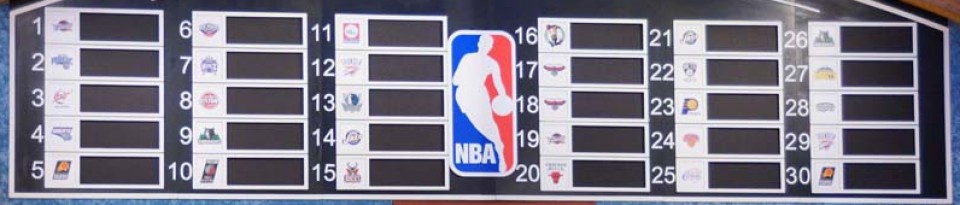
← Older posts
Newer posts →

Top Posts & Pages

  • Should NBA Teams Worry about Brandon Miller's Role in Fatal Shooting?
    Should NBA Teams Worry about Brandon Miller's Role in Fatal Shooting?
  • 2015 Final Big Board
    2015 Final Big Board
  • Diet Russ: The Lottery Freshman Nobody Is Talking About
    Diet Russ: The Lottery Freshman Nobody Is Talking About
  • How Good Are the Thompson Twins?
    How Good Are the Thompson Twins?
  • I'm Switching to Substack
    I'm Switching to Substack
  • 2015 Big Board-- How Do We Rate Mudiay?
    2015 Big Board-- How Do We Rate Mudiay?
  • 2016 Final Big Board With Writeups
    2016 Final Big Board With Writeups
  • 2018 Big Board
    2018 Big Board
  • 2022 Big Board
    2022 Big Board
  • 2023 Draft Mid-Season Board
    2023 Draft Mid-Season Board

Recent Comments

deanondraft's avatardeanondraft on Summer League Scouting: Cade…
Noble's avatarNoble on Summer League Scouting: Cade…
deanondraft's avatardeanondraft on 2023 Draft Mid-Season Boa…
cloudsean's avatarcloudsean on 2023 Draft Mid-Season Boa…
deanondraft's avatardeanondraft on Summer League Scouting: Cade…

Create a free website or blog at WordPress.com.

Privacy & Cookies: This site uses cookies. By continuing to use this website, you agree to their use.
To find out more, including how to control cookies, see here: Cookie Policy
  • Subscribe Subscribed
    • Dean On Draft
    • Join 57 other subscribers
    • Already have a WordPress.com account? Log in now.
    • Dean On Draft
    • Subscribe Subscribed
    • Sign up
    • Log in
    • Report this content
    • View site in Reader
    • Manage subscriptions
    • Collapse this bar