• Home
  • About
  • Big Board
  • NCAA
  • International
  • Miscellaneous

Dean On Draft

~ NBA Draft Analysis

Dean On Draft

Category Archives: NCAA

Video

Rodney Hood’s Defense vs Lamar Patterson: Don’t Believe Everything Jay Bilas Tells You

03 Monday Feb 2014

Posted by deanondraft in NCAA

≈ Leave a comment

Tags

Duke, Lamar Patterson, Pittsburgh, Rodney Hood

When Pittsburgh All-American candidate Lamar Patterson struggled offensively in a home loss to Rodney Hood and the Duke Blue Devils, the immediate media reaction was to applaud Hood’s defensive performance. He spent most of the game guarding Patterson, who finished with 14 pts 4-14 FG 5-6 FT 1 Ast 5 TOVs, which is a decidedly bad line for a normally efficient scorer.

It’s natural to assume that some significant portion of credit goes to Hood, and it raises the possibility that I have been underrating his defense and/or he has improved throughout the season.  The team as a whole has recently been playing better on that end, so it’s fair to wonder if Rodney Hood is transforming from a sieve to a passable defensive player.

I compiled the key plays to display how Duke shut Patterson down:

Conclusions:
-Hood was only guarding Patterson for 1 of his 5 turnovers, and it was when Marshall Plumlee came to help for the trap. It does not require much defensive acumen to force a turnover in that situation.
-Pitt’s bad spacing and elite help defense neutralized Patterson almost every time he penetrated. He got all the way to the rim only twice when Jabari Parker failed to cut off his drive and fouled him for free throws.
-Did anybody notice Hood doing anything impressive? He contested a couple of shots and he ripped away the ball on the trap, but that’s it. None of his good plays are indicative of an ability to hang with NBA SF’s
-There were four occasions on which Patterson badly faked out Hood. Aside from having questionable tools to hang with NBA SF’s, Hood exacerbates his projection by being easily juked. Consequently he gets blown by regularly, only this game he had Amile Jefferson at his back to keep him from looking too bad.

Overall this shows why measuring defense by counterpart performance is entirely worthless. The main credit goes to Coach K for finding a way to mitigate the impact of Hood’s defensive deficiencies, and Amile Jefferson for playing good help defense. At both the NCAA and NBA level defense is a team effort, and Hood’s role against Patterson could have been fulfilled by any wing draft prospect. In the NBA Hood will once again be reliant on help from his teammates, except it will be more difficult to find a solution when all of the good NBA offenses have far better spacing than the Pittsburgh Panthers.

Is Andrew Wiggins Really Passive? Let’s Check The Dunk Stats.

31 Friday Jan 2014

Posted by deanondraft in NCAA

≈ 9 Comments

Tags

Andrew Wiggins, Beta, Kansas, Passive

A large part of a player’s development is naturally his personality.  Derrick Coleman has admitted after retirement that he never liked playing basketball, whereas successful players such as Michael Jordan and Kobe Bryant give off the impression that succeeding as an NBA superstar is as important to them as breathing air.

A common critique of Andrew Wiggins has been that he is plays too passively, as he is not dominating nearly as much as projected.  It could be counter argued that he playing within himself and merely needs more time to develop before taking the world by storm with his basketball abilities.  My impression from watching him play has been that the former is the case.  But there’s a limit to which Wiggins or any prospect can be assessed from afar, as they only offer brief glimpses into their personalities.  While I enjoy attempting to thin slice such things, it is not nearly as reliable as a statistical analysis or breakdown of on court performance.  So in this case I sought a quantitative means of analyzing Wiggins’s personality: dunk stats!

A large part of Wiggins’s prospect appeal is his physical tools, as he stands 6’8″ with a 7’0″ wingspan and elite explosiveness.  There are few (if any) prospects in this year’s class who are better equipped to dunk with extreme frequency than Wiggins.  The only thing that may hold him back from unleashing a fury of slams is his personality, so I compiled dunk rates as a percentage of rim attempts that culminate in made dunks.  I included a total of 25 prospects of varying sizes and athleticism to offer frames of reference:

Player Height Dunks Attempts Dunk%
Glenn Robinson 6’6″ 23 53 43.4%
Montrezl Harrell 6’8″ 48 118 40.7%
KJ McDaniels 6’6″ 30 83 36.1%
Aaron Gordon 6’9″ 33 92 35.9%
Zach LaVine 6’5″ 22 64 34.4%
Michael Qualls 6’5″ 22 75 29.3%
Joel Embiid 7’0″ 23 89 25.8%
Julius Randle 6’9″ 23 97 23.7%
Jabari Parker 6’8″ 26 114 22.8%
Nik Stauskas 6’6″ 9 40 22.5%
Jerami Grant 6’8″ 17 79 21.5%
Andrew Wiggins 6’8″ 16 83 19.3%
Rodney Hood 6’8″ 11 58 19.0%
Noah Vonleh 6’8″ 17 98 17.3%
Sam Dekker 6’7″ 17 102 16.7%
Keifer Sykes 5’11” 21 130 16.2%
Marcus Smart 6’4″ 13 92 14.1%
TJ Warren 6’8″ 16 150 10.7%
Gary Harris 6’4″ 7 70 10.0%
Spencer Dinwiddie 6’6″ 4 49 8.2%
Semaj Christon 6’3″ 9 176 5.1%
Kyle Anderson 6’8″ 3 58 5.2%
Doug McDermott 6’8″ 4 131 3.1%
Tyler Ennis 6’2″ 1 81 1.2%
Jordan Adams 6’5″ 0 80 0.0%

Glenn Robinson is shooting an astounding 92.5% at the rim, which is made possible by his high % of attempts dunked.  Montrezl Harrell is a funky prospect whose offensive game is largely built around offensive rebounding and dunking, but his volume and frequency show the freakish athleticism that he possesses and make me question having him as low as #24 on my big board.  KJ McDaniels re-asserts my feeling that he has NBA level tools by appearing in the same range as known leapers Aaron Gordon and Zach LaVine.

The players that are lower than expected are Jerami Grant, Andrew Wiggins, and Noah Vonleh, as they all appear in the same range as Rodney Hood, Nik Stauskas, and 5’11” Keifer Sykes (who is rapidly rising up my big board) in spite of reputations as toolsy prospects.

Jordan Adams offers insight as to why his stats are so disparate from his draft stock, as he has 0 dunks on the season.  His lack of athleticism causes him to struggle at the rim against good defenses, and his ability to translate is in question.

The problem with these stats as a whole is that not all dunk opportunities are created equally.  It is far easier to dunk on a wide open fast break than it is against a set defense.  So using ESPN play by play (which is not perfect, but not so poor so as to be wrong enough to possibly alter the narrative), I split up dunk rates into transition and halfcourt splits.  Let’s look at the transition splits first:

Player Height Dunks Attempts Dunk%
Montrezl Harrell 6’8″ 14 20 70.0%
Aaron Gordon 6’9″ 10 18 55.6%
KJ McDaniels 6’6″ 10 19 52.6%
Michael Qualls 6’5″ 12 26 46.2%
Glenn Robinson 6’6″ 9 21 42.9%
Zach LaVine 6’5″ 18 44 40.9%
Noah Vonleh 6’8″ 7 18 38.9%
Nik Stauskas 6’6″ 3 8 37.5%
Rodney Hood 6’8″ 4 11 36.4%
Julius Randle 6’9″ 8 23 34.8%
Marcus Smart 6’4″ 8 23 34.8%
Joel Embiid 7’0″ 2 6 33.3%
Andrew Wiggins 6’8″ 13 39 33.3%
Sam Dekker 6’7″ 6 24 25.0%
Jabari Parker 6’8″ 7 30 23.3%
TJ Warren 6’8″ 10 52 19.2%
Gary Harris 6’4″ 7 37 18.9%
Jerami Grant 6’8″ 2 11 18.2%
Keifer Sykes 5’11” 12 68 17.6%
Spencer Dinwiddie 6’6″ 4 24 16.7%
Semaj Christon 6’3″ 7 75 9.3%
Tyler Ennis 6’2″ 1 24 4.2%
Kyle Anderson 6’8″ 1 27 3.7%
Doug McDermott 6’8″ 1 30 3.3%
Jordan Adams 6’5″ 0 29 0.0%

Once again Harrell shines, as he dunks roughly everything in transition.  LaVine has the most volume, where he has shown off some impressive dunks for UCLA.  Even though Wiggins is reputed to be a transition beast and has a good volume of dunks in this scenario, he still isn’t throwing down with the frequency of his fellow athletic freaks.  He is also behind the smaller Marcus Smart and far less athletic players such as Stauskas, Hood, and Randle.

Jabari Parker has had some impressive coast to coast plays, but his dunk rate in transition is a mildly troubling sign for his athleticism, especially in tandem with his poor rim finishing percentage.

Now onto halfcourt splits:

Player Height Dunks Attempts Dunk%
Glenn Robinson 6’6″ 14 32 43.75%
Montrezl Harrell 6’8″ 30 92 32.61%
KJ McDaniels 6’6″ 20 64 31.25%
Aaron Gordon 6’9″ 23 74 31.08%
Joel Embiid 7’0″ 21 83 25.30%
Jabari Parker 6’8″ 19 84 22.62%
Jerami Grant 6’8″ 15 68 22.06%
Zach LaVine 6’5″ 4 19 21.05%
Michael Qualls 6’5″ 10 49 20.41%
Julius Randle 6’9″ 15 74 20.27%
Nik Stauskas 6’6″ 6 30 20.00%
Rodney Hood 6’8″ 7 47 14.89%
Keifer Sykes 5’11” 9 62 14.52%
Sam Dekker 6’7″ 11 78 14.10%
Noah Vonleh 6’8″ 10 80 12.50%
Marcus Smart 6’4″ 5 70 7.14%
Andrew Wiggins 6’8″ 3 44 6.82%
Kyle Anderson 6’8″ 2 30 6.67%
TJ Warren 6’8″ 6 98 6.12%
Semaj Christon 6’3″ 2 67 2.99%
Doug McDermott 6’8″ 3 101 2.97%
Gary Harris 6’4″ 0 33 0.00%
Jordan Adams 6’5″ 0 49 0.00%
Tyler Ennis 6’2″ 0 57 0.00%
Spencer Dinwiddie 6’6″ 0 25 0.00%

This is where Wiggins is failing to shine to the point of concern.  He has precisely as many dunks in halfcourt sets as the hopelessly earthbound Doug McDermott!   A small amount of blame may be placed on Kansas’s mediocre spacing, but with his tools it cannot be the sole explanation.  And it’s not like he has excellent touch around the rim- he has only converted 54.5% of his rim attempts in half-court sets and 61.4% total.  He is flat out not using his physical blessings to dominate, and this proves that he is playing passively.

As an aside, Jerami Grant assuages concerns about his low total rate as Syracuse’s slow down offense gives him limited transition opportunities.  He does quite alright dunking in the half court, often impressively slamming home putbacks.

These stats comport with my overall perception of Wiggins’ game, which is that he refuses to dominate.  He has awesome tools, solid skills, and does not seem to be lacking in instincts or effort.  He is having a good freshman season, but his bottom line results are less than the sum of his parts.  His common upside comparison is Paul George, but Paul George showed extreme confidence in himself entering the draft.  Here are some pre-draft quotes from him as per DraftExpress:

“I haven’t been exposed to this game as much as a lot of other players and I think I’m already a great prospect with good potential,” he says. “Once I get that chance to really get that experience and learn about the game, I think my ceiling is pretty high.”

“At that point I was just starting to learn what playing against real athletes was like,” he says. “It helped me understand how much work I needed to do. I’m just a student of the game. I love to watch it and learn about it. I think that’s really what has gotten me to where I’m at now.”

“I think that’s probably the most important part of my game,” he says. “I’m only 19 and I have a lot of room to keep growing. I know with the people around me and with my work ethic I’ll get to that next level. I won’t stop until I’m one of the elite players in the NBA.”

After reading those quotes, it should be the least surprising turn of events ever that George developed into an NBA star.  That is elite self-esteem for a 19 year old.  He is down to earth with no delusions of grandeur regarding his level of play at the time, but is also in touch with his potential and the path that it will take to get there.

Does Andrew Wiggins feel similarly about himself?  I don’t know, I have never even met the guy.  But in observing his play on the court and analyzing his reticence to dunk, it’s hard to find any sign that he does.  He could still be a good NBA player without a deep-seated desire to dominate, especially with the aid of a good coach.  He remains a valuable prospect, as I have him #2 overall on my big board.  But his lack of confident edge that his teammate Joel Embiid shows on the court contributes to why he is a clearly inferior college player and prospect.  He is still only 18 years old and has plenty of time to grow, but any team that drafts him needs to ask themselves: on a scale of Marvin Williams to Paul George, what evidence is there that Andrew Wiggins is closer to the latter?  There may be a correct answer, but if so it certainly doesn’t lie in his propensity to dunk all over physically inferior competition.

Video

A Randle Walk Down Fraud Street

29 Wednesday Jan 2014

Posted by deanondraft in NCAA

≈ 9 Comments

Tags

bust, John Calipari, Julius Randle, Kentucky

Julius Randle is the #2 RSCI freshman and is ranked as a top 5 draft pick (#5 ESPN #4 DX).  All of those are far too high and any team that expends a pick in that range on him will be sorely disappointed.  He is at best a shaky defensive prospect with questionable offensive translation.  His performance and playing style are both rife with red flags that I highlight in this video.

Some may say I’m being too harsh, as he has good pedigree and good statistics and I’m looking for the negative in every play he makes.  This is true, but it’s also rare for a lottery prospect to have such extreme red flags.  First let’s try to back trace the source of his pedigree.  According to Kenpom.com, Kentucky has played 5 woefully bad defenses (ranked 229th or worse) and 15 defenses ranging from respectable to good (ranked 136th or better).  This gives us a conveniently large rift to draw the line between cupcakes and not cupcakes to see how Randle fares against each grade of defense:

opposing D Pts/30 Rbs/30 Ast/30 TOV/30 eFG FTA:FGA
average + 14.5 9.4 1.6 3.6 50.0% 0.68
pathetic 22.7 13.7 2.1 2.1 64.0% 1.16

He absolutely demolishes bad teams and his bulk stats, efficiency, and turnover rates all fall off a cliff against respectable opponents.  It is natural that there should be some gap, but his discrepancy is massively troubling.  It should shed some light on how he became rated so highly.  He relies heavily on his strength to completely dominate smaller competition.  So if he put that level of hurting on doormat college defenses, imagine what he did to even smaller and weaker high school defenses.  Since no high school defense is in a position to expose his weaknesses, it is easy to see why he garnered so much acclaim as a recruit.

On the other hand, given the slope of respectable college defenses to bad ones, imagine what the output would be if there was another data point of NBA defenses that completely crush the good college defenses he has been facing.  It would be ugly, and this alone causes serious concern for his NBA translation.

His overall stats should not be taken at face value, since the tough portion is only tangentially related to his NBA projection and his performance against dregs is completely worthless.  But for the sake of argument let’s pretend that he happened to have good days against the bad teams and see how his overall stats measure up to similar players.  Let’s start with basic offense: usage, O-Rtg, and defensive strength of schedule as per kenpom.com.  Final column is a catchall that adjusts each player’s O-Rtg to Randle once they are normalized to the level of defenses he has faced and his usage rate at the standard 1.25 points of O-Rtg per 1 pct of usage:

Player Season Usage O-Rtg Opp D-Rtg Adj O-Rtg
Kevin Love Freshman 27.4 126.9 98.9 129.1
Kelly Olynyk RS Junior 30.2 123.1 99.6 127.9
Derrick Williams Soph 28.6 123 99.2 126.2
Jared Sullinger Freshman 26.9 120.9 99.1 122.0
T Hansbrough Freshman 26.5 119 98.3 120.5
Zach Randolph Freshman 26 116.9 97 119.3
Anthony Bennett Freshman 26 113.9 99 113.8
Julius Randle Freshman 28.5 112 101.7 112.0
Troy Murphy Freshman 26.3 109.2 99.5 108.8
JJ Hickson Freshman 26.6 107.4 99 107.9

Kevin Love is the one example of a player with Randle’s size and poor athleticism who has become an NBA star.  But he completely outclassed Randle as an NCAA freshman with vastly superior basketball IQ, outside shooting, and pretty much everything else.  Randle’s offensive upside is not in the same stratosphere, which rules him out as a reasonable top 5 selection given his defensive woes. Even when you include his dominance over the dregs, he finds himself at the bottom of the list in not particularly flattering company.

Steal % Block % Height Wing
Jared Sullinger 2.2 4.0 6’9″ 7’1.25″
T Hansbrough 2.2 2.3 6’9.5″ 6’11.5″
Zach Randolph 2.1 3.7 6’9″ 7’5″
Troy Murphy 2.0 4.1 6’11” 6’11”
Derrick Williams 1.9 2.3 6’9″ 7’1.5″
Kelly Olynyk 1.5 5.0 7’0″ 6’9.75″
JJ Hickson 1.4 4.8 6’9″ 7’3″
Anthony Bennett 1.4 4.5 6’7″ 7’1″
Kevin Love 1.4 5.0 6’9.5″ 6’11.25″
Julius Randle 0.7 2.5 6’9″ 6’11”

Even with 3 steals vs LSU, Randle finds himself at the bottom of the steal list by a comfortable margin, and only slightly ahead of Hansbrough and Williams in block rate.  Anthony Bennett is the only taller player and Kelly Olynyk is the only player with shorter arms, but they each have advantages in the other category to help offset.

Zach Randolph is a common comparison for Randle.  But on top of being better as a freshman, he also has significantly longer arms which shows how misguided it is to expect similar production from Julius.

Randle is a good example of why steals are a strong predictor of NBA success.  In the Stauskas video, I showed an example of him using smarts + instincts to read the offense and make a steal.  Randle is so woefully slow at reading offenses that he can’t do this, and most of his steals are the byproduct of a teammate stripping a ball that falls into his lap, including the completely undeserved one in the video that he fails to corral (also one of his steals against Vanderbilt was a blatant error).  And these woes are also correlated to offensive issues.  Steals are more than a proxy for athleticism – they also can shed insight into a player’s basketball IQ.  Randle has mediocre NBA tools, but for the college level they are pretty good and he should make far more plays than he does.

O-Reb% D-Reb% Assist% TOV%
Julius Randle 14.9 22.2 11.9 22.0
JJ Hickson 11.8 21.8 9.2 21.1
Zach Randolph 18.7 20.0 10.1 18.5
Kelly Olynyk 11.8 20.5 15.0 18.4
Derrick Williams 11.8 21.9 8.7 18.3
Troy Murphy 11.1 22.0 9.6 18.2
T Hansbrough 14.0 14.6 8.7 17.1
Anthony Bennett 10.2 21.8 8.7 15.2
Kevin Love 15.4 28.5 14.0 15.0
Jared Sullinger 12.4 23.8 8.6 13.7

It shouldn’t be a surprise that the two lowest turnover rates are also the two highest IQ players in this sample in Love and Sullinger.  Basketball IQ is a good way to overcome questionable tools, but Randle likely grades out worse than anybody else in the sample in this regard as supported by his exorbitant turnover rate.  He does have a good assist rate as he is a willing passer, but nevertheless turns it over a ton because he is not sharp enough to make good decisions on the fly and often attacks doubles and triples when he clearly should not.

It is worth noting that his stats do not stand out from that of JJ Hickson, except Hickson has obviously superior length and athleticism.  Hickson has not been an especially rewarding return on the 19th overall pick (his stats are OK, but Portland improved significantly by replacing him with Robin Lopez), so what would make Randle worth so much more?

FTA:FGA FT% 3PA 3P% eFG
Derrick Williams 0.871 74.6% 74 56.8% 65.0%
Kelly Olynyk 0.497 77.6% 30 30.0% 64.1%
Kevin Love 0.635 76.7% 82 35.4% 59.4%
JJ Hickson 0.706 67.7% 1 0.0% 59.0%
Zach Randolph 0.536 63.5% 1 0.0% 58.7%
Anthony Bennett 0.467 70.1% 96 37.5% 58.0%
T Hansbrough 0.724 73.9% 4 50.0% 57.3%
Troy Murphy 0.591 74.1% 13 30.8% 54.4%
Jared Sullinger 0.519 76.8% 40 40.0% 53.7%
Julius Randle 0.798 72.9% 11 18.2% 53.6%

Randle also grades out with the worst eFG in the sample, which is troubling since he does not currently have 3 point range and he will see much higher % of shots rejected in the pros.  He largely relies on bullying his opponent for free throws, but that trick did not translate favorably for Derrick Williams who shares a poor feel for the game, and appears to be a bust in spite of superior tools and stats.

Troy Murphy offers an inkling of hope, as he shares a similar tools and freshman shooting stats and became a prolific NBA 3 point shooter.  It is not worth gambling on Randle on the chance that he can develop Murphy’s shooting touch, but it is a possible out for him.

Defensively Randle has decent man to man potential and competes hard, but lacks rim protection ability and has horrific instincts and awareness.  He will be bad on this end and needs to be great offensively to atone and become a useful starter.  Yet he projects as a post-up scorer with mediocre length, mediocre athleticism, poor basketball IQ, and a loose grip that causes him to get stripped frequently.  His strength only gets him so far as his bully ball is already failing against respectable college defenses.  I am not sure how his offense can be projected to be good enough to make him a solid starter in spite of his defensive woes, let alone give him a shot of becoming a top 30 player to justify a lottery pick.  Perhaps he can improve his skills and instincts and find a coach who can put him in a position to succeed, but I simply don’t see the upside that he is purported to have.

I had rated Randle 12th on my big board, but after compiling this video and post I realized that was far too high and intended to drop him.  And then he had a horrible game against LSU’s long, athletic defense to re-affirm my suspicions.  He is likely the Shabazz Muhammad of this year’s class and a fringe 1st rounder.  He can improve his standing by showing some semblance of competence against good defenses, but I wouldn’t wait underwater for it to happen.

Video

Nik Stauskas Makes A Case For Defense Being Unimportant

27 Monday Jan 2014

Posted by deanondraft in NCAA

≈ 4 Comments

Tags

JJ Redick, Michigan, Nik Stauskas, Stephen Curry

In spite of the importance of defense with respect to prospect value, not all prospects who project as liabilities on that end have limited value. Stephen Curry, Steve Nash, and Ryan Anderson are examples of players who provided elite value at their draft slots that would have been missed with steadfast refusal to draft such types. In this year’s expected crop, the prospect with the best odds of paying similar dividends is Nik Stauskas. Not only is he an elite shooter and floor spacer, but he has also shown tremendous ball handling and passing skills this season, which offers a dimension to his game that other defensively challenged prospects such as Rodney Hood and Doug McDermott are lacking. I compiled a video briefly touching upon his defensive limitations, but mostly glazing over them and highlighting his offensive strengths.

If anybody was hoping to see his offensive shortcomings, he doesn’t have any striking flaws beyond his physical limitations. If there is any complaint to be made with his offense, it is that he does not shoot enough as he hardly makes any mistakes at all.  He is boasting an astronomical 67% TS and a miniscule 11.3% turnover rate. That efficiency is unprecedented for a player who serves as an offensive centerpiece for a team that has played the 8th toughest schedule in the nation. Here is how he statistically compares to historical perimeter prospects with questionable tools, as well as Hood and Ougie. Opponent D-Rtg is based on the player’s team strength of schedule as per Kenpom.com. The far right column is how the player’s O-Rtg compares to that of Stauskas once you normalize to his SOS and usage rate, using 1.25 points of O-Rtg per 1 percent of usage as the conversion rate to offer a rough estimate:

Player Season Usage O-Rtg Opp D-Rtg Adj O-Rtg
Jimmer Fredette Senior 36.3 115.3 99 133.4
JJ Redick Senior 28.9 121.4 97 132.9
Nik Stauskas Soph 23.4 132.8 100.5 132.8
Doug McDermott Senior 32.5 121.2 101 131.9
Luke Jackson Senior 28.6 120.8 98.9 129.4
Stephen Curry Soph 31.5 122.1 102.8 129.3
Kyle Korver Senior 22.9 129.6 101.6 127.6
Rodney Hood Junior 22.9 128.3 101.2 126.8
Luke Babbitt Soph 25.9 120.7 101.7 122.4
Luke Ridnour Junior 27.6 112 99.4 118.5

I used each player’s final season of college except for Curry, since his sophomore season is a more pertinent comparison to Stauskas, and I do not believe he progressed enough as a junior to drastically boost his value. Not only do Stauskas and Curry have similar mannerisms as they maneuver through the opposing defense, but they are the two premier offensive prospects in this sample as they were able to achieve dominance at an earlier stage of their careers than others on the list. Granted that Curry did take on a larger role in his offense, Stauskas’s ball handling ability likely would enable him to do likewise if necessary.

The closest comparison is senior Redick, as he has a usage closer to Stauskas’s range and they were both centerpieces of elite major conference offenses.  The fact that Stauskas is performing on the same level as a sophomore is quite the feather in his cap, as Redick’s senior year is acclaimed as an all-time great college season.  The same adjusted O-Rtg for Redick was 125 as a sophomore, and 126.5 as a junior.

Senior Jimmer grades out the highest, but he is also the shakiest comparison given his monstrous usage.  It’s not certain that he had the basketball IQ to play such mistake free ball at a more moderate usage, as he posted just a 112.5 O-Rtg on 24.8 usage as a sophomore.

Of course bottom line production matters, but the distribution of point production is also important for translation concerns:

3 2 FT
Kyle Korver 64.1% 17.9% 18.0%
Stephen Curry 52.2% 33.6% 14.2%
Nik Stauskas 44.1% 29.4% 26.4%
JJ Redick 43.3% 33.8% 22.9%
Luke Ridnour 37.4% 37.6% 25.0%
Jimmer Fredette 34.8% 41.6% 23.6%
Rodney Hood 34.0% 43.1% 22.9%
Luke Jackson 33.4% 41.8% 24.8%
Doug McDermott 30.2% 47.3% 22.4%
Luke Babbitt 17.0% 56.3% 26.8%

The interesting bit in this sample is the strong correlation between percentage of points from 3 and NBA value with respect to draft slot.  3’s translate, but scoring inside the arc with shaky tools may be a problem. It is not a mystery why Luke Babbitt failed as a prospect, as he dominated inside the arc as a 6’9 mid major player and went on to shoot 37% from 2 as an NBA player. This does not bode well for McDermott, who attempts the majority of his 2’s at the rim and has worse tools. Hood is less of a translation concern than Ougie with superior tools and a greater frequency of two point attempts coming from midrange, although his inside the arc translation still can’t be taken for granted.

On the other side of the spectrum, it is easy to see why Curry is such a force in the NBA as he was able to sustain high efficiency on a large workload with a huge % of his attempts coming behind the arc.  This is where he sets himself apart from Stauskas, as nobody else is a pure enough shooter to be that good on that volume behind the arc.

Once again Stauskas mirrors Redick’s senior year, as they have near identical point distributions.  Their assist and turnover rates are not horribly different either (Stauskas 21.3% assist 11.3% TOV, Redick 15.7% assist 13.0% TOV).

Steals, blocks, and height:

Player Steal% Block% Height
Stephen Curry 3.5 1.4 6’3
Luke Ridnour 2.8 0.1 6’2
Kyle Korver 2.6 2 6’7
JJ Redick 2 0.1 6’4
Luke Jackson 2 0.4 6’7
Jimmer Fredette 2 0 6’2
Nik Stauskas 1.5 0.8 6’6
Luke Babbitt 1.5 1.8 6’9
Rodney Hood 1.3 0.7 6’8
Doug McDermott 0.5 0.5 6’8

This is a friendly reminder that in spite of Stauskas’s solid instincts and ability to jump a little, he still does not stand out in this collection as a defensive playmaker.  He remains a significant defensive liability.

Curry again sets himself apart from Stauskas.  Even though he was correctly projected to become a bad pro defender, his defensive playmaking at the collegiate level gives him an additional edge.  He was also a better rebounder in spite of being smaller.  Curry is clearly the overall better prospect, although Stauskas is not as far behind as current perception would suggest.

On the other hand, he continues to equate to senior Redick.  Redick had more steals, quicks, and speed, Stauskas more blocks, size, and athleticism.  And like JJ, Stauskas has the benefit of a strong work ethic.  It is difficult to envision how he was able to chisel his body and improve his handles and passing to the extent that he did and still have time to eat and sleep this offseason.  It is not a guarantee that he reaches the same level as Redick in the pros given that JJ likely achieved the upper bound of his NBA range.  But given Stauskas’s work ethic and feel for the game, his odds seem favorable.  And given that he achieved this level of success two seasons earlier and 15.5 months younger, he clearly has more upside.

Overall Nik Stauskas’s prospect value as well as style lies somewhere in the middle of JJ Redick and Stephen Curry.  If he achieves his upside as they did, he offers an excellent offensive piece to fit in any NBA offense that will make his defensive woes worth stomaching.  He still has plenty of time for his stats to lose a bit of luster, but if he continues to perform at this level through the rest of the season he likely will have value worthy of the back end of the lottery.

Video

Meet the Press with Wayne Selden

22 Wednesday Jan 2014

Posted by deanondraft in NCAA

≈ Leave a comment

Wayne Selden is currently rated as a 1st round pick (22nd DX, 21st ESPN) and I’m not sure why.  He was the 13th RSCI recruit in his freshman class, which is a range that yields more busts than players who go on to have long NBA careers.  The early signs have been indicating that Selden is a bust as he has not performed well for Kansas, and his stock has not dropped nearly as much as it should have.  One of his greatest flaws is turnovers.  Here are 4 of his 5 turnovers that he committed vs Oklahoma State, where he seemed to have particular trouble with their full court press:

Sure he’s only 19 and still has plenty of time to pull his act together and carve out an NBA career, but until he at least proves to be useful as a college player I don’t think he merits much discussion as a draft prospect.

Video

Joel Embiid’s Peaks and Valleys vs Oklahoma State

22 Wednesday Jan 2014

Posted by deanondraft in NCAA

≈ Leave a comment

Tags

Joel Embiid, Kansas, Oklahoma State

Joel Embiid is rapidly cementing himself as the #1 pick in the eyes of the public, as nearly every game he puts on a show with his surprising coordination, offensive skill, and defensive rim presence.  I compiled this video to focus on the latter, along with the mistakes that he is prone to on defense that demonstrate how he remains somewhat raw in spite of his high level of skill and production:

Note that I give audio commentary to describe each play as opposed to having a table of contents this time.

Key points
1) Embiid is better at contesting shots without fouling than people realize. People see his exorbitant foul rate and assume that it largely stems from contesting shots, but he racks up fouls in a variety of ways, including battling for position in the post, going over the back on rebounds, committing technicals (which count as personal fouls in college), and in this game a perimeter handcheck. He also does foul on contests, but 8 blocks and several other solid contests without fouling against a top team is extremely impressive, even if it is an outlier performance.

2) In spite of his errors on offense, Embiid still made a huge positive impact on defense. Oklahoma State shot 14/38 on 2 pointers, attempted just 16 FT’s, and had to resort to bombing 3’s and hitting 12/28 to stay in the game and eventually lose by 2.

3) As an NBA rookie he won’t be able to dominate as much on natural ability, but if he even shows an average ability to learn and grow he has favorable odds of being good on both ends. Based on signs thus far that he was able to be better than expected and was able to quickly pick up on the simple detail that Oklahoma State was using Murphy as a passer to keep him away from the rim, he has shown enough to set himself apart from the Javale McGee/DeAndre Jordan low IQ types.  And if he proves to be a fast learner and hard worker, he will inevitably become one of the all time greats.

This is just one game where he did set a career high in blocks, but overall his stats measure up favorably to the historically elite defensive big man prospects in their final season of college. This is with Kansas having played the 2nd toughest schedule in the nation thus far:

Player Season Dreb% Steal% Block%
Anthony Davis Fr 23.7 2.5 13.7
Joel Embiid Fr 23.7 2.2 12.7
Greg Oden Fr 23.6 1.1 12.6
Hasheem Thabeet Jr 22.0 1.1 11.9
Emeka Okafor Jr 22.2 1.8 11.0
Roy Hibbert Sr 17.0 1.3 9.8
Tim Duncan Sr 29.7 1.2 8.7
Andrew Bogut So 30.9 1.8 6.2

These players were all drafted 1st or 2nd overall with the exclusion of Hibbert who went 18th.  Defensive stats are not the ultimate indicator of NBA success (see: Thabeet), but Embiid is making plays against tough competition as much as anybody else has, and he has the physical tools to translate as he stands 7′ 250 pounds with a 7’5 wingspan and nimble feet.

His offensive game merits similar analysis that I will offer in the future, but for now suffice it to say that it mirrors his current defensive disposition.  He offers great skill, college production, and a world of upside, but he also has plenty of fat to be trimmed with his exorbitant turnover rate.

Overall he has elite two way player upside, and it’s easy to see why he is rapidly emerging as the obvious #1 pick in the draft.  There is plenty of uncertainty with respect to his learning ability, but this uncertainty doesn’t necessarily mean that he is a significant bust risk.  Given that he is already this good this soon, it is difficult to envision him not becoming a competent NBA player.  He may not be a lock to become a superstar, but I do not believe he carries the same downside risk of players such as Thabeet or Darko who were merely NBA bodies that never demonstrated much basketball skill or acumen.  Embiid does carry the same injury risk that everybody else does, and it is possible his fiery personality will cause issues along the way.  But there is far too much working in his favor for him to be a complete flop, and I believe he has the highest floor in the draft on top of the highest ceiling.  As far as I am concerned he should be locked into the #1 pick, even if he tears his ACL or is revealed to be 22 years old.

Video

KJ McDaniels vs. Rodney Hood

20 Monday Jan 2014

Posted by deanondraft in NCAA

≈ 10 Comments

Tags

Clemson, Duke, KJ McDaniels, Rodney Hood

Rodney Hood of Duke and KJ McDaniels of Clemson have a number of similarities: they are both going to be 21 on draft night (KJ is 3.5 months younger), they are similarly sized SF prospects (Hood is 2 inches taller, 1-2 inches shorter wingspan), they play in the same conference, they both employ a slashing game but lack advanced ball handling skills, and they both have shot and scored well this year.  Both players posted good box score lines in their recent matchup, but a closer analysis of the game tape highlights their differences.

I compiled a video of the matchup (embedded below).  It is a near comprehensive look at the two players, which includes all possessions where Hood and McDaniels are matched up on each other, all made baskets when they were not matched up, and all other notably good or bad defensive possessions.

Pay attention to how well each player performs defensively in terms of staying in front of their man, fighting through screens, and generally forcing their matchup into difficult shot attempts.

A table of contents has been included in the “about” description on the video’s youtube page, which describes each play with timestamps. It also has been posted to the site and can be accessed here.

Box Score: http://espn.go.com/ncb/boxscore?gameId=400502786

Conclusions:
This game gives a nice snapshot of each prospect. Hood is a great shooter who can drive and finish against weaker defensive players. He also is a defensive liability, as both his quicks and instincts are suboptimal. If anybody is wondering why there is no “Hood other defense” section, it is because defense isn’t exactly something Hood does. His lack of quicks also cause him to struggle to drive past a defensive player of KJ’s caliber, so he likely will not be able to get to the rim against NBA caliber defenses on a regular basis.

KJ demonstrated his full array of strengths in this matchup. Defensively he completely took away Hood’s driving ability, and was also able to cut off Quinn Cook’s drive 2 out of 3 times. This speaks well for his lateral quicks as Cook is a quick point guard who is fringe NBA caliber. He showed off the various situations in which he blocks shots (transition, help, and man to man) as he leads the ACC in blocks at 2.8 per game in spite of being a wing. Duke screened him often, and while he was slowed down on occasion, he was able to fight through them on multiple occasions. Overall he showed excellent NBA wing tools with good size (6’6), length (6’9.5 wingspan), strength to fight through screens, quicks to hang with guards, and explosive athleticism at the rim. Combined with good defensive effort (in spite of playing 36 minutes with a heavy offensive workload), instincts, and awareness he clearly has upside to be a good defensive wing in the NBA. He does not project to be a primary option offensively, but he did show the ability to attack both smaller and slower matchups and finish at the rim. While his shooting form is imperfect and he has yet to prove himself as a shooter over a large sample size, he has improved his shot each year at Clemson.

Hood’s advantage lies in shooting and passing, McDaniels in physical tools and defensive acumen.  Here is an assist and shooting comparison with KJ’s numbers on the left and Hood’s on the right (Hood redshirted during 12-13 after transferring from Mississippi State to Duke):

Season AST% 3PA 3P% FTA FT% AST% 3PA 3P% FTA FT%
2011-12 5.2 25 0.280 38 0.579 11.9 129 0.364 41 0.659
2012-13 6.5 96 0.333 79 0.684
2013-14 8.4 60 0.350 78 0.859 12.2 81 0.457 85 0.847
Career 6.9 181 0.331 195 0.733 12 210 0.400 126 0.786

KJ’s improved shot hasn’t been proven over a large sample (he is unlikely to sustain an 86% FT this season), his steady improvement in both 3’s and FT’s strongly suggest that he has been working on his shot and it has genuinely improved over each offseason.  Shooting is a major point of inflection for him, as developing a decent NBA 3 point shot would allow him to fit in most offenses and likely be a useful pro.  Hood has also clearly improved over his redshirt season, and also has shown the ability to shoot off the dribble as only 70% of his made 3’s this season have been assisted (KJ has been assisted 81% and the NCAA average is 84%). Now if we compare defense and rebounding numbers with KJ again on the left:

Season ORB% DRB% STL% BLK% ORB% DRB% STL% BLK%
2011-12 13.4 8.9 2.1 7.5 3.5 13.3 0.8 1.3
2012-13 7.8 14 2.7 8.3
2013-14 8.9 16.8 2.5 9.7 4.2 11.7 1.3 0.7
Career 9.2 14 2.5 8.6 3.7 12.7 1.0 1.1

These comport with the highlights in that KJ makes plays on defense and Hood doesn’t. KJ has a good steal rate and an exceptional block rate that hasn’t been seen from a wing prospect since Dominic McGuire blocked 10.1% of opponent two point attempts for Fresno State as a junior in 2006-2007 (for inquiring minds: McGuire couldn’t stick as an NBA player due to lack of shooting ability). Hood needs to significantly improve his defensive fundamentals and awareness to offer a positive return on a 1st round pick, as he is nowhere near ready to play defense in the NBA and does not have high upside on that end with mediocre tools and questionable acumen.

In terms of overall offense, Hood has been better thus far but it is too soon for a meaningful comparison since Clemson has yet to play most of the tough defensive teams on its schedule. McDaniels did have his two highest scoring outputs vs two of Clemson’s toughest matchups vs Duke and at Arkansas and did so with excellent efficiency (in sum 51 pts on 32 FGA 16 FTA 2 TOV). His future NBA team will not rely on him to create and score nearly as much as Clemson does, so he has the benefit of trimming some of the fat to his offensive game and focusing more of his energy on defense.

For those who are unfamiliar with each player’s respective pro stock, it may surprise you to discover that Hood is rated drastically higher (13th DX, 12th ESPN) than McDaniels (57th DX, not in ESPN’s top 100). This is largely because Hood plays for a higher profile program and there is a bias toward offensive performance, as defensive discrepancies are not readily apparent to the casual observer. With a closer look, there is strong evidence that they belong in the same class of prospect, and I currently believe that McDaniels is superior (this could change as information is gained over the course of ACC play).  Hood belongs in the 1st round but is overrated as a lottery pick as his offense is not elite enough to make his defense tolerable at such a high draft slot.  KJ has a good shot of elevating his stock into the 1st round should he choose to declare, and with a strong enough performance in conference play he may even enter lottery discussion.

The Draft Starts With Defense: The Curious Case of Doug Mc-No-D

18 Saturday Jan 2014

Posted by deanondraft in NCAA

≈ 7 Comments

Tags

Creighton, Doug McDermott, Steve Novak

Image

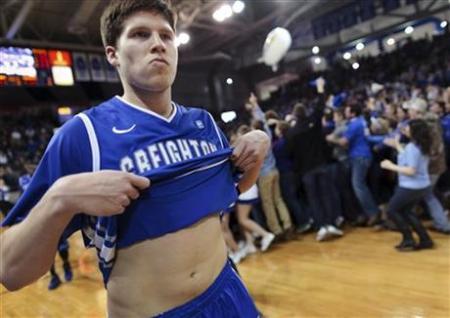
For those who appreciate statistics, Creighton senior forward Doug McDermott oozes appeal.  He has posted a PER of at least 31.0 in each of his sophomore, junior, and senior seasons.  This year he is carrying a whopping 32.9% usage rate with just an 11.6% turnover rate and a 62.3% TS.  He is shooting 52.6% on 2’s, 43.4% on 3’s, and 89.6% from the line, and his 3 point percentage is actually down from his past two seasons where he shot 49% behind the arc.  That is an incredible combination of volume and efficiency and he has solid rebounding and assist totals as well, so it’s easy to see why both ESPN and DraftExpress have him as a lottery pick (he is 14th and 12th respectively on their big boards).

In spite of all of his offensive goodness, his most amazing statistics may be his steal and block totals.  In 127 college games averaging 30.9 minutes per game, he has a grand total of 31 steals and 12 blocks.  It is dumbfoundingly rare for him to make a play on the defensive end.  While Creighton does not often gamble on defense, he has ranked comfortably last on the team in steal rate in each of his sophomore through senior seasons.  His steal percentages from his sophomore through senior seasons have been 0.4%, 0.4%, and 0.5% respectively.  Among his teammates who have played 300 or more minutes in any of those seasons, the next lowest steal rate was from Gregory Echenique in 11-12 at 0.9%.  While an effective college player, Echenique was a doughy, lumbering big man who lacked great length and was nowhere near an NBA prospect.  Yet he had more than twice as many steals as McDermott, as did the rest of his largely unathletic, non-prospect teammates.  And in spite of being 6’8, McDermott is not setting himself apart with blocks, accruing just 1 per every 327 minutes of college play.  This is all with Creighton being a mid-major that has not played an especially difficult schedule.

Recently there have been studies claiming a strongly positive correlation between college steal rates and NBA success, and it’s easy to see the underlying logic.  If a player has the tools and instincts to be a good NBA defender, he should be able to create turnovers against inferior college competition without habitually gambling.  Steals are not perfect and must be adjusted for context, but they serve as a decent approximation of a prospect’s defensive playmaking ability.


McDermott is 6’8 with a 6’8.5 wingspan and is listed at 225 pounds, which leaves him incapable of regularly defending NBA PF’s since most can both bully him and shoot over him given his lack of length and strength.  This leaves SF as his likely position, where on the perimeter his lack of quicks and athleticism will be a major issue.  No matter whom he tries to defend in the NBA his physical disadvantages will be glaring,  as there may not be a player in the league who is more physically ill equipped to guard anyone.  It is a serious concern that he will become the worst defensive player in the entire league, which would negate whatever offensive value he brings and leave him as a replacement level player at best.  On the upside, he reputedly does work hard on defense and is a smart team defender.  Any team who drafts him would have to be confident that these strengths can mitigate his weaknesses to justify a 1st round selection.  But optimism should be curbed, as there is no precedent of an NBA prospect who is so poor at both forcing turnovers and altering shots, let alone of one succeeding.  Here is a comparison of his steal and block rates to past high skill, questionable tool prospects:

Player Steal% Block%
Kyle Korver 2.9 1.9
Jimmer Fredette 2.3 0.1
JJ Redick 1.8 0.1
Matt Bonner 1.6 2
Wally Szczerbiak 1.6 2.5
Luke Babbitt 1.5 2
Adam Morrison 1.3 0.4
Steve Novak 1.1 0.3
Ryan Anderson 0.9 0.5
Doug McDermott 0.5 0.3

Korver is a common comparison for McDermott since both are white players and great shooters who played four seasons at Creighton, and that comparison is misguided.  Part of the reason why Korver is such a useful pro is that he plays respectable defense and doesn’t negate his offensive value on that end.  His steal and block totals indicated this as a possibility, and it is insane that he slid to 51st overall in the draft. Even Steve Novak, who is arguably the worst defensive player in the NBA produced over twice as many steals as McDermott and has a clearer niche as a PF being 2 inches taller. JJ Redick is the only successful current pro without any positive tools for his position, but his vastly superior steal rate against tougher competition suggests that perhaps he is not quite as athletically challenged for his position.  And he did have to spend first three seasons in the league developing his game before becoming rotation caliber, and he didn’t become a solid starter until his 6th or 7th season in the league.

It could be argued that Ryan Anderson inspires hope for McDermott, as he has become a valuable NBA player who plays acceptable defense and has far exceeded his draft slot EV without racking up steals and blocks in college.  But Randerson had the tools to play PF as he is 6’10 240, and he still achieved nearly twice the steal and block rate in college.  This is a detail that Anderson himself noted after McDermott participated in the USA basketball mini-camp this past summer.  Per CBS:

“Anderson pointed out that McDermott’s future position is also a question. Will he be a slower small forward, or a shorter power forward?”

When even your below the rim brethren question your tools to perform at the next level, it may be a sign that you are a cut below the threshold for success.

McDermott’s defensive projection in the NBA ranges from downright horrific to moderately bad.  Is it really that big a deal since he has far better offensive stats than anybody else in the pool?  The answer is yes, because his defensive concerns are correlated with concerns regarding his ability to translate his scoring repertoire to the NBA.  He is a great shooter, and shooting always translates to the pros.  But he’s a worse shooter than Steve Novak, and Novak’s defense prevents him from being a regular rotation player.  Here is a shooting comparison with Novak’s college stats on the left and McDermott’s on the right:

3PA/40

3p%

FT%

3PA/40

3p%

FT%

Freshman

8.5

0.505

0.939

4.1

0.405

0.746

Sophomore

9

0.43

0.912

4

0.486

0.796

Junior

8.3

0.461

0.905

5.5

0.49

0.875

Senior

9.9

0.467

0.974

7.3

0.434

0.896

Career

9

0.461

0.931

4.9

0.458

0.831

Not only did Novak have a much higher FT% each season and a slightly higher 3p% overall, but he also attempted a greater volume of 3’s.  It is likely that his average quality of 3 point shot was lower, as he had nearly double the career attempts per minute with both teams playing at similar paces.  Jeff Van Gundy coached Novak in Houston and has called him the best 3 point shooter he has ever seen, and the stats justify that assertion as reasonable.  Yet he is still roughly replacement level as an NBA player since his defense is so bad and his offensive game is otherwise limited.

For McDermott to succeed as a pro, he needs to be more than a spot up shooter.  While his odds may seem reasonable given that he is far more effective inside the arc as a college player than Novak, the same lack of tools that limit him defensively also inhibit his ability to translate his paint scoring to the pros.  He will struggle to get his shot up over any NBA big men with his lack of reach, he won’t be able to outmuscle any of them, and he remains an eternal underdog to ever leap over any of them.  71% of his points this year have come inside the arc or at the free throw line, and that enormous chunk of production will largely get diluted or evaporate altogether in the NBA.  Further, he struggles to create his own shot and does not shoot well off the dribble. As a senior, 72.5% of his rim FG attempts and 60.6% of his non-rim 2 point attempts have been assisted.  In a way this is good since he will often be playing off the ball as a pro, but the downside is there is no fat to be trimmed off his game that will cause a better than expected translation.  Perhaps he will get an occasional bucket on a cut when rim traffic is limited, but it is not clear how he can achieve either high volume or high efficiency in the paint.

To get a sense for the impression his game left on NBA players at team USA mini-camp, here are some quotes:

“There’s always a place for a shooter,” Barnes said. “He can make shots with the best of them.”

“He’s a confident player. He’s a confident shooter, a confident scorer,” New Orleans Pelicans forward Ryan Anderson said. “I think a college guy can come in here and be intimidated, but he wasn’t. He accepted the challenge.”

“He can shoot the shit out of the basketball,” Detroit Pistons big man Andre Drummond said. “It’s incredible. I was surprised he didn’t come out for the draft this year, but he’s going to make a lot of money the way he shoots.”

“He’s going to be a great shooter in this league,” Golden State Warriors guard Klay Thompson added.

Other than Anderson calling him a confident scorer (after first going with confident shooter), nobody seems impressed with anything other than his shooting.

Taken altogether, McDermott’s lack of tools drastically inhibit his draft value.  Not only do they guarantee that he will be bad defensively, but they also ensure that a significant portion of his offensive dominance will be lost in translation.  He needs to overperform expectations to be passably bad instead of a nightmare on defense and he needs to bring a second dimension to his offensive game other than shooting.

Given the success of JJ Redick it is not fair to write off McDermott entirely, as high IQ and work ethic can overcome a surprising amount of physical deficiency.  But even Redick is merely a good role player after achieving his upside, so it is not as if the GM’s who passed on him must now live with tremendous regret.  The bottom line is both McDermott’s ceiling and floor are underwhelming.  In a reasonably deep draft, it will be questionable to use a 1st rounder on him and laughable to expend a lottery pick.  Perhaps a naive team who is newly discovering the wonders of TS% and PER will be seduced by his stats, but I would wager that smart front offices will resist drafting Ougie Fresh in the 1st round.
Newer posts →

Top Posts & Pages

  • Draft Combine Reactions
    Draft Combine Reactions
  • How Good is Ja Morant?
    How Good is Ja Morant?
  • About
    About
  • Is Luka Doncic The Best Prospect Ever?
    Is Luka Doncic The Best Prospect Ever?
  • 2019 Mid-Season Big Board
    2019 Mid-Season Big Board
  • 2022 Post Draft Audit
    2022 Post Draft Audit
  • Jusuf Nurkic: The Bosnian Boogie
    Jusuf Nurkic: The Bosnian Boogie
  • Jalen Green vs. Franz Wagner: How Much Should Creation Be Valued?
    Jalen Green vs. Franz Wagner: How Much Should Creation Be Valued?
  • Where Does Paolo Banchero Fit in the Modern NBA and 2022 Draft?
    Where Does Paolo Banchero Fit in the Modern NBA and 2022 Draft?
  • The Downside of Upside
    The Downside of Upside

Recent Comments

deanondraft's avatardeanondraft on Summer League Scouting: Cade…
Noble's avatarNoble on Summer League Scouting: Cade…
deanondraft's avatardeanondraft on 2023 Draft Mid-Season Boa…
cloudsean's avatarcloudsean on 2023 Draft Mid-Season Boa…
deanondraft's avatardeanondraft on Summer League Scouting: Cade…

Create a free website or blog at WordPress.com.

Privacy & Cookies: This site uses cookies. By continuing to use this website, you agree to their use.
To find out more, including how to control cookies, see here: Cookie Policy
  • Subscribe Subscribed
    • Dean On Draft
    • Join 57 other subscribers
    • Already have a WordPress.com account? Log in now.
    • Dean On Draft
    • Subscribe Subscribed
    • Sign up
    • Log in
    • Report this content
    • View site in Reader
    • Manage subscriptions
    • Collapse this bar