/cdn.vox-cdn.com/uploads/chorus_image/image/58433879/895131342.jpg.0.jpg)
I haven’t written much this year, so I am going to jam all of my takes into a giant mega-post. Note this list is missing every international prospect except for Doncic and Okobo because those are the only internationals I have looked at.
Missed the Cut
Khyri Thomas (#23 ESPN)
Khyri Thomas is a consensus first rounder as some project him to be an Avery Bradley-esque 3 + D prospect.
The first problem is Avery Bradley is not that good, and teams should aim for higher upside in round 1. The other problem is that even this may be optimistic for Khyri– Bradley was an elite athlete who was #3 overall recruit, whereas Khyri is a 2* who received only low major offers outside of Creighton.
It’s easy to see why Khyri was not coveted as a recruit. In spite of being 6’3″, he is a non-athlete non-creator. He mustered a modest 21% usage as an old junior with an inordinate 38% of his points coming in transition– a means of production which is not predictive of NBA success.
He could not run the pick and roll to save his life, posting just 0.6 PPP for 23rd percentile as per synergy as a junior. And this was actually an improvement over his 0.57 PPP as a sophomore. He turns 22 before the draft, and it’s hard to imagine that a 6’3″ player who is this inept at the pick and roll at his age providing NBA value.
And it’s not even like he’s a great shooter. He made 40.6% of his NCAA 3P, but that was with a somewhat low rate of attempts and 72% career FT. He will not make any special impact as an NBA shooter, and there is no guarantee that he is even above average.
His defense has some hope, as he has long arms, good steal and rebound numbers, and won Big East DPOY twice. But the potential defensive impact for a 6’3″ player is limited, and there is no guarantee Khyri is a positive on this end.
Ultimately Khyri has some hope of providing replacement level production, but is too limited offensively, athletically, and in height to have non-trivial value as a prospect.
Tyus Battle (#27 ESPN)
Why do people keep looking for mediocre Syracuse players to be draft sleepers? This happened when Malachi Richardson bizarrely was selected in the 1st round in 2016, and now ESPN has Battle projected #27 this year.
I am guessing there is some level of wishful thinking that a player will look great defensively once removed from the zone, but this has yet to happen for any player other than MCW. But Battle posted half the rebound rate of MCW in spite of being the same height, so he is a horrible bet to be anything other than lost on an NBA defense.
With a pedestrian offensive game to boot, it’s hard to see Battle providing value in the NBA.
Aaron Holiday (#19 ESPN)
If you are 6’1″ and can only defend one position poorly, you better have a special offensive repertoire to merit a 1st round pick.
Aaron Holiday has a completely pedestrian offensive game, so his hype train is bizarre. It may have something to do with his brother Jrue outperforming his #17 overall draft slot. But Jrue is 3 inches taller and significantly better at basketball, so the two cannot be compared.
Tier 5: Guys who almost may stick in the NBA, but aren’t special enough to get their own rank:
It’s really hard to differentiate #38 from #57. So here is a giant dump of players into the “maybe he sticks” tier
Udoka Azubuike
Jaylen Barford
Brian Bowen
Ky Bowman
Desonta Bradford
Bruce Brown
Jalen Brunson
Tony Carr
Jevon Carter
Gary Clark
Hamidou Diallo
Donte DiVincenzo
Trevon Duval
Bruno Fernando
Melvin Frazier
Devon Hall
Jaylen Hands
Chandler Hutchison
JP Macura
Charles Matthews
Ajdin Penava
Theo Pinson
Shamorie Ponds
Isaiah Reese
Jerome Robinson
Landry Shamet
Anfernee Simons
Omari Spellman
Gary Trent
Mo Wagner
PJ Washington
Kris Wilkes
Tier 4: Fliers
35. Vince Edwards
34. Alize Johnson
33. Kevin Hervey
32. Yante Maten
These are my favorite UDFA targets
Vince Edwards offers a good blend of passing and shooting for a 6’7″ player, and I am a bit surprised he wasn’t invited to the combine.
Johnson is a mobile 6’9″ PF who can pass, rebound, and maybe shoot.
Hervey is a prototypical stretch 4 at 6’9″ with a 7’3″ wingspan and the ability to pass, shoot, and rebound.
Yante is an incredibly intelligent player who was excellent defensively for Georgia and can rebound, pass, and shoot. He may be too slow and unathletic to translate his defense to the NBA at 6’8.5″, but his IQ gives him enough of a chance to be worth a flier.
31. Rawle Alkins
30. Lonnie Walker
29. Keita Bates-Diop
28. Shake Milton
27. Ethan Happ
Alkins has potential to be a decent 3 +D SG.
Walker fell flat as a freshman, but he is a 19 year old 5* recruit with good tools and frankly there isn’t much depth in this draft.
Keita Bates-Diop I don’t know why not stash him here.
Shake Milton also a why not. He lacks the athleticism and handling to be special, but could be a serviceable 3 + D.
Ethan Happ will likely be undone by his lack of athleticism and broken shot, but it cannot be ignored that he is a cerebrally gifted 6’9″ player with point center skills. He has special strengths for a non-lottery prospect, and should be valued as a real prospect in spite of his warts.
26. Isaiah Roby
Roby is a 6’7″ shotblocker with a glimmer of hope for perimeter defense and shooting ability. He could make for a late steal if he turns out well in these regards.
25. Elie Okobo
Okobo isn’t a freak physically, but he has pretty good length and athleticism for a point guard who can shoot. There are questions about whether he is cerebral enough to thrive as a pro, but he has enough upside to be worth a late 1st flier.
Tier 3: Solid prospects lacking elite upside
24. Jarred Vanderbilt
After a stellar Hoop Summit performance where he posted 19/10/3/2/2, Vanderbilt missed most of his freshman season with a foot injury. He was rusty in his first few games back, and then when he started to find his groove he re-injured his foot.
Vanderbilt’s appeal starts with his rebounding, as he posted a monster rebound rate. Here’s how it stacks up vs. past Kentucky freshman bigs
It is probably a good idea to draft any Kentucky freshman who dominates the glass. And Vanderbilt easily had the highest rebound rate (albeit in a small sample), and the second highest assist rate behind KAT.
He isn’t as physically gifted as the other players in the table, but he’s 6’9″ and fairly athletic, and likely has some cerebral advantage to nevertheless be ultra productive. Given that he showed some scoring promise in the Hoop Summit and just turned 19, Vanderbilt clearly has a nice upside tail and is an exciting mystery box.
That said Vanderbilt has had a frightening amount of foot injuries for a player who just turned 19, so he also has plenty of downside. But he is a fascinating gamble for a player who is much more special than his draft hype implies.
23. Collin Sexton
22. Mitchell Robinson
21. Kevin Knox
This is the trio of talented young players all have some potential, but aren’t all the way there.
Sexton has an incredibly combination of coordination and explosiveness, making him an excellent isolation scorer. But his poor vision and dimensions make him a major liability with respect to passing and defense, and will always diminish his overall goodness.
MitchRob is big, athletic, and talented but has major intangibles flags, so who knows how to value him. Hassan Whiteside is a good comp for him.
Knox is super young and has a decent offensive skillset for a huge wing, but has a long way to go to become a good NBA player. That said I am interested to see how he develops as his frame fills out and he is freed from the shackles of John Calipari’s coaching.
20. Kenrich Williams
Kenrich offers everything you want in a 3 + D prospect. He is an excellent passer, rebounder, and team defender, and he can run the pick and roll in a pinch.
The only questions are about his actual 3 + D, as he shot 63% FT in college and may not be athletic enough to guard the perimeter in the NBA. But he has a decent chance to succeed at both, and this what makes him an excellent a 3 + D target.
Shooting and defense are hard to predict, so guys who are definitely good at other things and maybe good at 3 + D are better gambles than chasing the best 3 and best D. Which explains why I only have Mikal Bridges at #19 in spite of top 10 hype:
19. Mikal Bridges
Mikal’s NCAA 3P% (40%) and FT (84.5%) inspire promise for his shooting, while his steals, blocks, team success, and 7’2″ wingspan inspire promise for his defense.
But he was never reputed to be a great shooter, doesn’t have great form, and he lacks great strength, burst, and quickness on defense so it is easy to see him falling short of expectations in both areas. If so, he will provide an awfully disappointing return on a top 10 pick, as he is not much of a creator, rebounder, or passer. And even if he can shoots and defends well, his upside is capped by limits in other areas.
Mikal clearly has a better shooting projection than Kenrich, but Kenrich’s superiority at everything else makes them similarly good prospects.
Is Mikal Ottomatically going to be a good pro?
Everybody loves to compare Mikal Bridges to Otto Porter, Rob Covington, and Danny Green with the hypothesis he is a solid bet to be on a similar level of goodness. The logic is that he mimicked their NBA role to be one of the most effective players in the NCAA, thus he should seamlessly translate to the same role as a pro.
This logic is dubious, as excellent NCAA play should be a pre-requisite for a 21 year old to be considered in round 1 at all. To deserve top 10 consideration, elite NCAA play at that age isn’t enough.
For comparison, he was the same age as a freshman as Otto was as a sophomore. As a quick and simple comparison, let’s see how the players fared in terms of points, rebounds, and assists per 40 minutes at the same age:
|
Points |
Rebs |
Assists |
| Otto |
18.3 |
8.5 |
3.1 |
| Mikal |
12.5 |
6.3 |
1.7 |
Otto clearly waffle crushes Mikal, which is why stat models and scouts alike rated him as an elite prospect. It’s simply not realistic to comp Mikal to a player who was THAT far ahead of him at the same age. Even if they seem similar stylistically, Otto is flat out better at basketball.
Now let’s shift focus to more realistic comps such as Danny Green and Robert Covington, comparing career per 40 min samples for the trio:
|
Points |
Rebs |
Assists |
Blocks |
| Green |
18.9 |
8.2 |
3.5 |
2.1 |
| RobCov |
19.8 |
9.9 |
1.6 |
1.7 |
| Mikal |
16.5 |
6.5 |
2.3 |
1.3 |
This is closer, but it is still clear that Mikal is behind.
Both Green + RobCov have superior rebounds and blocks to suggest nuanced physical advantages over Mikal. They also scored more, and superior creation may have subtle impact on their NBA success even in low usage roles. RobCov offers Mikal hope as a rare example of a good NBA defensive player with a low assist rate, but overall it’s clear that his natural talent lags behind this duo as well.
Essentially Mikal’s NCAA success came from limiting his mistakes and scoring efficiently playing in an elite offensive system for an elite coach. It is plausible that this translates to a useful NBA player, but it also may not. His weaknesses will be more frequently exposed, and his easy opportunities will dry up, and even if he does succeed it is unlikely to be to the same magnitude as the aforementioned trio.
While Mikal has *some* chance of achieving an Otto/RobCov/Green level of goodness, everybody in the lottery has some chance of reaching a greater upside.
Ultimately Bridges’s hype is based on the notion that he will mimic RobCov and Otto’s production as a pro, as their success in spite of low usage makes their success seem attainable. In reality it is not, as they are special in ways that Mikal and most other 3 +D prospects are not. He’s a solid 3 + D prospect in the back end of round 1, but he isn’t special enough to justify the top 10 hype.
18. Jacob Evans
17. Kevin Huerter
These 3 + D prospects also are much better passers than Mikal, and on a similar tier in spite of much less hype. Along with Kenrich, there are quite a few 3 + D players who should be valued similarly to Mikal that will be available much later in the draft.
Evans is a high IQ wing who does a bit of everything. He can be a good role player, but doesn’t have the shake or athleticism to have much upside beyond 3 + D.
Huerter is only 19 with a quick release and good lateral movement at 6’7″ gives him switchability potential. He has the most upside of the non-lotto 3 + D tier as he is strikingly similar to Klay Thompson.
16. Robert Williams
Robert Williams is long, athletic and statistically productive, but it seems like something is missing with him. His team defense was worse with him on the floor, and it’s a concern that he’s just an enticing talent who will never put it all together.
That said his talent is enticing, so it feels wrong to be totally out on him. He is a slippery prospect to evaluate, and it’s hard to know what to expect.
Tier 2: Possible All-Stars
This tier is really deep and really good, and can be re-shuffled to almost any order. I don’t see a huge difference between #15 and #4
15. DeAnthony Melton
Melton’s freshman season was a statistical doppelganger for that of Jrue Holiday.
There is no guarantee that his offense develops as well as Jrue did, but if so he can be special. He’s young, long, and athletic with exceptional vision and instincts. And if nothing else he can be useful as a defensive specialist.
14. Troy Brown
Brown has ideal role player traits for the modern NBA, as he is 6’7″ with a 6’11” wingspan with a good frame and the quickness to match up with guards on the perimeter. He has elite switching potential to defend 1-4, and he is also a strong rebounder and passer.
The big question is whether he can score. He was inefficient as a freshman, as he was turnover prone and only shot 29% from 3. But he has decent handling + shake, and 74% FT while only being 18 on draft night. There is hope that he develops well on this end. If so, he has star potential as a versatile wing who can do it all.
Or maybe he is a disaster on offense and does not amount to much, but his elite role player potential with sneaky star upside makes him worth stomaching that risk.
13. Josh Okogie
I have written about Okogie, and I am a firm believer in his goodness. Physically he is surprisingly switchable for a 6’4″ player due to monster 7’0″ length, a strong frame, and good athleticism and quickness. And his elite motor makes him a good bet to apply these tools effectively on D.
Offensively his game is a bit raw, but he is rapidly developing into a quality shooter and he is a good passer with a passable handle. He still struggles to finish near the rim, but he has a nice first step and if his handling and finishing improve he can be good offensively.
Okogie has good odds of becoming a Marcus Smart type with more 3 and less D, and he has plenty of potential to be more.
12. Michael Porter Jr.
It may be unfair to rank MPJ this low as he only played 2 NCAA games late in the season, and he posted great AAU stats as the #2 RSCI and had #1 overall hype entering the season. But RSCI has been on an extended streak of missing on top 3 guys, and MPJ showed some serious bust risk in the Hoop Summit as he reminesced of a hybrid of Jabari Parker and Andrew Wiggins.
For a player whose primary strength is scoring, Porter is not that good at creating quality attempts vs halfcourt defense. He’s not that explosive or shifty, and looks awkward navigating traffic. He nevertheless padded his Hoop Summit box score with breakaway layups + dunks, and this was likely a significant portion of his AAU production as well.
He cannot be firmly judged based on two NCAA games against good defenses after missing almost all of the season with injury, but he looked legitimately awful in those two games. He badly struggled to create quality shots off the dribble, and ended up settled for difficult jump shots that mostly bricked.
Given his one dimensional skillset, translation flags, and injury concerns, disappointment almost feels inevitable with Porter. But his talent cannot be completely ignored, and a Carmelo Anthony or LaMarcus Aldridge level outcome is firmly within his range. And if he hits the upper bound of his shooting potential, maybe he will be even more.
It’s possible I am underrating him at this slot, but he has so many flags and the other prospects in this tier are so good that placing him at #12 is not going out on a major limb.
11. Jontay Porter
It is really mindblowing that Jontay is brothers with Michael. They are completely opposite, as Michael is a heroball chucker who lives for buckets, and Jontay is the ultimate role player who is elite at everything but scoring.
Jontay is currently projected as a 2nd rounder (#36 ESPN) because he is a plodding big in a world where slow bigs are going extinct. This puts a dent in his stock to be sure, but he is too skilled at shooting and passing for the youngest player in the draft to be written off based on this alone. He is very similar to Nikola Jokic who slid to the 2nd round because of being a slow big, and this comp alone should be enough to establish Jontay as a lottery value.
10. Shai Gilgeous-Alexander
After I wrote a glowing review of Shai, he massively disappointed vs Kansas State, as he could not get past their guards and was roasted by Barry Brown for the bucket that ended Kentucky’s season.
After that performance it is hard to be convinced Shai is bound for NBA greatness, but I remain highly intrigued by what he has to offer. He has great PG dimensions and an elite euro-step to atone for his athletic deficiencies. He has a good feel for the game and while there are questions regarding his shooting, defense, and creation, there are enough possible answers to give him sneaky upside.
Most of the time he will be similar to Dejounte Murray with more offense and less defense.
9. Mo Bamba
Bamba is not that athletic, coordinated, cerebral, skilled, or really useful in any way outside of having a monster 7’9″ wingspan and standing reach. My eyes were really not fond of him, except he made use of his elite reach to post a statistically productive senior year, cleaning up with blocks, rebounds, and dunks.
He has recently shown an improved shooting form, and while there is little evidence that he will be a decent NBA shooter, it is nice to know he is at least working hard toward that goal. If his shooting develops better than expected, it’s easy to see him becoming a valuable pro.
I could see Bamba working out really well or really poorly. He is one of the tougher players in the draft to peg.
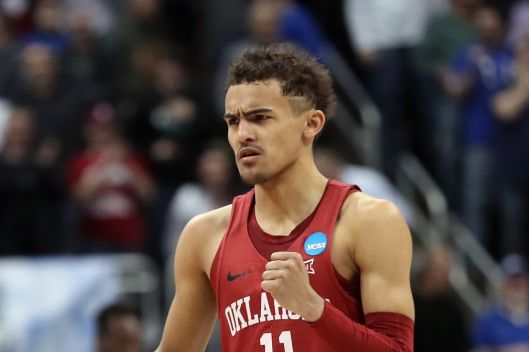
8. Trae Young
Trae Young is an outlier. His skill level is off the charts, and with monster scoring, shooting, and assist totals as a freshman, he has been rampantly compared to Stephen Curry. Let’s take a look at their freshman shooting stats (pace adjusted per 40):
|
3P |
3PA |
3P% |
FT% |
| Steph |
4.7 |
11.4 |
40.8% |
85.5% |
| Trae |
4.0 |
11.0 |
36.0% |
86.1% |
This is really close. Trae had almost as many 3PA, and his lower 3P% could be due in part to bad luck in light of his elite FT%. Let’s move on to steal, block, and rebound rates:
|
ORB% |
DRB% |
STL% |
BLK% |
| Steph |
2.6 |
12.8 |
3.6 |
1.0 |
| Trae |
1.3 |
9.9 |
2.5 |
0.7 |
This is where the comp falls apart. The two players have similar physical profiles, but Steph being superior across the board implies some subtle physical advantage and/or cerebral superiority.
My take is that Steph is in another league cerebrally. This manifests in him being surprisingly decent defensively as well as consistently finding space to get off quality shots in spite of his physical deficiencies and immense defensive attention.
With this in mind, I do not believe Trae’s 3P% was due to bad luck whatsoever. He was on fire during Oklahoma’s soft portion of the schedule, and then against Big 12 play he was often shut down by taller wings. He lacked the explosion to blow past them, and often settled for deep, contested 3’s. It is not surprising that he went through a major shooting slump because he was chucking low quality attempts.
Curry has the most outlier combination of shooting accuracy in fast release in NBA history, and it is unrealistic to project anybody to match it. And even if Trae is a similar outlier, he will likely be a much worse defensive player who struggles to find space offensively, and it is really difficult to see him ever sniffing Curry’s overall level of goodness.
Is Trae an Elite Passer?
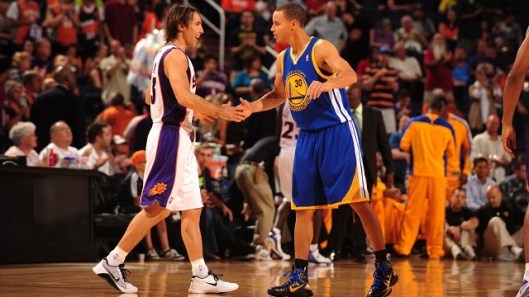
If there is a path to greatness, it will come through his passing. Young has excellent vision and posted a much higher NCAA assist rate than Curry. There is some scenario where he has a Steve Nash level impact with his passing on top of almost Curry level shooting, which is why he belongs in the top 10.
But Steve Nash is a one of a kind player, and this scenario is the pinnacle of optimism for Young. In spite of returning almost everybody from last season, Oklahoma barely improved and under-performed preseason statistical projections. Common narratives will blame this on Trae’s underwhelming teammates, but the same teammates were not that much worse with a year’s less experience and Jordan Woodard (pretty good) + Darrion Strong-Moore (pretty bad) splitting PG minutes.
In spite of excellent vision, Young seems to be lacking high end IQ and decision making ability. Perhaps these improve over time, but for a player with his physical deficiencies there are too many worrisome signals to be too optimistic. He has an elite skill level to be sure, but his instincts appear to be merely good but not great, and this creates significant downside risk.
Young has a weird + polarized profile, and it makes him extremely difficult to predict. I lean toward the side of pessimism, but there is clearly enough unique goodness to amount to a highly valuable NBA player. I’m not comfortable dropping him out of the top 10, but I believe it would be a reach to draft him top 5.
7. Miles Bridges
Miles fits the 3 + D archetype perfectly, as his strength, athleticism, passing, rebounding, and shooting suggest that he will be a versatile role player in the NBA. His dimensions are too limited for him to be a perfect 4, but he nevertheless may have the strength and hops to succeed in that role defensively.
As a bonus, his burst and shake give him creation upside and all-star potential. Versatile role playing wings are valuable enough on their own, and when they come with a nice upside tail it is correct to draft them early and ask questions later.
6. Wendell Carter Jr.
Carter is a tough prospect to rank. To some extent he is a plodding big in a world where plodding bigs are rapidly dying. But on the flipside, his mobility is not that bad and it is really his only weakness. Meanwhile he can pass, rebound, shoot, score inside, block shots, and being good at that many things can easily add up to a good player. If he can adequately defend in space, he can be a mid-lottery steal.
It’s easy to see Carter having an Al Horford-ish career. While Horford is not the sexiest player in the modern era, he is still a valuable contributor and a great return on a mid-lotto pick. And there is wiggle room for WCJ to be better than Horford, so it’s hard to argue he does not belong in the front end of the lottery.
5. Marvin Bagley
Bagley is an awesome talent in the wrong mold for the modern NBA. He is an elite garbage man as his motor + athleticism make him an awesome rebounder and finisher, and his handle gives him some creation ability.
That said, he does not have the dimensions to protect the rim or the skill for the perimeter, not to mention that his perimeter defense is a major question mark. This leaves him in an awkward disposition. There is some scenario where he succeeds on the perimeter and you are left with a really unique and valuable player who can also function as a small 5.
But there is also a scenario where he’s a productive player who is an awkward fit with weaknesses that get exposed in the playoffs. Ultimately Bagley’s talent cannot be ignored and he should be valued highly, but his warts are enough to temper optimism from being extreme.
4. Zhaire Smith
Zhaire Smith came out of nowhere as a 3* recruit to have a monster freshman season and lead Texas Tech to their first elite 8 ever. The most shocking part of him flying under the radar is that he is a nuclear athlete, which rarely gets overlooked. But Zhaire was young for his class and raw offensively, and went unnoticed until late in his high school career.
He was still raw offensively for Texas Tech, playing a low usage role where he rarely attacked off the dribble and attempted a low volume of 3’s. But he was highly efficient in this role, as he posted an excellent eFG% and assist:TOV with 72% FT to give hope for his long term shooting ability. He statistically profiles as similar to Jae Crowder.
In terms of recruiting rank and physical profile, he is similar to Russell Westbrook. Westbrook also slid through the cracks as a 3* recruit due to being young and raw, and Zhaire is arguably the most explosive athlete in the draft since Russ. Westbrook carried a higher NCAA usage, but even after his sophomore year DraftExpress believed he had a poor handle.
It’s not clear how Zhaire’s handle compares to Russ at the same age, but there is no evidence it is drastically worse. What is clear is that Zhaire is more selective about the occasions on which he attacks and is much less mistake prone offensively. So he will likely not stretch his usage to a monster rate a la Westbrook, but there is plenty of potential for him to stretch his usage while also having the instincts to play efficiently.
It’s hard to envision exactly what Zhaire’s NBA role will look like. He could remain a Crowder-ish role player, or his athleticism could enable him to develop into a star scorer in spite of his current limits as a ball handler. But it’s so rare for a player with his combination of youth, efficient production, and athleticism to be anything other than a #1 pick, it’s not worth sweating this point. Once the tanking prizes are all off the board, I believe it is correct to take Zhaire and see what happens.
Tier 1: Tanking Prizes
3. DeAndre Ayton
Ayton is ESPN’s favorite to be the #1 pick, but draft twitter is less enthusiastic bemoaning his poor defensive instincts as he posted underwhelming steals and blocks for a disappointing Arizona defense.
The truth likely falls somewhere in the middle. Let’s quickly compare him to a couple of past prospects who had similar instincts– DeAndre Jordan and Julius Randle:
|
Stl% |
Blk% |
ORB% |
DRB% |
| Ayton |
1 |
6.1 |
13.5 |
28.2 |
| Jordan |
0.6 |
6.5 |
11.6 |
22.3 |
| Randle |
1 |
2.6 |
13.4 |
24.7 |
Jordan eventually developed into a good defensive NBA player in spite of this. Ayton may not be quite as athletic, but overall they have similar physical profiles and Ayton’s box score stats are slightly more impressive– so you cannot rule out the possibility that he is a significantly more skilled DAJ.
I was highly bearish on Julius Randle for his poor defensive instincts with mediocre PF dimensions, but he now has a chance of becoming a good NBA player in spite of this. If both Randle and Jordan can succeed and overachieve their draft position in spite of similar warts, Ayton likely can too.
Further, he has much stronger positives than DAJ + Randle without having worse flaws. He has a monster physical profile and was highly efficient in a high usage role offensively, posting a 98th percentile halfcourt efficiency per synergy. He had almost as many assists as turnovers, and showed traces of shooting ability with 73% FT and 12/35 3P.
In spite of his flaws, Ayton has monster upside and an easy path to all-star production. There’s some scenario where is merely a more athletic Nik Vucevic, which is disappointing but not bad enough to drop him any lower than #3.
His questionable instincts are enough to set him behind the creme de la creme prospects, but he has offsetting strengths to be a #1 or #2 overall pick in most drafts. The bottom line is that while he is flawed, DeAndre Ayton is an incredibly talented player and an elite prospect.
2. Luka Doncic
More than a year ago I pondered whether Doncic was a LeBron level prospect, offering a generational skill level on par with LeBron’s generational physical profile. Now after meditating on this point, I do not believe he can be valued similarly as LeBron definitely had a generational physical profile whereas Doncic only maybe has a generational skill level.
The chief concern with Doncic is that he is not particularly explosive or shifty, and will rely on outlier shotmaking to be an NBA star. Yet he is only making 30% of his three pointers so far this year, and if this is an issues that persists in the NBA he could disappoint similarly to D’Angelo Russell.
That said, Doncic still has a monster upside that cannot be ignored. He is a wizard with the ball and is also incredibly cerebral in a monster body that moves decently well, and if he develops into an elite shot maker he can be a special NBA player unlike anything we have seen thus far. I still rate him as a solidly good #1 overall pick, it’s just that he has the misfortune of sharing a draft with somebody who is just a bit more special
1. Jaren Jackson Jr.
This kid has special written all over him. He is one of the youngest players in the draft, and was arguably the best NCAA player this past season once you get past his minutes being limited by foul trouble and a risk averse coach.
The narrative is that he is an elite 3 + D role player who lacks the athleticism and scoring to be a true star. He is at minimum the former, as he shot 3’s and FT’s very well for a 18 year old big and has exceptional defensive potential.
JJJ offers elite length, mobility, and instincts to be incredibly versatile both defending the perimeter and protecting the rim, and he played a large role in Michigan State having the most outlier defensive 2P% in kenpom history dating back to 2002.
It’s worth noting that Jaren Jackson Sr. rated well by RAPM metrics and was a solid 3 + D player for the Spurs, and JJJ appears to have inherited his father’s basketball IQ with a 7″ height advantage and likely greater athleticism.
The really interesting point for JJJ is that he shows traces of ability to score off the dribble from the perimeter, as he has a surprisingly decent handle and ability to change directions for such a young big. He is still raw in this regard and often turned it over trying to attack, but if this develops well with age it could elevate him from elite 3 + D player to a traditional mold of superstar.
And he doesn’t have any real weaknesses. His turnover and foul rates were both high, but not particularly bad for an 18 year old big. His rebounding rate is mediocre, but he was sharing the floor with super sized lineups and this could improve as his frame fills out.
I just don’t see how JJJ ever fails. He’s going to be valuable no matter what, and has monster upside to boot. He should absolutely be valued on the same tier as KAT, Embiid, and Anthony Davis, and has clear potential to peak as the best of the bunch.
I will note that I’m not certain who should be valued higher between JJJ and Doncic– both are awesome prospects who are dripping with upside. But I feel a bit more certain in JJJ’s goodness, and if nothing else it’s worth considering the possibility that he deserves to be the #1 prospect in the draft, as it is a topic that has yet to receive fair consideration.



 Dean On Draft