• Home
  • About
  • Big Board
  • NCAA
  • International
  • Miscellaneous

Dean On Draft

~ NBA Draft Analysis

Dean On Draft

Monthly Archives: December 2016

Big Board 2.0: Going Deeper

26 Monday Dec 2016

Posted by deanondraft in Big Boards

≈ 10 Comments

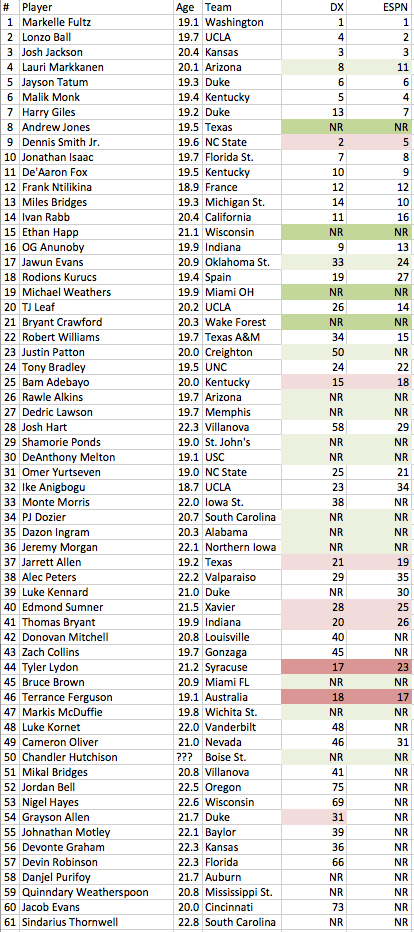
Now that I have really dug into the 2017 draft class, it is time to post a complete big board of my top 60 prospects (and 1!). Age is as of draft night, and the only internationals I am including for now are Ntilikina and Kurucs because I just don’t know anything about the others:
screen-shot-2016-12-26-at-1-25-47-pm

I wrote that Malik Monk is not overrated, but I still rate him a hair lower than DX/ESPN. This is mostly because Lauri Markkanen is my one way shot maker of choice, as having an elite shot is more likely to be overpowered for a player who is 7’0″ and coordinated than a 6’3″ athlete. And I still do not want to glaze over Monk’s warts, because they are bad.

Harry Giles has not been ready to contribute his first two games after missing more than a year of action with an injury. He may not fully showcase his potential this year, and with his injury flags he will be one of the most challenging prospects in the draft to evaluate.

I’m aggressively sticking my big sleeper prospect Andrew Jones at #8. This may look silly  if he falls flat in Big 12 play, but it is more likely that he does not and he ascends to the lottery where he belongs.

Dennis Smith Jr. has been playing better lately but still has not shown the big upside curve to go top 5.

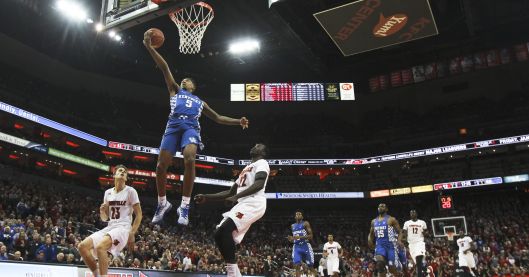
De’Aaron Fox is a challenging prospect to rate. On one hand, he is extremely pleasing to my eyes, as he is ultra quick, a pest on defense, throws laser passes in transition, and has smooth touch near the hoop. On the other hand– he cannot shoot, he has a frail frame, and he has poor awareness. Against Louisville he lost track of the shot clock twice, resulting in violations both times. He already had concerns about his ability to be an effective offensive player, and mistakes like this suggest that we should err on the side of pessimism.

If you are wondering why stat models love Ethan Happ, it’s because he can make plays like this. He’s too similar to Draymond and Millsap to slide to round 2 just because he does not fit the traditional PF archetype.

Bryant Crawford is another sophomore that nobody is talking about. He has good height (6’3) and length (6’7) for a PG and has revitalized Wake Forest basketball as the leader of a very good offense.

Creighton redshirt freshman big man Justin Patton is 6’11”, athletic, and hyper efficient on offense. He’s similar to Bam Adebayo, except he is actually tall enough to play center and better at everything other than offensive rebounding. And if you want a young offensive rebounder, Tony Bradley is posting a whopping 22% ORB% that is almost as high as Patton and Bam’s rates combined. Bam is not bad, but he just is not special relative to the other young bigs on the board in the late 1st.

Shamorie Ponds and DeAnthony Melton are statistical darlings of the draft with major scouting flags. Melton is a combo guard who can neither dribble nor shoot, and Ponds is a combo guard in a diminutive 6’0″ body. Both are so young with such outlier stats that they should not be dismissed entirely for their flaws, but Michael Weathers of Miami Ohio is the stat beast who has the best shot of becoming a good NBA player. He is quick with legitimate vision and creation ability, as he is posting Westbrook level stats for his woeful mid-major team.

Omer Yurtseven has not looked great in his first 3 games for NC State, but it is still too early to judge him firmly.

Ike Anigbogu is an infant aged pogo stick who is difficult to project given how young and raw he is.

PJ Dozier and Dazon Ingram are a couple of 6’5″ SEC lead guards who do a little bit of everything. They may not be athletic and skilled enough to be lead guards in the NBA or shoot well enough to play off the ball, but are intriguing 2nd round gambles nevertheless.

Jarrett Allen has strikingly low rebound, steal, and block rates for a player of his size and wingspan. He was portrayed as a defensive prospect and he may be broken on that end, which makes him not that much of a prospect after all.

Edmond Sumner hype sounded reasonable pending a big junior season breakout, but thus far I am skeptical. He is completely out of control when he drives to the basket and does not make accurate passes or layups. He seems like a poor man’s Mudiay to me, which is just poor.

Thomas Bryant is adored my the numbers, and hated by my eyes. It is possible I am underrating him, but I just don’t see him fitting in defensively in the NBA and I don’t see him as any sort of special offensive player.

I really do not buy Tyler Lydon as a 1st round prospect. He is a good but not great shooter, as he makes 41% of his career 3’s but has a low 3PA rate and cannot rely solely on his shot to succeed in the NBA. He’s a decent athlete and passer, but unless he can switch onto NBA wings on the perimeter (I suspect he cannot), I do not see enough versatility in his game to complement his shooting.

I cannot fathom that a player who cannot score, rebound, assist, steal, or block is a first round pick, but Terrance Ferguson is consensus top 20. He is super young and most of the other 5* prospects in the class have turned out well, so maybe he is somehow good. But more likely he’s a weak 3 + D prospect with average 3 and average D and terrible everything else. Bruce Brown is older, but seems much better at everything else other than his inferior shot.

Markis McDuffie is my deep mid-major sleeper. He is baby aged for a sophomore, and he is 6’8″ and smooth and could become a good role playing wing as his frame fills out.

Chandler Hutchison is my deeper mid-major sleeper, pending discovery of his birthday. He is a 4* junior 6’7″ SF with a 7’0″ wingspan who does it all for Boise State. If he is reasonably young for his class, he becomes an intriguing second rounder.

Mikal Bridges is an elite NCAA role player who is often miscast as a sleeper 1st round prospect. He is a zero on offense without outlier tools or defense to make him an exciting gamble. His physical profile is nearly identical to Hutchison’s, except he has far less offensive creation ability.

Grayson Allen has a consistent habit of turning into a brick and turnover machine whenever he faces any sort of athletic defense, and it is hard to see him amounting to anything in the NBA without becoming an elite shooter.

I included Sindarius Thornwell as a 61st prospect because a number of people have asked me about him. I am skeptical of his ability to make the NBA as he is not particularly athletic, quick, skilled, smart, or tall. But he does a little bit of everything statistically, and appears to have an improved shot. He merits attention if he continues to shoot well whenever he returns from his suspension.

Marques Bolden being unranked may seem harsh after he missed games with an injury and has barely played since returning. But he sounded like a dud coming in, and it looks like he will be sparsely used for Duke. I do not see any reason to cling on to hype until he actually starts performing, as he will likely be back at Duke for his sophomore year.
Malik Monk Is On Permanent Fire

25 Sunday Dec 2016

Posted by deanondraft in Uncategorized

≈ 11 Comments

Tags

JJ Redick, JR Smith, lol Calipari, Malik Monk, Reggie Miller, Stephen Curry

malik-monk-ftr-121716jpg_11hfff0g2wxq61q3618vvdy10r

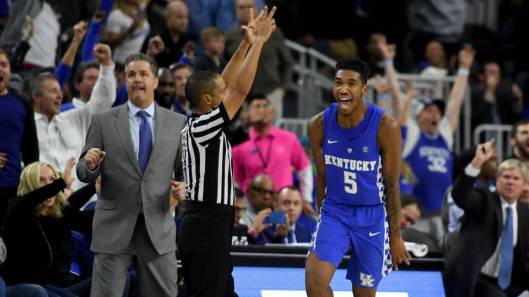
For every incoming freshman class, it is fun to make predictions based on the biases of traditional scouts. Malik Monk’s scouting report was that he was an athletic scorer who did not play defense and took poor shots. Scouts highly value athleticism and scoring and are willing to overlook poor defense and basketball IQ in prospects that have both strengths. Given that Monk was only rated #9 RSCI, he seemed like a strong candidate to bust. After all, he had a similar profile to Malik Newman who was similarly rated and completely flopped last year.

But this year’s class apparently only includes good prospects, and Monk has led Kentucky to a great start with his surprisingly efficient scoring. Basketball twitter is still abound with skeptics of his NBA upside, as his lack of size, point guard skills, ability to get to the rim, and defense seemingly preclude him from becoming an NBA star. After all– how valuable is elite athleticism if it does not lead to good defense or slashing ability?

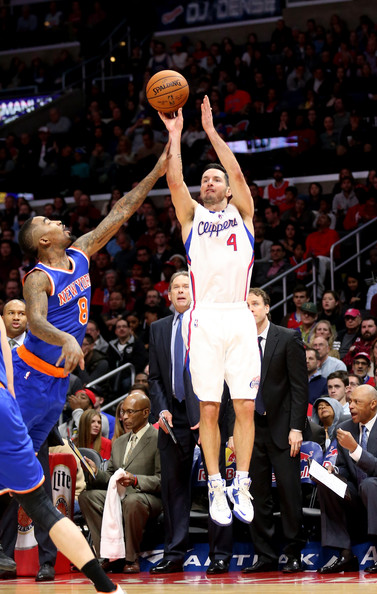
The common comparison for Monk is JR Smith as a player who is mostly a floor spacer in spite of his great athleticism, as he lacks the ball skills and smarts to capitalize on his physical ability. I was initially on board, as they share similar strengths and limitations and it overall felt reasonable.

But Monk kept making shots and Kentucky kept playing well. When outcomes badly fail to align with a prediction, there is often an outlier force that my initial prediction underrated. Intuitively it felt wrong to continue to fade Monk, and that more attention should be given to what he can do rather than what he cannot do.

Let’s Not Be Redickulous

Monk had an elite combination of volume and efficiency in AAU, he has an elite combination thus far in NCAA, so why would he not continue the trend in the NBA?

There are a few reasons– first his NCAA sample is small against many weak teams, and it he may not continue to shoot fireballs against superior competition. He heavily relies on transition scoring, and those opportunities wane as competition levels increase. But then you compare his freshman statistics per 100 possessions to those of another common comp: JJ Redick:

REB AST TOV STL BLK
Redick 4.4 3.6 2.8 2.0 0.1
Monk 4.3 4 3.4 1.9 0.6

They are strikingly similar. The main difference is that Monk has more blocks due to his greater athleticism, but Redick used his smarts to keep pace on steals and both players are allergic to rebounds. Now shooting and scoring:

2PA 2P% 3PA 3P% FTA FT% Pts
Redick 6.6 43.9% 12.8 39.9% 6.0 91.9% 26.6
Monk 14.3 58.8% 14.6 39.4% 4.6 83.9% 37.8

Redick has the better FT% and surprisingly FT rate. But Monk has a slightly higher 3PA rate, and then there is the glaring advantage in 2 point volume and efficiency. This is especially impressive in tandem with Monk’s turnover rate.

Yes, much of that goodness will wane as he translates to NBA competition, but there is a whole lot of goodness there, and it will not go away altogether.

For starters, Monk will be one of the best transition scorers in the NBA. He will not be able to solely depend on this, but his athleticism, instincts, and shot making mean that he will be as productive as anybody in the league and this will pad his overall efficiency. This may in part explain his low defensive rebound rate, as he is likely leaking out a ton, so it comes at a cost. But it is nevertheless a feature that should not be ignored.

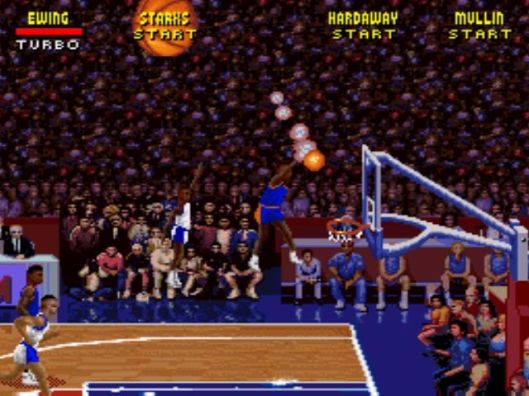
He’s On (Permanent) Fire!27148-nba-jam-snes-screenshot-he-s-on-fire

The interesting part is that Monk may become the 2nd best pull up jump shooter in NBA history behind Steph Curry. His synergy shooting splits are a wonderland (C&S = catch and shoot):

Poss Pts PPP Pctile
C&S Guarded 43 62 1.44 88
C&S Unguarded 16 20 1.25 56
Pullup Jumpers 39 44 1.13 88
Short J’s (< 17′) 14 14 1.00 81
Medium J’s 17 22 1.29 98
3 Point J’s 72 99 1.38 87

He is fireballs from everywhere, except unguarded catch and shoot jumpers where he is merely average on a smaller sample.

Some of the difficult shot making is not sustainable, but even with a fair bit of regression he is still clearly special talent. The percentile ranks are in comparison to players with a lower volume of attempts on average, and there is no precedent of such a young player playing such an inefficient style with such an efficient outcome.

screen-shot-2015-04-10-at-10-09-41-am

Meanwhile, coach Cal says: “I’m trying to say get to the foul line. Go to the line more, don’t just shoot all perimeter jumpers. He’s such a great athlete and he’s so good with the ball, why settle? I know it’s easier and he goes on a run of making 7 in a row, but they can’t guard him when he goes to the basket.”

Calipari also wanted Monk to drive it down 2 with 20 seconds left, but fortunately his player was smart enough to shoot a 3 that went in to give Kentucky the lead and eventual victory. His coach is somehow completely ignorant of his player’s strengths and optimal usage, which only makes it more exciting to imagine Monk in the hands of a good NBA coach.

But Can He Create?

Monk cannot create offense by slashing to the rim like most guards, but he can create it by converting shots that are inefficient for mortal guards. This is where his athleticism *might* serve its greatest function, as it gives him the *possible* ability to get off a high volume of attempts without a drastically lower percentage of conversions. I include the qualifiers because I am not certain that a player of his limited handle can continue to shoot so well off the dribble, but his athleticism could be the key ingredient to make it sustainable.

Monk’s playmaking ability remains in question, but he does have a decent assist rate for a player who shares the backcourt with two pure point guards in Isaiah Briscoe and De’Aaron Fox. His pass button and vision do not appear to be broken, so it is feasible that he does develop into a solid playmaker at the NBA level.

If he can 1) create offense for himself and others in the half court 2) be a blur in transition and 3) be a dynamite floor spacer, that adds up to quite the offensive weapon. And given his fantastic athleticism there is some hope for him to develop a semblance of a slashing game.

Limitations

newyorkknicksvlosangelesclippersq3vsf8p-uwql

The downside is that it cannot be taken for granted he will continue to make shots at an insane rate. In 2015 AAU he only shot 35% from 3 and 79% FT. His Kentucky sample is still extremely small, and even after a full season his NBA shooting will be difficult to predict. Buddy Hield just had a full NCAA season of elite volume shooting and is struggling to convert 3’s in the NBA. And with Monk’s defense and rebounding likely being bad, there is significant pressure on him becoming great offensively to justify a top 10 draft selection.

If Monk proves to be a good but not great shooter, then he is merely JR Smith, except shorter, worse at rebounding, and probably worse on defense. Not an ideal outcome.

Even if he is an elite shooter, there are no guarantees for his playmaking and creation abilities. It is possible that his off the dribble shooting thus far is a fluke, and will never be great because of his limited ball handling ability. He could be JJ Redick with more athleticism, less intelligence, and overall similar value.

My favorite comparison is Reggie Miller with less height and more athleticism. They both share elite shooting, terrible rebounding, and a knack for overall efficient offensive play. Reggie Miller was never a mega-star, but he was the best player on some good Pacers teams and a highly favorable outcome outside the top 3.

And Miller is not his absolute upside. There is some scenario where his shot improves at an outlier rate and he becomes almost as good of a shooter as Stephen Curry, with his athleticism compensating for his inferior skill level. This is an unlikely outcome, but there is some happy medium in between Miller and Curry that is attainable if things break right for Monk.

Bottom Line

636179936231847064-uk-malik-monk

Monk is nowhere near guaranteed to become a star, and even if he does his upside is not quite boundless. His warts are real, and they cannot be ignored as they would be a deal breaker for lottery consideration for almost any other similar prospect. Thus I do not believe he belongs in the top 3 conversation with Fultz, Ball, and Jackson.

But if anybody is going to overcome those warts to attain greatness, it will be somebody with outlier strengths like Monk with his elite intersection of shooting volume, shooting efficiency, and athleticism. There is no precedent of a prospect with a superior combination of these traits, and they could synergize to create an upside tail that exceeds any reasonable projection.

Ultimately Malik Monk is a unique talent, and if he remotely sustains his early shooting performance, he will clearly deserve a top 10 selection and could rank as high as the #4 player in the draft. This is a rare case where the hype for a one dimensional athletic scorer may actually be justified.

Diet Russ: The Lottery Freshman Nobody Is Talking About

25 Sunday Dec 2016

Posted by deanondraft in NCAA

≈ 1 Comment

Tags

Andrew Jones, Russell Westbrook

This year’s draft class is the gift that keeps giving. There are ten possibly elite freshman in the class, and a handful of other good ones that deserve lottery consideration. And recently an 11th possibly elite one has begun to emerge, and nobody is talking about him yet.

Diet Russ

One of the most badly overused draft comparisons is Russell Westbrook. People want to believe that every big PG with a hint of athleticism has potential to develop at an outlier rate from a pretty good NCAA player into an NBA star like Westbrook. But Westbrook is an outlier of outliers, as he is likely the most explosive player in NBA history and he complements that with an elite motor, vision, and work ethic to develop into the beast he is today.

So when you compare a player to Westbrook, the first problem is that he is definitely less athletic. The other problems are that his basketball instincts may be broken in some way, and that most player do not progress at the same outlier rate. Thus there is only one Russ, and we are left grasping at straws to try to find Diet Russ.

But Westbrook is nevertheless an important outlier to show the upside of athleticism. He is currently posting the highest single season BPM in NBA history, yet players such as Michael Beasley and OJ Mayo were drafted ahead of him. His NCAA performance offered no clear indication that he was on track to becoming an NBA star. It was merely enough to demonstrate that his basketball instincts were not broken for a young, athletic freak. Let’s compare our future Diet Russ to the real version’s sophomore season via per 40 minute pace adjusted stats:

TRB AST STL BLK TOV PTS
Diet Russ 7.0 5.0 2.1 0.5 3.5 18.8
Actual Russ 4.7 5.2 2.0 0.2 3.0 15.5

Diet Russ is a month younger than sophomore Westbrook, and he does not look diluted at all in terms of production. He has more rebounds and blocks than the triple double machine, and scores at a higher rate. Shooting splits:

2PA 2P% 3PA 3P% FTA FT%
Diet Russ 6.6 60.5% 5.6 34.4% 6.4 78.4%
Actual Russ 9.8 49.7% 2.4 33.8% 4.7 71.3%

The only flag is the lower 2PA rate, but I believe it largely stems from better shooting range and shot selection. As per synergy only 1 of his 38 2PA have come from mid-range and 4 have come on short range jumpers. When he attacks he tends to get all the way to the rim, and he appears to have more 3 point potential than Westbrook at the same age.

Who is this Mystery Freshman?

It is 5* Texas guard Andrew Jones.

As always, there are caveats. He is an explosive leaper, but he does not match Westbrook’s power and explosion. Also his statistics are a small 230 minute sample that includes a fair share of weaker opposition. In spite of his good 2P%, Jones still struggles to make layups off the dribble, as his handle is still limited and his PG ability is a major work in progress. And while his early rebound rate is impressive, he gets dwarfed by Russ’s ORB% (1.0 vs 5.8) which is a more significant signal than DRB%.

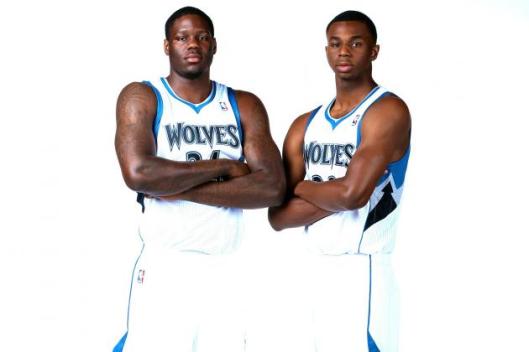
But it is hard to not be intrigued. Unlike other super athletes such as Andrew Wiggins and Jaylen Brown, his basketball instincts do not seem to be broken. Like Westbrook, he merely requires significant development of his point guard skills. This is far from guaranteed, and it is possible that he never progresses enough to become a good NBA player. But in the instance that it does, there is nothing preventing him from becoming a top 10 NBA star.

Compare him to a prospect such as Kentucky’s De’Aaron Fox. Fox is quicker with drastically more polished PG skills. But Jones is an inch taller with more explosiveness and better strength, and if he closes the gap in PG skills he has more potential to finish in traffic against NBA defenses as well as defend NBA shooting guards. Further, his superior shot gives him much more potential to play off the ball as well as make pull-up jumpers when he can not get all the way to the rim. Fox’s upside is tantalizing in the scenario that he learns to shoot, but Jones has an even more appealing upside if he can learn to play point guard.

Of course this is not to say that Jones necessarily will develop into a point guard. Right now his interior buckets are limited to beating the defense down the court, attacking before the defense is set, or attacking mismatches off the dribble. Jones rarely attacks when there is not a clear seam, which is indicative both of good feel for the game as well as the current limitations in his ball skills.

More Than Just a Potential Slasher

The offensive selectivity should prove to be a nice feature if he never develops into a great scorer. He still would have some potential as a 3 and D player who can attack closeouts and move the ball as a super role player. Granted, neither his 3 or D are guaranteed to be elite. Defensively his rebounds, steals, blocks, and athleticism show promise, and he can move well laterally. But he is also undersized for a SG and does not appear to be a lockdown defender at this stage of his career. His early shooting statistics show enough promise, and he appears to have NBA 3 point range. But shooting is difficult to predict, and in AAU play he only shot 31% on 3’s and 69% on FT’s.

Ultimately there is no guarantee that any of his passing, shooting, defense, or offensive creation ability to prove to be above average at the NBA level. Jones is largely a mystery box, and he may never fulfill his potential. But there is also nothing broken or sorely limited about any of his abilities. For a great athlete with good feel and instincts, that offers a gargantuan upside tail that makes him an excellent gamble in the lottery.

Jones is a mystery box, and early in his freshman career it is difficult to rank him with any certitude. But he looks like he is probably worth a top 10 pick in the draft and possibly top 5, as his upside tail is as elite as most of the other stud freshman in the class. He will not develop into a do it all monster like Russell Westbrook because nobody will, but if he becomes a the diet version plus a better 3P shot and more efficient shot selection, that is an awesomely valuable player.

Andrew Jones has slid under the radar via being outside of the top 20 in recruiting rankings as well as Texas’s disappointing start to the season, but it is time to start giving him attention as he is yet another gem in a loaded freshman class.

2017 Early Draft Big Board

20 Tuesday Dec 2016

Posted by deanondraft in NCAA

≈ 11 Comments

The non-conference NCAA season is almost over, and we now have a glimpse of what the top freshmen have to offer. The early returns are extremely promising, as this draft class has potential to be the best top 10 of all time. I have not had time to thoroughly watch all of the top guys so these rankings are highly fluid, but this is what I have so far:

1. Markelle Fultz: 6’4″ PG/SG, Washington

Everything about Fultz screams superstar. He has the skills, he has the tools, he has the instincts, and his statistics are off the charts for an 18 year old freshman. His team success is lagging, but that is likely attributable to teammates and coaching that is even more dreadful than Ben Simmons had to work with. Unless some serious flags arise as the season progresses, it is hard to imagine him not being the #1 pick, as his profile is just dripping with greatness. He is arguably a top 3 prospect of the past 20 years along with LeBron and Anthony Davis.

I don’t want to go overboard with the praise as I have not watched him enough to rate him over past prospects such as Oden, Durant, Embiid, and Towns with high confidence. But based on his numbers and physical profile his upside is boundless, and for now he is the clear tanking prize of the draft.

2. Lonzo Ball: 6’6″ PG, UCLA

Ball is polarizing, as he does not have overwhelming athleticism nor is he much of a scoring threat. But the draft is about finding players with outlier strengths rather than no weaknesses. And it is worth considering the possibility that Ball could become the best passer in NBA history.

In 15 years at coaching at UCLA, New Mexico, and Iowa, Steve Alford has never had a top 10 offense or a top 20 eFG%. His best was the loaded 2014 UCLA team featuring Kyle Anderson, Jordan Adams, Zach LaVine, and Norman Powell. They finished #11 in kenpom offensive efficiency, and #22 in eFG%.

12 games into the season, Ball’s UCLA team has the #1 offense and #1 eFG%. Their eFG is as many points better than the #3 eFG team as the Anderson + Adams teams was above average. This UCLA team just doesn’t miss shots, and it is hard to not suspect that Ball has a special impact on the offense. Granted, there are a number of explanations to temper optimism:

  1. Only 5 of the 12 teams they have faced are top 100 teams, as they have played most of the weaker teams on the schedule
  2. TJ Leaf is playing an integral role, as he leads the team with a staggering 71.5% eFG%
  3. It is still a small sample, and UCLA likely will not sustain its 43.9% 3P%

But based on early indicators it is hard to not feel like Ball has a special impact on the offense. UCLA has consistently outperformed expectations, and have been at their best against the stiffest competition. And every returning rotation player has seen his offensive efficiency skyrocket.

Ball’s lack of athleticism and scoring is a harmful flaw on his profile to be sure, but they are worth stomaching with his potential to be a bigger and better version of Steve Nash or John Stockton.

3. Josh Jackson: 6’8″ SF, Kansas

Jackson has been precisely as advertised, as he is elite at everything except for his big flaw of shooting. But his saving grace offensively is that he has feathery touch from short range, which is a stark contrast from Andrew Wiggins bricking layup after layup for Kansas.

His shot appears to be seriously broken, but if he makes a big leap in this regard he is going to be a superstar. And even if it stays broken, he may nevertheless be a valuable NBA player.

Deciding between Ball and Jackson at #2 is going to be an incredibly tough decision. They both have such a special combination of strengths, and both would be #1 picks in most seasons.

4. Lauri Markkanen: 7’0″ PF, Arizona

Markkanen has been placed in a rough situation to start his college career, as Arizona is currently playing with just 7 players with only 3 of them being perimeter players. Thus he has been forced to play small forward in some awkward 3 big lineups, and he has managed to be hyper efficient anyway due to his elite outside shooting and incredible propensity to avoid turnovers.

He still has shown limited ability to create and score inside the arc, which puts a slight damper on the profile of a player who is a one way scorer. But all things considered he has been excellent in spite of tough circumstances, and he has potential to be an elite offensive weapon in the NBA.

5. Jayson Tatum: 6’8″ SF/PF, Duke

After 4 career games, I still do not have the best handle on Tatum. I had expected him to be a Jabari Parker doppelgänger, but based on early returns he appears that he may be significantly better. He had a great game against Florida in the only real competition he faced, and his upside appears to be a better version of Carmelo Anthony. I would like a large sample size of success before getting too excited, but so far he appears to be more than just a mid-range volume scorer.

6. Harry Giles: 6’10” PF/C, Duke

Giles had a tough NCAA debut with an ineffective 4 minutes after various knee injuries have kept him sidelined for the past 1+ year. His stock has been tanking due to the injury flags, but he is a unique talent who offers elite upside in the scenario that he can stay healthy.

7. Jonathan Isaac 6’11” SF, Florida State

Isaac is stuffing the stat sheet with steals, blocks, rebounds, and made shots. But the big wart is just 8 assists vs 19 TOVs, which is a flag for his feel and ability to play the perimeter. There is still enough good stuff here for him to be a very exciting mid-lotto selection, but his wart is a bit more disconcerting than the flaws of the other top guys.

8. Dennis Smith: 6’2″ PG, NC State

Smith has been a bit of a letdown to start the season, as he has not been as efficient as expected and his team is struggling badly. He is coming off an ACL tear and speedy freshman PG’s often are at their best late in the year, so his best play is likely yet to come. But if he does not turn it on down the stretch, his prospect appeal wanes. His small size is more enigmatic the less he dominates NCAA.

9. Malik Monk: 6’4″ SG, Kentucky

Monk’s superpower is that he has an elite intersection of athleticism and shot making ability. He can score from anywhere, and has posted excellent scoring and volume and efficiency thus far.

Monk does this in spite of being unable to create his own shot at the rim in the half court. He racks up points in transition, and in the half court he scores by hitting shots of all difficulty, as he has excelled at shots that are contested and/or off the dribble.

The challenge is figuring out what this amounts to in the NBA. He is undersized for a SG, has a reputation for coasting on defense, and is completely allergic to rebounds, so it is safe to call him a one way prospect. JR Smith seems like a reasonable comparison, but Monk seems to have an extra gear of shot making ability that Smith lacks.

It is possible that Monk is so good at making jump shots and has enough passing vision such that he can become an offensive star in the NBA. But being a 6’4″ SG who does not get to the rim or play defense are big warts that cannot be overlooked.

10. De’Aaron Fox: 6’3″ PG, Kentucky

The perfect yin to Monk’s yang– Fox excels at the areas where Monk is lacking: defense, rebounding, point guard play, slashing to the rim. But he is almost as bad at making shots away from the rim as Monk is good. He is just 3/23 from 3 and just 6/25 from mid-range shots in the half court, as per Synergy Sports. The glimmer of hope comes from his 76% FT, and if he can learn make jump shots Fox becomes a highly attractive player. But if he cannot he may be worse on offense than he is good on defense.

11. Ivan Rabb: 6’11” PF/C, California

Rabb is off to a slow start this year as he has battled injuries, but he should be his regular super Zeller self once his wounds are healed.

12. Frank Ntilikina: 6’5″ PG, France

Ntilikina is an international box of mystery, and I have no idea where he should go.

13. Rodion Kurucs: 6’8″ SF, Latvia

Kurucs is super young and has a compelling international stats, and could be a good gamble once the stud freshmen are off the board.


14. TJ Leaf: 6’10” PF, UCLA

Leaf’s limited wingspan and athleticism cast doubt on his ability to translate his offense to the NBA and fit in defensively. But his offensive skill and feel is so great that he has pretty good upside in spite of his physical limitations

15. Miles Bridges: 6’7 SF, Michigan State

Bridges offensively efficiency has been bad in 8 games for Michigan State, but if he can improve his shot and cut his turnovers it is easy to see him amounting to a pretty good NBA player with his body, athleticism, and defensive potential.

16. OG Anunoby: 6’8″ SF/PF, Indiana

Anunoby has an intriguing blend of physical tools, defensive upside, and youth. The big question for him is whether he can fit into an NBA offense without being a massive liability.


17. Jawun Evans: 6’0″ PG, Oklahoma State

Evans is undersized for a PG, but does literally everything for Oklahoma State offensively at an efficient clip. He is a poor man’s Chris Paul. This does not paint a clear outcome because being worse than Chris Paul means he can be anywhere on a scale of not NBA caliber to an all-star. But since the original CP3 was undervalued in the draft, it is reasonable to suspect that Evans may be as well.

18. Michael Weathers: 6’2″ PG, Miami OH

My favorite statistical outlier of the season. Weather is listed at 161 pounds, but that has not stopped him from rebounding like a forward and blocking shots like a center. And he also does everything offensively at a not bad efficiency for a mid-major team that is otherwise bereft of talent.

He clearly has potential to rise up to the lottery the way Cam Payne did. Rivals rated him as a 3 star recruit, and he is super quick. If he can add muscle to his frame he becomes highly intriguing, as he is as outlier as you can get for a mid-major prospect.

19. Ethan Happ: 6’8″ PF, Wisconsin

Happ is an old school low post power forward who is too small and with too limited range to catch the eye of NBA scouts. But he is a full fledged statistical outlier, and there are some shades of Paul Millsap in his profile. All of the upperclassmen who fit preferred archetypes are so bad that I would easily gamble on Happ’s unique NCAA performance over a prototypical future d-leaguer.

20. Robert Williams: 6’9″ PF, Texas A&M

I highlighted Williams as a non-elite prospect who could rise in the draft ranks in my season preview, and based on the early returns he should be a 1st round selection. He is undersized to play center, but his appeal is centered around his surprisingly decent passing and shooting ability for an athletic shot blocker.

21. Rawle Alkins: 6’5″ SG, Arizona

Nothing about Alkins jumps out as elite, but he is a solid and well rounded SG prospect who does a little bit of everything. Why not gamble on him in the late 1st over an upperclassmen with more obvious limitations?

22. Josh Hart: 6’5″ SG, Villanova

Nothing about Hart’s profile is amazing. He is merely good but not great in most categories: athleticism, shooting, scoring, defense and is undersized for a wing. But he has the tools to fit in, and is so smart and well rounded that it is not hard to envision him becoming a quality NBA role player.


23. Monte Morris: 6’3″ PG, Iowa State

Morris does not have enough athleticism, shooting, or scoring ability to be loaded with upside. But he may be able to overcome his athletic shortcomings with exceptionally smooth footwork, and his feel and efficiency may yield a quality rotation player.

24. DeAnthony Melton: 6’4″ SG, USC

Melton has tantalizingly good stats for an NCAA role player, as he racks up rebounds, steals, assists, and blocks while maintaining a good offensive efficiency. But he has elite offensive efficiency because he cannot do anything off the dribble and ergo does not try, and he is a poor shooter as well. He is fairly athletic and super young so there is still hope that he manages to fit into an NBA offense, but he will likely be undone by his inability to do anything on offense.

25. Bam Adebayo: 6’10” PF, Kentucky

The runt of the Kentucky litter, Adebayo excels at offensive rebounding and dunking and not much else. He is also old for his class and I do not see anything special about him to argue that he belongs in the lottery.

26 and beyond

Things are getting pretty thin at this point. The draft is loaded at the top, but after the elite freshmen are off the board the international and upperclass crops are both too thin to offer much depth.


An Objective Assessment of Andrew Wiggins

12 Monday Dec 2016

Posted by deanondraft in Uncategorized

≈ 26 Comments

I recently posted that Andrew Wiggins is a bust, and it received a couple bits of criticism that I would rate as fair:

  1. Even if flawed he is contributing enough to avoid a bust label
  2. Just because advanced stats do not love him do not mean he cannot be good

I would like to follow up on these points as I agree with both, and prefer that the main points of my writeup do not get lost due to my manner of presentation.

Is Wiggins Really a Bust?

e4a2c8391371245a142cd14c74ea2585_crop_north

It depends on your definition of the word. The most common interpretation has been that a bust is a high pick who is worthless at the NBA level, and Andrew Wiggins scores 22 points per game at an acceptable efficiency. By that definition, I would agree that my label of him as a bust is harsh and inaccurate.

Most people cited Anthony Bennett as an example of a bust, as he was picked #1 and was truly awful. I would agree that Andrew Wiggins is an infinitely better NBA player, and I would never group the two in terms of overall badness. But there are a few key aspects that set the expectations of each player apart.

Bennett was not even expected to go top 5 overall in a weak draft. There was no consensus that he was a great prospect, he only happened to go #1 because of a unique combination of horrible decision making by Cleveland and a weak crop of other choices. In a regular draft he is a run of the mill mid-late 1st round flop.

Wiggins entered high school with expectations of being a generational prospect of LeBron’s caliber. Those expectations had been lowered a notch after a good but not great freshman season at Kansas, but he was still considered an acceptable prize for tanking. Further, he was taken over Joel Embiid who had clear hall of fame level upside in spite of injury flags.

Missing Upside Hurts More Than Hitting Downside

The point of drafting #1 is to draft a superstar. The Cavaliers made a grave error in drafting Anthony Bennett, but they are only hurt by missing out on the best realistic alternative. The franchise does not suffer extra negative points for drafting the worst #1 pick of all time as opposed to a regular bust, as they can simply waive him and move on as the Cavs did.

To put this in perspective– would you rather start a franchise with Andrew Wiggins and Otto Porter, or just Joel Embiid? Even with a substantial risk that Embiid cannot stay healthy enough to make an impact, he is the clear choice as he has franchise changing upside that is not found in the other two players.

Andrew Wiggins is not a bust based on consensus interpretation of the word. But he is nevertheless on track to significant disappointment relative to expectations, and may be a more costly mistake than taking Bennett #1 overall, even though Bennett was the much more obviously wrong choice both at the time and in retrospect.

Advanced Statistics vs The Eye Test

hi-res-7063070_crop_north

The other issue with Wiggins is that in spite of lackluster advanced stats, the facts remain: he is 21 years old, averaging 22 pts/game, and is 6’8″ and can jump through the roof. In spite of whatever shortcomings he has with BPM or RPM, it is too soon to write him off altogether. I agree with this, as similar players Rudy Gay and DeMar DeRozan have taken big leaps after flawed outputs early in their career to become useful NBA players.

But Rudy Gay and DeMar DeRozan are still not big time positive impact players, as their strengths are still outweighed by the weaknesses that plagued them early in their careers.

On the other hand, the players who became true stars showed clear signs of stardom but their 3rd year. Entering draft night, expectations for Wiggins had been lowered from the next LeBron or Durant to the next Paul George or Kawhi Leonard. But Kawhi won finals MVP in his third season and Paul George led the Pacers within one win of the finals. Andrew Wiggins is by most statistical indications still a below average player early in his third year.

Advanced statistics are not precise measures of truth, but they are signs that point in the direction of the truth. And in this case, they highlight the key flaws that separate Wiggins from genuine stars.

Does Wiggins Really Eye Test Well?

The hype of being an elite prospect never jived with my eye test. There were too many things wrong with Wiggins. Yes, he is 6’8″ and super athletic with a decent enough skill set. But he was visually grating in a number of ways that made him feel unlikely to be a true stud.

First, he has a choppy lack of smoothness to his game. I posted about how he struggled to finish at the rim in college, which stood out as a surprising flaw for a player with his athleticism. Even if he has improved, he remains an average shot maker which has prevented him from complementing his shot creation skills with high efficiency.

He also does not see the floor that well. His vision is not awful, but it is limited enough to prevent him from consistently creating for others, racking up steals, or making a defensive impact commensurate to his physical gifts.

His third problem is the most difficult to pinpoint, but something seems to be lacking in his intangibles. He lacks some combination of motor, competitiveness, toughness, and work ethic that clearly affects his play.

But You Cannot Quantify Intangibles!

True, but there are subtle quantitative hints at intangibles. A few things stood out about Wiggins pre-draft:

  1. He was hyped as next LeBron and came in as a good but not great NCAA freshman. This is a MASSIVE disappointment as LeBron would have been godlike if he played a year of NCAA. This hinted that Wiggins was more broken than people realized or he was not developing well. Either way: not a good sign.
  2. From 17 year old hoop Summit to 18 year old he grew an inch but only gained two pounds. This suggests that either his body was bad at developing muscle or he had not been working hard in the gym. Again: not good either way.
  3. He looked like he was going through the motions on defense rather than intensely engaged in getting a stop like Marcus Smart or Aaron Gordon. I wrote about how my Smart vs Wiggins eye test could be supported numerically in 2014.


Now that he is in the NBA:

  1. In his 3rd NBA season at age 21, he is listed just 2 pounds heavier than his 18 year old weight. Does he even lift? I am not certain this is a reliable predictor, but DX called his frame “great”, “terrific”, and “amazing” at various junctures in high school. Then pre-draft they changed their tune to: “His frame is on the narrow side, but will undoubtedly fill out as he matures.” Now he is listed at 199 pounds, and it is hard to find many examples of great NBA players in his height range listed with such a light weight. For whatever reason, his frame is filling out at a much slower rate than expected.
  2. He has a pathetic rebound rate for a hyper athletic 6’8″ player. Before you chalk this up to KAT and Dieng hogging the boards, consider that it is worse than his point guard teammates: Kris Dunn, Ricky Rubio, and Tyus Jones. It is fair to take his lackluster steal, block, and dRPM rates with a grain of salt, but the anemic rebounding cannot be overlooked as an alarming wart.

    For context– Stephen Curry’s physical profile is so lacking that he was not even recruited by major NCAA schools in spite of his elite skill level. On the other hand, Wiggins was chosen #1 overall in spite of his flawed skill and instincts because of his physical profile. And even though Curry remains vastly physically inferior at 5 inches shorter with infinitely less athleticism, he STILL has a superior career rebound rate to Wiggins. If Wiggins’ physical profile still offers great upside, shouldn’t he at least dominate tiny non-athletes such as Steph Curry or Tyus Jones at a physical aspect of the game such as rebounding? If he cannot even leverage his tools to become a merely competent rebounder, how can he be expected to leverage them into being great overall?

  3. His statistical improvements since entering the league are marginal, at best.

The caveat is that none of this directly proves that he has bad intangibles. But taken in tandem, it strongly implies that there is some negative force consistently bogging down his production. The bottom line is that he was lauded as the next LeBron at age 18, and at age 21 he is arguably no more valuable than a replacement player– how can there not be something seriously wrong with him to fall THAT short of expectations at every level?


Does any of this prove that he will not be a good NBA player?

No, of course not. He is a decent volume scorer and has a slightly above average PER, as his elite athleticism immensely helps him create offense. And it enables him to be physically capable of defending a star player such as James Harden when he is engaged on defense, and he is still only 21.

Even though he has not taken a leap yet, there is no proof that there will be no future leap for him. After all he can be rather useful with some minor improvements. Uptick his shooting percentages, trim his TOVs a bit, and progress his defense toward average and he is now a useful NBA player.

It is not difficult to envision these progressions, which is a major reason why it was harsh calling him a bust. He is already not terrible and he has a clear path to becoming an average starter. Even if his work ethic is lacking, he does not need to improve THAT much to achieve decency.

That said, there is a huge gap between being a useful but flawed player such as DeRozan and a top 15 star, and it already requires a decent amount of optimism to project Wiggins to DeRozan status. If we want to turn the optimism up further, we could compare him to Joe Johnson, who also struggled in his first 3 years and never rebounded well. But to reach top 15 status Wiggins has to blaze his own trail and become the example of a player who overcomes major early statistical warts to achieve greatness. Given his outlier athleticism, it is fair to assign a non-zero chance of this happening. But is it really that much higher than zero?

We are talking about a player who has fallen well short of expectations at every level since entering prospect radar. We are talking about a guy who cannot outrebound much smaller players who can barely jump half as high. Is he really the guy that you want to bet on to suddenly turn it around and become the outlier of exceeding expectations? Perhaps it is possible, but I am definitely not betting on it.

The Upside Quandary

One problem is that people often equate athleticism with upside. Yes, they are correlated but it is not a 100% correlation. Not many people believed that Nikola Jokic had a great upside pre-draft because he was so slow and unathletic, but now it appears that he does have upside based on his size, skill level, and outlier good instincts. Thus he slid to round 2, and at this juncture he is drastically more likely to become a top 15 player than Wiggins.

And this is for good reason– it is easy to perceive athleticism, and it is clearly an important trait toward becoming a valuable NBA player. It is difficult to quantify and perceive subtle qualities such as instincts and intangibles, so those are often undervalued and players such as Draymond Green, Paul Millsap, Nikola Jokic, and many others slide all the way to the second round.

This was the point of the statistical comparison in my initial post. Poor BPM and RPM do not prove that Wiggins is a replacement player or worse, or that he cannot improve to quality player. But the players who became great had multiple clear statistical signals showing that they were on the path to greatness. It is time to start seriously worrying about Wiggins lack of these signals, especially when they align with qualitative fears that were evident before he played an NBA game.

Conclusion

ku10

I do not believe that Wiggins is a bust in the traditional sense of the word, and I do regret putting that in the title as it does not precisely describe what I meant by it.

But I do believe that he is extremely unlikely to become a star, and that it was clearly a major error to draft him ahead of a generational talent such as Joel Embiid, even with Embiid carrying significant injury risk. Anthony Bennett was a bigger bust than Wiggins, but Wiggins may prove to be a more costly pick (in a theoretical world where the Cavs did not trade him). Embiid has already shown many more quantifiable signs of greatness in 15 NBA games than Wiggins has in 187. He is an outlier at stuffing the stat sheet, and he passes the eye test in a way that Wiggins does not with better instincts, greater non-scoring impact, and a million times more smoothness and coordination.

I also believe Aaron Gordon is clearly superior. Even if he is off to a rough start in his third season, it cannot be overlooked that he was much better in nearly three times as many minutes last year. His overall statistical profile is clearly much better than Wiggins, and his physical tools are not far behind, if at all.

I may be wrong about this, but I would still rather gamble on Marcus Smart than Wiggins. Smart has failed to develop into an offensively competent player, which is particularly harmful for a 6’4″ guard. But he is so good defensively that if he ever makes a mini-leap in his offensive efficiency, he has such an easy path to usefulness.

I controversially ranked Clint Capela ahead of Wiggins, and I stand by that ranking. Capela is a freak athlete in his own rite, and he at least has some statistical signals of goodness thus far.

I will amend my prior statement– it is too soon to call Andrew Wiggins a bust. But it’s not too soon to call him an example of the NBA draft hype machine missing the mark, and it’s not too soon to call his selection over Joel Embiid a major error.

Top Posts & Pages

  • Draft Combine Reactions
    Draft Combine Reactions
  • Where Does Paolo Banchero Fit in the Modern NBA and 2022 Draft?
    Where Does Paolo Banchero Fit in the Modern NBA and 2022 Draft?
  • About
    About
  • Capture the Flag: Which Prospects Are Riskiest to Draft in 2021?
    Capture the Flag: Which Prospects Are Riskiest to Draft in 2021?
  • Reactions From The Combine
    Reactions From The Combine
  • Who Wants To Gamble On Aaron Gordon?
    Who Wants To Gamble On Aaron Gordon?
  • Summer League Scouting Report: Andrew Wiggins
    Summer League Scouting Report: Andrew Wiggins
  • Andrew Wiggins is a Bust
    Andrew Wiggins is a Bust
  • 2022 Draft Tier 2: Sorting Through the Best Non-Top 3 Prospects
    2022 Draft Tier 2: Sorting Through the Best Non-Top 3 Prospects
  • Lonzo Ball Is a Basketball Genius
    Lonzo Ball Is a Basketball Genius

Recent Comments

deanondraft's avatardeanondraft on Summer League Scouting: Cade…
Noble's avatarNoble on Summer League Scouting: Cade…
deanondraft's avatardeanondraft on 2023 Draft Mid-Season Boa…
cloudsean's avatarcloudsean on 2023 Draft Mid-Season Boa…
deanondraft's avatardeanondraft on Summer League Scouting: Cade…

Create a free website or blog at WordPress.com.

Privacy & Cookies: This site uses cookies. By continuing to use this website, you agree to their use.
To find out more, including how to control cookies, see here: Cookie Policy
  • Subscribe Subscribed
    • Dean On Draft
    • Join 57 other subscribers
    • Already have a WordPress.com account? Log in now.
    • Dean On Draft
    • Subscribe Subscribed
    • Sign up
    • Log in
    • Report this content
    • View site in Reader
    • Manage subscriptions
    • Collapse this bar

Loading Comments...