• Home
  • About
  • Big Board
  • NCAA
  • International
  • Miscellaneous

Dean On Draft

~ NBA Draft Analysis

Dean On Draft

Category Archives: NCAA

How Good Is This Year’s Draft?

23 Monday Jan 2017

Posted by deanondraft in Big Boards, NCAA

≈ 16 Comments

Tags

De'Aaron Fox, Dennis Smith Jr., Frank Ntilikina, Harry Giles, Jayson Tatum, Jonathan Isaac, Josh Jackson, Lauri Markkanen, Lonzo Ball, Malik Monk, Markelle Fultz
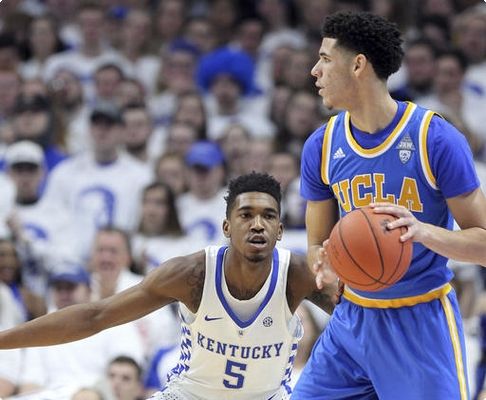
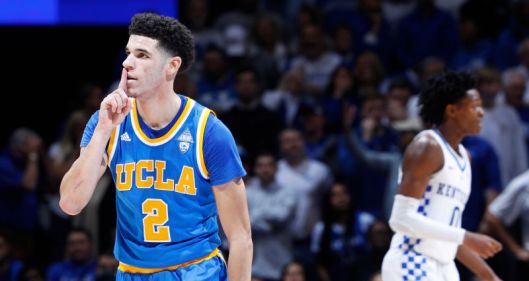
lonzo-kentucky-picture

It is a common exercise to rate prospects in the class against each other, as this drives the selections made on draft night. But this class is being hyped as historically good, and it is worth discussing how this crop collectively compares to an average draft class.

The Short Answer:

This draft is completely loaded at the top. I count 8 players who normally belong in the top 3, including 2 above average #1 picks. There are also 3 high risk elite talents who are just outside of most top 3’s, and then after that the draft becomes normal as the upperclass is fairly thin.

I estimate that this draft is similar to an average draft, but with three times as much top 3 talent as normal. To demonstrate, let’s stack the top 11 talents from the past 3 drafts up against my top 11 rankings:

2014-16 2017
1 Embiid Ball
2 Towns Fultz
3 Simmons Jackson
4 DAR Monk
5 Porzingis Lauri
6 Gordon Fox
7 Ingram Isaac
8 Jabari Tatum
9 Okafor Giles
10 Exum Ntilikina
11 Wiggins DSJ

These lists are well balanced, each side has similar prospect value.

I tried to match current prospects with similar ones from prior drafts while also having a reasonable rank of prior prospects, and it all worked out surprisingly well. The prior prospect list is almost a perfect ranking of how they would be valued today with the aid of partial hindsight.

The only improvement to be made with respect to pairings are swapping non-shooters to match primary handlers (Fox and Simmons) and off ball SF athletes (Gordon and Jackson). It is arguable whether this means that Gordon is underrated, Jackson is overrated, or simply that they are not the same exact prospect. But they are deeply similar, and I have more to say on this comp later.

Obviously the 2017 prospects will not all have parallel fates with their parallel prospect, but I feel this accurately conveys my perception of this draft’s goodness: It is amazingly good, and has clear potential to be the best top 11 of all time.

The Extremely Long Answer:

I am going to break this down into 4 classes: transcendent stars, possible stars, risks, and the non-elite.

Transcendent Stars (Strong #1 picks)
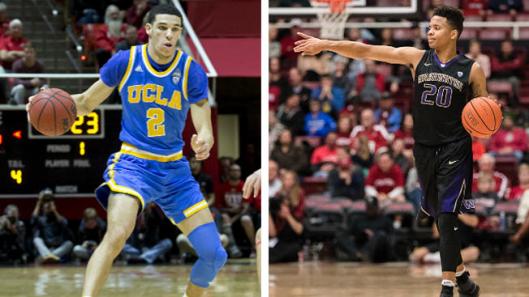
usa-lonzo-ball-markelle-fultz
1a. Lonzo Ball– 6’6″ PG, UCLA
1b. Markelle Fultz– 6’4″ PG, Washington

Fultz is a transcendent physical talent, Ball is a transcendent mental talent. They are extremely close, and I have a difficult time settling on one as superior to the other.

For now I put Lonzo in the lead because he glows with goodness that has captured my attention in a strong way. I cannot stop watching him, I cannot stop writing about why he is great and why his flags are of little concern. Fultz is amazing in his own rite, but I’m giving the edge to the guy who is aggressively pinging my intuition with signs of greatness.

Among historic point gods, I believe Lonzo Ball is most similar to Steve Nash. He may never match Nash’s off the dribble shooting ability, but he also might. Even if he falls short, he can atone for it with a much lower turnover rate and better physical tools to hold his own on defense. It is difficult to envision him becoming less good than Nash. But his incredibly assist:TOV ratio and elite eFG% reminisces of Chris Paul, and Ball has clear potential to be that good. And with his massive 6″ height advantage over Paul, there is wiggle room for Ball to become even better.

Fultz is a hybrid of Dwyane Wade and James Harden with potential to be better. It is almost easier to see him becoming better than those two than worse. His combination of slashing, finishing, and vision at such a young age is exceptionally rare and he is clearly on the path to greatness. Perhaps he develops at a poor rate and falls well short, but how bad can he be at developing his game if he is already this good this young? His biggest question mark is whether his basketball IQ trails his intuitive instincts by enough to preclude him from greatness. It is plausible, but he is so insanely talented that he is definitely going to be good.

I do not think either of these players measures up to Anthony Davis or Joel Embiid in terms of raw pre-draft talent. But they are likely both top 5 prospects of the past decade, as they both have strong cases to be rated superior to Karl Anthony Towns, Blake Griffin, John Wall, and Ben Simmons. I’d rate them as similar to KAT and superior to the latter 3.

Possible Stars (Strong #2 picks to weak #3 picks):

screen-shot-2016-03-31-at-11-35-40-pm

You can rank this tier in almost any order without getting an objection from me. All of the players have clear star upside, but also have flaws that could render them ordinary NBA players.

3. Josh Jackson– 6’8″ SF, Kansas

Jackson offers loads of goodness, as he is elite at everything but shooting and creation off the dribble. But the worries with Jackson are mounting

  1. His 26% 3P and 56% FT are major flags. It’s fun to imagine him making a Kawhi level shooting leap, but Kawhi shot 74% FT in college and had a much better starting point.
  2. Aside from spacing issues– can he be a point forward? As per synergy, he is averaging 0.59 PPP as P&R Handler and 0.46 in Isolation, good for 24th and 9th percentile respectively. This is largely correlated with his shooting woes, as when he does not get to the rim he will often pull up and brick, as he his shooting 29.3% eFG off the dribble (23%ile)

I still have him at #3 because he has such great strengths, and still manages to produce on offense thanks to excellent passing, cutting, and touch near the rim. He reminisces most of the awesome and underrated Shawn Marion with a worse shot and better passing and athleticism. But I also said the same thing about Aaron Gordon in 2014. Gordon appeared to be on the path to stardom after his sophomore NBA season, but now has an unclear upside in the midst of a third year slump.

As mentioned earlier, they are deeply similar prospects who are excellent at everything but shooting and shot creation. Gordon bricked harder on NCAA FT’s at 42%, but he was 1 year 7 months younger as a freshman. His average NBA age is similar to Jackson’s NCAA age, and he has shot better on FT’s (66% vs 56%) and 3’s in spite of longer distance (30% vs 26%). Jackson is a different person and player with his own share of advantages (better rim touch, more steals/blocks, better cutting) and he could develop at a faster rate. But are his advantages enough to outweigh his inferior shooting by a significant enough margin to make him a star? Should we be encouraged by Gordon’s promising sophomore season, or are his third year struggles a sign that it is crazy to take Jackson #3 overall? It’s tough to say–  Jackson is an extremely weird prospect.

I am erring on the side of optimism for now because Jackson’s intangibles are reputedly excellent, as he is a fiery competitor with 3 technical fouls on the season. He is not the type of player I am in a rush to bet against, and placing him outside of the top 3 feels like it would be such a bet. So for now Jackson leads my second tier, but he may creep down to the 4-6 range by draft night.

4. Malik Monk– 6’3″ SG, Kentucky

I normally am opposed to drafting one dimensional shooters with defensive question marks too early. My first post on the site was about Doug McDermott being an overrated prospect, and last season I singled out Buddy Hield as the clear dud of the lottery. But Monk and Lauri Markkanen are outliers, so they get special consideration.

I already wrote about Malik Monk’s elite shooting, and I am not sure why has not received more comparison to Steph Curry. Let’s compare pace adjusted per 40 stats from their freshman seasons:

2PtA 2P% 3PtA 3P% FTA FT%
Monk 9.6 59.3 8.9 41.4 4.6 83.3
Curry 7.8 53.6 10.4 40.8 5.1 85.5

The differences in 3PA rate and FT% such that Monk is not a Curry level outlier in either accuracy or trigger, but the fact that he is even in the ballpark is exciting. He has a chance of becoming the 2nd best shooter in NBA history. And he does far more damage than Curry did inside the arc. Granted, much of that is in transition which translates poorly to the NBA, but Monk’s additional production and athleticism cannot be ignored.

Pts Rebs Asts TOs Stls Blks
Monk 26.3 2.9 2.7 2.3 1.4 0.4
Curry 25.5 5.5 3.3 3.3 2.2 0.2

Curry’s comfortably superior steal and rebound rates in spite of comfortably inferior athleticism imply some drastic instinctual advantage that likely precludes Monk from becoming as good as Curry.

But Monk’s athleticism is evident in his higher block rate, and his ability to avoid turnovers is another feature that helps counter-balance the comparison a bit. And most importantly– Monk’s assist rate is surprisingly close considering that he shares the backcourt with two traditional PG’s in De’Aaron Fox and Isaiah Briscoe. He has shown flashes of impressive vision and passing ability, and it is feasible that he develops into a great distributor like Curry.

Overall Monk’s inferior shot, instincts, rebounding, and ball handling likely preclude him from achieving Curry’s level of greatness. But his athleticism and ability to avoid mistakes give him a shot of coming close. Even if he falls short of Curry, he can still be as good as another hyperefficient shooter who was allergic to rebounds: Reggie Miller.

He could also fall short of Miller, but I would be surprised if he fell on his face altogether. His combination of elite shooting accuracy, volume, athleticism, and offensive feel for the game is too much to not become good offensively. I would be surprised if he is not at least as good as the 2016-17 version of Bradley Beal.

Monk’s flaws are real, and they cannot be ignored. His defense and rebounding will almost certainly be bad as a pro, and it detracts from his value. But offense is much higher leverage for guards, and he has such a high floor high ceiling offensively that I suspect his defensive warts will be well worth stomaching.

5. Lauri Markkanen– 7’0″ PF, Arizona

Markkanen is shooting 83.5% from the line, and the only 7’0″ NBA player with a greater career FT% is Dirk Nowitzki. If you include 6’11” players: Mike Gminski, Jack Sikma, and Bill Laimbeer all check in between 83.7% and 84.9%. Gminski only made 6 career 3P, and Sikma and Laimber shot 33% from 3 on low volume, yet the latter two collectively appeared in 11 all-star games. Then Yao checks in at 83.3%, and the combination of being tall and great at FT’s continues to look like a strong combination.

You need to go below Lauri’s current FT% to find the discouraging comps of Channing Frye, Andrea Bargani, and Meyers Leonard in the 82-83% range for their NBA careers. But their pre-draft FT%’s all pale compared to Lauri as they were all in the 73-76% range, and Bargnani and Leonard were rife with flaws that precluded them from NBA goodness. A better shooting version of Frye would be a reasonable floor for Lauri, which is good for a non-top 3 pick.

Now let’s consider the meaning of his elite FT%. First it loudly suggests that he has a chance to become the best 6’11″+ shooter in NBA history, especially taken in tandem with his 50% 3P. It also hints that he has an outlier level of coordination, which gives him potential to develop an elite creation ability to complement his elite shooting. This is why the Dirk comparison is so pertinent, especially when he has the ability to pull off a move like this off the dribble.

Most are not convinced of the Dirk comp, as Markkanen does not score high volume for Arizona and is consensus rated outside the top 7. But given his hyper efficient 137 O-Rtg and how well he eye tests, I believe his Dirk upside is more attainable than commonly perceived. If nothing else he will be a highly efficient complementary scorer who physically can hold his own on defense, as he does not have lead feet like Steve Novak. He may nevertheless be a poor NBA defensive player due to lackluster instincts and length, but at least he has a chance of competence.

Markkanen’s range is a better version of Channing Frye or Ryan Anderson to the second coming of Dirk. I believe he is underrated by consensus.

6. De’Aaron Fox– 6’3″ PG, Kentucky

With a strong start to SEC play, the quick De’Aaron Fox jumps over the lazy Dennis Smith Jr. in my rankings.

Fox may seem high at #6 considering his poor shooting from all levels: 3P (5/37), mid-range (4/20), and short range (6/21). But he has super powers that cannot be ignored:

  1. His unique combination of quickness, coordination, and ball handling enables him to get to the rim at will, and his touch near the rim enables him to finish efficiently.
  2. He has an elite assist and turnover rate for a volume scorer

His 69% FT suggest that his shot is not hopelessly broken, and it is worth gambling that he makes an outlier leap. One sneaky benefit is that he is so adept at getting to the rim he does not pull up for bricks as often as other bricklaying PG’s, and is shooting 55% on 2P thus far. It is feasible that he becomes a good offensive player even if his shot stays broken, and if he makes a big leap he will become a full fledged stud lead guard.

Most will want to compare him to past Kentucky guards like Rajon Rondo and John Wall, but Rondo is more cerebrally gifted, Wall is more physically gifted, and neither has Fox’s ability to smoothly navigate through defenses.

The best comparison for Fox is Rod Strickland, who shared similar dimensions (6’3″, 175) and had a good statistical prime in spite of limited shooting range. Isiah Thomas has similarities as well. The most optimistic upside comp if he makes the shooting leap is Gary Payton. Although Fox is an extreme long-shot to match Payton’s shooting AND defense, he is a much more advanced scorer at the same age. Yes, it is the pinnacle of optimism, but it is hard to find pertinent comps for Fox since he is such a special snowflake.

The fact that most Fox comps inspire optimism is a good sign, as it is difficult to find a past guard who offered scoring, passing, and limited mistakes while amounting to little in the NBA. In spite of the poor shot, #6 may be too low for Fox as he arguably has as much upside as anybody outside the top 2.

7. Jonathan Isaac– 6’10” SF/PF, Florida St.

Isaac is the defensive specialist of the draft, as his profile is highlight by a rare combination of height and quickness that gives him elite versatility to guard multiple positions. He fits especially well into a heavy switching scheme, and considering his awesome steal, block, and rebound rates he has potential to be an extraordinarily valuable defensive player as a pro.

His biggest warts appear on offense, as he is limited off the dribble and a long windup on his shot results in a low 3PA rate. Consequently, he has a medium usage that does not have great upside to be stretched, and his limited ball skills show in his poor assist:turnover ratio. But he is not a complete disaster on this end– his 38.5% 3P and 82.4% FT imply that he should be an acceptable NBA floor spacer, and he moves well off the ball with great efficiency on cuts (95%ile per synergy) and put backs (97%ile).

Isaac is a one of a kind super role player. There is one strong upside comp who mirrors his physical profile and skill set: Andrei Kirilenko.  Kirilenko is highly underrated and would be an awesome return on any draft slot. Isaac is far from certain to be as good defensively as AK47, and his passing is far behind. But he his a much better shooter and has a reasonable chance of matching Kirilenko’s overall peak value. But Kirilenko is an extremely special snowflake, and Isaac may end up closer to the strikingly similar Marvin Williams. Pace adjusted per 40 freshman stats:

Pts 2P% 3PA 3P% FT%
Isaac 19.9 63.2 4.6 38.5 82.4
Marvin 18.1 52.2 2 43.2 84.7

Isaac converted more shots inside the arc and displayed more comfort shooting from 3 point range. But at 8 months older, there is not much separating their NCAA offensive output.

Rebs Asts Stls Blks TOs PFs
Isaac 11.7 1.6 1.9 2.3 2.6 2.9
Marvin 10.5 1.2 1.7 0.8 2.5 4.1

This is where Isaac sets himself apart, with slightly better rebounding and steal rates and much better block and foul rates. And while he also has an assist:turnover flag, it is a lighter shade of red than Marvin’s.

Overall Isaac is clearly the superior prospect, and a better defensive version of Marvin Williams is not a bad floor. But Williams is a cautionary tale for Isaac’s offensive warts, as his lack of NBA 3P range and ball skills depressed his offensive output early in his career. If Isaac runs into similar translation problems, his offensive weakness may offset his defensive goodness.

Marvin Williams to Andrei Kirilenko presents a wide range of outcomes, but Isaac’s upside and ability to fit in almost any NBA lineup is highly attractive for a non-top 3 pick.

8. Jayson Tatum– 6’8″ SF, Duke

Tatum is the top 8 player that I have the toughest time grasping. On one hand– he has clear two way star potential as his scoring instincts and 85% FT give him offensive upside, and his steal and block rates imply great defensive upside.

Conversely, nothing is guaranteed on either side of the ball. Offensively his FT% is extremely promising, and he also has the ability to score volume and the vision to whip an occasional great pass. But there is also a laundry list of warts to fret over:

  1. Does he have NBA 3 point range? Only making 30% of 3’s on low volume for Duke and seems to be more comfortable in the mid-range.
  2. He gets stripped and swatted a ton for a player of his talent. His high turnover rate and 48% 2P makes his overall efficiency meh in spite of his free throw dominance.
  3. He is a poor offensive rebounder for his size, and pales in comparison to similar players such as Jabari Parker and Carmelo Anthony in that regard.

So he is a mystery box. Maybe he will always be a black hole of inefficiency with limited spacing gravity, or maybe the rest of his skill level will catch up with his elite FT% and he becomes a star on this end. I don’t know.

Defensively the steals and blocks are exciting, but he was never reputed as a lockdown defensive player and Duke as a team has been underachieving on defense relative to their talent level. So maybe he is a sieve, or maybe he makes a positive impact on this end. Again, I don’t know.

His range is roughly an overrated mediocrity like Glenn Robinson to a suped up version of Carmelo Anthony. I am slightly more pessimistic regarding Tatum than consensus, largely because his mold presents a more worrisome downside tail than the other prospects in this tier. But he definitely offers enough goodness to have star upside, thus he occupies the final slot in the tier.

Tier 3: Risky Talents (Standard #4-7 picks):
cg_mftexeaetqln
9. Harry Giles– 6’10” PF/C, Duke

On top of injury flags, Giles has also looked like a disaster since entering Duke’s rotation as he appears completely lost on defense. His instincts look bad, and he also may have some lack of physical confidence as he appears surprisingly prone to bullying for a player of his physical profile.

It is hard to project his NBA future, as he could so easily be a zero. But prior to the injuries, he was a front-runner for the #1 overall pick in front of all of these studs. His AAU stats are awesome, his physical profile is awesome, and he is a rare enough talent to be worth a shot in the dark gamble in the back end of the lottery.

His downside is Andre Drummond with injury flags, his upside is a better version of DeAndre Jordan. Once the tier 1 and 2 players are off the board, it is likely worth it to take a shot on him and hope for the best.

10. Frank Ntilikina– 6’5″ PG, France

Ntilikina is a complete mystery box. His profile suggests that he has clear star potential, but without any reasonable gauge of statistical production we must reduce the odds of his upside being attained and fatten up his downside tail.

Most people will point to Giannis Antetokounmpo as an example of an upsidey mystery box being underrated in the draft, and yes he was an incredible steal who is much better than all 14 players drafted ahead of him. But for every Giannis that binks, there is a truckload of Bruno Caboclos that come nowhere close. How do we tell the difference from afar? We cannot, we can only accept the uncertainty and try our best to rank him at a level headed slot considering his wide error bars.

Ntilikina is playing professionally in France, but due to low minutes and a limited offensive role as an 18 year old string bean, it is nearly impossible to gauge his level of goodness. If he played NCAA we would at least have an idea of how he looks as a primary handler, but as is he averages 3.2 pts per game with more turnovers than assists. He has some home run potential, but is more likely to be a complete whiff.

He cannot go ahead of elite freshmen who solidified their appeal with great NCAA production, but once they are all off the board it is reasonable to gamble.

11. Dennis Smith Jr.– 6’3″ PG, NC State

I rate DSJ as the clear fraud of the lottery, as in spite of his great athleticism and statistical production his team continues to rack up losses. This is because he has poor basketball IQ, makes inaccurate passes, and over gambles on defense.

And while his talent is good, it is not great. He has great athleticism, but isn’t an explosive freak and his poor wingspan and reach diminish his physical profile. And while he is a capable shooter, he is not great. His intersection of handles, shooting, athleticism, and vision are nice, but not special or outlier enough to make him an exciting gamble in the top 5 given his losing tendencies.

I have a hard time seeing Smith as a star that helps his NBA team win games, although he may post nice fantasy stats as a pro. His upside is Stephon Marbury and his downside is just bad. Maybe I am underrating him– I do not feel quite as pessimistic for him as I did for Andrew Wiggins. But I have a hard time getting excited for him relative to the other studs in the class.

Tier 4: The Rest (standard #8-16 picks)

012716ethanhapp
12. Isaiah Hartenstein
13. Rodions Kurucs
14. Ethan Happ
15. Ivan Rabb
16. Miles Bridges
17. TJ Leaf
18. Robert Williams
19. Andrew Jones

20. OG Anunoby

After the top 11, the draft starts to lose appeal as the non-freshmen are fairly weak this year. But there are a few players who deserve mention.

Interationals:

Hartenstein is a rapidly rising international who is gaining appeal based on his great physical profile and balanced stat stuffing in FIBA U18 play. I just skimmed his DX profile and know little about him, but it is possible that after further analysis he should belong a tier higher. He is highly appealing at a glance.

Kurucs is a young, versatile, international wing who may not declare for this draft.

NCAA non-freshmen:

Happ, Rabb, and Anunoby are my super sophomores and the only NCAA non-freshmen I have in my top 21. The ones who just missed the cut are Dedric Lawson, Bryant Crawford, and Josh Hart.

Happ is the underrated gem of the draft, as he excels at everything but shooting and has potential to be a Draymond/Millsap level steal when he declares.

Rabb will likely be a solid NBA player similar to the Zeller bros, but it is difficult to see his path to stardom. Anunoby is a one way defensive beast who recently underwent season ending knee surgery. I believe he is too much of an offensive zero to justify a lottery selection as he is currently projected.

The Other Freshmen:

Bridges is the consensus next best freshman after the elite group. He has the athleticism, smoothness, and balanced production to sum to a quality NBA player, although his questionable efficiency and steal rate hint at him not being a future star.

TJ Leaf has significant appeal as a skilled and smart PF that offers versatile scoring and passing. His downside is his limited athleticism and defense. I would have an easier time getting excited over Leaf’s offense if he shot better than 62% FT, but he nevertheless pings my intuition as a player whose upside is underrated.

Robert Williams is a weirdo who pairs great length and athleticism with a unique skill set, as he offers great passing, cutting, and rim touch for a pogo stick. But his shot is a work in progress, and his offensive creation ability is sorely limited.

I wrote about Andrew Jones as Diet Russ, and since then he has committed many turnovers. He still piques my interest as a player who has nice upside if his skill level improves at an outlier rate, but right now he is incredibly raw.

Bruce Brown is my top freshman to miss the cut. He is an unheralded athletic freshman SG for Miami who is a nice athlete and does a little bit of everything.
Does Lonzo Ball Hard Enough?

20 Friday Jan 2017

Posted by deanondraft in NCAA

≈ 11 Comments

Tags

GOAT, Lonzo Ball

dyodpj9mlpaqmtbqe58g

I have already written why I believe Lonzo Ball has immense upside as a possible transcendent NBA star. But for his upside to be attained, he needs to not have any major obstacles in his path that offset his strengths. In this article I will look for a negative comparison to see if there are any frightening signals in Ball’s performance thus far that should cause any assessment of his upside to be skewed downward.

A common narrative on basketball twitter is that Lonzo Ball cannot create offense for himself, and we should be extremely worried about it. The best way to assess the validity of this narrative is to look at historical pass first point guard prospects who struggled to score. Let’s start by making a list of guards drafted in the top 10 during the lottery era who were better at passing than scoring:

Year Pk Player
1994 2 Jason Kidd
2005 3 Deron Williams
2005 4 Chris Paul
2007 4 Mike Conley
2005 5 Raymond Felton
2009 5 Ricky Rubio
2016 5 Kris Dunn
1987 6 Kenny Smith
1998 7 Jason Williams
1999 8 Andre Miller
2003 8 T.J. Ford
2013 9 Trey Burke
1989 10 Pooh Richardson

That’s a pretty good list, as there are few busts and many of these players were as good or better than their drafting teams hoped. The first lesson to be gleaned is that it’s rare for pass first PG’s to be badly overrated in the draft. But there is the occasional Trey Burke or Kris Dunn, so let’s dive further and see how these players compared to Lonzo as freshmen. Stats are pace adjusted per 40, with an * for the players that are not pace adjusted due to lack of pace data:

Player Pts eFG% AST TOV
JWill* 18.4 58.5% 8.7 3.7
Burke 18.3 50.5% 5.7 3.5
Paul 16.6 57.0% 6.6 3.1
Kidd 15.6 50.5% 9.1 4.7
Lonzo 15.0 65.9% 8.5 2.5
Conley 14.6 55.2% 7.9 2.9
Felton 13.9 48.9% 7.3 4.0
Miller* 13.4 54.9% 7.2 4.1
Ford 13.2 42.3% 10.1 4.8
Smith* 12.6 51.9% 6.8 4.3
Pooh* 12.5 49.2% 7.3 3.8
Deron 9.1 50.6% 6.6 2.7
Dunn 8.8 41.5% 4.8 2.9

If there is a signal for disappointment it likely comes in assist rate. Dunn and Burke come in at the bottom as the two biggest busts.

Dunn was a completely disaster all around as a freshman, and was even worse in 4 games as a sophomore before finally putting it together as a junior. Trey Burke never had natural point guard skills, and was also plagued by his diminutive size and poor athleticism. Neither of them can be seen as pertinent comps for Lonzo.

Next– where are the scoring flags for Lonzo? Raw point totals are not precise measures of creation ability, but he has easily the highest eFG% on the list and could easily have the highest scoring rate if he attempted more inefficient shots. Based on how basketball twitter rails on his lack of scoring, you would expect him to be dead last on the list. Yet here he is with the best scoring stats of the bunch.

Also let’s take a moment to appreciate that to match Jason Kidd’s freshman offensive output, Ball would merely need to add a truckload of bricks and turnovers to his profile.

Forget Creating Shots, Let’s Talk About Making Them!

On average, the high eFG% prospects panned out well, with Paul, Conley, and Miller all providing great values for their slots. Jason Williams is the only questionable one. But he was a 20 year old freshman playing for mid-major Marshall, only 6’1″, and seemed more in tune with making mixtape highlights than racking up efficient attempts for his teammates. And he still had a still has 71% percentile career win shares for all time #7 overall picks, which is rather good for the most negative example of the bunch.

Perhaps people should be less worried about Ball’s lack of elite creation and more impressed with his outlier ability to never miss.

Speaking of missing shots– this chart excludes Ricky Rubio, who never played NCAA basketball. Rubio struggles to score simply because he cannot convert shots from any part of the court, and he has been plagued by a career of low usage and horrific eFG%. Yet he is still considering a good point guard. Even if Ball does not measure up defensively, his passing and shotmaking ability completely dwarf those of Rubio, and I would say that a more offensively gifted (and overall better) version of Rubio is his absolute floor.

Reaching Deeper For Comps

Outside of the top 10 you are looking at talent that is badly dwarfed by Ball, but it is still difficult to find any sign that an elite passer who can make shots busts. I am not going to be as comprehensive here, just going to offer a balanced list of players who offer both positive and negative outcomes. Also not pace adjusted for anybody but Lonzo, and I used career stats for all:

Player Pts eFG% AST TOV
Lonzo 15.0 0.659 8.5 2.5
Stockton 15.9 0.559 6.6 3.5
Nash 19.9 0.537 6 4.1
 Jackson 13.3 0.537 7.4 3
Marshall 10 0.505 11.1 3.7
Bogues 11.1 0.494 8.8 3.3
Williams 12.8 0.455 10.4 4.7
Ennis 14.5 0.453 6.2 1.9
MCW 13 0.445 8.2 3.7

I included Kendall Williams and Marcus Williams because they are players with outlier assist rates who busted. But you can see that Williams had a horrible eFG%, and Williams had a horrible scoring output with a mediocre eFG%. They provide examples of what REAL scoring flags look like, and you can see Lonzo is light years ahead of them.

And some non-scorers don’t fall on their face: Muggsy Bogues shows that you can have serious scoring flags and still have an NBA career at 5’3″ if you are good enough at creating for teammates and avoiding mistakes.

This chart agrees with my earlier theory that Lonzo’s shot making deserves more love. The three best slot values in Stockton, Nash, and Mark Jackson all had the best eFG%’s of the group, and the brickiest players busted the hardest.

Conclusion

Given the way some people talk about Ball’s scoring flags, you would think that there would be SOME historic comp that offers a scary downside scenario. But there’s nothing there. Scoring is the most easily quantified statistic, and there is no example of a pass first point guard who has busted without having a scoring output that is light years inferior to that of Ball.

This analysis does not completely assuage concerns, as a significant portion of his scoring comes off the ball or in transition. Further, his 43% 3P% may not be sustainable. Some of the better NBA players may have had some offensive advantages that are not directly perceptible by simply looking at the numbers. But he passes the negative comp test so comfortably, it is difficult to see how his limited creation could prove debilitating.

If anything this analysis suggests that he has an outlier scoring edge in his completely awesome eFG%. I believe this deserves more attention than his lack of high scoring volume. After all, his scant attempts at creating have been highly efficient– perhaps he would assuage creation concerns if he was not such a genius at avoiding low quality attempts.

Ball’s strengths are clearly elite. His basketball IQ is through the roof, he makes insanely difficult passes with pinpoint precision, he has made 43% of his 3PA with most coming from NBA range, and his physical profile is stellar for a player with his combination of skill and smarts. He has limitations in his game much like every other prospect, but where is the evidence that they remotely weigh as heavy as his positive strengths?

Putting too much emphasis on Ball’s weaknesses qualifies as getting lost in details. It is akin to arguing that a beautiful woman is not attractive because she has pointy elbows– it’s great that you noticed a flaw, but giving this flaw too much attention is only going to lead to faulty conclusions. The bottom line is that Lonzo oozes star potential, and there is no quantifiable signal that suggests he has serious downside risk. He is probably going to be awesome, and I cannot fathom that it is correct to draft any prospect other than Markelle Fultz ahead of him.

Is Markelle Fultz a Loser?

15 Sunday Jan 2017

Posted by deanondraft in NCAA

≈ 3 Comments

Tags

De'Aaron Fox, Dennis Smith Jr., Lonzo Ball, Malik Monk, Markelle Fultz

11032016-uwwesternadds012-1020x757

Markelle Fultz seems to be losing traction as the clear cut #1 overall pick due to a lack of team success, as his Washington Huskies have struggled badly. Let take a look at some stats to analyze the veracity of the narrative that Markelle Fultz is a loser.

Lorenzo Romar’s Washington Tenure

Let’s start at looking at the simple O-Rtg, D-Rtg, and kenpom rank during Lorenzo Romar’s tenure at Washington.

Screen Shot 2017-01-15 at 4.40.58 PM.png

First you can see that this is his worst team since his first season as Huskies’ coach in 2003, and for a major conference team with an allegedly transcendent prospect that is definitely bad.

You can also see that the culprit is largely bad defense, as the #248 rank (out of 351) is far worse than the 2nd poorest at #167. There are a number of factors that go into this, and the worst conclusion that can be made is that Fultz gives a Harden-esque effort in spite of good rebound, steal, and block numbers. It is plausible that he does, but great point guards make their biggest impact on offense which deserves the most attention.

And on the bright side, the offense has been pretty good, as Romar has not had a more efficient offense since 2011. Romar did have a number of more efficient offenses from 2004-2011, but those were all LOADED with NBA talent. Here is a chart of the NBA talent that passed through Washington during that stretch:

Year Rank NBA 1 NBA 2 NBA 3 NBA 4
2004 29 Brandon Roy Nate Robinson
2005 5 Brandon Roy Nate Robinson
2006 14 Brandon Roy Jon Brockman
2007 45 Spencer Hawes Jon Brockman Quincy Pondexter
2008 75 Quincy Pondexter Jon Brockman
2009 35 Isaiah Thomas Jon Brockman Quincy Pondexter
2010 45 Isaiah Thomas Quincy Pondexter Justin Holiday
2011 13 Isaiah Thomas Justin Holiday Terrence Ross CJ Wilcox
2012 62 Terrence Ross Tony Wroten CJ Wilcox

You can see his best offenses were LOADED with NBA talent, and often had quality role players who were a notch below NBA caliber. It is somewhat amazing that Washington never peaked higher with all of the talent that passed through over this stretch (especially with 4 years of Roy and 3 years of Thomas), but it goes to show that Lorenzo Romar is the king of doing less with more.

Modern Day Huskies

maxresdefault

Let’s peep the 2015-16 roster with minutes played, offensive BPM, and total BPM:

Player Mins OBPM BPM
Andrew Andrews 1150 8.2 8.9
Marquese Chriss 848 2.8 5.9
Dejounte Murray 1139 1.8 4.3
Matisse Thybulle 819 1.2 5.1
David Crisp 728 0.8 1
Malik Dime 720 0.7 6.1
Noah Dickerson 736 -2.2 -0.3
Dominic Green 337 -2.8 -3.2

It is well known that the Huskies lost Marquese Chriss and Dejounte Murray to the NBA draft, but graduating senior Andrew Andrews was by far the team’s best player statistically, especially on offense. Collectively these three carried the load offensively, and were likely the top 3 players on the team overall.

The other five players in the chart all returned, not that this is particularly good news. The only returner who is probably useful is Matisse Thybulle. Malik Dime had a strong total BPM, but that is largely derived from his gaudy block rate which is heavily overrated by BPM at the NCAA level. Suffice it to say that Fultz stepped into a rough situation.

Fultz & Friends

Fultz was tasked with replacing both Andrews and Murray’s production offensively. He was given Washington’s 5 weakest players from last year’s team, plus two incoming freshmen who were lowly 3* recruits in Sam Timmons and Carlos Johnson. Let’s see how BPM rates this year’s team:

Player Mins BPM
Markelle Fultz 587 9
Matisse Thybulle 464 5.2
Malik Dime 321 4.6
David Crisp 535 1.7
Noah Dickerson 442 -0.3
Dominic Green 385 -1.5
Sam Timmins 218 -4.8
Carlos Johnson 227 -5.3

Timmons and Johnson have been so bad that their badness exceeds Chriss and Murray’s goodness. If there was a draft for bad high-major rotation players, they would both be lottery picks. One may argue that a good PG should make bad players presentable, but they have respectable eFG% at 53% and 52% respectively. BPM dislikes them for poor passing, frequent turnovers, and poor defense, which are all beyond Fultz’s control.

But in spite replacing the 22 year old star Andrews at age 18, and in spite of two NBA 1st round picks being replaced with low major caliber talent, the offense has still gotten BETTER under the guidance of Fultz, leaping from #86 to #54 in national rank

If anything we should be impressed with Fultz keeping this sinking ship afloat on the side of the floor that point guards are meant to impact. He walked into the perfect storm of horrible coaching and horrible teammates, and even Lonzo Ball would struggle to win in this environment.

The Real Loser of the Lottery

209b3547ef0b452581bb24048d22a03c

Dan Hanner does a fantastic job modeling the NCAA for SI.com based on player statistics, recruiting ratings, and coach data. His ratings provide a reasonable baseline for expectations, and because point guards have such significant offensive impact, let’s see how the top point guards’ team offenses are faring in comparison to his projections:

Team Projected Actual Diff
UCLA 116.7 123.9 7.2
Kentucky 119.2 122.4 3.2
Washington 110.3 111.3 1
NC State 117.6 112 -5.6

UCLA dropkicking expectations is hardly a shock with both Ball and Leaf being great. Kentucky performing well is also not a surprise with both Monk and Fox playing well. Washington is surprisingly performing ABOVE expectation offensively in spite of everyone and everything outside of Fultz being awful.

But the lead guard whose team is completely failing to live up to expectations is Dennis Smith Jr. Hanner highlighted NC State as a sleeper based on myriad of quality talent surrounding Smith, including multiple good shooters and an underrated offensive coach. Omer Yurtseven busting does not help, but the model did not rate him of integral importance to NC State’s offense. He was projected to rank just 5th in both minutes played and O-Rtg.

The more important point is that Smith was a highly rated PG surrounded by great shooting and multiple talented role players. Everybody outside of Yurtseven has been fine, and it’s clear that the lion’s share of the blame goes to the guy who always has the ball in his hands.

As of now NC State has the worst ranked offense in Mark Gottfried’s 6 years as head coach at #44. Over the prior 5 years, he has had 2 NBA draft picks: Lorenzo Brown and TJ Warren. Brown and Warren combined for the #10 offense in their season together. Since Warren’s departure, NC State’s best players have been Trevor Lacey and Cat Barber who both declared for the draft as juniors and went undrafted, yet were enough to muster the #25 and #33 offenses as lead guards.

The problem is that Smith’s poor decision making and questionable passing accuracy have led to a much higher than usual turnover rate. And for good measure, they also have the worst defense under Gottfried’s tenure. This is why Dennis Smith will never be as good as Ball or Fultz– he is a talented player, but his impact on his team’s success will always trail his individual statistics.

Bottom Line

6_4925959

Washington is an overall worse team than NC State, but Fultz is playing with much worse teammates for a much worse coach. Point guards should be able to make a positive impact on their team’s offense, and in that regard Fultz is succeeding and Dennis Smith Jr. stands out as a loser.

In fairness, I somewhat glazed over Washington’s defensive woes in this writeup. Fultz does have an impact on D, and he likely is worse on that end than his gaudy steal, rebound, and block rates imply. But even if he is as bad on Harden on D, does it really matter if he is as good as Harden on offense? Smith has even greater defensive concerns as his lack of reach makes him a liability on switches, and he doesn’t sniff the offensive upside of the other point guards in the draft.

Lonzo Ball is a winner, Malik Monk and De’Aaron Fox are likely winners, and Markelle Fultz could be a big time winner once placed in the correct environment. If NBA teams are worried about drafting a loser to lead their offense, they should steer clear of Dennis Smith Jr. and select literally any other lottery freshman instead.

Lonzo Ball Is a Basketball Genius

15 Sunday Jan 2017

Posted by deanondraft in NCAA

≈ 10 Comments

Tags

Chris Paul, Dennis Smith Jr., John Stockton, Lonzo Ball, Steve Nash

lonzo-ball-steve-alford-1300

Lonzo Ball has drawn massive hype as an NBA prospect, as he is now in the conversation for the #1 overall pick in spite of Markelle Fultz’s existence. He has become a polarizing figure on basketball twitter as some perceive him as Basketball Jesus, whereas others see him as a non-deity who cannot create his own shot at the rim or play defense.

Scouting Report

It is common to evaluate prospects based on which boxes they check off, and Lonzo is considered a big risk through this lens. Neither his handle nor first step is elite, and he rarely creates his own shot at the rim. And while he is shooting 43% from 3, his 68% FT’s and low release on his jumper raise concerns for his ability to consistently make NBA 3’s. And because he is a non-elite athlete who struggles to defend at the point of attack, we are left with a point guard who cannot get to the rim, can only maybe shoot, and cannot defend. When you view it that way, Lonzo sounds far from awesome.

But the counterpoint is that Lonzo has strengths in his game as well, and they are spectacular. It starts with his supreme basketball IQ, which has potential to be the best basketball IQ in NBA history. He constantly pushes pace and dishes picture perfect passes to set up his teammates with high quality shots in their hot spots. This is his one big strength which has captivated the draft world.

Aside from smarts, Ball has elite size for a PG at 6’6″, and even though he is not an explosive freak, he moves well and is a pretty good athlete. Height is an extremely important tool for a PG, as it gives him the ability to see and pass over defenses as well as switch onto wings defensively. Overall his physical tools are a significant positive, as they enable him to rack up good rebounds, steal, and block totals for a PG.

The Checkbox Fallacy

The problem with grading a player based on checkboxes is that it will penalize a player for multiple minor flaws and an outlier strength. Let’s play devil’s advocate to Lonzo’s flags:

While Ball does have downside on defense, his physical tools, rebound, steal, and block rates offer just as much upside on that end. If nothing else his height gives him the ability to fit in well with a heavy switching defense. And while he is flawed, nothing is broken in a way that precludes him from being great defensively as a pro.

His shot is a minor concern, but if he ticks up his FT% it becomes trivial. He is currently at 68% in an extremely small sample. In 2015 AAU play he shot 24/31 from the line, and if you sum that with his UCLA sample he is up to 71%. He is shooting 43% from 3 on nearly twice as many 3PA as FTA with the majority of his makes coming from NBA 3 range, and he rarely misses badly. His shot is not perfect, but is a clear positive in my eyes.

The greatest concern is his ability to create for himself, but there are a number of mitigating factors:

  1. As per synergy, he ranks 91 percentile as both a PnR handler and isolation scorer. He attacks infrequently, but is efficient when he does.
  2. His off the dribble shot qualifies as creation, and while he only has 14 attempts he has 20 points ranking him 99%ile. Small sample yes, but he often takes this shot from NBA 3 range and rarely misses badly.
  3. There have been elite NBA PG’s such as Steve Nash and John Stockton who did not put significant pressure on the rim in college. It is not nearly a fatal flaw given the skill set.
  4. He moves well off the ball, and often dunks home lobs off of cuts. Even if he needs creation help, he can still be a dynamite off ball player with size to defend wings.

Overall Lonzo has a handful of pink flags in his game, but no glaring red flags. Meanwhile, he has the one outlier strength of being a basketball genius that should carry exponentially more weight than the weaknesses in his game.

Basketball IQ and Point Gods

nba_g_nashpaul_580

Let’s take a moment to look at the most successful players drafted outside of the top 3 in NBA history:

Year Pick Player WS WS/40
2005 4 Chris Paul 150.8 0.251
1984 5 Charles Barkley 177.2 0.216
1985 13 Karl Malone 234.6 0.205
1978 6 Larry Bird 145.8 0.203
1998 9 Dirk Nowitzki 198.8 0.201
2009 7 Stephen Curry 77.7 0.200

We have a couple of non-athletes who dominated with smarts and skill in Bird and Curry on the list, but the player I want to focus on is the guy at the top: Chris Paul.

Chris Paul was drafted after Andrew Bogut, Marvin Williams, and Deron Williams because 6’0″ players never become superstars. But Chris Paul bucked that trend, and is likely the best player in NBA history 6’5″ and under. He did so by being a basketball savant with parallels to Lonzo Ball, as his efficient PG play led Wake Forest to the #1 offense in both of his NCAA seasons.

Now let’s see the best players drafted outside of the top 14:

Year Pick Player WS WS/48
1984 16 John Stockton 207.7 0.209
1996 15 Steve Nash 129.7 0.164

Oh hey, it’s two more basketball genius PG’s that like Ball were neither elite athletes nor scorers.

Basketball IQ is an incredibly important trait for a point guard. The PG has the ball in his hands the most, and is constantly making decisions that affect his team’s scoring output. Consistently good decision making can add up to a tremendous amount of value, therefore it should not be a surprise that three of the biggest draft steals in NBA history had an elite basketball IQ to overcome their flaws that caused them to slide.

Now consider that Lonzo’s pre-draft flaws are more trivial, as he is has a much better physical profile than any of Paul, Stockton, or Nash, and he also has far more draft hype than any of the three as well. The additional hype does not make him necessarily better, but imagine: what if he overachieves his draft expectation as much as the aforementioned trio? He would be in the conversation for the best player in NBA history.

To me it is incredible that people care more about the ability to put pressure on the rim than his basketball IQ. There is only one Russell Westbrook, and there will likely not be another. Most all-time great PG’s are more cerebral than athletic, with Steph Curry, Jason Kidd, Magic Johnson, and pre-injury Penny Hardaway as further examples. If you look at the athletic scorers with average IQ outside of Russ, you are more likely to end up with a Stephon Marbury or Allen Iverson who are not causes to tank for.

But How Do We Know Lonzo is a Basketball Genius?!? 

Great question! After all, it is awfully aggressive to rank him up there with the creme de la creme of basketball IQ’s in NBA history. First, let’s look at UCLA’s team offensive success under Steve Alford via kenpom.com:

screen-shot-2017-01-15-at-11-18-33-am

Steve Alford is not a great coach (without Ball he clearly undervalues 3PA), but he does attract great talent. In 2014, he took over a loaded roster featuring Kyle Anderson, Jordan Adams, Norman Powell, Zach LaVine, and the efficient Wear twins. This resulted in easily his best offense in 21 pre-Ball seasons as a college head coach at #11 in NCAA, as his next best ranked #38 for Iowa in 2005.

Now Lonzo, Leaf, and company are waffle crushing that team with the #1 offense in the country. Lonzo’s impact is noticeable in a few ways: 1) UCLA is posting a historic eFG% as he creates elite shots both inside and outside the arc, 2) The team has a massive spike in 3PA rate as he understands that 3 pointers are better than mid-range, and 3) the team’s tempo and average possession length are faster than ever because he knows to push pace and move the ball crisply.

Not only does Lonzo create elite shots for his teammates, he does so with an unprecedented ability to avoid turnovers. Let’s compare his NCAA per 40 stats to other PG’s. Note that Nash and Stockton were late bloomers so I used their senior year stats, and career samples for the others:

PTS AST TOV AST:TOV
Ball 16.5 9 2.6 3.5
Paul 18 7.5 3.2 2.3
Stockton 22.2 7.6 3.5 2.2
Kidd 17.8 10 4.9 2.0
Nash 20.1 7.1 4.2 1.7
Penny 21.8 6.5 3.9 1.7

You could mention that a bust like Tyler Ennis had a nearly as good assist:TOV rate (3.2), but he did so by making low risk, low reward passes for a team with a below average eFG%. To be a risk taker like Lonzo and create monster eFG% for his team and STILL avoid turnovers is nothing short of godlike.

Chris Paul is the gold standard for NBA assist to turnover rate, and Ball puts his numbers to shame. Granted, Ball benefits from a lower scoring volume (I did not adjust for pace so his volume is even lower than it appears), but the point is clear: we have never seen a player create shots for his teammates while avoiding turnovers like this ever before. Not even close.

So Lonzo is going to better than all of those studs?

1750408-e1371719551821

Not necessarily. There are areas he pales in comparison to this group, even outside of scoring volume. Looking at career per 40 rates for everybody (again, not adjusted for pace):

Player STL FT%
Nash 1.7 86.7%
Paul 3 83.8%
Stockton 3.1 71.9%
Penny 2.7 71.7%
Ball 2.1 67.8%
Kidd 4.1 67.7%

Again, not pace adjusted so Lonzo’s steal rate is slightly inflated here. The only player who gets fewer steals is Nash, who makes up for it with a much better FT%. Kidd is the only player who is as poor at the line, but he makes up for it with double the steal rate. Meanwhile Chris Paul crushes him at both, so perhaps he has some subtle cerebral and skill advantage that will prevent Ball from reaching his status as a point god.

The steal rate also lends credence to his defense being a problem, as in spite of his tools he is much closer to Nash the sieve than the the great stoppers like Stockton and Kidd.

While there is some evidence that Ball is in a league of his own as a point god, there is other evidence that he is a notch below the creme de la creme. It is possible that he peaks as the best of the bunch, but he also could be the weakest link.

Conclusion

There are enough flaws in Ball’s game to stop short of calling him a guaranteed hall of famer, which is how I felt about Joel Embiid when he played at Kansas. But there is much to love, and nothing to strongly dislike. He is definitely going to be a good NBA player, and is likely going to be great one.

I have watched him play more than any other prospect in this class, and every time I see him I feel as if I am witnessing greatness. He runs UCLA’s offense as perfectly as a 19 year old can, and it is mesmerizing to see him consistently set up his teammates with amazing shots with such infrequent mistakes.

This draft class is so loaded, it is still early to come to many hard conclusions. But I have seen enough of Lonzo to come to a few:

  1. He is clearly a top 2 prospect on my board. Josh Jackson has great upside, but his shot is a much bigger wart than any of Ball’s, and I do not think he has as much overall goodness as Ball’s basketball IQ offers.
  2. Ball deserves consideration at #1 overall. Markelle Fultz is an incredible talent in his own rite, but it is plausible that Ball is the better prospect. I am not sure who will end up #1 on my final big board, right now they are super close to me.
  3. Dennis Smith Jr. has approximately 0% odds of becoming a better NBA player than Ball. He is the inverse of Lonzo as he passes the checkbox test, but his limited basketball IQ and size make him a poor gamble in the top 5.

Diet Russ: The Lottery Freshman Nobody Is Talking About

25 Sunday Dec 2016

Posted by deanondraft in NCAA

≈ 1 Comment

Tags

Andrew Jones, Russell Westbrook

This year’s draft class is the gift that keeps giving. There are ten possibly elite freshman in the class, and a handful of other good ones that deserve lottery consideration. And recently an 11th possibly elite one has begun to emerge, and nobody is talking about him yet.

Diet Russ

One of the most badly overused draft comparisons is Russell Westbrook. People want to believe that every big PG with a hint of athleticism has potential to develop at an outlier rate from a pretty good NCAA player into an NBA star like Westbrook. But Westbrook is an outlier of outliers, as he is likely the most explosive player in NBA history and he complements that with an elite motor, vision, and work ethic to develop into the beast he is today.

So when you compare a player to Westbrook, the first problem is that he is definitely less athletic. The other problems are that his basketball instincts may be broken in some way, and that most player do not progress at the same outlier rate. Thus there is only one Russ, and we are left grasping at straws to try to find Diet Russ.

But Westbrook is nevertheless an important outlier to show the upside of athleticism. He is currently posting the highest single season BPM in NBA history, yet players such as Michael Beasley and OJ Mayo were drafted ahead of him. His NCAA performance offered no clear indication that he was on track to becoming an NBA star. It was merely enough to demonstrate that his basketball instincts were not broken for a young, athletic freak. Let’s compare our future Diet Russ to the real version’s sophomore season via per 40 minute pace adjusted stats:

TRB AST STL BLK TOV PTS
Diet Russ 7.0 5.0 2.1 0.5 3.5 18.8
Actual Russ 4.7 5.2 2.0 0.2 3.0 15.5

Diet Russ is a month younger than sophomore Westbrook, and he does not look diluted at all in terms of production. He has more rebounds and blocks than the triple double machine, and scores at a higher rate. Shooting splits:

2PA 2P% 3PA 3P% FTA FT%
Diet Russ 6.6 60.5% 5.6 34.4% 6.4 78.4%
Actual Russ 9.8 49.7% 2.4 33.8% 4.7 71.3%

The only flag is the lower 2PA rate, but I believe it largely stems from better shooting range and shot selection. As per synergy only 1 of his 38 2PA have come from mid-range and 4 have come on short range jumpers. When he attacks he tends to get all the way to the rim, and he appears to have more 3 point potential than Westbrook at the same age.

Who is this Mystery Freshman?

It is 5* Texas guard Andrew Jones.

As always, there are caveats. He is an explosive leaper, but he does not match Westbrook’s power and explosion. Also his statistics are a small 230 minute sample that includes a fair share of weaker opposition. In spite of his good 2P%, Jones still struggles to make layups off the dribble, as his handle is still limited and his PG ability is a major work in progress. And while his early rebound rate is impressive, he gets dwarfed by Russ’s ORB% (1.0 vs 5.8) which is a more significant signal than DRB%.

But it is hard to not be intrigued. Unlike other super athletes such as Andrew Wiggins and Jaylen Brown, his basketball instincts do not seem to be broken. Like Westbrook, he merely requires significant development of his point guard skills. This is far from guaranteed, and it is possible that he never progresses enough to become a good NBA player. But in the instance that it does, there is nothing preventing him from becoming a top 10 NBA star.

Compare him to a prospect such as Kentucky’s De’Aaron Fox. Fox is quicker with drastically more polished PG skills. But Jones is an inch taller with more explosiveness and better strength, and if he closes the gap in PG skills he has more potential to finish in traffic against NBA defenses as well as defend NBA shooting guards. Further, his superior shot gives him much more potential to play off the ball as well as make pull-up jumpers when he can not get all the way to the rim. Fox’s upside is tantalizing in the scenario that he learns to shoot, but Jones has an even more appealing upside if he can learn to play point guard.

Of course this is not to say that Jones necessarily will develop into a point guard. Right now his interior buckets are limited to beating the defense down the court, attacking before the defense is set, or attacking mismatches off the dribble. Jones rarely attacks when there is not a clear seam, which is indicative both of good feel for the game as well as the current limitations in his ball skills.

More Than Just a Potential Slasher

The offensive selectivity should prove to be a nice feature if he never develops into a great scorer. He still would have some potential as a 3 and D player who can attack closeouts and move the ball as a super role player. Granted, neither his 3 or D are guaranteed to be elite. Defensively his rebounds, steals, blocks, and athleticism show promise, and he can move well laterally. But he is also undersized for a SG and does not appear to be a lockdown defender at this stage of his career. His early shooting statistics show enough promise, and he appears to have NBA 3 point range. But shooting is difficult to predict, and in AAU play he only shot 31% on 3’s and 69% on FT’s.

Ultimately there is no guarantee that any of his passing, shooting, defense, or offensive creation ability to prove to be above average at the NBA level. Jones is largely a mystery box, and he may never fulfill his potential. But there is also nothing broken or sorely limited about any of his abilities. For a great athlete with good feel and instincts, that offers a gargantuan upside tail that makes him an excellent gamble in the lottery.

Jones is a mystery box, and early in his freshman career it is difficult to rank him with any certitude. But he looks like he is probably worth a top 10 pick in the draft and possibly top 5, as his upside tail is as elite as most of the other stud freshman in the class. He will not develop into a do it all monster like Russell Westbrook because nobody will, but if he becomes a the diet version plus a better 3P shot and more efficient shot selection, that is an awesomely valuable player.

Andrew Jones has slid under the radar via being outside of the top 20 in recruiting rankings as well as Texas’s disappointing start to the season, but it is time to start giving him attention as he is yet another gem in a loaded freshman class.

2017 Early Draft Big Board

20 Tuesday Dec 2016

Posted by deanondraft in NCAA

≈ 11 Comments

The non-conference NCAA season is almost over, and we now have a glimpse of what the top freshmen have to offer. The early returns are extremely promising, as this draft class has potential to be the best top 10 of all time. I have not had time to thoroughly watch all of the top guys so these rankings are highly fluid, but this is what I have so far:

1. Markelle Fultz: 6’4″ PG/SG, Washington

Everything about Fultz screams superstar. He has the skills, he has the tools, he has the instincts, and his statistics are off the charts for an 18 year old freshman. His team success is lagging, but that is likely attributable to teammates and coaching that is even more dreadful than Ben Simmons had to work with. Unless some serious flags arise as the season progresses, it is hard to imagine him not being the #1 pick, as his profile is just dripping with greatness. He is arguably a top 3 prospect of the past 20 years along with LeBron and Anthony Davis.

I don’t want to go overboard with the praise as I have not watched him enough to rate him over past prospects such as Oden, Durant, Embiid, and Towns with high confidence. But based on his numbers and physical profile his upside is boundless, and for now he is the clear tanking prize of the draft.

2. Lonzo Ball: 6’6″ PG, UCLA

Ball is polarizing, as he does not have overwhelming athleticism nor is he much of a scoring threat. But the draft is about finding players with outlier strengths rather than no weaknesses. And it is worth considering the possibility that Ball could become the best passer in NBA history.

In 15 years at coaching at UCLA, New Mexico, and Iowa, Steve Alford has never had a top 10 offense or a top 20 eFG%. His best was the loaded 2014 UCLA team featuring Kyle Anderson, Jordan Adams, Zach LaVine, and Norman Powell. They finished #11 in kenpom offensive efficiency, and #22 in eFG%.

12 games into the season, Ball’s UCLA team has the #1 offense and #1 eFG%. Their eFG is as many points better than the #3 eFG team as the Anderson + Adams teams was above average. This UCLA team just doesn’t miss shots, and it is hard to not suspect that Ball has a special impact on the offense. Granted, there are a number of explanations to temper optimism:

  1. Only 5 of the 12 teams they have faced are top 100 teams, as they have played most of the weaker teams on the schedule
  2. TJ Leaf is playing an integral role, as he leads the team with a staggering 71.5% eFG%
  3. It is still a small sample, and UCLA likely will not sustain its 43.9% 3P%

But based on early indicators it is hard to not feel like Ball has a special impact on the offense. UCLA has consistently outperformed expectations, and have been at their best against the stiffest competition. And every returning rotation player has seen his offensive efficiency skyrocket.

Ball’s lack of athleticism and scoring is a harmful flaw on his profile to be sure, but they are worth stomaching with his potential to be a bigger and better version of Steve Nash or John Stockton.

3. Josh Jackson: 6’8″ SF, Kansas

Jackson has been precisely as advertised, as he is elite at everything except for his big flaw of shooting. But his saving grace offensively is that he has feathery touch from short range, which is a stark contrast from Andrew Wiggins bricking layup after layup for Kansas.

His shot appears to be seriously broken, but if he makes a big leap in this regard he is going to be a superstar. And even if it stays broken, he may nevertheless be a valuable NBA player.

Deciding between Ball and Jackson at #2 is going to be an incredibly tough decision. They both have such a special combination of strengths, and both would be #1 picks in most seasons.

4. Lauri Markkanen: 7’0″ PF, Arizona

Markkanen has been placed in a rough situation to start his college career, as Arizona is currently playing with just 7 players with only 3 of them being perimeter players. Thus he has been forced to play small forward in some awkward 3 big lineups, and he has managed to be hyper efficient anyway due to his elite outside shooting and incredible propensity to avoid turnovers.

He still has shown limited ability to create and score inside the arc, which puts a slight damper on the profile of a player who is a one way scorer. But all things considered he has been excellent in spite of tough circumstances, and he has potential to be an elite offensive weapon in the NBA.

5. Jayson Tatum: 6’8″ SF/PF, Duke

After 4 career games, I still do not have the best handle on Tatum. I had expected him to be a Jabari Parker doppelgänger, but based on early returns he appears that he may be significantly better. He had a great game against Florida in the only real competition he faced, and his upside appears to be a better version of Carmelo Anthony. I would like a large sample size of success before getting too excited, but so far he appears to be more than just a mid-range volume scorer.

6. Harry Giles: 6’10” PF/C, Duke

Giles had a tough NCAA debut with an ineffective 4 minutes after various knee injuries have kept him sidelined for the past 1+ year. His stock has been tanking due to the injury flags, but he is a unique talent who offers elite upside in the scenario that he can stay healthy.

7. Jonathan Isaac 6’11” SF, Florida State

Isaac is stuffing the stat sheet with steals, blocks, rebounds, and made shots. But the big wart is just 8 assists vs 19 TOVs, which is a flag for his feel and ability to play the perimeter. There is still enough good stuff here for him to be a very exciting mid-lotto selection, but his wart is a bit more disconcerting than the flaws of the other top guys.

8. Dennis Smith: 6’2″ PG, NC State

Smith has been a bit of a letdown to start the season, as he has not been as efficient as expected and his team is struggling badly. He is coming off an ACL tear and speedy freshman PG’s often are at their best late in the year, so his best play is likely yet to come. But if he does not turn it on down the stretch, his prospect appeal wanes. His small size is more enigmatic the less he dominates NCAA.

9. Malik Monk: 6’4″ SG, Kentucky

Monk’s superpower is that he has an elite intersection of athleticism and shot making ability. He can score from anywhere, and has posted excellent scoring and volume and efficiency thus far.

Monk does this in spite of being unable to create his own shot at the rim in the half court. He racks up points in transition, and in the half court he scores by hitting shots of all difficulty, as he has excelled at shots that are contested and/or off the dribble.

The challenge is figuring out what this amounts to in the NBA. He is undersized for a SG, has a reputation for coasting on defense, and is completely allergic to rebounds, so it is safe to call him a one way prospect. JR Smith seems like a reasonable comparison, but Monk seems to have an extra gear of shot making ability that Smith lacks.

It is possible that Monk is so good at making jump shots and has enough passing vision such that he can become an offensive star in the NBA. But being a 6’4″ SG who does not get to the rim or play defense are big warts that cannot be overlooked.

10. De’Aaron Fox: 6’3″ PG, Kentucky

The perfect yin to Monk’s yang– Fox excels at the areas where Monk is lacking: defense, rebounding, point guard play, slashing to the rim. But he is almost as bad at making shots away from the rim as Monk is good. He is just 3/23 from 3 and just 6/25 from mid-range shots in the half court, as per Synergy Sports. The glimmer of hope comes from his 76% FT, and if he can learn make jump shots Fox becomes a highly attractive player. But if he cannot he may be worse on offense than he is good on defense.

11. Ivan Rabb: 6’11” PF/C, California

Rabb is off to a slow start this year as he has battled injuries, but he should be his regular super Zeller self once his wounds are healed.

12. Frank Ntilikina: 6’5″ PG, France

Ntilikina is an international box of mystery, and I have no idea where he should go.

13. Rodion Kurucs: 6’8″ SF, Latvia

Kurucs is super young and has a compelling international stats, and could be a good gamble once the stud freshmen are off the board.


14. TJ Leaf: 6’10” PF, UCLA

Leaf’s limited wingspan and athleticism cast doubt on his ability to translate his offense to the NBA and fit in defensively. But his offensive skill and feel is so great that he has pretty good upside in spite of his physical limitations

15. Miles Bridges: 6’7 SF, Michigan State

Bridges offensively efficiency has been bad in 8 games for Michigan State, but if he can improve his shot and cut his turnovers it is easy to see him amounting to a pretty good NBA player with his body, athleticism, and defensive potential.

16. OG Anunoby: 6’8″ SF/PF, Indiana

Anunoby has an intriguing blend of physical tools, defensive upside, and youth. The big question for him is whether he can fit into an NBA offense without being a massive liability.


17. Jawun Evans: 6’0″ PG, Oklahoma State

Evans is undersized for a PG, but does literally everything for Oklahoma State offensively at an efficient clip. He is a poor man’s Chris Paul. This does not paint a clear outcome because being worse than Chris Paul means he can be anywhere on a scale of not NBA caliber to an all-star. But since the original CP3 was undervalued in the draft, it is reasonable to suspect that Evans may be as well.

18. Michael Weathers: 6’2″ PG, Miami OH

My favorite statistical outlier of the season. Weather is listed at 161 pounds, but that has not stopped him from rebounding like a forward and blocking shots like a center. And he also does everything offensively at a not bad efficiency for a mid-major team that is otherwise bereft of talent.

He clearly has potential to rise up to the lottery the way Cam Payne did. Rivals rated him as a 3 star recruit, and he is super quick. If he can add muscle to his frame he becomes highly intriguing, as he is as outlier as you can get for a mid-major prospect.

19. Ethan Happ: 6’8″ PF, Wisconsin

Happ is an old school low post power forward who is too small and with too limited range to catch the eye of NBA scouts. But he is a full fledged statistical outlier, and there are some shades of Paul Millsap in his profile. All of the upperclassmen who fit preferred archetypes are so bad that I would easily gamble on Happ’s unique NCAA performance over a prototypical future d-leaguer.

20. Robert Williams: 6’9″ PF, Texas A&M

I highlighted Williams as a non-elite prospect who could rise in the draft ranks in my season preview, and based on the early returns he should be a 1st round selection. He is undersized to play center, but his appeal is centered around his surprisingly decent passing and shooting ability for an athletic shot blocker.

21. Rawle Alkins: 6’5″ SG, Arizona

Nothing about Alkins jumps out as elite, but he is a solid and well rounded SG prospect who does a little bit of everything. Why not gamble on him in the late 1st over an upperclassmen with more obvious limitations?

22. Josh Hart: 6’5″ SG, Villanova

Nothing about Hart’s profile is amazing. He is merely good but not great in most categories: athleticism, shooting, scoring, defense and is undersized for a wing. But he has the tools to fit in, and is so smart and well rounded that it is not hard to envision him becoming a quality NBA role player.


23. Monte Morris: 6’3″ PG, Iowa State

Morris does not have enough athleticism, shooting, or scoring ability to be loaded with upside. But he may be able to overcome his athletic shortcomings with exceptionally smooth footwork, and his feel and efficiency may yield a quality rotation player.

24. DeAnthony Melton: 6’4″ SG, USC

Melton has tantalizingly good stats for an NCAA role player, as he racks up rebounds, steals, assists, and blocks while maintaining a good offensive efficiency. But he has elite offensive efficiency because he cannot do anything off the dribble and ergo does not try, and he is a poor shooter as well. He is fairly athletic and super young so there is still hope that he manages to fit into an NBA offense, but he will likely be undone by his inability to do anything on offense.

25. Bam Adebayo: 6’10” PF, Kentucky

The runt of the Kentucky litter, Adebayo excels at offensive rebounding and dunking and not much else. He is also old for his class and I do not see anything special about him to argue that he belongs in the lottery.

26 and beyond

Things are getting pretty thin at this point. The draft is loaded at the top, but after the elite freshmen are off the board the international and upperclass crops are both too thin to offer much depth.


Defensive Versatility Rankings

22 Wednesday Jun 2016

Posted by deanondraft in NCAA

≈ 3 Comments

Prospects tend to be evaluated based on whether they can guard their natural match up on the floor. But as the NBA progresses toward defensive systems that entail rampant switching, ability to guard multiple positions should be valued at a premium. I hypothesize that defensively versatile players will tend to be undervalued in the draft, and players constrained to one position will be overvalued as extreme switching will pit them against more extreme mismatches than normal.

Bearing this in mind, I will approximate the defensive versatility of the noteworthy players in the class to give an additional perspective to apply to my final rankings. These estimates are based on size, athleticism, and quickness and are more reflective of potential than current ability.

Able To Guard All 5 Positions:
Dragan Bender

While he is a bit thin at age 18 to guard bulkier NBA bigs, he is 7’1″ with elite lateral quickness. As he bulks up with age he should be able to guard NBA centers, and he should maintain the quickness to switch onto most other players on the floor. Pair this with his elite passing and possible 3 point shooting ability, and he could be the only other player in the league to match Draymond Green’s versatility.

4 Positions:
Ben Simmons

It’s rare to get a point guard who can guard big wings, and Simmons is the rare PG in a PF body. He could arguably hold his own against centers in a pinch, but the fear is whether he will play adequate defense at all. He was exceptionally lazy at PF/C as his LSU team was eviscerated inside. If he performs in line with his physical gifts in the NBA he can be a versatile beast on defense, but much like his game as a whole this is a big if. He could prove adequate at guarding 0 positions, which is why he is such an enigmatic prospect.

Jaylen Brown

At 6’7″ Brown is slightly short to play PF, but his 7’0″ wingspan and strong frame should enable him to fit in small lineups and he has the quickness and athleticism to hang with PG’s. His freshman defense was not perfect, but unlike Simmons his team defense saw a big jump from #80 kenpom to #17 with the arrival of himself and Ivan Rabb. Stat models do not love him, but his elite tools and potential for defensive versatility nevertheless keeps him on the radar for a top 5 pick.


3.5 Positions:
Brandon Ingram

Ingram doesn’t quite have the strength to guard centers or the quicks to defend guards, but because of his height, length, and defensive aptitude I am giving him half credit for each position outside of his natural SF and PF. As he gains experience and muscle, he could develop into a solidly versatile defender.

Timothe Luwawu

Luwawu is a bit light on the length and strength to regularly guard PF’s, but should be able to guard PG through SF. He also has potential to guard all guards and wings well, which makes him an intriguing sleeper outside of the top 10.


3 Positions
Marquese Chriss

Chriss is similar to Simmons in that he is a bit small to guard centers and his defensive fundamentals cast doubt as to whether he can guard anybody at a high level. But as a 6’10” player with elite athleticism and quickness he can be a versatile weapon on this end if his fundamentals progress well.

Taurean Prince

Prince is a natural SF/PF tweener who also has the quicks to switch onto some guards. Although he does not have the most versatile offensive game, the ability to make 3’s combined with his defensive versatility makes him the modern prototype for 3 + D play.

Deyonta Davis

He’s slightly small for center, but he can fit there as the NBA trends smaller. And his quickness and athleticism enables him to switch onto smaller players. This could become the new prototype for center– he can protect the rim in spite of being slightly small and should be extremely difficult to attack in the pick and roll.

Paul Zipser

DX’s scouting report on his Eurocamp play:

Defensively, he guarded multiple positions in his no-nonense fashion, mostly operating at the power forward position, using his strong frame, but showing nice versatility switching onto players big and small all over the floor.

Thin slice says he is a SF/PF tweener who can switch onto a wide range of players in a pinch. Given that his rebounding, shooting, and passing also look competent, he could be another player to add to the international sleeper pile as he is a European parallel to Prince.

2.5 Positions
Jakob Poeltl

There are questions about Poeltl’s defense, and he may be merely decent rather than good. But he nevertheless has center size at 7’1″ and the quickness to hold his own against perimeter players, and this should enable him to provide value to a wide range of lineups while the NBA trends small.

Chinanu Onuaku

Onuaku is a bit undersized for center, but shows good rim protection and the quickness to compete vs. perimeter players.


Wade Baldwin

Baldwin is suited to guard either guard position, and his strong frame and 6’11.25″ give him a shot to handle some SF’s as well. The ability to play PG on offense and sometimes guard SF’s on defense is a nice intersection that compounds the adoration he has received from draft nerds including myself.

Patrick McCaw

McCaw’s rail thin frame may prevent him from guarding SF’s with regularity, but his quick feet, quick hands, and length could enable him to be a terror vs both guard positions

2 Positions:
Kris Dunn
Dejounte Murray
DeAndre Bembry
Malachi Richardson

Not going into much detail here as this is a fairly neutral place to land. Although it is a slight positive for Dunn and Murray as PG skills in a SG body is generally a nice situation to have.


1.5 Positions
Brice Johnson

He has the quickness and burst to hold his own on the perimeter, but traditionally struggles switching onto perimeter players making it hard to get excited about him regularly switching. And he lacks the height, length, and strength to guard centers. I had rated Johnson as a sleeper, but without rapidly improving his perimeter defense he may not provide great 1st round value.

Malik Beasley

He likely has the athleticism to guard PG’s, but is a bit undersized for a SG.

1 Position
Demetrius Jackson

Jackson is a great athlete, but at 6’2″ with a 6.5.5″ wingspan he is strictly limited to guarding PG’s which makes it difficult to get excited for him without an elite offensive skill set.

Buddy Hield

Too slow to guard PG’s, too small to guard SF’s, and he may not even be that good at guarding SG’s. I already wrote about my skepticism for Hield in detail, and his lack of defensive versatility is a big nail in his coffin.

Jamal Murray

Murray has more offensive upside than Hield, but arguably bigger defensive concerns as his shorter wingspan could make him a liability against everybody.

Henry Ellenson

He arguably has the size to play center in a pinch, but he is not a rim protector and is generally bad defensively and might end up getting torched by everybody.

Domantas Sabonis

His poor length prohibits him from playing center. Sabonis can play but his funky mold prevents him from having great upside.

0.5 Position
Denzel Valentine

At 6’5.75″ Valentine is a bit short for SF while also being too slow to play SG. His 6’10.75″ length makes SF his best bet, but he could be a disaster on defense.

Tyler Ulis
Kay Felder

 At 5’10” these guys are too short to guard most PGs, and things should not become easier when switched onto larger players.

Diamond Stone

At 6’10.25″ he is short for a center and doesn’t have the athleticism or quickness to switch onto perimeter players. He fits the prototype for bruising big man who is unplayable in a wide range of situations in the modern NBA.

Teenage Mutant Ninja Poeltl

03 Friday Jun 2016

Posted by deanondraft in NCAA, Scouting Reports

≈ 11 Comments

NCAA Basketball: Washington State at Utah

After Brandon Ingram and Ben Simmons go off the board, there are a myriad of possible choices at #3 overall. Dragan Bender is the good choice, and if the Celtics correctly select him, the 4th overall pick is a mess of players who should never be chosen in the top 5 of any draft. Kris Dunn is the only choice that is reasonable to both draft nerds and scouts, which is good argument for him being the best choice. ESPN and DX offer Jaylen Brown, Jamal Murray, Marquese Chriss, and Buddy Hield as alternate possibilities. Draft nerds (such as myself) may argue that Wade Baldwin or Chinanu Onuaku deserve consideration. I would like to make an argument for a player which neither crowd considers to belong in the top 5.

Jakob Poeltl is a 20 year old center from Austria. He is 7’1″ and mobile, he scores efficiently with elite rim touch, passes well, and rebounds decently. He does not attempt jump shots, but he did improve his FT% from 44% as a freshman to 69% as a sophomore.

He fails to arouse excitement in the lottery because he is not an explosive leaper, he does not make jumpers, and there are questions about his defense. His lack of bulk and toughness makes him prone to bullying, and he was most recently seen getting dominated by Domantas Sabonis in an NCAA tournament blowout loss. Further, his lackluster steal and block numbers prevent the statistically aware crowd from embracing him as a two way center. In world where big men are losing utility, it is natural to feel meh toward one who can neither shoot nor defend.

A Defense Of Poeltl’s Defense

He measured 7’1″ with a 7’2.75″ wingspan 239 pounds. This is similar to Willie Cauley-Stein who is 7’0.5″ with 7’3″ wing 242 pounds. Poeltl lacks the athleticism and quicks of Cauley-Stein, but he is not a slouch in these areas. WCS has elite tools and is an elite defensive prospect, and comparatively it is fair to say that Poeltl has good enough tools to be a good defensive prospect.

I do not read heavily into the Sabonis matchup because he can physically match up and it was just one game. There’s no reason to believe that Poeltl will be routinely dominated by Sabonis types. In the 2015 tournament against Jahlil Okafor DX says “Poeltl won the head-to-head battle in almost every aspect of the game.” And Okafor is theoretically Poeltl’s kryptonite since getting he was draft 3rd overall largely for his ability to bully weaker players in the post. The Gonzaga loss was likely just a bad game for Poeltl at the wrong time, especially since I had loads of moneys on the Utes.


The Okafor example proves that Poeltl can handle bullies no more than Sabonis proves that he is a sieve. But proneness to bullying is not the most debilitating weakness as post-up attempts are rapidly vanishing from the NBA. It is a blip in his profile, but not a death knell.

His low steal rate is another blip, and then his block rate suspiciously dropped from 8.6% as a freshman to 5.0% as a sophomore. There are two possible explanations for this :

  1. He lacks some level of burst/reach/instincts to protect the rim at an elite level
  2. He does not attempt to block as many shots as his giant peers

#1 is true to at least some extent and adds another blip, but let’s explore #2 for a moment

Non Block Party

Jumping at every shot in the paint to try to swat it into the 4th row is not optimal defense. It leaves the attempting blocker susceptible to pump fakes and fouls, and even when shots are blocked they are rebounded by the defense at a lower rate than normal. It is often preferrable to contest without blocking, which Poeltl seems to prefer.

Utah finished #131 of 351 in defensive block rate, but #32 in defensive 2P%. In Pac-12 play they were #9 in Blk%, #2 in 2P%. Utah also had the lowest defensive FT rate in the entire NCAA, with Poeltl’s impressively low 4.5 fouls per 100 possessions playing a factor. He is the anti-Skal Labissiere who posted double the block rate and committed 11.2 fouls per 100 in the process.

This aligns with DraftExpress’s scouting report which praises Poeltl’s fundamentals for his discipline, competitiveness, and ability to switch pick and rolls.

One concern may be that Utah’s defense slipped from #6 to #69 following the departure of Delon Wright and 7’0″ backup Dallin Bachynski. Of course any defense will miss Delon Wright, but much of the decline is attributable to variance. Utah’s defensive 3P% slipped from 31.2% to 37.1% and opponent FT% increased a few points as well. This has nothing to do with Poeltl, a little to do with Wright, and a lot to do with variance. If opponents missed shots against Utah like they did the prior year, the Utes could have easily had another top 25 defense. This is not amazing, but is solidly good for a roster that does not feature much size or athleticism outside of Poeltl.

This does not mean that his block rate should be entirely ignored. Even his freshman block rate was slightly less than most stud defensive big prospects post. But his freshman rate did not raise flags, and his low sophomore rate correlates with positive aspects of his defensive profile

In Summation

+Good physical tools
+Good fundamentals
+Anchored good team defense
+Solid defensive rebounder


-He lacks strength and is prone to bullying
-He is not an explosive playmaker with both steals
-Nothing about his defensive profile is amazing


His profile is founded on good intersection of macro indicators with a few blips that cut into his upside and create a downside tail. He may be good defensively, or he may be soft and mediocre. But nobody is as worried about the defense of Deyonta Davis who also had issues with steal rate, is 2.5 inches shorter, and has no indicator that he should be better outside of a being slightly more athletic. Poeltl should be treated similarly, as a good but not great defensive prospect.

But centers are a dying breed!

As the game drifts beyond the arc, centers are being used less frequently in favor of small lineups with superior shooting. This dents the value of bigs, especially ones that cannot make threes such as Poeltl. But this will not necessarily trend until centers are extinct– it is generally helpful to be extremely tall at the game of basketball, and it is possible the league will take measures to counteract the 3 point bombing fest that the game has become (i.e. move the 3 point arc back).

Further, while Poeltl is not a 3 point shooter, he does offer the other key small person traits of passing and ability to switch onto smaller matchups. I doubt that a mobile 7’1″ player with multiple skills will become totally obsolete, so it is not reasonable to condemn him based on recent anti-big trends.

Bottom Line

Scouts like Poeltl, stat models like him, and he is much better defensively than his stat sheet suggests. The intersection of these qualities tends to suggest that a prospect is good.

Poeltl has an awesome offensive package of rim touch, passing, hands, and improved FT%. He may never be able to make 3’s, but his FT% implies a fair chance of developing a mid-range game and he could be solidly good on both ends. He could also be soft on defense and limited offensively, or he could be a player who is productive but can only be played situationally as the NBA evolves. But everybody outside of the top 3 has serious bust risk and non-elite upside.

His NCAA statistics in many ways parallel to fellow Ute and former #1 overall pick Andrew Bogut, who also had a curiously low NCAA block rate and provided a rare case of a higher NBA block rate from age 25 onward. He also has shades of Al Horford and Marc Gasol who are above average at a wide range of things to sum to a solidly good player. Those are optimistic outcomes that require him to develop a jump shot and hit his upper bound defensively, but they are nice upside scenarios for a weak #4 slot.

I am not certain that he belongs at #4 overall. Kris Dunn and Wade Baldwin may be safer choices in a world where two way perimeter players who can guard multiple positions trade at a premium. But beyond them there are not many names who offer notably fewer flags or higher upside, so I have Poeltl locked into the #4-7 range in my big board.


I’m Not Your Friend, Buddy

02 Thursday Jun 2016

Posted by deanondraft in NCAA, Scouting Reports

≈ 5 Comments

buddy-hield
This past season Buddy Hield (DX: 7, ESPN: 6) captured the basketball world’s heart as the fast talking Bahamian delivered a break out season at Oklahoma. He thrived on his sharp shooting, as he led Oklahoma to the Final 4 while elevating his stock from 2nd round to a possible top 5 pick.

Why his stock is high

Hield’s two strongest selling points are his shooting accuracy and ability to get off a high volume of 3PA. He put on a Steph Curry-ish shooting display as a senior, averaging more 3P per game than any other NCAA player while converting a staggering 46%, backing this up with 88% FT. Many of these shots came off the dribble, as only 68% of his 3P were assisted. Combine this with adequate tools for an NBA SG, no debilitating weakness in his game, and the work ethic to continue to progress at an above average rate and it is easy to see why he is regarded as a strong candidate to be an ideal floor spacing SG.

Hield is often compared to a more athletic JJ Redick, and a possibly superior version of Redick is certainly an adequate upsisde for a mid-lottery pick in this draft.

Is Redick really a fair comparison?

I have skepticism regarding Hield’s ability to attain that Redick’s of goodness. Redick is a better shooter who has picture perfect form and shot 40% from 3 and 92%+ FT in each of his first 3 NCAA seasons. Hield shot a mere 35% from 3 and 80% FT over his first 3 seasons, which casts significant shade on his senior shooting numbers (although in fairness they were superior to Redick’s senior %’s). While there was clearly genuine progression in his senior season shooting ability, shooting percentages are heavily plagued by variance and it’s exceptionally unlikely that Hield’s senior percentages are indicative of his true shooting ability. He is nevertheless a very good shooter, but not likely to be an outlier shooter on par with Redick, Steph Curry, Kyle Korver, etc.

Other than his shooting, Buddy does not have many notable strengths in his profile. His tools are roughly average for an NBA SG, which can be viewed as a strength for a great shooter. He can score in transition and has enough handle and athleticism to create his own shot off the dribble. If there is a second feature to his game, it is that he created an excellent volume of his own shots at the rim this past season and increased his FT rate. With 55% 2P to complement his great 3P% and FT%, his offensive game appears to maximize the sweet spots of 3’s, layups, and FT’s similar to James Harden.

But as his scoring improved, he saw a spike in turnovers while his assists stagnated, resulting in an atrocious assist to turnover rate for a senior guard. Any team drafting him should be extremely worried that his lack of vision will prevent his slashing game from efficiently translating to the NBA, especially since he is not the shiftiest player. He should be able to attack closeouts and finish in transition, but I doubt he can efficiently penetrate NBA defenses with regularity given his poor vision.

Defensively he lacks the quickness to guard PG’s and the size to guard SF’s. And he is not good at guarding his only competent position of SG. It is conceivable that he could become average a guarding NBA SG’s, but a low floor, low upside, and limited versatility on this end makes it difficult to get excited over an old guard with a 1.5 dimensional offensive game.

Hield’s work ethic inspires some optimism to overcome his flaws, but he turns 23 in December and has limited time to improve before he reaches his peak. Perhaps his career will mirror that of Redick, who didn’t become a useful rotation player until his 4th season at age 25. But JJ Redick is an outlier example of a one dimensional shooting senior becoming a solid starter, and choosing him as a Hield comp undersells nuances to Redick’s skill, feel, basketball IQ, and pro development that enabled his success. Hield is more likely to be a compare to Doug McDermott or Jimmer Fredette than Redick.

Bottom Line

My favorite Hield comparison is Anthony Morrow. He can easily populate his game outside of shooting to be a rich man’s Morrow (most readily by not being awful on defense). Also he can make a greater shooting impact by getting off a higher volume of 3’s, even if he 3P% will likely be lower. A more complete Morrow is a useful rotation player, and if his work ethic leads to surprising leaps in his game, Hield will become a starting caliber SG.

Buddy is worth a 1st round selection, but his equity to be an above average starter is slim, and he isn’t going to become an all-star. It is possible that I am underrating the value of his massive 3PA rate, his slashing ability, and his odds of becoming competent defensively, but I simply do not see the upside to justify a lottery selection.

Fortunately, there are healthier alternatives for teams starved for wings:

Wade Baldwin (DX: 15, ESPN: 20)

baldwin

This is every draft nerd’s free space for SG to rate above Hield. Baldwin is a much better passer and defensive player than Hield while being 2.3 years younger. Given that he also has a better career 3P% with 80% FT and a similar physical profile, it is a layup that he is better than Hield.

Hield’s key edge is that he attempts more than twice as many 3’s as Baldwin, who struggles to shoot off the dribble and has a slower trigger. It seems that Baldwin should be able to increase his 3PA rate in the NBA as he plays more off the ball, but it is a noteworthy flaw in his profile. And while Baldwin doesn’t have the burst or handle to regularly penetrate to the rim, his youth and passing nevertheless place his slashing upside far above that of Hield.

It is arguable that Hield is a slightly better offensive prospect due to his edge in 3PA rate, but once you factor in defense it is no contest: Baldwin is clearly the superior overall prospect.

Baldwin should become something on a scale of Delonte West to George Hill a significant % of the time. He’s a solid 3 + D prospect with a hint of PG skills and versatility to defend either guard, and deserves to be picked in the top 10.

Dejounte Murray (DX: 32, ESPN: 12)

NCAA MENS BASKETBALL, STANFORD AT WASHINGTON

Murray is younger and has higher risk of busting completely, but he also has a sliver of star upside that Hield lacks.

Murray’s best selling point is his slashing potential, as he posted an excellent assist rate for a freshman wing and pairs this with a slithery ability to penetrate through defenses. If he adds strength and improves his skills at a good rate, he could become a weapon offensively as a James Harden lite. While Murray won’t be nearly as good, Harden exemplifies how vision and shake can sum to elite slashing without an explosive first step.

Murray’s biggest wart is his shooting (29% 3P, 66% FT), which makes him far more likely to resemble Monta Ellis, Michael Carter Williams, or 50 year old Kobe than Harden. But unlike Hield who will never have adequate PG skills, Murray could conceivably improve to an average 3 point shooter.

Murray’s defense is a mystery box. ESPN labels him as a good defender, DX labels him as indifferent albeit with upside. His steals, blocks, and rebounds indicate good potential on this end. He could be as poor as Harden or solidly good on this end.

Murray is a slippery prospect. There is a high upside, but it requires a long parlay of conditionals to be reached. He provides an example where behind the scenes evaluation would be particularly helpful. With personality green flags he’s a tantalizing sleeper that belongs in the lottery, without them he’s a long shot in the dark. I cannot say that he’s a definitively better prospect than Hield, but he has a much clearer path to stardom and a more attractive gamble from afar.

Caris LeVert (DX: 46, ESPN: 43)

635652287629113380-levert

LeVert’s stock has been harmed by having his past two seasons prematurely ended by injury, and he has fallen from possible mid-1st rounder all the way to round 2.

LeVert offers a balanced package as a role playing wing, as he is 8 months younger, 2 inches taller, better defensively, more defensively versatile, better at passing, and has a better career 3P% than Hield. That’s a whole lot of goodness that he brings to the table that Hield lacks.

Hield’s advantages are his 3PA rate and his lack of an injury history. He is also stronger and perhaps slightly more explosive, but it’s difficult to see his trigger and ability to shoot off the dribble as more valuable than LeVert’s more well rounded package. LeVert’s versatility offers a prototypical role player who fits in any lineup, and his summation of many small strengths can add up to more upside than meets the untrained eye.

Hield still may be the better overall prospect depending on your optimism (or lack thereof) regarding LeVert’s ability to stay healthy, but the two prospects are close. Why use a lottery pick on Hield when you can nab LeVert in the late 1st or early 2nd?

Malachi Richardson (DX: 37, ESPN: 14)


Just kidding! Somebody has to explain to me why he is even top 50. In spite of being a freshman, he is sophomore aged and his most notable statistic is 39% 2P. His big selling points are that he is an average shooter and has a 7’0″ wingspan. Other than that he’s an average athlete and unspectacular rebounder and passer. Nobody knows if he’s good on defense because he played in Syracuse’s zone, but he posted curiously low steals and blocks for a wing with 7’0″ length.

According to Chad Ford he interviewed well, but it is hard to see that mattering when the position he seeks is “NBA basketball player.” I would like a hit of whatever Ford is smoking to rate him as a lottery pick.

Which 2015 Prospects Get To The Rim The Most

17 Friday Apr 2015

Posted by deanondraft in NCAA

≈ 23 Comments

Tags

Cameron PAyne, D'angelo Russell, Delon Wright, Devin Booker, Dez WElls, Justise Winslow, Kelly Oubre, Norman Powell, Olivier Hanlan, Tyus Jones

After my 2014 iteration appears to have shown some level of predictive power at the tails, it is worth examining which guards and wings have created their own shot at the rim the best. Using hoop-math.com’s splits, I take unassisted rim FG in the half-court minus putbacks to approximate who had the most frequent success of slashing through a set defense and finishing. This could also include post-ups and the splits are at the whim of NCAA play by play keepers, so this should not be treated as gospel. But it is an interesting perspective that can illuminate why an otherwise weak prospect like Jordan Clarkson might have value to NBA teams. I am splitting up the sample into point guards and wings since I found last season that point guards tend to get to the rim more often since they have greater ball handling responsibility.

Point Guards:

Player UA Rim FG Minutes UARF/40
Olivier Hanlan 47 1204 1.56
Delon Wright 43 1165 1.48
Kris Dunn 39 1123 1.39
Yogi Ferrell 40 1186 1.35
Cam Payne Fresh 37 1111 1.33
Jerian Grant 45 1408 1.28
Tyrone Wallace 30 1152 1.04
D’Angelo Russell 25 1188 0.84
Briante Weber 11 529 0.83
Cam Payne Soph 23 1127 0.82
TJ McConnell 23 1158 0.79
Terry Rozier 22 1260 0.70
Tyus Jones 23 1322 0.70
Andrew Harrison 15 994 0.60
Shannon Scott 11 1068 0.41

Olivier Hanlan leads the pack, and this might be a hint that he is worth a mid-late 2nd round flier.

Delon Wright is the real winner of this analysis in my mind. Not that his grade is exceptional, but I perceived him as a player who would struggle to create against superior defenses since he is neither a high usage scorer nor is he a great athlete. But this suggests he has more slither than I had credited him for in my mind, and with his length, sharp instincts, and stellar NCAA production he may be the hidden gem of the draft.

Kris Dunn and Jerian Grant are right around where I expected them to be. If anything I am slightly disappointed that neither showed much more slashing potential than expected.

I showed Cameron Payne’s freshman and sophomore split to display how wonky a single season sample can be. Payne actually showed large upticks in his two point volume and efficiency from freshman to sophomore season, yet fell off a cliff with respect to this specific split. Perhaps the Murray State play by play keeper became much more stingier with the definition of a rim attempt, as Murray State went from 42% rim, 22.6% mid-range splits to 34.9% rim, 31.4% mid-range splits with almost entirely the same roster. Payne does throw up a bunch of short range floaters so it would stand to reason that he would have a number of FG’s on the border between rim and non-rim attempts. Either way this is a bit of a red flag, he is a sophomore playing in the Ohio Valley Conference and probably will not be a lock down defensive player in the pros. And even if he gets to the rim in the NBA, he may not have the size or athleticism to consistently finish. This is a friendly reminder to not get too carried away with the mid-major sweetheart as draft sleeper.

D’Angelo Russell’s split is a big disappointment, and the only major red flag in his draft profile. He is only a freshman, and he does appear to have the handle and shake to become a decent slasher in the NBA. But perhaps this is a sign that his lack of burst outweighs his shifty ways, and that he will struggle to create rim attempts the same way that James Harden does. Harden overcomes his lack of burst with an elite euro-step, and if Russell is only decent at stepping through the defense he may be a big disappointment. Perhaps this stat is a fluke, or maybe Russell overcomes it as he adds bulk and continues to polish his skill set. He still does have a stellar skill package and this is not necessarily reason to disregard that. But it explains his shaky splits vs. good competition and it prevents him from being a guaranteed stud like Karl Towns and Justise Winslow.

Tyus Jones also has a disappointing split. He is a freshman projected to go in the mid-late 1st round, so this is not quite cause to firesale his draft equity. But it is worth pondering what his edge will be over the other talented PG’s in the NBA as a small jump shooting PG.

Terry Rozier’s splits show why I do not perceive him to be much of a prospect. He is 6’2″, just turned 21, and is below average at slashing, passing, and shooting. At best he is a late 2nd round pick.

Andrew Harrison is not an NBA caliber basketball player. Not much new to see here. He would be a waste of a draft pick.

Wings:

Player UA Rim FG Minutes UARF/40
Norman Powell 55 1244 1.77
Dez Wells 31 853 1.45
Sam Dekker 44 1239 1.42
Rashad Vaughn 22 742 1.19
Tyler Harvey 33 1182 1.12
Wesley Saunders 28 1032 1.09
Justise Winslow 30 1135 1.06
Justin Anderson 17 724 0.94
Buddy Hield 22 1135 0.78
Michael Qualls 21 1086 0.77
Caris LeVert 12 645 0.74
Rondae Hollis-Jefferson 19 1090 0.70
Anthony Brown 23 1320 0.70
Josh Richardson 19 1162 0.65
RJ Hunter 21 1294 0.65
Jarell Martin 17 1159 0.59
Stanley Johnson 13 1081 0.48
Aaron Harrison 12 1004 0.48
Kelly Oubre 7 756 0.37
JP Tokoto 8 1106 0.29
Devin Booker 4 816 0.20

Norman Powell and Dez Wells stand out as possible round 2 sleepers as both are toolsy wings who may be solid roleplayers with some 3 point shooting upticks. Powell is especially intriguing as he is a great athlete who measured to have a monster 6’11” wingspan 5 years ago.

I called Sam Dekker a boring prospect, but this is one area where he stands out. He has the athleticism and handle to get to the rim, and the size to finish over anybody. I am warming up to him after seeing him beat Willie Cauley-Stein off the dribble and finish over him, which is something that happens approximately never.

Rashad Vaughn continues to strengthen my belief that he is an underrated one and done due to playing for arguably the worst NCAA coach in Dave Rice. He can probably get buckets at the NBA level, and it’s only a matter of gambling on his BBIQ and feel developing into a complete player. The latter is not likely to come to fruition, but in the late 1st it is worth a shot.

Justise Winslow grades out extremely well for a freshman SF who was alleged to lack creation skills. His explosiveness paired with a nice euro-step gives him sneaky upside as a slasher, especially if he continues to polish his handle and finishing ability. His draft profile is completely loaded with green flags, and he is at worst my #2 prospect in the draft behind Karl Towns.

Stanley Johnson does not assuage my creation concerns for him with his score, as some of his buckets could even be from post-ups. But Kelly Oubre ranks even worse, which throws cold water on my affinity for him as a sleeper, even though I knew that he does not have much shake in his game.

Devin Booker did not get much ball handling responsibility sharing the floor with the Harrisons and Tyler Ulis, but this is a red flag nevertheless. He has solid 2p% statistics but it is not because of his ability to create for himself. Without athleticism, length, defense, rebounding, or creation I simply do not see how he is worth a look in the lottery.

← Older posts
Newer posts →

Top Posts & Pages

  • Is Luka Doncic The Best Prospect Ever?
    Is Luka Doncic The Best Prospect Ever?
  • Let's Talk About All of the Little SG's
    Let's Talk About All of the Little SG's
  • How Good is Ja Morant?
    How Good is Ja Morant?
  • 2017 Draft Preview
    2017 Draft Preview
  • 2023 Draft Mid-Season Board
    2023 Draft Mid-Season Board
  • Jalen Green vs. Franz Wagner: How Much Should Creation Be Valued?
    Jalen Green vs. Franz Wagner: How Much Should Creation Be Valued?
  • How Good Is This International Class?  Part 2
    How Good Is This International Class? Part 2
  • Lonzo Ball Is a Basketball Genius
    Lonzo Ball Is a Basketball Genius
  • This Draft Feels Like 2014 All Over Again
    This Draft Feels Like 2014 All Over Again
  • 2022 Big Board
    2022 Big Board

Recent Comments

deanondraft's avatardeanondraft on Summer League Scouting: Cade…
Noble's avatarNoble on Summer League Scouting: Cade…
deanondraft's avatardeanondraft on 2023 Draft Mid-Season Boa…
cloudsean's avatarcloudsean on 2023 Draft Mid-Season Boa…
deanondraft's avatardeanondraft on Summer League Scouting: Cade…

Blog at WordPress.com.

Privacy & Cookies: This site uses cookies. By continuing to use this website, you agree to their use.
To find out more, including how to control cookies, see here: Cookie Policy
  • Subscribe Subscribed
    • Dean On Draft
    • Join 57 other subscribers
    • Already have a WordPress.com account? Log in now.
    • Dean On Draft
    • Subscribe Subscribed
    • Sign up
    • Log in
    • Report this content
    • View site in Reader
    • Manage subscriptions
    • Collapse this bar
 

Loading Comments...