• Home
  • About
  • Big Board
  • NCAA
  • International
  • Miscellaneous

Dean On Draft

~ NBA Draft Analysis

Dean On Draft

Author Archives: deanondraft

2022 Draft Tier 2: Sorting Through the Best Non-Top 3 Prospects

28 Saturday May 2022

Posted by deanondraft in NCAA

≈ 11 Comments

Tags

aj griffin, bennedict mathurin, dyson daniels, jaden ivey, jalen duren, jeremy sochan, keegan murray, kendall brown, mark williams, Shaedon Sharpe, tari eason, trevor keels, walker kessler
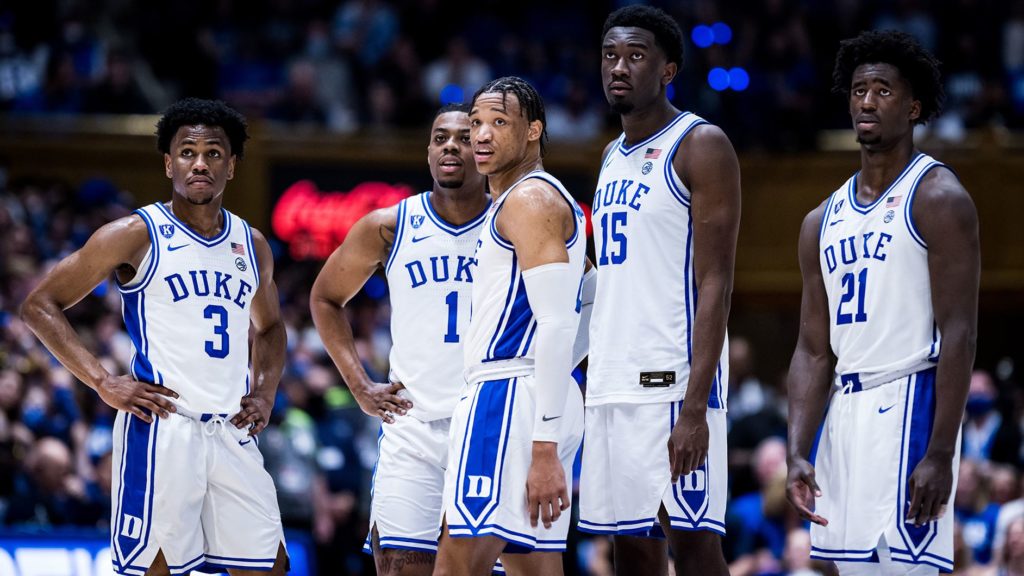
Draft rankings are brutally difficult to execute with consistent accuracy. This year it was season long challenge for me to decide between Paolo and Jabari for #1, and even though I settled on Paolo and would take him in Orlando’s shoes, I still have no criticism for Orlando if they choose Smith at #1 as reported since he is an excellent wing prospect.

And even though I have been firm on Chet being #3, it also is not a clear mistake if OKC choose him over Paolo at #2. I would still take Paolo even if he is an odd fit with Shai + Giddey as it leaves too many offensive hubs who need the ball. You can always trade one of the three for 3 + D help down the road, and the main priority should be to try to hit on a future top 5 MVP candidate which Paolo has better odds of than Shai, Giddey, or Chet.

But if OKC chooses Chet, they are nevertheless left with an excellent trio of potentially 3 future all-stars, with Chet being a perfect 3 + D fit next to their guards. While Chet has less creation upside and a bit more weirdly skinny frame downside than Paolo, he still is an excellent player in his own rite and could be the best player in the draft long term.

That tier was challenging enough to rank, and then at #4 we are left with a much thicker tier of 13 guys to fill out the lottery (with a few underrated guys who will inevitably slide) that is even more challenging to parse through. I have expressed doubts that Jaden Ivey is the correct choice, and skimmed through some possibilities at #4 focusing on high upside molds.

But it is not clear that swinging for the fences with an Ivey, Sharpe, or Duren at #4 is necessarily the correct answer, as it is difficult to be confident that any of them are going to be good at all. Let’s discuss all other options, and try to estimate how closely they compare to one another.

Dyson Daniels
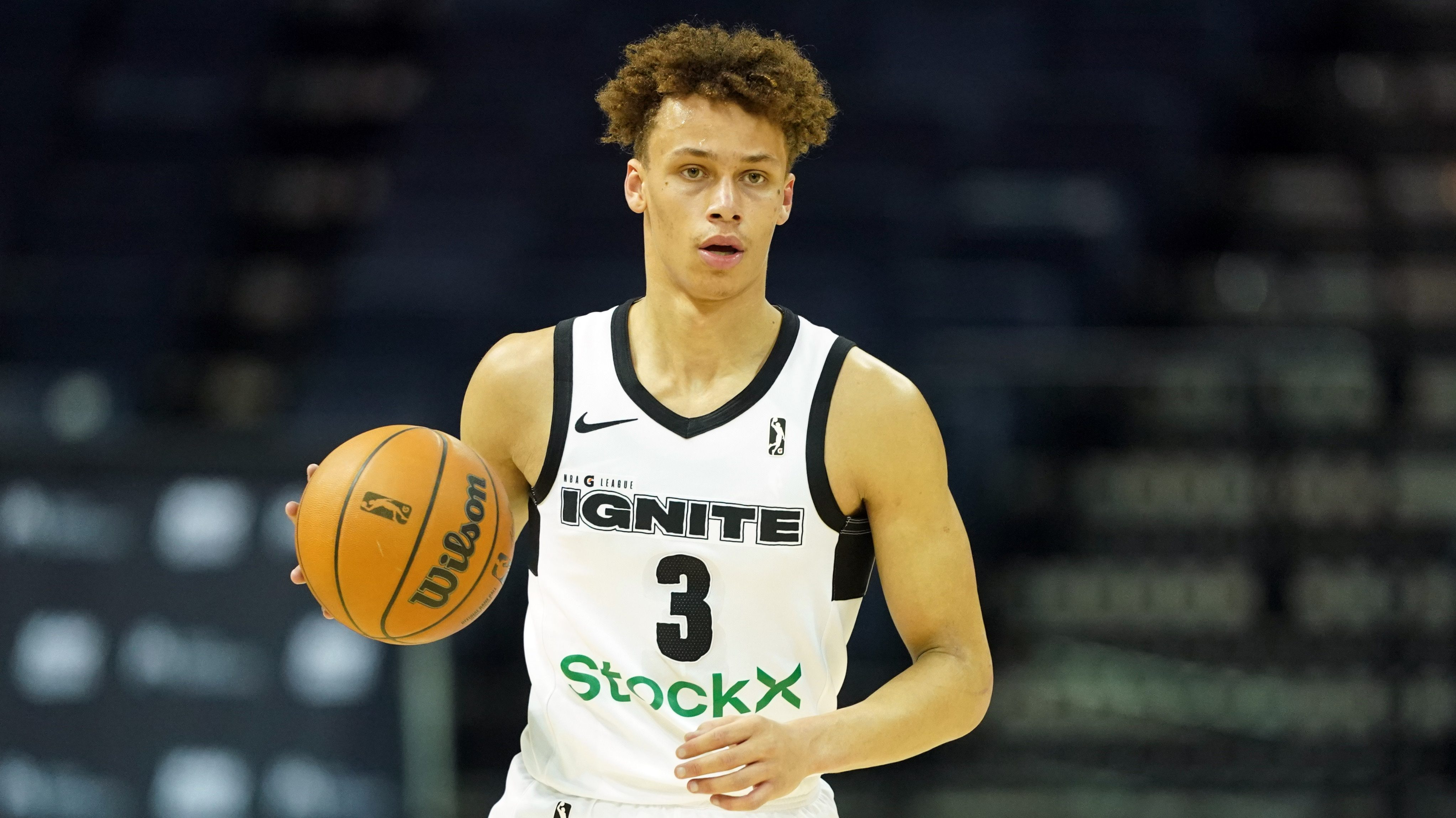
Last summer when Australia played USA in FIBA, Dyson Daniels was the clear 2nd best prospect on the floor behind Chet with 18 pts 5 rebounds 4 assists 1 turnover. Australia lost by 21 but was only -6 in Daniels’ 25 mins on the floor.

Since then Daniels has grown 1.5″ to solid SF size at 6’7.5 with 6’10.5 wingspan, and had a productive season for G League Ignite averaging 31.6 mins 11.6 pts 6.8 rebs 4.7 ast 2.7 tov 2 stl 0.7 blk with 53% 2P. His sole weakness was in his mediocre shooting at 30% 3P on 3.4 attempts/game and 53.3% FT on a small sample of 45 attempts.

But apparently he shot the lights out during his pro day. It is a slippery point to read too heavily into, but he is making a number without touching the rim and goes on a few long streaks without the camera cutting away. We should not expect him to be an actively good shooter based on this, but it does mitigate some concern raised by his G League shooting %’s.

He was already the non-top 3 prospect who had the highest odds of being a useful NBA player. And he isn’t lacking in upside– his passing and defense are both great for a young SF. If his shot creation and shooting progress well he can be an all-star.

If we want to turn optimism to the max, there is nothing disqualifying him from being a Scottie Pippen. It would require almost everything to go right, but it is more realistic than Jaden Ivey becoming Russell Westbrook.

A more common outcome would be something along the lines of Boris Diaw as a versatile role playing wing is more of a passer than a scorer. Diaw would not be a thrilling outcome for a top 5 pick, but it will be better than most of the guys who go outside of the top 3 this year, and there is still arguably as much (or more) upside for Daniels as there is for anybody else.

Hard to see him disappointing unless he simply cannot make an open 3, which is still of some concern. But collectively Daniels seems to have the highest odds of being decent of anybody outside the top 3, and he seems to have as much upside as anybody outside the top 3, and I would currently lean toward him being the correct choice at #4 overall.

Jeremy Sochan
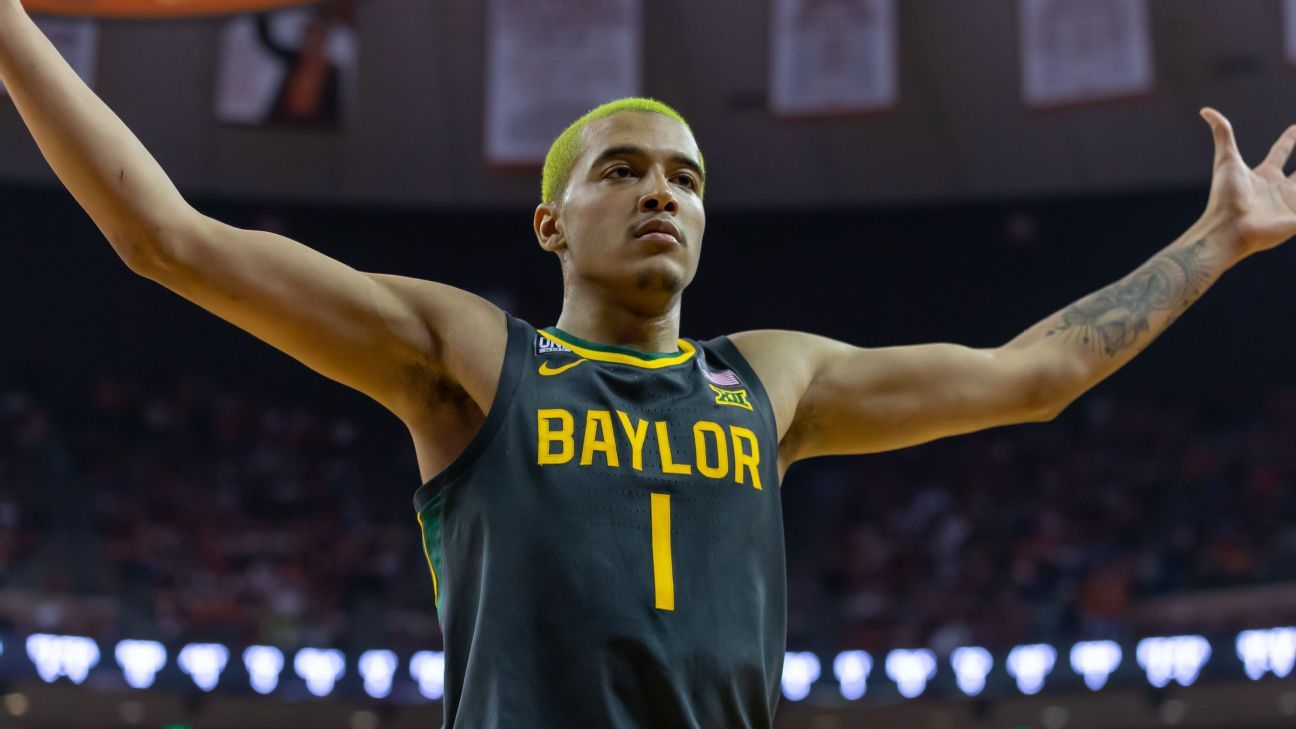
Sochan has been frequently compared to Dennis Rodman for changing his hair color, and his pest like approach to the game where he regularly irritates his opponents. But stylistically, his freshman numbers are more similar to another player with a colorful personality. Per 100 possessions:

AgePtsRebsAstTOVStlBlk2PA2P%FT%3PA
Sochan18.621.414.84.13.62.91.610.10.5850.5896.3
Draymond18.817.417.44.43.531.311.40.5630.6150.1

Draymond was a bit better rebounding and passing, but Sochan 2.5 months younger and played a bigger freshman role averaging 25 mins/game compared to 11 mins for Draymond. Sochan also attempted substantially more 3PA, but that may be a product of the modern era more than anything.

Sochan didn’t get measured at the combine, but is listed at 1.5″ taller than Draymond at 6’9 vs 6’7.5 with less wingspan at 7′ vs 7’1.25″.

In all likeilhood Sochan will not be as good as Draymond, but anybody who is that similar at a young age is automatically interesting in this year’s lottery.

More commonly he will be a Rondae Hollis-Jefferson type who hopefully learns to make an open NBA 3 pointer in time. This may seem boring to most, but RHJ was legit good for a non-shooter, and at least Sochan believes in his shot enough to chuck up attempts at a moderate rate. RHJ with a competent outside shot would be a solid NBA role player.

Sochan has excellent wing dimensions, a great motor, his gets good rebound, assists, steals, and blocks, and he is a somewhat dirty player who gets under opponents’ skins. It seems like players like this are almost always good on defense, where he can possibly make a major impact.

Sochan’s lack of offense is likely getting in the way of him generating much draft hype, ranking 15th on ESPN’s latest big board and 18th on their most recent mock. But his positive assist:TOV ratio, efficiency inside the arc, and not completely hopeless shooting given his youth could sum up to a decent player offensively in time.

There is a decent case to be made that he is one of the top 5 prospects in this draft. Perhaps it is too much of a gamble on his dicey shooting ability and limited offensive package, but most everybody outside of the top 3 have major warts on at least one side of the ball.

Between him and Dyson Daniels, I would lean toward Daniels having the edge. Sochan is 1.5″ taller, but Daniels is a better passer and better bet to shoot.

If we are putting him against guys like Mathurin, Ivey, Sharpe, Duren, etc it becomes a fuzzier comparison but it just doesn’t seem that crazy to project Sochan a bit more valuable than all of those guys. You cannot have enough versatile defensive wings in the modern NBA, whereas there is a limit to how many bigs and chucking SG’s you can play at a time (one).

Bennedict Mathurin
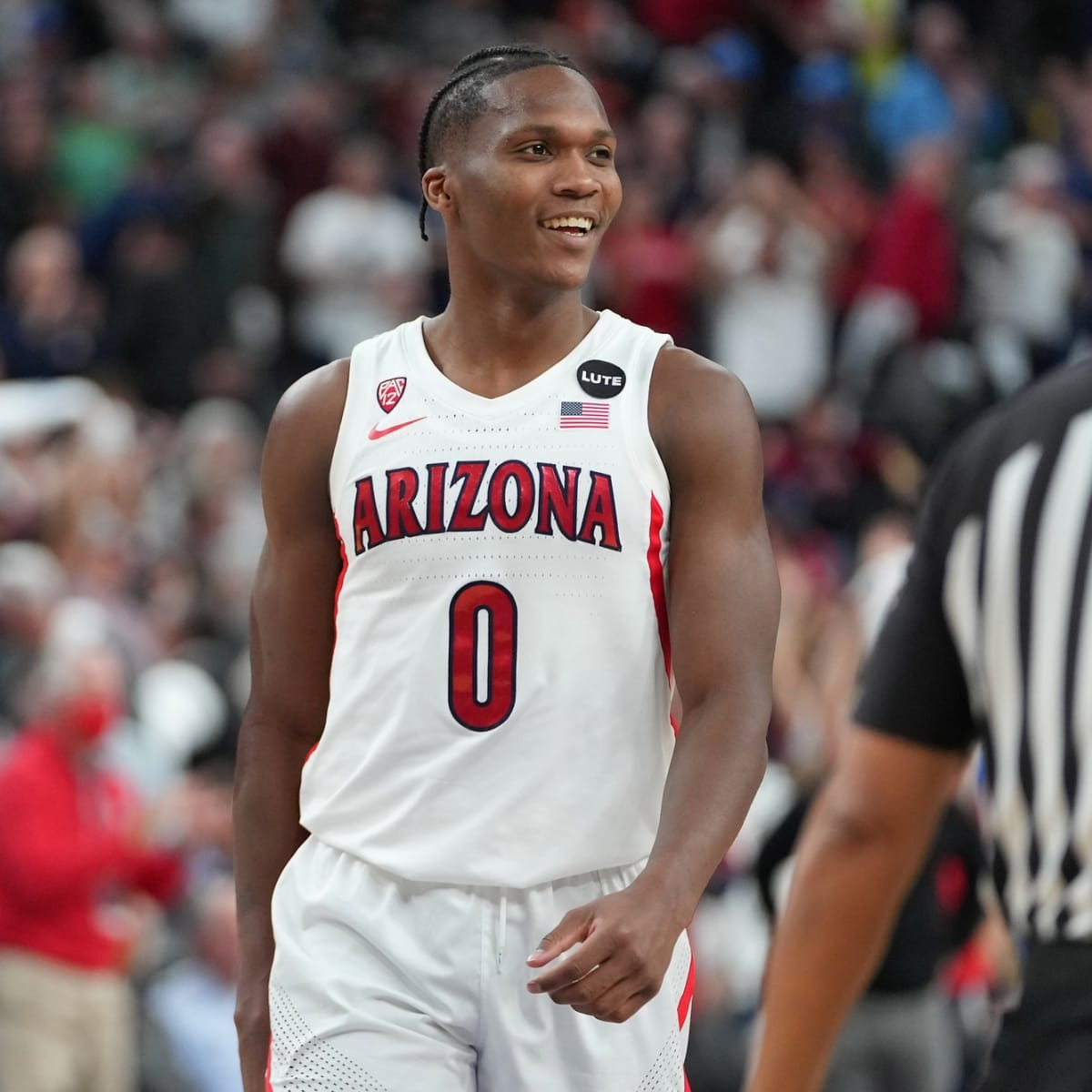
Mathurin makes for an easy comparison to Shaedon Sharpe and Jaden Ivey because they are all athletic SG’s. This is especially the case for Ivey since they have high major NCAA samples at a similar age. Per 100 possessions:

AgePtsRebsAstTOVStlBlkDunks
Mathurin19.5309.54.331.60.51.75
Ivey19.933.19.35.851.71.11.50

Ivey is higher in the public eye because he is the more outlier elite athlete, and uses it more functionally to pressure the rim and create a high volume of offense. This led to a higher scoring and assist output than Mathurin. But he also turned it over much more, and Mathurin has the better assist:TOV ratio (1.42 to 1.17).

In spite of being the less explosive athlete who attacked the rim and scored in the paint less frequently, Mathurin dunked slightly more often than Ivey. This is likely in part to his 2″ height advantage, and that Mathurin is an excellent athlete in his own rite.

Based on sophomore shooting stats Mathurin is the slightly better shooter at 36.9% 3P 76.4% FT vs 35.8% 3P 74.4% FT for Ivey. But if you include freshman #’s the gap widens, with Mathurin 38.3% 3P 78.9% FT vs Ivey 32.2% 3P 73.9% FT.

Both players project to be defensive liabilities, but Mathurin seems slightly better on D. His 2″ height advantage is significant, his NCAA team defense was much better, and he eye tests as a bit better.

So if we sum everything up, is it really clear that Ivey is better? He has a bit more athleticism and potential for a high usage role offensively, but it’s not clear that he has the basketball IQ to merit a high usage role for an NBA team. And if you are drafting somebody to be a #2 or #3 guy, Mathurin is a better fit since he has an edge in both 3 and D and scores more within the flow of the offense with fewer turnovers.

That said, Mathurin is not a world beater, he could easily be just a Ben McLemore or Terrence Ross. In slightly more favorable outcomes, he may be a Kentavious Caldwell-Pope or Tim Hardaway Jr. His more exciting outcome would be Jason Richardson, and perhaps he has some small outs to be a Devin Booker, although his shooting and scoring would need to take some major leaps to get there.

But it still seems like he has an easier path to decency than Ivey, who will have some bad common outcomes like Jordan Crawford or Dennis Smith Jr.

If Ivey makes a big shooting leap and figures out how to navigate NBA defenses, he could be a Zach LaVine. His more common useful outcome would be a Jordan Clarkson type.

Westbrook comps are ridiculous– Russ was 9 months younger posting 7.9 assists vs 4.5 turnovers per 100 for UCLA sharing the PG duties with junior Darren Collison compared to Ivey’s 5.8 ast 5.0 tov as the primary perimeter ball handler for Purdue. Russ may be wild and make questionable decisions at times, but he is a far more natural PG as well as likely the most explosive athlete in NBA history.

To my eye, Ivey’s basketball intuition is a buck short of what it needs to be for him to place in the top of this tier. You can argue a number of players belong ahead of him, and Mathurin has a fairly solid case of 4 months younger, 2″ taller, better shooter, less bad D, and plays better within the flow of the team while being only slightly less athletic.

Mathurin vs Sharpe

We can extend the comparison to Sharpe, who is stylistically more similar to Mathurin than Ivey. He is slightly shorter than Mathurin at 6’5.25″ vs 6’6″, but has a solid length advantage at 6’11.5″ vs 6’9″. Dimensionally they are similar tier, with perhaps a tiny edge to Sharpe for his length.

Both Mathurin and Sharpe are guys who rely on shooting and athleticism to score a high volume without turning it over. Neither guy gets many steals or blocks defensively, and you are drafting them mostly for their offense and hoping their D is not too bad.

Sharpe has that mystery box upside, but Mathurin likely has a better floor for his proven performance at Arizona. One concern with Sharpe is that while he made 36.4% 3P on 6.4 attempts/game in 12 EYBL games, he only shot 33/52 (63.5%) FT. This is a slightly uncomfortable point given how much he needs to be able to shoot to succeed. Mathurin is likely the favorite to be the better shooter with his 78.9% FT in 2 years at Arizona. And even though Mathurin was 2 classes ahead of Sharpe in high school, he is only 11 months older, Sharpe does not have that much of a youth advantage.

The advantage for Sharpe is simply that he has more upside to be a big time scorer. Mathurin showed good scoring capability and his athleticism leaves room for it to grow, but he will be a medium usage complementary scorer more often than he is the go to guy in the NBA.

Sharpe has more potential to be that #1 scorer, but has lower FT%, and unlike Mathurin did not prove he can be a quality NCAA player as he was Pac-12 player of the year at age 19.

This makes it tricky to pick between these two. Sharpe has higher upside but based on his AAU stats, age, and the way scouts talk about him he is probably not going to be Vince Carter or Ray Allen. There’s a clear case to be made that Mathurin’s proven performance is worth more than Sharpe’s extra sliver of upside, since there are decent odds Sharpe would not have been as good as Mathurin if he stayed for a year of college.

AJ Griffin
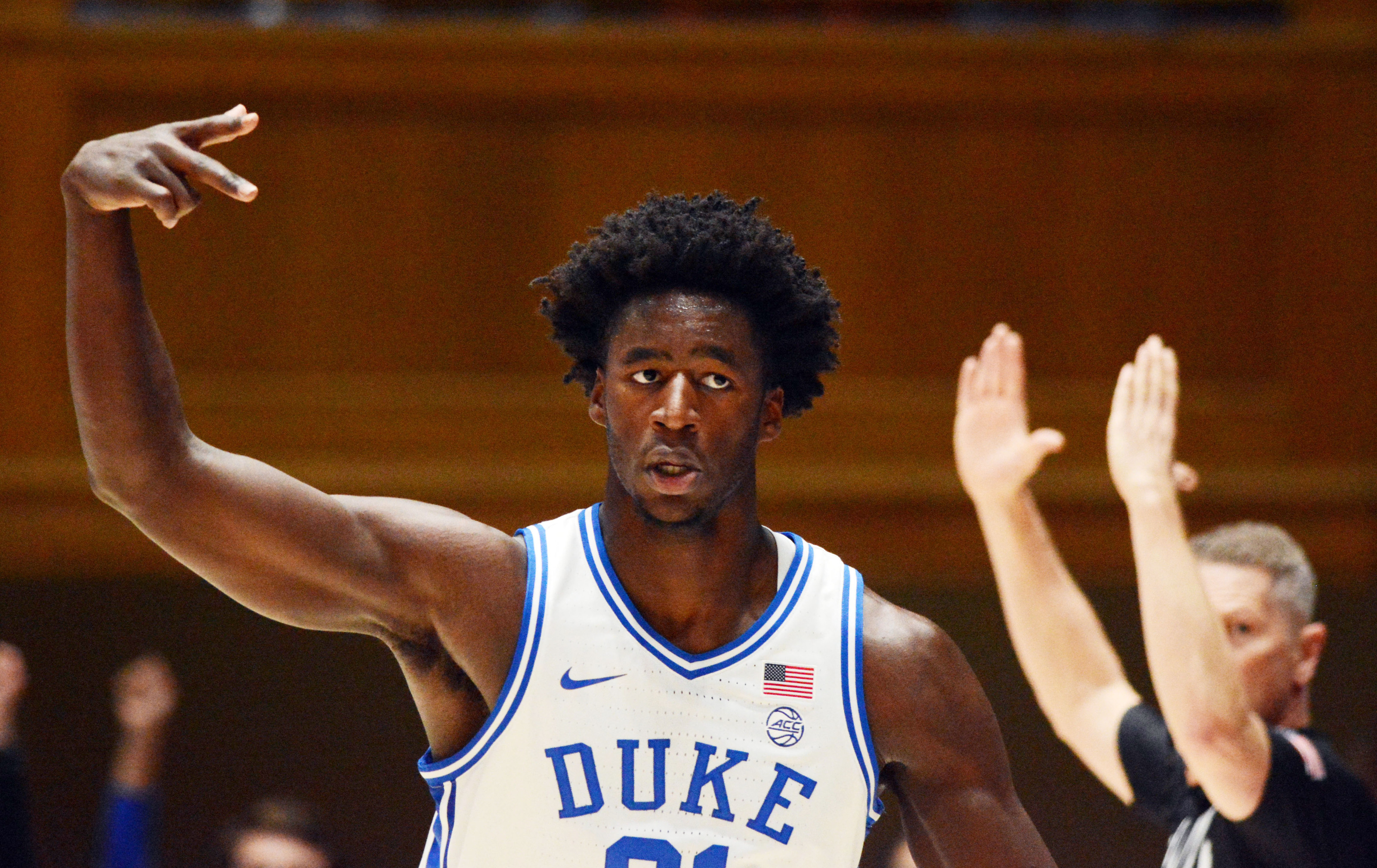
AJ Griffin is a close stylistic relative of Sharpe + Mathurin while trading athleticism for a bit of size. He is much less dunky with a mere 0.51 dunks per 100 possessions compared to Mathurin’s 1.75, and rarely creates his own shot at the rim.

He is presumed to be 6’6 with 7′ wingspan, although did not measure officially. He likely has a small dimensional advantage over Sharpe + Mathurin, and his main calling card is his efficient offensive play as he showed promising shooting making 44.7% 3P 79.2% FT with a microscopic turnover rate at the young age of 18. In spite of being a class ahead of Sharpe, he is actually 3 months younger.

But Griffin gets messy because there are a number of reasons to skew his projection in either direction. First his shooting just does not look that smooth, especially not relative to his #’s. On average I would trust the actual numbers over the eye test for shooting, but there have been guys who shot the lights out for small college samples that failed to do so in the NBA. For instance– Xavier Henry shot 41.8% 2P 78.3% FT on slightly more 3PA (165 vs 159) and solidly more FTA (115 vs 53) than Griffin and could not shoot a lick in the NBA. Aaron Nesmith made 52.2% 3P 82.5% FT as an NCAA sophomore, and has shot 31% 3P in 245 NBA attempts between regular season and playoffs.

Shooting is weird and difficult to predict, and for Griffin’s biggest selling point it is slightly uncomfortable that the eye test does not align with his relatively small statistical sample. His 3P%, FT%, and 3PA rate are all slightly better than Mathurin’s career numbers while Griffin is younger, but Mathurin has a bigger sample of attempts and looks smoother. Who is the favorite to be the better NBA shooter? It is not clear.

If Griffin’s shooting does prove to be a SSS ruse and he is average or worse shooting in the NBA, it is difficult to imagine him being a useful pro. He has an anemic steal rate considering his length, and he has mediocre defensive awareness and is often caught napping for backdoor cuts. Also for his size he is a mediocre rebounder and rarely gets to the line, and he seems to shy away from physicality a bit. He is physically capable of defending in the NBA, but he has clear risk of being a liability, and without official measurements he may be closer to a SG than a true wing size.

Another point for downside is that he missed large chunks of his last two high school seasons with injuries. Some people will argue that this gives him extra upside for future growth, but repetitions at ages 18-20 are not the same as repetitions from 15-17. It is difficult to see this as anything other than a flag that he might be made of glass.

So between his injury history and minor doubts regarding his shooting, there are a couple of ways that Griffin’s career can go sideways. But if he stays healthy and shoots as well as his freshman numbers imply, he is a nice offensive piece that can space the floor, avoid mistakes, and hopefully develop competent defense in time.

And having an NBA father in Adrian Griffin is a plus, as these prospects tend to work out with a higher success rate than average prospects. Tim Hardaway Jr and Gary Trent Jr are fellow NBA dad juniors with similar games who were not quite as strong as pre-draft, so there is no major obstacle that prevents him from being as good as those guys or even better.

If we are stacking him up against his fellow SGs in Mathurin, Sharpe, and Ivey we are left with more razor thin decisions. He is the youngest of the group, turns it over the least, has the best shooting %’s, and his NBA dad could easily propel him to be the best of the bunch. But he also is clearly the least athletic, has the lowest possibility of randomly expanding his offensive role in time, has the scariest injury history, and eye tests as a bit more wonky than that crew.

Analyzing the draft is really hard. Between Mathurin, Sharpe, and Griffin we could easily have one guy become a Michael Redd or Jason Richardson or even Devin Booker level hit, one could be a THJ or KCP type of kinda boring but kinda useful role player, and one could be a dud like Ben McLemore or Xavier Henry. But it’s really hard to know which ones are most or least likely to fall into each path, and most people will resort to ranking them based on some arbitrary heuristic and hope for the best.

Keegan Murray
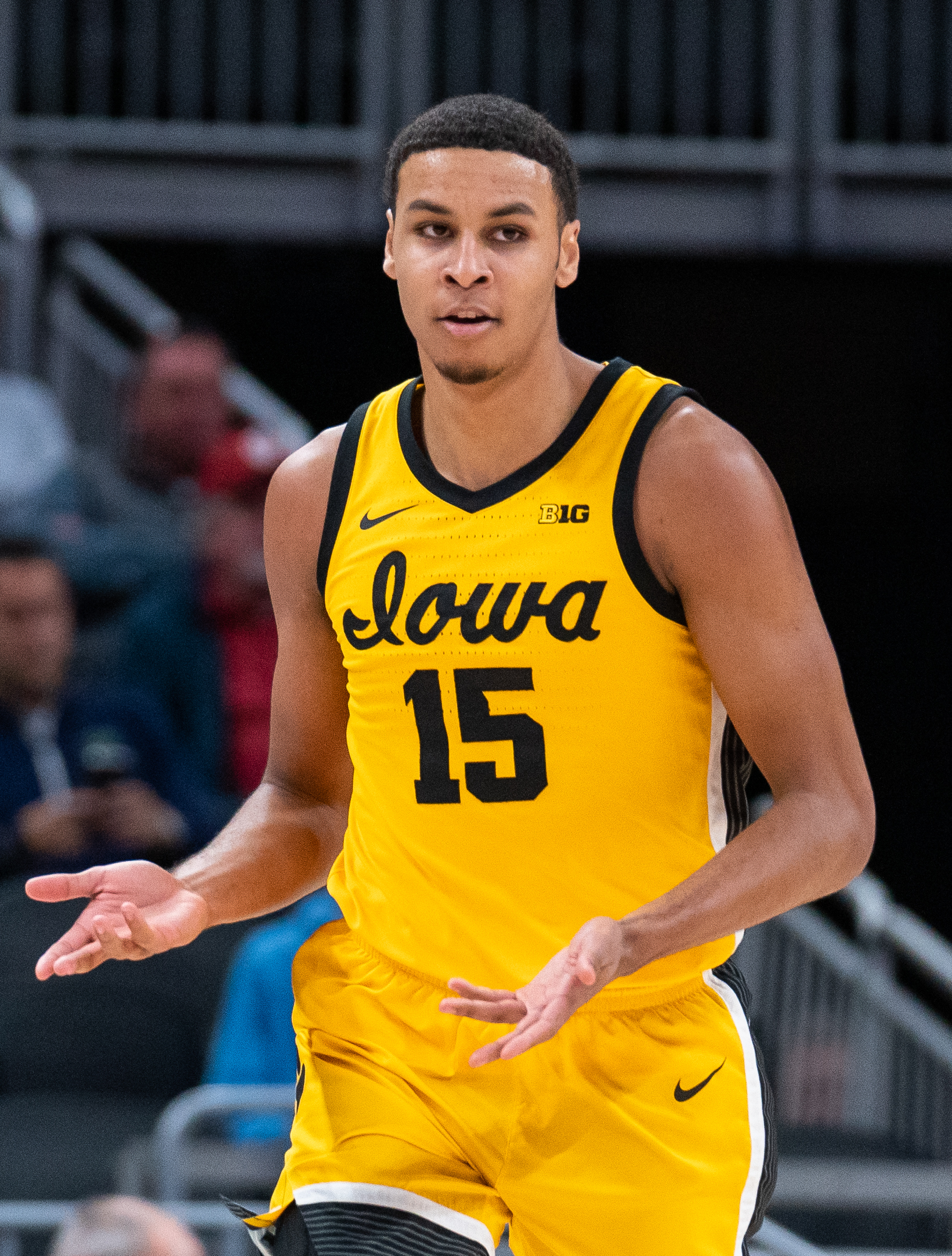
Murray absolutely stuffed the stat sheet for Iowa this past year, but you would hope so given that he is by far the oldest player in the lottery and projected #4 in ESPN’s latest mock.

Murray turns 22 shortly after the draft in August, and his biggest issue is that he is a 3 + D wing who may not be good at either 3s or D. He has solid rebound, steal, and block rates, but his D does not always look as good as his statistics imply. His lateral quickness is only OK, and he is prone to being beat off the dribble. In the NCAA tournament he was bullied in the paint for an easy bucket 3 times in a row by 6’7 Nathan Cayo who averaged 9.1 points for mid-major Richmond. This is not the best look for an older prospect.

But presumably at 6’8 with 6’11 height he has pretty good wing dimensions and at least does some things on defense, so he has potential to be either a positive or negative on this end. I would lean slightly toward the negative side, but he is decidedly a mixed bag.

Offensively he made 39.8% from 3 as a sophomore, but backed it up with an unspectacular 74.7% FT. Over his two seasons at Iowa he shot 37.3% 3P 74.9% FT on a middling rate of 3PA, which is fine but not great for an older prospect.

His main value is his ability to score a high volume of 2 pointers with a microscopic turnover rate. He is a difficult player to finger. He has a number of statistical parallels to Frank Kaminsky, but is smaller and closer to Kyle Kuzma stylistically.

He’s a pretty decent wing prospect, but he is just too old with too many blah points in his profile to be a compelling choice in the top 5. He is likely worth taking somewhere near the end of the lottery, but his weirdness makes him difficult to predict with precision.

Tari Eason

Eason is a fascinating weirdo who measured with dreamy dimensions for a wing at 6’8 with 7’2 wingspan.

He anchored LSU’s elite #6 defense, as he led the team in TRB%, STL%, and BLK%. He has a great motor and an excellent intuition for pressuring the ball on defense, and was able to use his length to force a boatload of turnovers for the Tigers.

Offensively he is a capable shooter making 80.3% FT and 35.9% 3P for LSU (32.7% 2P 75.7% FT for his 2 year career) and can create his own shot at the rim, making 56.4% 2P on high volume.

But he has major holes in his basketball IQ, as he is often sloppy and out of control. He only played 24.4 minutes per game for LSU because of foul trouble averaging 2.8 per game, and he had a poor 0.45 assist:turnover ratio. He frequently makes questionable decisions, and often attacks at bad times. This is exacerbated by being a relatively old sophomore, having turned 21 in May shortly before the combine.

This is a fairly significant wart, and puts him behind other wings with high defensive potential like Daniels and Sochan. But he also has bigger strengths than most of the prospects outside of the top 3, which makes for an interesting value proposition.

It is most interesting to compare him to Keegan Murray. Eason is 9 months younger and longer with clearly better defense, they are in a similar boat as shooters with perhaps a small edge to Keegan, and Keegan is far better at avoiding mistakes with drastically lower foul and turnover rates.

This is another close comparison. Perhaps it is wise to simply favor the guy who does not have bizarre warts for his age in Murray as consensus does. But Eason’s length + defense add enough sex appeal such that it’s crazy that one of these guys is projected inside the top 5 and the other out of the lottery. The sharp play is clearly to pass on Keegan earlier to take Eason later.

The Bigs: Jalen Duren, Mark Williams, and Walker Kessler

Duren is compelling for his physical tools and youth, and it is easy to get enthusiastic for his upside if he develops well. But he is so raw and his skill and decision making have a long way to go for him to sniff that upside, and he will have plenty of boring common outcomes like Derrick Favors or Andre Drummond. How much value can you place on hitting on a big like that when bigs are getting valued less and less?

So how high is it worth gambling on him hitting a big upside and becoming an Alonzo Mourning or Dwight Howard when most of the time he is not that interesting? And it is not even clear that he is a favorite to be better than Mark Williams who should be available later in the lottery.

Williams is a bit older and less strong and athletic, but has actual center dimensions and is much more efficient for Duke. There is a good case to be made that Williams has the higher median outcome while Duren has the higher upside, and it is not clear exactly who should have the higher draft value.

But the concern for Williams is that for a big who is largely a garbageman and rim protector– does he protect the rim at a high enough level? Duke’s defense was solid but far from elite at #49 in the nation, and it was slightly better with the 20 year old Williams off the floor.

Perhaps the galaxy brain take is that while Duren + Williams are perfectly solid prospects, it is pointless to take them lotto with Walker Kessler lingering in the 20’s. He is a bit weirder and less attractive as the not as athletic white guy, although you would never be able to tell by looking at the stats.

Kessler is only slightly behind Duren + Williams in dunks and rebounds, but dwarfs them in steals and blocks as he set the record for D1 block rate among players who played at least 400 minutes. He blocks almost everything, and is decently mobile for a 7′ rim protector. Offensively, he has the worst FT% of the 3, but is the only one of the group who regular attempts 3’s as he shot 10/50 as a sophomore, attempting 1.5 3P per game. Otherwise he is hyperefficient with an elite 70% 2P and microscopic TOV rate, much like Williams.

There is quite a bit of goodness in Kessler’s profile, and not really anything to strongly dislike. He seems to be getting the short end of the stick due to assumptions that he is a big white stiff, but he does not look stiff on the court and he has a unique intersection of strengths.

Ultimately I tend to agree with consensus ranking of Duren > Williams > Kessler, but disagree with the space between them in mock drafts. It seems pretty close to a three way coinflip between these guys, as any of them could be the best of the bunch or the worst.

Kessler being underrated should not be a huge knock on Duren and Williams, but he is indicative of the bigger trend that teams are averse to heavily investing in non-elite bigs, and it is an easier position to play moneyball since obviously good ones can fall through the cracks in the draft like Kessler. Duren + Williams both seem like reasonable top 10 picks, but given the market value of bigs, is it really necessary to draft them that high? It’s not clear.

The Weird Combo Guard: Trevor Keels

Keels is the one guy who is unique enough to be difficult to directly compare to anybody in this draft, because he ticks to his own beat as a prospect and it is tough to find a historical comparison for him.

On paper he seems extremely boring as an undersized SG at 6’4.75 with 6’7.25 wingspan. He also had some of the worst athletic testing for any non-big, as he graded similarly to the unathletic euro guards Hugo Besson and Matteo Spagnolo and well below any domestic guard. And he did little on the court as a Duke freshman to dispel any athletic doubts, as he finished the season with a mere 2 dunks and 2 blocks.

Let’s compare past NBA draft prospects who are somewhat similar to him with similarly low block and dunk numbers:

AgePtsRebsAstTOVStlBlk2PA2P%FTAFT%3PADunks
Keels18.422.36.75.32.42.40.19.60.5225.20.679.30.11
Pritchard18.915.16.97.42.92.40.25.30.4553.30.737.50
Herro18.925.68.24.5320.611.50.5384.60.9358.30.2
C Joseph19.4196.55.52.71.90.69.90.4293.70.6996.40.05
Brunson19.423.74.36.24.51.709.40.516.60.7747.90
T Ennis19.4246.310.23.23.90.3150.4298.10.7654.60.11
A Rivers19.427.363.74.11.70.112.60.4779.50.6588.20.16
Kennard19.525.97.83.31.72.10.49.90.52860.88910.50.12

Pritchard has largely succeeded in the NBA because he became a 41% shooter through his first two seasons, but at the same age Keels was not far behind as a shooter. He is confident in his shooting and takes a good volume of 3PA in spite of only making 31.2%, and given how young he is he has plenty of time to become decent to good at shooting.

And even if he does not shoot as well as Pritchard, he had a similar assist:TOV while scoring at a much higher rate, and his greater size gives him more potential on defense.

Herro and Kennard are not quite the same because they are such obviously better shooters, but they nevertheless have had NBA careers without being overall more productive than Keels.

Cory Joseph is a fairly juicy comparison. He was a role player who was never that valuable, but he provided a solidly above average return on a late 1st pick at #29 overall as he consistently has found significant minutes throughout his career. And when you put him side by side with Keels, it is not close. Keels was a much more efficient and productive scorer at a full year younger, and has similar potential to be a pesky defensive player with slightly more versatility given his extra 1.5″ of height and length. It does not seem right to let Keels go as late as Joseph did in a weak draft.

Jalen Brunson is fascinating comparison because not only did he have 0 dunks and 0 blocks as an NCAA freshman, but he was similar to Keels with less size, a year older, and far more turnovers. His only significant advantage was in shooting. It’s crazy how well Brunson has done in the NBA– there was no clear signal of his potential statistically or athletically. In fairness he did quite a bit better than Keels in athletic testing, but there was no evidence of any athletic prowess on the court for him.

Austin Rivers is also interesting to compare to Keels, because he was essentially better at nothing as a freshman while having nearly identical dimensions to Keels and being a full year older. Rivers had a bit more volume scoring on mediocre efficiency, but Keels had significant advantages in assists and turnovers as well as more rebounds and steals while being a full year younger.

Rivers was a subpar return on #10 overall as he has never quite been useful, but he has been close enough to useful to hang around the NBA for a long career. If Keels can be a Rivers but with better efficiency, passing, and defense, that is a decent NBA player.

The big cautionary tale on the list is Tyler Ennis, who crushed with assist:TOV ratio while scoring a high volume and completely flopped in the NBA. His low athleticism likely played a role, but he also racked up stats in a dumb Syracuse offense where they jacked up a bunch of mid-range shots and then offensive rebounded them at a huge 38.1% rate. This is reflected in his 42.9% 2P and his team having the 2nd worst 2P% in ACC– it is easier to generate a high volume of offense without turning it over if you are settling for lower quality shots.

Granted, this does not completely negate his offensive production, he still had a compelling amount of output and his limited athleticism likely played a significant role in him succeeding. But as somebody who saw potential in Ennis at the time, I believe I gave his statistical production a bit too much credit given how much it centered around mid-range chucking.

Perhaps I missed a good example or two to compare, but overall this seems to be hardly a death knell. Granted, most of these guys either skipped athletic testing or scored better than Keels, but on court athletic performance should typically trump combine testing for athleticism.

And in terms of on court performance relative to age, Keels seems like he is better than all of these guys. Perhaps you could make a case for Herro or Ennis having a small edge on draft day, but Keels clearly performed better than everybody else as a freshman. And this group collectively performed fairly well relative to draft stock.

There are no huge wins who became stars, which is a reason to somewhat temper enthusiasm for Keels. But there is also no clear signal that limited athleticism should place a major pessimistic skew for young productive guards, and it would seem that with an ESPN ranking of #27 the pessimism for Keels’ athletic limitations has gone too far.

The Tortoise and the Hare

AgePtsRebsAstTOVStlBlk2PA2P%FTAFT%3PADunks
Keels18.422.36.75.32.42.40.19.60.5225.20.679.30.11
Ivey19.933.19.35.85.01.71.113.90.531110.7449.51.5

It is interesting how similar these two prospects are outside of being on opposite ends of the athletic spectrum. They have similar dimensions, similar shooting, play similar roles, and the main difference is that one of these guys has a massive speed advantage and the other has a massive IQ advantage.

At a glance you may think that any IQ disparity is likely not that big. Ivey plays a significantly bigger offensive role, and his additional turnovers are not so bad given the higher scoring and slightly higher assist totals.

But consider that Keels is 1.5 years younger and needed to share the ball with four other first round caliber prospects at Duke. It is exceptionally rare for a guard that young to create as much offense as Keels did for himself and his teammates while turning it over so rarely.

With an extra year of experience and more ball handling duties, Keels could see a significant sophomore leap if he returned to school. This would be especially true if he played in a favorable situation like Ivey at Purdue where he was always playing with an elite big man and 3 shooters.

It is difficult to overstate how favorable of a situation Ivey was in this past season. Purdue returned everybody from a top 25 team last year, and gave Ivey a bigger offensive role in more minutes. The team had major upside, but hardly even improved.

Part of this is because of a significant regression in their defense. The defense has simply been dreadful whenever Ivey has played over the past two seasons, and he seems really bad on this end. Keels is not an elite stopper on defense, but he is solid and in spite of being much slower than Ivey is overall a solidly better defensive player. Athleticism certainly helps on defense, but it is secondary to intelligence and Ivey’s defensive IQ is ultra bad where Keels is good.

Offensively Ivey’s IQ is decent enough since he is able to score with high efficiency and post more assists than turnovers for the #2 NCAA offense behind Duke. But he still made a few too many questionable decisions for a 20 year old– especially in Purdue’s tournament loss to Saint Peter’s, which may be the worst tourney performance of all time for a projected lottery pick.

Intuitively, I have a difficult time buying that Ivey has the basketball IQ to be trusted as a lead guard for an NBA offense. He seems more like a microwave scorer for a bench unit.

Meanwhile there has to be something special about Keels’ basketball IQ to have such solid creation as an infant aged freshman while managing to avoid turnovers.

Granted, athleticism gets valued more in the draft for non-trivial reasons. One because a significant percentage of stars are high end athletes, and two because it is easier to discern than basketball IQ.

For instance, it is easy to underrate the basketball IQ of Russell Westbrook who is prone to playing out of control and making bad decisions at times. This makes it easy to overlook his excellent basketball intuition and that he showed rare floor general skills for such an elite athlete at a young age.

Conversely, it is easy to overrate the basketball IQ of guys like Doug McDermott or Jimmer Fredette when they have a common level of NCAA success as non-athletes at an old age.

And this is where the draft gets tricky…Ivey gets top 5 consideration because it is difficult to discern that his basketball intuition/IQ is levels below that of Westbrook, and if you pass on him and he turns out to have similar intelligence and athleticism then you are risking missing out on a big time star.

Intuitively I believe Ivey’s basketball IQ is simply not good enough to run an NBA offense, and that anybody who takes him top 5 will feel scammed in due time. But I cannot assess his BBIQ with perfect accuracy, and there is some wiggle room that needs to be left that his intelligence proves to be decent enough for him to be a good NBA player, even if he is never an MVP candidate like Westbrook.

But most of the athletes that get picked highly in the draft and fail are due to a poor basketball IQ, and most of the best steals who slide out of the top 20 are non-athletes who just know how to play.

While it is difficult to directly compare two prospects with such athletic and intelligence disparities, it would be highly unsurprising if Keels turned out to be the solidly better pro than Ivey. Does this necessarily mean he is the better prospect? I am not sure. There is a reasonable case to be made for it, but it is unclear.

What is clear is Keels’ path to be solidly better at a fraction of the cost based on current draft consensus makes him a drastically better value relative to draft slot.

Kendall Brown
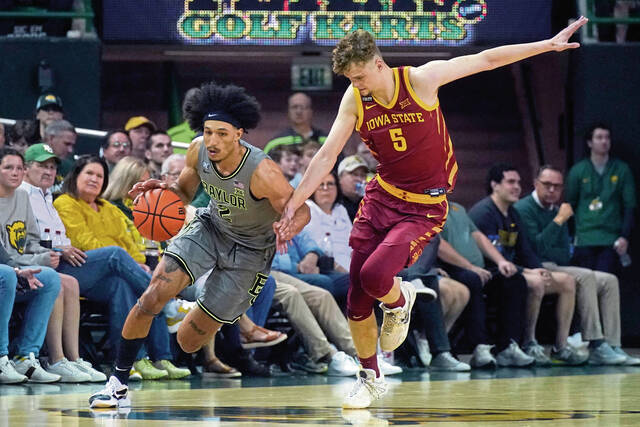
Brown is a curious case where I wonder what sort of terrible impression he must have made in interviews to be rated #28 on ESPN’s big board.

He has excellent physical tools for a wing as he is 6’7.5″ with 6’11” length and elite athleticism. He had the second highest max vertical leap in the combine behind Kennedy Chandler and 36% of his made FG this season were dunks.

He only turned 19 in May shortly before the combine, and has pretty decent statistical production for a young and toolsy prospect in the coveted mold of 3 + D wing.

Granted, he is not particularly good at either 3 or D. He made 34.1% 3P 68.9% FT which seems decent enough, except he sparsely attempted 3’s with just 1.2 attempts per game in 27 minutes.

His steal, rebound, and block rates are decent, but they nevertheless pale in comparison to fellow NBA prospect teammates Matthew Mayer and Jeremy Sochan. Baylor’s offense and defense were both solidly worse with him on the floor. While Brown has ideal physical tools to defend NBA wings, his defense is largely unrealized potential at this point.

He seems capable of scoring at a decent volume as well, as he has a basic ability to create off the dribble and finish as he converted an excellent 63.8% 2P. But he attacked oddly infrequently, and only averaged 9.7 points in 27 minutes for Baylor on the season.

You may be noticing a trend that Brown has significant potential across the board but his current output is underwhelming in all regards. He has this passive and floaty approach to the game which is frustrating– he should take more 3’s, he should attack the rim more, he should be more disruptive on D, but his mental approach cuts into all of this and leaves a mediocre imprint on the game.

It seems that draft consensus is so offput by this that he is at risk of sliding out of round 1, which seems a bit crazy. There have been floaty players in the past who were not nearly as punished for their limits:

AgePtsRebAstTOVStlBlk2PA2P%FTFT%3PADunks
H Barnes18.629.3112.73.71.40.815.30.476.30.759.90.99
Wiggins18.830.310.42.74.12.11.7150.49311.50.7756.41.88
K Brown18.620.910.543.72.20.811.80.6384.70.6892.62.78
RJeff Fr18.522.69.65.74.91.30.812.70.528.90.7762.3N/A
RJeff Jr20.523.211.15.561.51.712.60.5356.50.6555.2N/A

You can see compared to Wiggins and Barnes that in spite of their floaty nature, they still scored considerably more than Brown and were better shooters, which likely played a role in help keeping their draft stock afloat.

But Brown was much more efficient inside the arc. He actually made slightly more 2P per 100 in spite of taking so many fewer attempts, and he had a better dunk rate than either. He also had a much better assist:TOV ratio, which is fairly important for predicting success for NCAA prospects to translate to NBA wing.

The main difference was really that Wiggins + Barnes were better shooters and shot far more frequently. But Brown’s shooting does not seem all that broken, he can close the gap by improving over time and simply pulling the trigger more often.

Richard Jefferson is an example of a prospect with a more similar distribution to Brown. They seemed pretty close as freshmen, but what is surprising about RJ is how his production barely improved over his three years at Arizona and in his final pre-draft season his production was essentially the same as his freshman year with more turnovers.

Perhaps there was some subtle nuanced advantage that drove Jefferson to be selected 13th overall while Brown likely falls to the end of round 1. Maybe Brown just doesn’t like basketball that much and it is apparent in his interviews with teams.

But it is odd that somebody with his physical profile, youth, and mold is getting such little love in the draft. He has a stench of mediocre underachieving that makes it difficult to have much faith in the guy, but prospects with his strengths are normally a lock for the lottery even with some nasty warts attached.

Personally I’m not sure what to exactly think about Brown, but it is difficult to see how he is valued appropriately in the late 20’s.
Draft Combine Reactions

21 Saturday May 2022

Posted by deanondraft in Scouting Reports

≈ 9 Comments

Tags

alondes williams, bryce mcgowens, christian braun, dalen terry, dereon seabron, hugo besson, jake laravia, leonard miller, patrick baldwin jr, ryan rollins, terquavion smith, wendell moore

The draft combine gives a nice new chunk of information to work with: official measurements are most interesting and the combine scrimmages have been surprisingly predictive, with Quentin Grimes and Bones Hyland shining last season and being two of the most productive rookies taken outside of the lottery.

This year there were not any prospects who stood out as clearly, but let’s run through the guys who made favorable impressions:

Darius Days

Days received a combine invite after a monster G League camp where he measured 6’7 with 7’1 wingspan and in 17.5 mins he averaged 14 pts, 5 rebs, 0.5 ast, 0.5 tov, 2.5 stls on 5/9 2P 5/14 3P 3/5 FT.

Then in the combine he continued to play effectively averaging 22.5 mins, 13 pts, 6 rebs, 1 ast, 0 tovs, 1 stl on 4/7 3P 5/15 3P 3/4 FT.

Combine both samples and you get an average of 20 mins, 13.5 pts, 5.5 rebs, 0.8 ast, 0.3 tov, 1.8 stl and a whopping 7.3 3PA per game.

It’s difficult to see how such a prototypical 3 + D wing can go undrafted. He is getting off a huge volume of 3PA, not taking bad shots, not turning it over, and is capable of rebounding and defending the perimeter.

Days is on the older side as he turns 23 before next season in October, and he is only a decent but non-elite shooter. But what more do you want in round 2 than a pull at a solid 3 + D wing like him? It seems crazy that he is currently slated to go undrafted, and somewhat obviously deserves to be picked.

Jake LaRavia

LaRavia measured 6’8 as listed. His wingspan is slightly underwhelming at 6’9.5, but sufficient for a wing given his height. He also crushed lane agility with the 3rd best time and tied for 2nd best in the shuttle run. His standing and max verticals were less impressive, but this is consistent with his style of play– he is not particularly explosive, but he is agile.

This enables him to provide value as a versatile and switchable defensive player, which is likely his biggest strengths as a prospect as he is a high IQ defensive player who moves his feet well and actively generates steals with a solid 2.7% steal rate as a junior for Wake Forest.

Offensively he is an excellent passer and an efficient scorer on middling volume, and projects as a complementary piece. The biggest factor for him is if he develops NBA 3 point range– he made 38.4% 3P and 77.7% FT as a 20 year old junior, but took a meager 3.6 3PA per 100 possessions and likely will need time to develop from NBA 3 point range.

But if that range does develop in time, you are looking at an ideal role player. He is currently slated at #38 in ESPN’s latest mock, but it would not be surprising to see a sharp team like the Grizzlies snipe him at #22 or #29.

Jalen Williams

Williams looked good in all regards in Chicago, as he measured 6’5.75″ with a monster 7’2.25″ wingspan and excellent athletic testing including a tie for the 2nd best standing vertical.

He was also one of the standouts of the scrimmages, where in two games he averaged 24 mins, 15 pts, 4 rebounds, 1 assist, 1 turnover, and rarely missed shooting 9/12 2P, 3/4 3P, 3/3 FT.

Williams fits a nice offensive mold as he was a high volume creator for Santa Clara, regularly creating his own shooting at the rim with an excellent 2:1 assist:TOV ratio as a junior who turned 21 shortly after the season. He is a capable shooter making 39.6% 3P 80.9% FT (35.2% 3P 78.5% FT career), although his 3PA volume is slightly underwhelming with 5.2 attempts per 100 possessions.

The main hitch in his profile is that he rebounds like a small guard and does not make the defensive impact that he is physically capable of making.

The variance in his NBA success hinges on how well his 3 point shot develops and how well he defends. He has the physical tools to be a solid defensive player, but his performance thus far leaves a fair amount of downside on that end.

But if those points go reasonably well for him, it is easy to see him as a quality piece that fits in almost any NBA lineup. He was mocked at #43 on ESPN before the combine, and it would not be surprising to see him rise into round 1 based on his showing, as he seems like a reasonable selection in the 20’s.

There has been some chatter that he belongs in the lottery, which would be excessive. For perspective, there is a similar player who has not been building hype currently projected at #36: Wendell Moore. Let’s compare per 100 statistics:

PtsRebsAstTOVStlBlk3PAFT%
Wendell Moore23.29.27.63.42.40.45.60.805
Jalen Williams28.97.16.73.41.90.95.20.809

Both are long armed guards who had junior breakout seasons. Wendell is 0.25″ shorter at 6’5.5 and 1.75″ less length at 7’0.5″, and does not create as much offense at the rim but had slightly more assists and offered better rebounding + defense.

Both guys have similarly good FT% and 3PA rate, but Wendell likely gets the edge in shooting based on career FT% (81.4 vs 78.5) and 5 months of youth advantage.

Last and perhaps most significantly, Wendell was a 5* recruit playing for one of the best teams in the country against a major conference schedule. Santa Clara had an excellent mid major season in a good conference, but played a notably weaker schedule and is a much weaker source of NBA talent than Duke.

While Williams has a couple of advantages over Moore and is a fun prospect with a unique distribution of talent, Moore is likely the safer bet being slightly more well rounded coming from a more proven source of NBA talent.

Williams had a good showing at the combine and rightfully deserves some hype for his performance, but it’s worth noting that a slightly better sleeper is currently building no hype and should be available in late round 1 or early round 2.

This is not meant as a slight on Williams since I would also rate Moore above Johnny Davis who is currently slotted at #10 overall, rather an interesting comparison of guys who fall in a similar category of long armed guards who do a bit of everything offensively.

Dalen Terry

Terry was already an interesting sleeper as role playing wing in round 2, and he solidified it by having slightly better measurements than expected at 6’7.25″ with 7’0.75″ wingspan.

Mixed Bags

Ryan Rollins

Rollins measured a slightly disappointing 6’3.25″ height, but atoned with an excellent 6’9.75″ wingspan.

He only played in one scrimmage where he had a number of plays that popped including an athletic putback and being pesky with deflections on defense. But he was very sloppy with 5 turnovers on a relatively limited offensive load of 9 FGA and 3 assists, and missed all three of his 3’s including a couple of bad bricks on wide open looks.

This makes it difficult to know where to place him in the draft. He has potential in a number of ways, as he has good defense for his size and decent offensive skills for a guard who doesn’t turn 20 until shortly after the draft.

But the question with him is: does he have enough offensive skill to get excited over at 6’3? In his two NCAA seasons he made a solid 79.6% FT, but only 31.7% 3P on moderate volume. For a little guy, it needs to be a concern whether he can ever make NBA 3’s with consistency.

The other question is whether he can be a lead guard, as he can get to the rim decently enough and had more assists (3.6) than turnovers (2.2) as a sophomore but is not a true point guard. The turnover issues in the scrimmage were not encouraging on this front.

So he is on the fringe of good in almost every category. It is plausible that with his length and instincts he is a + defensive player and has enough skill to develop into a + offensive player in time. Or it’s plausible that he is a buck short in everything across the board for a little guy and isn’t an NBA player.

He is projected as undrafted in ESPN’s pre-combine mock which seems harsh, as it is tough to see 50 prospects ahead of him in this draft. But he did not show quite enough to get hyped on him as a top 30 guy who belongs in round 1.

He is a difficult one to rank, but early-mid round 2 seems reasonable based on what he has shown these past few days.

Alondes Williams

Williams is one of the most fascinating weirdos in the entire draft. After starting his career in JUCO for two seasons, he spent his junior season badly struggling for Oklahoma and looking stone dead to be a future NBA player. As a senior his numbers upticked to a respectable role player, but still looked nothing like an NBA player.

But then for his 5th season he transferred to Wake Forest where he was an absolute stud, averaging 18.5 pts 6.4 rebounds 5.2 assists 3.6 TOVs making 60.3% 2P. He is shifty and athletic and got to the rim at an astronomical rate, and proved to be an intelligent and crafty passer with good size for a lead guard at 6’5 with a 6’7 wingspan.

The downside for him is that he is a career 27% 3P 69.9% FT shooter for a 5 year player who turns 23 several days before the draft. And how much can his lead guard play for one season at Wake be trusted when he showed nothing close to that at ages 20 and 21 for Oklahoma?

In his 2 scrimmages, he averaged 27 mins 9 pts 3 rebs 4.5 asts 1 tov on 4/10 2P 1/7 3P 7/10 FT. That’s a nice assist to turnover ratio, but his jumper was not falling and he struggled to finish at the rim on a few occasions. His %’s were likely to some extent bad variance, but it would have been nice to see him show a bit more self creation.

Everything about Alondes is so oddly distributed. Based on his performance at Wake Forest he seems to have unique athleticism and creation ability for a 6’5 guard, and just enough possibility of learning to shoot to have massive upside in round 2 where he is currently slated to go at #54.

But in the more common scenarios where he is a bad to mediocre shooter who lacks defensive versatility, how valuable can he be? And how much should we worry about his slow start at Oklahoma?

There is a lot of weirdness here which creates reason to be both optimistic for his best cases and cautious for his common outcomes. But there are some serious shades of Derrick White who was good value in the late 1st round, so it would seem that Alondes should belong much higher than 54th where he is currently slated to go.

Dereon Seabron

Seabron showed some impressive scoring ability in the scrimmages, but his measurements were a huge disappointment. In spite of being listed at 6’7, he measured a meager 6’5.75 with 6’8.75 wingspan.

He seemed like a possibly major sleeper at 6’7 with legitimate creation skills as he is both shifty and explosive and go to the rim at an astronomical rate for NC State. But after measuring as an undersized SG that tempers so much of the excitement, because that seems like it makes one wart too many to have a compelling NBA upside.

As a sophomore he averaged more assists (3.2) than turnovers (2.4) but he is definitely not a point guard and is not really a shooter either. He made 71.3% FT but merely 25.6% 3P on a meager 2.2 3PA/100.

In the scrimmages he averaged 27.5 mins, 16 pts, 5 rebs, 2.5 asts, 3 tovs on 10/16 2P, 1/2 3P, 9/10 FT. This is basically who he was in college– excellent at creating his own offense in the paint but still not really a floor general and still not comfortable taking 3’s.

He is also staggeringly old for a sophomore, turning 22 a month before the draft. He is only 11 months younger than Alondes Williams, and has a similar of super power of getting to the rack but is less comfy from 3 and is not the same tier of passer, so it is difficult to get nearly as excited in spite of being slightly bigger and younger.

It’s hard to not be slightly intrigued by Seabron based on his slashing ability, but it at his size he is a bit too one dimensional to get excited over.

Christian Braun

Good news: he measured an entire inch above his listed height at 6’7″, bad news: he is a t-rex with 6’6.5″ wingspan.

Good news: he was actively making all sorts of plays in the scrimmage averaging 26.5 mins, 11.5 pts, 5.5 rebs, 3.5 asts, 1.5 tovs, 2.5 stls. Bad news: he really struggled to make shots 5/15 2P, 4/11 3P, 1/2 FT.

It is nice to see him freely attempt threes as he had an odd decline from 9.4 3PA/100 as a sophomore to 5.5 as a junior. His NCAA shooting signal only looks OK-ish, making 37.8% 3P on moderate volume and 74.9% FT in his 3 years at Kansas.

Braun is in a bit of a weird zone where he does not have any particularly bad weakness, nor does he have any major strength to lean on. He is more or less a 6’7 guy who is OK at everything.

Is that a guy worth taking in round 1? He is not going to be a home run selection, and he may not be an NBA player at all. But he also doesn’t need that much to go right to be a decent rotation player.

He is currently mocked at #28 at ESPN which seems about right.

Disappointments

Bryce McGowens:

McGowens had a bad year for a bad team but as a 19 year old who got to the line a ton and made 83.1% FT, having wing dimensions would be enough to make him worth considering in the late first.

Unfortunately he came up a bit short at 6’6.5″ with 6’8.75″ wingspan and 181 pounds. Makes it hard to get excited on the idea of gambling that he can ever learn to defend decently in the NBA being that slight with SG dimensions and showing no inkling of basketball IQ as an NCAA freshman.

He is currently slated at #29 on ESPN’s mock, but I am downgrading him to a mid-late 2nd round pick based on those measurements.

Patrick Baldwin Jr.

PBJ had perfectly decent measurements at 6’10.25″ with 7’1.75″ wingspan, but his athletic testing was outright miserable.

He was at or near the bottom of every test: dead last in max vert, 2nd to last in standing vert and lane agility, 4th to last in 3/4 court sprint, and 6th to last in the shuttle run.

It can be dangerous to overly invest in athletic testing since it is not always indicative of in game athleticism, but this mostly helps reconcile how he was so dreadfully bad playing low major basketball this season. He is likely too slow and too unathletic to find a niche in the NBA, and it is likely correct to let go of his top 10 recruiting hype and treat him as a likely bust with thin outs to be a useful pro.

He is currently slated as #31 in ESPN’s mock but should be a late 2nd rounder or UDFA.

Hugo Besson

The good news for Hugo is that he measured considerably above his 6’3 listing at 6’5.75″, although he does not supplement this with any sort of length at 6’5.5″ and his frame looks slight at 180 pounds.

In the scrimmages he averaged 23.5 mins 11 pts 3 rebs 2 asts 2 tovs while making 3/4 2P 3/11 3P 7/9 FT. This is a good distribution of shots as it was mostly in the paint, free throws, or 3’s.

Besson did show a decent capability of getting to the rim, as all 3 of his two point makes were self created off the dribble. So it was not a complete disappointment for Besson, and his fans may have felt that he showcase versatile efficient and scoring for a SG while measuring a respectable height. Even as a major Hugo doubter it is worth acknowledging that his hype seems slightly less ridiculous after seeing his height and a few successful forays to the rim.

But outside of being an OK-ish complementary scorer, it seems that just about everything else is a weakness. He is nevertheless very small for a SG once factoring in strength + length and showed nothing to indicate that he will be anything other than a massive sieve defensively in the NBA.

Offensively, his basketball IQ left quite a bit to be desired. He had a number of bad turnovers, including an uncredited one where he essentially dribbled out the last 7 seconds of the shot clock with no awareness that it was ticking down. This is not a forgivable mistake for a 21 year old with major physical deficiencies.

He also had a number of other sloppy passes for turnovers, as his vision and decision making both seem limited. He also had several bad bricks from 3 on bad attempts, including one that he got bailed out with a foul for 3 free throws.

So it’s difficult to see how he ever makes the offensive impact to make it worth stomaching his likely awful defense. He is not even that good of a shooter, making 30.8% 3P 79.5% FT this past season and 34.8% 3P 77.6% FT over the past three.

It’s tough to see what his path to being useful could possibly be. He is OK-ish at shooting and scoring, bad at passing and decision making, and terrible on defense. Those are some huge weaknesses with no clear strengths to offset them.

It boggles the mind how a random French guy with no clear NBA strengths on by far the worst Australian basketball team is even in attendance at the combine. This guy does not belong.

Terquavion Smith

Tiny Terq measured 6’3.75″ with 6’6.5″ wingspan and a tiny 165 pound frame, and is a horribly undersized SG.

In the scrimmage he did what he does best and jacked up a ton of shots with mediocre efficiency, finishing with 17 pts, 4, rebounds, 2 assists, and 2 tovs on 3/7 2P, 3/10 3P, 2/2 FT.

He keeps creeping up draft boards and in the latest mock is knocking on the door of round 1 at #33 overall, but it’s difficult to see what his calling card to success may be.

He may be compared to other combo guards who have done well in the late 1st lately, but Jordan Poole measured 1.75″ taller and 25 pounds heavier, Tyrese Maxey is 1.25″ longer and listed 35 pounds heavier. Terq is very small by combo guard standards.

So what makes him special? He was the second best player on a terrible NC State team, was horribly inefficient from 2 at 43.7%, rarely got to the FT line and only made 69.8% when he got there. His main selling point is that he has a monster 3PA rate and is a pretty good athlete, rating in the top 11 in all 5 athletic testing categories (out of 50 to 51 prospects) which enabled him to get decent rebound, steal, and block rates for a little guy.

But that’s all so thin. Most likely he is a sieve on defense and an inefficient chucker with no PG skills offensively. And even in the good outcomes, how much can his athleticism salvage things for him? He is still too small to guard non-PG’s, and he is still mostly going to be an off ball player as his shooting clearly exceeds his creation skills.

There are definitely outs to be something, and he may deserve to be drafted at some point in the mid-late second, but why bother to use a late 1st or early 2nd on him when a guy like Marcus Sasser is going to be available in UDFA?

Sasser is not as young or athletic, but has similar size and high volume 3PA with higher basketball IQ playing a key role for a much better team. It is fair to give Terq the edge overall due to his youth and athleticism, but does not have enough to build on with that youth and athleticism to justify chasing after him with a top 40 pick.

Leonard Miller

Miller measured well at 6’10 with 7’2 wingspan, tested decently athletically, and showed some flashes of usefulness in the scrimmages.

in 26 minutes he averaged 7.5 pts 6.5 rebs 1.5 asts 2.5 tovs 0.5 stl 0 blk on 6/9 2P, 1/9 3P 0 FTA. He didn’t force many bad shots, he is physically capable of being defensively versatile, and he at least attempted 4.5 3P per game.

He is still only 18 years old and does not turn 19 until November, so it’s difficult to be all the way out on a prospect like him.

But at the same time he offers too little to get into him. Many of his 3PA missed badly, everybody attempts them in the combine so there is no evidence that his shooting is not broken. And he seems generally lacking in skill or capability to do anything off the dribble. And his feel for the game does not seem all that good, and his defense leaves much to be desired in spite of his physical profile.

For better or worse, a bet on Miller seems like a complete shot in the dark on his youth and tools in case he learns how to both shoot and play over time. It seems grim with just a sliver of upside, although it is difficult to be too confident in how far away he is with such a small sample of Miller playing in real competition.

His youth and tools aren’t much of a base but they are something, so it’s hard to complain much about taking a round 2 shot on him. But intuitively he seems probably not good enough for the NBA and probably not worth a round 1 selection.

2022 Draft: International Men of Misery

15 Sunday May 2022

Posted by deanondraft in International

≈ 17 Comments

Tags

hugo besson, ismael kamagate, nikola jovic, ousmane dieng

It seems that it is a rule that regardless of how weak an international class is, that at least two internationals must go in round 1. Even if there are no NBA caliber prospects overseas in a particular class, teams will look for and find a few guys to latch onto and treat them as if they are deserving.

Going back to 1998, 22 of 24 drafts have featured at least two internationals in round 1, and all drafts have had at least two picked in the top 32. Internationals tend to be higher variance picks since NBA teams tend to be bad at evaluating them, with colossal mistakes such as Darko Milicic 2nd over Anthony, Wade, and Bosh and Nikola Jokic sliding all the way to #41.

This year is decisively a bad year for internationals, but there are nevertheless four guys in round 1 consideration at the moment currently ranked in ESPN’s top 33. Let’s run through them one at a time and see if any have them have decent odds of justifying the hype.

Ousmane Dieng (#12 ESPN)

Dieng burst onto prospect radar in 2019, playing for France’s u16 team that won the silver medal. In 22 minutes he averaged 8.9 pts 2.7 rebounds 3.6 assists, showing an intriguing intersection of passing and shooting for a 6’9 wing but also shooting just 33% from the field.

Most recently he has played for the New Zealand Breakers, by far the worst team in the Australian NBL who went 5-23 with -8.7 point differential.

After a dreadful start to the season, he finished strong. He finished the year averaging 20.8 minutes, 8.9 points, 3.1 rebs, 1 ast, 1.4 tovs, 0.6 stls, and 0.3 blks with 47.9% TS and a paltry 10.7 PER. His biggest appeal is his shooting, or at least his belief that he can shoot as he attempted 4.2 3’s per game and made 27.1%.

Over the past 3 seasons from ages 16 thru 18 he has shot 138/462 (29.9%) from 3 and 88/112 (78.6%) FT. So he’s not exactly a good shooter at this point, but in time he could develop into one for his size.

And whoever drafts him better hope that he does, because there is not much to like outside of that. He does not have much shake or burst, and struggles to beat anybody off the dribble. And in spite of his size, he is not much of a defensive playmaker with mediocre rebound, steal, and block numbers.

He turns 19 in May before the draft and is basically a gamble on youth and tools, even though his tools outside of height are not all that special as like most French people he is a mediocre athlete.

Interestingly, he has a domestic twin who was recently taken in the lottery. Per 40 minute stats:

AgePtsRebsAstStlBlkTOVFT rateTS
Kevin Knox18.419.26.71.810.32.80.3730.556
Dieng18.617.06.01.91.20.62.70.1340.479

Granted, Australian NBL is not the same as the SEC, but it is certainly not more difficult. And when you factor in that Knox played for a good SEC team with a coach who routinely makes prospects underperform statistically, and Dieng played for a horrific NBL team who had nothing better to do with their season than pump up his stats, it is clear that Knox is the much stronger candidate to be underrated by statistics than Dieng.

And based on just the numbers, Knox has a clear edge as they are near identical in most categories, except Knox is much more efficient due to drawing significantly more FT’s and making 34% 3P compared to 27% for Dieng and was 3 months younger.

Knox was a reasonable lottery selection because of the possibility that he might be better than his box score indicated, as is common with prospects who play for John Calipari. This is not so common with European prospects, as outside of Giannis everybody who becomes great has a clear statistical signal of high potential. And Dieng is nowhere near Giannis physically.

Dieng is essentially Kevin Knox minus the upside that never came to fruition. Perhaps he improves better than Knox and maybe he develops into an excellent shooter over time, but there is no clear reason to actively believe in him.

And even if he does develop well, it is difficult to see him having any sort of compelling payoff. People may try to compare him to Brandon Ingram or Nicolas Batum, but both of those guys were much better at the same age and hit their NBA upside as shooters, so it is difficult to see what path Dieng would have to get there.

Perhaps he can be something like a Bojan Bogdanovic in his best outcomes. But it’s a relatively thin path that results on him developing well and becoming a great shooter, and his much more common outcome is similar to Kevin Knox where he is nowhere near NBA caliber.

And if you want to take a tall wing who shoots and does nothing else, there is a domestic in this current draft projected at #29 in Bryce McGowens:

AgePtsRebsAstStlBlkTOVFT rateTS
Dieng18.617.06.01.91.20.62.70.1340.479
McGowens19.120.26.21.70.90.42.50.4910.533

Dieng is 6 months younger and approximately 2″ taller and 3″ longer, but McGowens gets to the free throw line much more frequently and made 83.1%. He also struggled from 3 making just 27%, but his free throws give him better hope of shooting and his FT drawing shows some capacity to play physical.

I would not rate McGowens as good value at #29, but would still lean toward gambling on him in spite of Dieng’s youth and dimensions edge if forced to pick between the two, although it is fairly close.

Ultimately there is probably enough there to justify a round 2 flier on Dieng, but it would be flat out insane to take him lottery and even in late round 1 he is a still a mediocre value proposition.

Nikola Jovic (#19 ESPN)

Jovic looked like a potential lottery pick in his 17 year old small sample, as he was efficient in 99 Adriatic League minutes and had a strong FIBA u19 performance where he averaged 31 mins, 18.1 pts, 8.3 rebs 2.9 asts, 1.9 tovs 56.6% TS over 7 games.

But unfortunately he has fallen completely flat as an 18 year old playing a larger sample in the Adriatic League. In 28.5 minutes he had posted 12 pts, 4.8 rebs, 3.6 assists, 3.1 turnovers, 0.7 steals, 0.5 blocks in 29 games across all competition, which includes two u18 games.

Collectively this amounts to a meager 11.9 PER which is not inspiring. He is unsurprisingly like an off brand version of Nikola Jokic who was only 4 months older when he posted 21.2 Adriatic PER. So it is rather amusing that the real thing went in round 2 while the cheap knockoff is slated to go in round 1.

But on the bright side, the most obvious part of that failure was underrating the Joker. And what makes Jovic interesting is that he had a higher assist rate (22.5% vs 18.1% if you include Joker’s Serbian sample) and a slightly better shooting signal, making 31.5% 3P, 5 3PA/G, 71.8% FT vs 31.5% 3P, 2.9 3PA/G, 65.6% FT.

Granted, he is unlikely to have the outlier shooting development of the real Joker, but height, passing, and shooting can go far in tandem so it is reasonable to consider him a serious prospect.

But he still is not as big as Joker, as he is 1″ shorter with 2″ less length, and plays drastically smaller on the court as he gets crushed in all of rebounds (10% vs 15.5%) steals (1.3% vs 1.9%) and blocks (1.6% vs 3.4%). He is not a true center, and likely lacks the footspeed to guard anybody on the perimeter, which is enigmatic for his defensive projection.

Offensively his main concern is that he is a disaster in terms of efficiency, as he is highly turnover prone and struggles to score inside the arc. He posted 96 ORtg on 23.8 usage compared to Jokic 119 ORtg on 20.2 usg– he completely gets destroyed in terms of efficiency.

Jovic has some shades of Jokic with his passing, shooting, and height, except he is smaller with no clear defensive role in the NBA and overall bad on offense instead of good.

It’s tough to come up with a real comparison for Jovic. We could try to comp him to a different Nikola with Mirotic, but Mirotic is much better everywhere outside of passing never being a strength.

Boris Diaw has some similarities, but was more agile and always had higher steal rates. Danilo Gallinari was a much better shooter with a much better steal rate pre-draft.

There really isn’t a clear comparison to make for Jovic. You are basically just hoping that his true talent is closer to his smaller sample last year plus his FIBA performance this past summer than this year, and that he learns to shoot and his passing gravity helps overcome his myriad flaws.

Ultimately he is in a similar boat to Dieng where he has outs to hit, but overall is a bland and boring prospect and is more of a round 2 flier than somebody worth a late 1st.

Hugo Besson (ESPN #32)

It’s surprising enough that there is one prospect on by far the worst Australian league team. But at least Dieng is 18 years old and toolsy. Besson has no excuse, since he is 21 years old and a horrible mold of 6’3 SG who is near guaranteed to be a disaster on defense.

You would have to figure well this guy must have elite skill level to make him worth consideration, but he had a pedestrian 35.7% 3P 79.1% FT and barely more assists (3) than turnovers (2.5).

In summary he is old playing for a bad team in a bad league in a bad NBA mold with bad dimensions and athleticism and has no clear strengths whatsoever.

Perhaps I am missing somebody, but I cannot recall a past prospect who seemed this hopeless to be an NBA caliber player. There is not even a clear selling point in his favor. If the draft was 10 rounds long, it is still difficult to see how he would deserve to be picked.

How he is flirting with round 1 radar is difficult to comprehend. Perhaps when NBA teams all actually see him they will universally agree that he is terrible and nobody will pick him. Nothing about him being on the radar makes sense.

Ismael Kamagate (#33 ESPN)

It is difficult to reconcile how we live in a world where bigs are rapidly dying and quality big prospects often slide through the cracks in the draft, yet this nondescript 21 year old is knocking on the door of round 1.

Physically his tools are OK for a big. He is 6’11 with 7’3 wingspan, and OK-ish athleticism, although he is slightly on the skinny side weighing 220.

In terms of basketball playing ability, he can dunk and occasionally block shots and his FT% is not completely busted at 68.3% over the past 3 years combined. But he is a mediocre rebounder, does not create steals, and had a meager 0.38 assist:TOV ratio this past season playing in France.

Further, there is a clear superior player currently mocked a few slots later at #36 overall. Per 40 minutes:

AgePtsRebsAstStlBlkTOVTS
Kamagate2117.19.11.01.02.32.70.664
Koloko21.519.811.52.21.24.32.50.661

Jeep Elite and Pac-12 are not the same, but Jeep Elite is not a good international league and is not a bigger challenge.

Christian Koloko has 1″ more length and is a better athlete, and outclasses Kamagate in every category of basketball playing ability.

I would rate Koloko as decent value in the early 2nd, as he has an easy path to serviceable NBA big, but it is difficult to get into him as a 1st rounder as it seems like he should be a replacement level big fairly commonly.

In Kamagate’s case, it seems like replacement big is approximately his upside as he has no clear strengths in terms of physical tools, skill level, and especially basketball IQ.

He is not quite as hopeless as Hugo Besson, but he nevertheless has no business being drafted.

Conclusion

If you are going to try to draft a player without an impressive statistical profile, it is typically an error to pick an international as opposed to a domestic player. America is the most proven source of NBA talent and has the best athletes. Its prospects typically have better odds of outperforming their pre-draft statistical profiles than random internationals do.

Really the only international who has hit with bad stats has been Giannis, and we could possibly go another 1000 drafts without seeing another prospect like him. He had a small sample of Greek stats that made him look like not a serious prospect, but he is a rare international who has elite physical tools. It is difficult to think of any past international prospect who is even close to him physically.

Because of this, you are playing with fire trying to project uniquely good NBA translation and/or development from internationals. Even if they seem athletic, they may not be by NBA standards (see: Mario Hezonja).

But there are have been so many draft steals from international players, scouts and teams are always going to look at a few of them every year. If there is not anybody who is clearly NBA talent, they will squint and squint and squint until they have a cute read that some bland talent has upside, and that guy will almost always flop.

This exemplifies this year. Dieng and Jovic have limited strengths for non-athletes, and should not be going in round 1. And they are the only guys who should be getting drafted at all, as everybody else seems more or less doomed to either fail or be a bland bench player.

If you want to draft an international prospect, there should be clear evidence that he is good at basketball. Since none of the prospects this year fit that qualification, each international drafted is likely to look like a mistake in the long term.

Let’s talk about #4

26 Tuesday Apr 2022

Posted by deanondraft in NCAA

≈ 16 Comments

Tags

Jalen Durren, Shaedon Sharpe

This draft has a good and clear cut top 3 overall between Paolo Banchero, Jabari Smith Jr., and Chet Holmgren. It’s a good year to land in the top 3, but then the draft falls off a massive cliff and whoever picks #4 is left in a brutal spot unless another team makes the mistake of taking Jaden Ivey in the top 3.

There are 3 clear upside pulls on the table for #4 overall: Jaden Ivey, Jalen Duren, and Shaedon Sharpe.

I have already written about Ivey, he is enticing for his elite speed and athleticism and ability to get to the rim, but his limited size for SG and questionable basketball IQ add a fair amount of downside to his profile. He is currently slated to go #4 on ESPN’s mock draft, but he has enough red flags such that it is worth considering other prospects for that slot, so let’s get into the other two options:

Sharpe

Shaedon Sharpe is currently projected #6 overall and is a fascinating mystery box, as he was #1 RSCI in this year’s high school class before reclassifying to Kentucky where he did not play this year. We are working with thin information on him, as his 12 game EYBL sample is the only somewhat meaningful stat sample to go off of.

He averaged 22.6 pts 5.8 rebounds 2.7 assists 1.5 turnovers for UPLAY Canada with 36.4% 3P on 6.4 3PA/game and 63.5% FT. He is listed at 6’5 or 6’6 with a 7′ wingspan, and is a good athlete but not outlier elite like Ivey. He turns 19 in May, which makes him slightly old for his high school class.

The good news for him is that he has the golden SG dimensions, especially if he measures 6’6. It seems that 6’6 with 6’11 wingspan is the baseline where players are capable of being elite without being point guards or generational 3 point shooters with Michael Jordan, Kobe Bryant, and Vince Carter as 3 big examples of guys with approximately those dimensions. It would be nice to get confirmation with official measurements, but Sharpe seems to make the cut.

The downside is that while he is a clearly + athlete for the NBA, he still may be a notch down athletically from those guys which makes it a bit more difficult to get hyped for him having hall of fame upside. He is athletic enough to not be ruled out entirely, but it feels overly optimistic to bet on him landing in that tier.

Also he does not seem to be a defensive stopper, with just 10 steals in his 12 EYBL games in spite of his monster length. He is physically capable of defending in the NBA and may become adequate on this end in time, but this is a bit of a red flag.

He nevertheless can get off a high volume of offense without turning it over, has great physical tools for a SG, and is young enough to have a compelling upside. His realistic upside comparisons are likely along the lines of guys like Michael Finley, Michael Redd, Jason Richardson, or Rip Hamilton. Which isn’t bad in a weak draft outside of the top 3, and he has some outs to surpass this group.

But without any thick reason to have conviction in him hitting, he also has downside risk and could be a Ron Mercer or Shabazz Muhammad.

It’s difficult to get overly enthusiastic on Sharpe with such little info, but there is no major obstacle to him being an all-star caliber SG if he develops smoothly. This should be enough to put him in the conversation for #4 overall.

Jalen Duren

Duren has an exceptionally intersection of youth and tools, as he is 6’10 with a 7’5 wingspan, a chiseled 250 pound frame, good athleticism, and does not turn 19 until November.

He is still raw in terms of basketball IQ and skill, but he did show some glimmers of potential as a passer and made a respectable 62.5% from the line.

The big selling point with his is that when somebody is so clearly + at each of height, length, strength, and athleticism, it is not particularly difficult to be a good NBA player. He has one comp that is basically his twin in Derrick Favors who was also 6’10 with 7’4 wingspan. Per 100 possessions:

ProspectAgePTSTRBASTSTLBLKTOVPF2PA2P%FTFTADunks
Duren18.126.718.12.81.84.75.06.118.160%862.5%5.46
Favors18.526.518.02.21.94.45.35.617.361.3%8.562.9%3.14

They are basically the same thing, except Duren is 3 months younger with better passing and more frequent dunks, and should have the higher upside tail. Favors was considered to have elite intangibles pre-draft, which would likely be his biggest advantage over Duren. Overall these prospects seem equal with possibly a small edge to Duren.

Favors had a solid career for a non #1 overall pick, but he also would be fairly boring as we enter an era where bigs are less commonly used.

Now let’s compare him to some prospects who are not as identical statistically, but have similar physical profiles since that is the defining feature of Duren:

ProspectHtWingWeight
Jalen Duren6’107’5250
Alonzo Mourning6’107’6240
Dwight Howard6’107’5240
DeAndre Jordan6’117’6250
Andre Drummond6’11.757’6.25279
Damian Jones6’11.57’4244
James Wiseman7′7’6240

It may be a bit optimistic to compare him physically to Howard or Jordan, the same way it is overly optimistic to compare Sharpe to MJ, Kobe, and Vince. They have the same body and dimensions, but there is nevertheless a significant difference between being an 80th or 90th percentile NBA athlete vs 99th percentile explosive freak.

It is unlikely that he matches Dwight’s MVP caliber play in Orlando, although Dwight never developed his passing or shooting so there is some non-zero chance that Duren can reach that level if his skill level develops particularly well.

For now let’s focus on comparisons between Duren and guys who actually played in college, starting with Hall of Famer Alonzo Mourning’s freshman season at Georgetown as well as his career averages over 4 NCAA seasons.

ProspectAgePTSTRBASTSTLBLKTOVPF2PA2P%FTFT%
Duren18.126.718.12.81.84.756.118.160%862.5%
Mourning18.926.314.61.40.99.93.96.815.460.9%11.566.7%
Mourning20.431.716.42.20.97.24.76.416.857.2%16.275.4%

Just looking at freshman year Duren had some significant advantages….he was 9 months younger with double the steal and assist rates as well as more points and rebounds. Zo destroyed him on blocks and had a higher FT rate and FT%

Mourning settled to 69.2% FT over his NBA career and that skill edge made him a 7 time all-star who finished top 3 in MVP voting twice, as he was defensive player of the year twice with his elite rim protection. It’s not clear if Duren is as athletic as Mourning, but they seem close enough physically such that this is a fairly exciting comparison if Duren develops his shooting and is able to make a major defensive impact in his own rite.

ProspectAgePTSTRBASTSTLBLKTOVPF2PA2P%FTFT%Dunks
Duren18.126.718.12.81.84.756.118.160%862.5%5.46
DAJ19.425.619.31.50.645.26.116.861.7%1143.7%?
Drummond18.421.916.611.85.93.44.818.754.1%5.729.5%5.25
D Jones18.527.213.70.50.73.34.48.119.854.3%10.454.5%2.83
D Jones20.530.615.22.50.53.64.37.220.859%11.253.6%2.59

DAJ and Drummond were slightly bigger and true center sized while Duren is slightly short for the position at 6’10, but in terms of on court production, he is solidly better than both. The first thing that stands out is that they were terrible NCAA players and it is stunning they had as much NBA success as they did.

In spite of being more than a full year older than Duren, DAJ had substantially fewer steals and assists, fewer blocks, more TOVs, and a much worse FT% that he hardly improved in the NBA. He required multiple outlier leaps from his first two seasons to reach his peak, so this isn’t what should be typically expected of a player who shows so many flaws in college. But when you are a physical freak these leaps are possible.

Drummond also was dreadful for UConn, as his profile is flaws on flaws on flaws. He scored a low volume with worse efficiency than Duren, had a microscopic assist rate, and his FT rate and FT% were both outright pathetic. And Duren dunked slightly more often in spite of being slightly smaller. Drummond was never quite as good as his box score production suggests, and is a somewhat boring type of player in the modern NBA, but he nevertheless had a surprisingly long and productive career considering his myriad flaws while being 3 months older than Duren.

Damian Jones was the most similar negative comp I could come up with, but he is not in the same ballpark as a prospect as Duren. James Wiseman is likely a better negative example since he had Duren’s pedigree and hype going #2 overall as a fellow Memphis alum, but it is still difficult to compare him because we only saw his disappointing rookie season and he lacked a real NCAA statistical sample with some major statistical flags in AAU.

Wiseman is likely a reasonable enough cautionary tale, because all he needs to do is not have an outlier DAJ improvement arc and he is not going to be a particularly useful NBA player. But on average guys in this mold who are not good college players are capable of doing surprisingly well in the NBA.

Ultimately Duren is in a similar boat as Sharpe where it is difficult to have conviction in his goodness based on what he has done on the floor thus far, but he has not disqualified him from being a future all-star in any clear way and has plenty of upside between his youth and physical tools.

Other Options at #4

Ivey, Duren, and Sharpe seem like they should be the choices at #4 since they have the juiciest upside tails, but without any clear reason to have conviction that they will hit it is worth pondering if it is worth taking a guy with lower upside but higher median above them.

ESPN’s latest mock has Keegan Murray at #5, which seems too high. He is in a nice 3 + D mold, but his physical tools are meh, he turns 22 in August, his defense seems soft, and how much do you really want to bet on a 74.9% NCAA FT shooter becoming an elite NBA shooter? Too much bleh in his profile to take him above those guys.

AJ Griffin is slated at #8, and he has youth, length, and efficient role playing on his side as he was an elite spot up shooter for Duke. He rarely turned it over, was efficient from all levels, and has an NBA dad which bodes well for his NBA development. He could be similar to fellow Dukie with an NBA dad in Gary Trent Jr., and if things go well enough he has upside to be better. But he is somewhat mechanical in his movement to get too optimistic for his upside, and his shooting is somewhat of a small sample to have too much faith in. I would slate him later in the lottery.

Dyson Daniels is #10 and Jeremy Sochan is #15 currently. These are 3 + D guys who are most interesting to me as types who have easy paths to goodness and are in molds that will be coveted by every NBA team if they hit. But their shooting and offense are both fairly weak, so it is difficult to have enough conviction to place them in the mix at #4. It is something worth considering if I watched enough film and was particularly impressed by either, but that has not happened at this juncture so for now they are in the 7-10 range.

Mark Williams is another guy who seems like a solid guy who is easily useful at #13, but the question is whether he has enough upside to vault ahead of the #4-6 guys. As of now I’d likely keep him in the same tier as Daniels and Sochan.

Benedict Mathurin is a wildcard at #11, as he is an exceptional athlete and turns just 20 in June. There is some chance he can develop into a Devin Booker type of big time offensive player. But there is also a chance he is mostly a spot up shooter on offense with mediocre to bad defense, and he only shot 78.9% FT in college so no guarantee he is an elite shooter in the NBA.

Then #7 Johnny Davis, #12 Ousmane Dieng, and #14 Ochai Agbaji simply do not belong in the lottery conversation. The easiest way to get an edge over other teams picking in the lotto or mid-first is to simply take these guys off your board.

Bottom Line

Dyson Daniels, Jeremy Sochan, and Mark Williams are all sleepers who could be better than all of Sharpe, Ivey, and Duren, but it feels like too much of a hot take to rate them there without heavy film watching that I have yet to do.

So for now it would seem the realistic debate is between Ivey, Duren, and Sharpe.

For me, Ivey is the weakest link of the group because even if he is clearly the most athletic, he has the most red flags between his limited size and mediocre basketball IQ. And he is already 20, and had the worst tourney game of any prospect against Saint Peter’s where he made an endless stream of bad decisions resulting in Purdue’s upset loss.

Ivey’s main value is going to be as a ball handler getting to the rim, and if he does not significantly improve his passing and decision making it is hard to believe you should want to build an NBA offense around him as the primary handler.

#4 on my board will in all likelihood come down to Duren vs Sharpe, which is a difficult decision. It seems that Duren’s mold hits more commonly since it is so easy to be a useful NBA player with those tools. But Duren also may be less coveted in his more common outcomes where unskilled bigs are not that valuable any more whereas length and shooting are perpetually in demand.

Gun to my head I will take Sharpe with the lowest conviction possible. This is how I would rank the lottery for now:

1Paolo Banchero
2Jabari Smith
3Chet Holmgren
4Shaedon Sharpe
5Jalen Duren
6Jaden Ivey
7Dyson Daniels
8Jeremy Sochan
9Mark Williams
10Bennedict Mathurin
11Tari Eason
12Trevor Keels
13AJ Griffin
14Keegan Murray

The Bigger O: is Oscar Tshiebwe a Sleeper in Round 2?

03 Sunday Apr 2022

Posted by deanondraft in NCAA, Scouting Reports

≈ 13 Comments

Tags

Oscar Tshiebwe

Oscar Tshiebwe was recently named the AP and Naismith men’s college basketball Player of the Year. And he deserved it– he had a monster year for Kentucky, posting elite statistics including the most rebounds per game (15.2) in NCAA D1 since 1979. He led a not so great Kentucky cast to 6th best kenpom team in the country.

While Kentucky had a disappointing round 1 upset loss to St. Peter’s, it was anybody but Tshiebwe’s fault (mostly TyTy Washington’s), as he posted 30 pounds, 16 rebounds, 2 assists, 2 steals, and 2 blocks on 11/16 FG.

He is currently projected to go round 2 at #44 on ESPN’s latest mock, which at a glance seems reasonable given his limitations. Tshiebwe is 22 years old and while he was dominant inside the paint and on the glass, he is not a true rim protector at 6’9 and he lacks the passing and shooting to project as a perimeter player at this age, so he does not have a clear niche in the modern NBA. He is somewhat of an obsolete old school power forward, so it makes sense that his NBA draft stock does not align with his NCAA dominance.

Best Round 2 Steals:

Let’s analyze who have been the best round 2 picks in the lottery era dating back to 1985. We can start with most career win shares of round 2 picks over that time:

YearPickProspectWin Shares
198646Jeff Hornacek108.9
199957Manu Ginóbili106.4
200647Paul Millsap95.4
200835DeAndre Jordan94.1
199832Rashard Lewis90.9
198627Dennis Rodman89.8
199229P.J. Brown89.8
198936Clifford Robinson89.7
200748Marc Gasol85.3
200235Carlos Boozer80.3
201441Nikola Jokić79.1
200351Kyle Korver73.4
198625Mark Price71.1

Internationals (Jokic, Ginobili, Gasol) and high school (Lewis) provided some of the best value because the NBA struggles with the lower/different information and drafts these types less efficiently than domestic college players.

Unfortunately this year’s international crop is incredibly weak, and it is unlikely that there is any sort of elite hidden gem in either round this season. So if we focus on domestic college players, that leaves these 9 plus active players Khris Middleton and Draymond Green, who could eventually reach this group and even if not had better peaks than some of the players on the list.

Carlos Boozer was never as useful as his box score stats implied because his lack of mobility made him a defensive liability. Cliff Robinson and PJ Brown had long and productive careers, but neither peaked high with one all-star appearance combined between the two of them.

So if we replace those 3 with Middleton and Green, that leaves a reasonable top 8 domestic round 2 picks with college experience. Perhaps we could include Gilbert Arenas to make 9 because of his 3 year peak of excellent box score stats, although he had no longevity and it is not clear that he helped his team win as much as his box score numbers suggested.

Among those 9, only 5 have 2%+ Hall of Fame Probability according to basketball-reference: Dennis Rodman (75.3%) is the only person actually in with Draymond (59.7%) having a solid chance of making it eventually and Arenas (21.6%), Price (18.3%), and Millsap (5.5%) all projected to be a buck short.

If we are looking for patterns, two guys who consistently show up as elite steals from any angle are Dennis Rodman and Paul Millsap. They share the commonality of extreme outlier NCAA rebounding, as well as surprisingly good steal rates but slid due to limited passing and shooting for undersized bigs. Interestingly, this description fits that of Tshiebwe.

Other Comparisons

The monster rebs + high steals + low skill is a distinct brand of prospect that 5 prospects clearly fit, with the two others being Kenneth Faried and DeJuan Blair who were drafted 22nd and 37th respectfully. Perhaps I am missing another example, but it is rare enough to find guys who rebound at this rate let alone guys who can rack up steals to boot.

Here are per 60 possession stats of their final college season:

ProspectAgePtsRebASTTOVStlBlk2P%FTAFT%3PA
Millsap20.920.814.11.22.61.92.40.5716.50.6230.5
Tshiebwe22.118.916.51.12.11.91.70.6065.30.6910
Rodman24.624.417.80.83.41.81.60.6457.40.6550
Faried21.118.615.61.12.822.50.6237.40.5830.1
Blair20.721.216.71.71.72.11.30.5936.30.6140

Note that Rodman’s minutes + pace are unavailable, so I just used his per game stats. He was a 24 year old man playing D2 basketball, so it is difficult to directly compare to these other guys, but you can see the similarity in his output.

Another odd (and perhaps meaningless) similarity is that Rodman, Millsap, and Tshiebwe all had lower steal rates in their first two seasons before seeing a big spike in their 3rd season.

Faried + Blair had relatively disappointing outcomes, but they did not flop completely. They had solidly productive careers relative to draft slot, but couldn’t find a niche to make an impact as their length and steal rates did not translate into NBA caliber perimeter defense and they were too small to guard bigs. And while their garbageman skills translated, they did not have enough shooting or skill to overcome their defensive warts.

Rodman and Millsap did prove to be good, versatile defensive players, with Rodman winning two defensive player of the year awards and Millsap making NBA all defensive 2nd team once. Millsap also became surprisingly good on offense, as he became a competent NBA 3 point shooter and developed some point forwards skills.

Collectively box score production has translated to NBA for all of these guys, and the biggest factor swinging outcome is whether they hit their low end defensive outcomes (Faried, Blair) vs their high end (Rodman, Millsap).

Now let’s look at measurables:

ProspectHeightWingWeight
Tshiebwe6’97’4255
Millsap6’7.257’1.5258
Rodman6’77’2210
Faried6’7.57′225
Blair6’6.57’2277

Being 2″ taller than any of these guys is an interesting advantage for Tshiebwe’s defensive versatility. He is still too short to defend star bigs like Jokic or Embiid, and is not a true rim protector, but that extra height does give him potential to play at least situationally as a small ball center.

And if he develops into a quality perimeter defensive player like Millsap or Rodman, he has the size to match up with big star wings like Giannis, Durant, and Luka.

This gives Tshiebwe an easier path to finding a defensive niche than these guys, as well as a bit more defensive upside outside of Rodman who was more athletic.

Next Closest Comps

This super long, super rebounder in a thick wing body mold is so distinct that there are not many other guys who even loosely pass for it. Let’s throw out some of the closest examples to be found:

ProspectAgePtsRebASTTOVStlBlk2P%FTAFT%3PA
Tshiebwe22.118.916.51.12.11.91.70.6065.30.6910
T Robinson20.819.913.3231.21.00.5056.80.6820.5
Sullinger19.820.710.91.52.31.41.30.5317.30.7681.3
McGary20.814.312.11.42.32.21.30.5922.90.5130.1
B Wallace21.315.913.30.72.41.34.70.57.70.3740

Thomas Robinson had all sorts of disadvantages. He was a worse rebounder, especially offensively which has more predictive gravity, and his steals and blocks were curiously low. He played a slightly bigger offensive role, but was a fairly inefficient scorer. And this was after he played a small bench role for his first two seasons. It’s curious that he seems like a poor man’s version of the mold, but he went 5th overall when these types typically go late 1st or round 2.

Jared Sullinger was a much worse rebounder and slower with fewer steals and blocks but had more skill. Not really the same.

Mitch McGary was a fascinating weirdo. He was taller at 6’10 and didn’t have a monster wingspan at 7’0, but still had a crazy steal rate. But he had other holes in his numbers, and he couldn’t stay healthy enough to be an informative data point.

Ben Wallace is the best undrafted free agent of all time, and these are his numbers guessing a 65 possession/game pace for his D2 Virginia Union team. It is surprising that he was not a bigger rebounding outlier playing D2, but he continually improved his rebounding rates in the NBA until leading the league in rebounds per game in his 6th and 7th seasons. He also had a higher steal rate in the NBA than his final year in college, although he did get more steals in his prior NCAA season.

But he had his differences from OT, as he was a vastly better shot blocker while being unskilled to a tragic extent. That turnover rate and 2P% for a relatively small offensive role at D2 makes it easy to see why he went undrafted, and he never leaned to make free throws shooting 41.4% for his NBA career.

Ultimately Wallace and Tshiebwe are different players, but it is fairly encouraging that Wallace shares the outlier rebounding trait to provide another example where it led to major draft overachievement.

Summary

It is interesting that how outlier rebounding has been a commonality in some of the best domestic prospects to slide out of round 1 in the lottery era. Ben Wallace and Dennis Rodman are the only two Hall of Famers over that time that played college basketball and did not get picked in round 1, and Paul Millsap has one of the better hall of fame cases even though he likely will not make it.

It’s not quite fair to compare him to Rodman and Wallace who are better athletes and multiple time winners of defensive player of the year. But it should be encouraging to know that Tshiebwe has some commonalities with them and with more offensive skill could become a better offense, lesser defense version– essentially Paul Millsap.

Granted it is a bit of a longshot that he both becomes a Millsap level defensive player and develops his perimeter skill, but the similarities between them are too strong to rule it out like we can rule out similar upside for most second round prospects.

And even if he does not hit his full Millsap ceiling, there are a number of other outcomes that are a happy return on a late 1st round pick or early 2nd rounder.

If he posts Kenneth Faried or DeJuan Blair box score production with a more competent but still not great level of defense, that’s a good return on a draft pick. Faried and Blair both accumulated top 20% career win shares for their draft range, and bad defense is the only thing that precluded them from being particularly useful toward NBA team success.

Of course he could also be “just” a Faried or Blair type role player who doesn’t really add value outside of eating regular season minutes at a passable level, but everybody outside of the top 3 could be bad this year. It’s not a scary floor outcome.

Where Does Oscar Fit in 2022 Draft?

Tshiebwe seems to be somewhat obviously the highest upside prospect currently projected to go in round 2. The other compelling options are mostly guys who could be quality role playing wings who cannot honestly be compared to past prospects who became multiple time all-stars.

He definitely is a first round value, but how high in round 1 does he go? This is where it gets tricky because he is so weird with such few similar past examples. Perhaps Blair + Faried are the more likely outcomes for this mold, and Millsap is an outlier with a career arc never to be replicated again. Or perhaps the mentality that goes into that level of rebounding is predictive of success in other aspects.

But he has obviously better upside than a number of 1st round guys. For instance, 6’5 SGs such as Johnny Davis, Malaki Branham, Ochai Agbaji, and Blake Wesley are all projected top 20, but none of them fit anything resembling a high upside NBA mold. It is difficult to fathom how it is correct to pick any of these guys ahead of Oscar.

Looking in Tshiebwe’s height range, internationals Ousmane Dieng (#19) and Nikola Jovic (#23) are younger, but have no interesting selling points toward their NBA upside. It seems clear that neither should be valued higher than OT.

Or if we compare him to a fellow old with elite college stats, Keegan Murray is only 9 months younger and projected at #5 overall. Keegan had slightly better PER (37.8 vs 35), WS/40 (.311 vs .297) and BPM (15.7 vs 13.3) and fits a more traditional 3 + D mold, so it is understandable that he is ranked higher.

But Tshiebwe has a much better wingspan (7’4 vs 6’11), better on/off splits, and outlier rebounding has been more predictive of late draft steals than Murray’s outlier low turnover rate historically. And even though Murray is the much better 3P shooter, Tshiebwe is not too far behind in career FT% at 69% vs 74.9%. There is some chance Oscar learns to make NBA 3’s and their shooting peaks relatively close, with Tshiebwe being much better defensively where Keegan appears to be soft.

So it seems like it should be fairly close between the two. Perhaps Murray belongs in the back end of the lottery and Tshiebwe right outside of the lottery. It is difficult to say because both are fairly weird and unique prospects. But it is curious that for older guys with gaudy box scores that Murray is getting every benefit of the doubt while Tshiebwe is stuck all the way back in mid round 2.

What is clear that Tshiebwe has upside, and when he hits he is going to hit harder than anybody else in round 2 and a number of round 1 prospects in a weak class. It is difficult to see 20 guys that belong ahead of him, and he has potential to be steal of the draft.

Where Should Jaden Ivey be Drafted?

27 Sunday Mar 2022

Posted by deanondraft in NCAA, Scouting Reports

≈ 7 Comments

Tags

jaden ivey

In a draft with a Big 3 of Chet Holmgren, Jabari Smith, and Paolo Banchero, Jaden Ivey looms as the dark horse at #4, with some hype of belonging in the top 3.

6’4 Ivey is incredibly explosive, and likely will be a top 1% athlete in the NBA. He uses his speed and athleticism to blow by defensive players and finish at the rim. He is also a competent shooter, making 74.4% FT and 35.8% 3P on 5 attempts per game. This makes him a versatile scorer at all levels, and he leads the #1 NCAA offense with 17.3 points/game.

He is more of a combo guard than a true point. He essentially finished in a 3 way tie for his team lead in assists per game (3.1), slightly more than his turnovers (2.6). This puts him on the fence where it is unclear if he can develop the floor general skills to run an NBA offense.

He has a wingspan reported anywhere from 6’7 to 6’10 and a nice frame, and does not shy away from physicality in the paint getting to the line regularly with a 46.9 free throw rate. This gives him potential to play bigger than his size, and possibly match up with taller perimeter players.

But he is nevertheless undersized to guard wings, and right now he is not a good defensive player. This flaws in tandem suggest that he will probably be a bad defensive player in the NBA, and could be a major liability.

Overall Ivey’s athleticism and scoring gives him tantalizing upside, but he needs a number of things to go right between the development of his shooting, passing, and defense for that upside to hit.

Nuclear Athlete = future MVP Candidate Upside?

Given his nuclear athleticism for a lead guard, it is worth wondering how close he can come to NBA MVP candidates such as Derrick Rose, Russell Westbrook, and Ja Morant:

AgePTSTRBASTTOVSTLBLK2P%3PAFTAFT%
Ivey19.933.19.35.851.71.10.5319.5110.744
Morant19.437.38.715.37.82.71.20.5567.212.50.813
Rose19.230.09.19.55.42.30.70.5215.310.30.712
Westbrook19.123.67.28.04.53.00.30.4973.67.20.713

These guys are fairly similar in a number of ways, but Ivey is significantly behind in terms of assists and steals in spite of being 6 to 9 months older than the rest of the group. He has nowhere near the natural PG skills of this group, which makes it hard to see him having similar offensive upside.

Westbrook had the excuse of lower offensive output while sharing PG duties with junior Darren Collison. Ivey had the keys to an offense surrounded by elite shooters, and does not have that same excuse.

Let’s shift our focus toward all-star caliber combo guards who are common comparisons: Victor Oladipo and Donovan Mitchell:

AgePTSTRBASTTOVSTLBLK2P%3PAFTAFT%
Ivey19.933.19.35.851.71.10.5319.5110.744
Oladipo20.728.713.34.34.84.61.60.64447.60.746
Mitchell20.328.18.84.933.70.90.463125.70.806

These guys were a bit older than Ivey, and similar in a number of categories, except there are a few significant divergences. First– both guys absolutely crush Ivey at steal rate, which is a vitally important signal toward becoming a + defensive player at combo guard size (and NBA star in general). Oladipo also massively outrebounded Ivey (especially ORB% 10.4 vs 3.1 for their careers) and Mitchell is a solidly better shooter with a much lower turnover rate.

Ivey is more explosive and proficient at creating his own shot at the rim drawing free throws than these guys, but as his only major strength he is not quite as multidimensional as these two.

Let’s shift our attention to combo guards whose value largely comes from scoring, such as Jamal Crawford, Jordan Clarkson, and Zach LaVine:

AgePTSTRBASTTOVSTLBLK2P%3PAFTAFT%
Ivey19.933.19.35.851.71.10.5319.5110.744
Clarkson19.630.27.14.74.91.710.4616.810.10.784
Crawford19.827.04.57.35.11.81.50.4689.64.80.784
LaVine18.822.15.94.22.72.10.40.4948.14.30.691

Now Ivey’s assist + steal rates are more in line with these guys, and is a more reasonable forecast of what to expect. His superior athleticism shows with better rebounds, 2P%, and FT rate, but all of these guys became good NBA shooters which is far from guaranteed for Ivey. And even though Clarkson + Crawford were more slithery than explosive, they still were able to create their own shots at the rim.

LaVine had a smaller offensive role given that he was playing on a loaded UCLA team with a more experienced Kyle Anderson, Jordan Adams, and Norman Powell handling the ball. Had he stayed an extra year and assumed a larger role, it would have been reasonable to expect him to have a similar sophomore performance to Ivey.

So this seems reasonably good for Ivey. MVP candidate seems unattainable, but he still has some loose comparisons to all-stars like Oladipo and Mitchell, and more realistically you are getting something on a scale of a more athleticism Clarkson or Crawford to a Zach LaVine.

But while athleticism offers potential for a player to overperform college production in the NBA, it does not guarantee it. Consider a couple of elite athletes with a high level of draft hype: Andrew Wiggins and Dennis Smith Jr. Neither are precisely like Ivey– Wiggins is bigger with more defensive versatility, but did not show any floor general ability in college. Smith was a small PG, but did show an ability to lead an offense. Let’s see what happens when we take the midpoint of their NCAA production:

AgePTSTRBASTTOVSTLBLK2P%3PAFTAFT%
DSJ19.1297.39.85.43.10.70.5097.6100.715
Wiggins18.930.310.42.74.12.11.70.4936.411.50.775
Dandris Smiggins Jr.1929.78.96.34.82.61.20.5017.010.80.745
Ivey19.933.19.35.85.01.71.10.5319.511.00.744

This may seem like an odd comparison, but I was a pre-draft skeptic of both Smith and Wiggins as their flaws seemed to outweigh their athletic strengths. It is interesting that Ivey’s numbers are near identical to the mid-point of their freshmen stats in spite of being a full year older, as he offers a similar intuitive feeling that his warts are too nasty to become a star.

Of course this does not mean that Ivey will necessarily disappoint as badly as these two, as elite athleticism always provides some attainable path to the upside. But there are such few prospects with similar mold and athleticism as Ivey, Smith and Wiggins may have the strongest pre-draft parallels as Ivey essentially hits the exact midpoint of their size, stats, and draft slots.

Now let’s move on from mythical busts to real ones:

AgePTSTRBASTTOVSTLBLK2P%3PAFTAFT%
Ivey19.933.19.35.85.01.71.10.5319.511.00.744
Jordan Crawford20.431.18.25.24.52.30.40.4948.76.70.765
Markelle Fultz18.635.78.89.14.92.51.80.5027.810.40.649
Jerryd Bayless19.434.64.97.15.21.70.20.4898.513.10.839

None of these guys are exactly like Ivey. Crawford has shorter wingspan at 6’5.5, much less athleticism, and his career college stats are similar to Ivey’s in spite of staying until a later age. This is why he was available in the late 1st at 27th overall.

But Ivey was only a slightly better college basketball player than Jordan Crawford, and his athleticism only offers the *possibility* that he is much better in the NBA, nothing is guaranteed. If that potential goes unfulfilled, it should not be surprising if he has a similar NBA career to Crawford.

Fultz shared similar dimensions to Ivey and although he was not as explosive, he showed a stronger knack for running an offense and making plays defensively. The big issue with Fultz is that his 64.9% FT proved to be a bigger flag than expected, as his shooting has prevented him from being an effective NBA player.

Ivey shouldn’t struggle as an NBA shooter to the same extent as Fultz, but Fultz was more multidimensional and productive at 15 months younger and went #1 overall for valid reasons. If his shooting disappoints a bit, he could struggle in the NBA to a similar degree as Fultz.

Jerryd Bayless is smaller at 6’3″ with a much shorter wingspan at 6’3.5″, and played smaller with much worse rebound and block rates than Ivey. But he was an excellent athlete in his own rite who showed better shooting and passing than Ivey at 6 months younger. If Bayless and Ivey were in the same draft, it would be difficult decision who to take first. Bayless ultimately provided a disappointing return on 11th overall.

What Does This Amount To?

Ivey is largely a one dimensional scoring combo guard, and this brand tends to be overrated in the draft with significant risk of bust or mediocrity, and a capped upside even when it hits.

What makes him special is his athleticism, giving him an easier path to hitting his upside. But he can still be a meh bench player like Jerryd Bayless, Markelle Fultz, or Jordan Crawford. And even if he turns out a bit better, a microwave scorer off the bench like Jordan Clarkson or Jamal Crawford isn’t exactly what you hope for in the top 5.

And even if he becomes a low end all-star like Zach LaVine, it is debatable how valuable that is as it is a difficult mold to build around. The Bulls did well with Lonzo Ball + Alex Caruso healthy, but have struggled with them injured. If LaVine is battling Nikola Vucevic for 2nd best player on a .500 team, is that really an all-star impact?

For him to surpass LaVine, Ivey needs to develop his passing and/or defense well beyond what he showed at Purdue. And it is difficult to be optimistic, because it is not like he is playing for Kentucky in lineups full of 5* PG’s and bigs. At all times he was surrounded by 3 shooters and 1 elite big, he had the keys to the offense and was in an ideal situation to rack up points and assists. He did well with the former and only OK-ish at the latter.

Defensively, his steal rate isn’t quite up to snuff and Purdue is coming off their worst defensive season in 10 years. In both of his college seasons the defense was significantly better with him off the court, and he seems likely to be a major liability on that end. One major selling point of athleticism is for defensive purposes, but without the size or IQ to capitalize on it, it will not matter all that much.

Ivey turned 20 in February, he is still young with time to develop but old enough for this season to be accepted as his likely true colors.

The one silver lining for him is that his athleticism is so rare, it is difficult to find many fitting comps. Perhaps his NBA projections should be heavily skewed toward the upside because life is easy when you are that athletic. But Zach LaVine upside is not quite enticing enough to heavily gamble on this hypothesis.

Where Does This Leave Him in 2022 Class?

Some people believe that Ivey belongs in the top 3, but given all of his limitations this seems like it would be a critical error. It is too much of a gamble on athleticism without enough meat or versatility in his profile to be worth it.

Outside of the top 3, he still could be the correct pick at #4, it’s not clear. After the top 3 everybody is flawed. This is a horrible year to get the #4 pick, and anybody who lands there should 100% be trying to trade up into the top 3 or down or out of the draft.

There are some guys you could argue above him. Jalen Duren is not quite the athleticism outlier, but because it comes attached to elite height, length, and frame, his physical profile is likely collectively better. If his upside comps are Dwight Howard or Alonzo Mourning vs Zach LaVine, I will take the former all day. Duren is still very young and raw and has all sorts of blah risk of his own, but he does have some case to go higher.

Shaedon Sharpe also has a case to go higher if he stays in the draft. He seems similar to Ivey in a number of ways, but with less information maybe his flaws do not cap his upside as badly. Or maybe the less info is hiding even worse flaws. It’s difficult to say with such limited info.

These are the guys that can be realistically ranked ahead of him. The players that seem slightly more interesting to me but more boring to the typical NBA GM are Mark Williams and Jeremy Sochan. Williams is somewhat limited as a role playing big in a world where nobody cares about bigs anymore, but he seems like such a solid bet to be a useful NBA player with upside to be a Robert Williams or Tyson Chandler. He is currently ranked #21 on ESPN, but should be rising with a strong tourney performance. I would suspect there are decent odds he becomes a better pro than Ivey, but they are so different it is a difficult comparison.

Sochan is also a difficult comparison because he is a one way defensive prospect to counter Ivey’s one way offense. But with his activity and versatilty on defense, and enough handling, passing, and shooting to work with offensively at a young age, the Draymond comparisons do not seem all that insane. And taking Draymond who is one of the most valuable pieces on a dominant championship team over Zach LaVine who is equally valuable to a .500 team should not be anything resembling a debate. Of course Draymond is one of a kind, but it is easy to see Sochan delivering a better pay off than Ivey.

Other than that, Bennedict Mathurin is fairly similar with more shooting and less slashing. Ivey’s slashing should likely be valued higher, but he is likely not too far behind.

If you can trade Ivey for any of these guys and a late 1st to scoop up Trevor Keels, it is an easy yes. Or if you can trade Ivey and a not enormous fee to move up for Paolo Banchero or Jabari Smith, is is an easy do.

I still am not sure exactly where I rank Ivey on my board, it will likely be in #4-7 range. It’s definitely not a mistake to pick him at #4, and it could pay off if he develops well. I just wouldn’t want to be running the team that is investing such a high pick in him, and would absolutely trade out of the pick at #4 overall.

Where Does Paolo Banchero Fit in the Modern NBA and 2022 Draft?

24 Thursday Mar 2022

Posted by deanondraft in NCAA, Scouting Reports

≈ 17 Comments

Tags

chet holmgren, jabari smith, paolo banchero

Paolo Banchero is currently rated #3 on ESPN’s latest mock draft. He creates a high volume of offense for himself and his teammates, and is built like a tanky PF at 6’10 250. There is quite a bit to digest with him, so let’s start with some statistical comparisons before moving on to more qualitative analysis.

Because of the tanky PF build, Paolo has drawn comparisons to Blake Griffin, Chris Webber, Julius Randle, and Jabari Parker.

Let’s start out by comparing him to the career NCAA stats per 100 possessions of the two guys that went #1 overall:

ProspectAgePTSTRBASTTOVSTLBLK2P%3PAFTAFT%
Paolo19.130.714.25.84.51.91.753.3%68.572.4%
Blake Griffin19.437.423.54.25.72.12.062.2%0.315.258.9%
Chris Webber19.329.517.04.14.92.44.264.1%3.27.253.0%

These guys all got buckets and were great passing bigs. But Webber and Blake played more like true bigs. Both were better rebounders than Paolo, Webber was a better shotblocker, Griffin drew far more FTA from bullying in the paint, and both were more dominant scorers in the paint with much higher 2P%.

But Paolo has far more perimeter skill– even though these guys are elite passing bigs, both had a substantially lower assist rate and a higher turnover rate. Paolo is also the better shooter, as both of these guys badly struggled on free throws, and both finished with a lower NBA career FT% than Paolo’s FT% at Duke while never becoming reliable from 3.

So there are some minor parallels in play, but these are not quite right as comparisons.

Now let’s discuss the guys who are more recent and less optimistic:

ProspectAgePTSTRBASTTOVSTLBLK2P%3PAFTAFT%
Paolo19.130.714.25.84.51.91.753.3%68.572.4%
Julius Randle19.129.520.52.8511.551.7%0.914.270.6%
Jabari Parker18.838.217.42.34.62.12.550.4%612.274.8%

Once again, Parker + Randle offered more of a bully ball approach, grabbing more rebounds and getting to the line more often. Unlike Webber + Griffin, they at least made similar FT% to Paolo. But they get absolutely destroyed in assist and assist:TOV rates, and Randle’s steals are anemic compared to Paolo.

Jabari Parker failed because he had all time bad defensive IQ, and there was a clear signal that his basketball IQ was limited given his assist:TOV rate. This also showed up with his offensive approach in summer league, where he played a horribly inefficient style. I ranked him 8th on my final 2014 board, and am not surprised that he disappointed as badly as he did.

Randle showed a number of similar flaws to Parker. His instincts were slow on both ends at Kentucky, and I was not particularly high on him entering the draft. To his credit, he developed his perimeter skills, became a good passer, and stretched his shooting out to NBA 3 point range, and is now a decent NBA player. Perhaps I underrated him by putting him 22nd on my big board. Or given that he maxed his abilities out and still is largely unwanted by NBA teams, perhaps that was an accurate rating.

Randle and Parker have some parallels to Paolo, but they seem fairly pessimistic because at the same age they showed major weaknesses where he is strong.

Because he plays like a big wing, let’s compare Paolo to other big wings who went in the front end of the lottery who are good shot creators and passers with an acceptable FT%. Let’s start with a Duke flavor, since Coach K has been recruiting big wings with versatile perimeter skill for decades:

AgePTSTRBASTTOVSTLBLK2P%3PAFTAFT%
Paolo Banchero19.130.714.25.84.51.91.70.53368.50.724
Jayson Tatum18.828.912.63.74.52.320.5046.98.20.849
Luol Deng18.728.713.13.54.32.52.10.5155.87.10.71
Grant Hill19.226.610.75.74.33.11.90.5730.37.90.695

Note that Grant Hill’s #’s are over his first 3 NCAA seasons, since that sample is both large and most closely approximates Paolo’s age.

This is a fairly optimistic trio, so let’s clarify why other past Dukies weren’t chosen: Danny Ferry only averaged 5.9 pts/game at age 19, Elton Brand was a true big, Carlos Boozer was a slow big and slid to round 2, Mike Dunleavy Jr. only scored 9.1 pts/game at Paolo’s age, Shane Battier more defense oriented, Marvin Bagley had a bad assist:TOV ratio, RJ Barrett too short, Brandon Ingram too skinny, and Wendell Carter Jr. had some parallels, but is ultimately a slow big.

That leaves these three Blue Devils as most similar, and by the #’s it does not look like Paolo clearly stands behind any of them. Tatum has a clearly significant advantage in shooting with his FT%, and he had a slightly better steal rate and is likely more mobile. So it may be too much to ask Paolo to be a star like Tatum. But given his superior passing, if his shooting improves over time and he turns out to be not far behind Tatum defensively, he can make a similar impact as a top 10 superstar.

Grant Hill is a fascinating comparison because he is a rare big wing that has similar assist and turnover rates as Paolo. Hill’s vastly superior steal rate implies that Paolo will not be able to match his perimeter defense as Hill was clearly the better athlete, but Hill never became a 3 point shooter. If Paolo develops an NBA 3 and becomes a modern day Grant Hill who trades some athleticism + defense for shooting, he would be fairly exciting to build around.

Luol Deng is not exactly the type of guy you target at #1 overall, as he does not stand out from Paolo in any way outside of a few ticks in steal rate, and Paolo unsurprisingly has the better passing. This is why Deng went #7 overall and Paolo is a near lock for the top 3. But if you stack Luol Deng’s career numbers up against 30 #1 picks from 1985 to 2014, he ranks 12th in career win shares (likely to be passed by Kyrie Irving and finish 13th) and 13th in VORP (already passed by Kyrie). He was a two time all-star and gave a truckload of quality minutes to the Bulls.

Even though Deng is a relatively disappointing outcome compared to a Grant Hill or Jayson Tatum, he is nevertheless an approximately average outcome for #1 overall. This is not so disappointing after all.

Now let’s get out of the Duke family and discuss who else could be similar to Paolo:

AgePTSTRBASTTOVSTLBLK2P%3PAFTAFT%
Paolo Banchero19.130.714.25.84.51.91.70.53368.50.724
Carmelo Anthony18.634.415.53.43.42.41.30.4967.310.60.706
Lamar Odom19.229.515.86.45.71.52.60.55.39.50.7
Tobias Harris18.531.314.82.63.71.41.70.4974.610.20.753
Josh Jackson19.929.813.45.45.03.11.90.5494.79.00.566

Carmelo was 6 months younger than Paolo as a freshman, but there is not much to suggest that Paolo is significantly behind him. Melo was better at getting off a higher volume of shots without turning it over, and Paolo is (unsurprisingly) the better passer.

Interestingly, they rate similarly as shooters at a similar age. Melo was more confident in his 3 with a higher 3PA rate (which is an even bigger gap considering that 3PA rate is up 17.7% from Melo’s college season) and he went on to shoot 77.7% FT as an NBA rookie. Melo does get the edge as a shooter, but Paolo is not too far behind at the same age and it is plausible that he peaks as a similar caliber NBA shooter.

Defense is the area where Paolo has a clear opportunity to outshine Melo. Melo’s college steal and rebound rates indicate that he is physically capable of defense, but due to some combination of apathy and bad awareness he was a liability on defense in the NBA. Even if Paolo is a bit slower, being better defensively than Carmelo is a low bar to clear. If he becomes something like Carmelo with better D, that’s a great return on #1 overall.

Lamar Odom is the closest comp who is the same height as Paolo at 6’10 and not an explosive athlete. Odom has an even higher assist rate, but slightly worse assist:TOV. He has a longer wingspan than Paolo as well at 7’4 vs 7’0, but in spite of this Paolo had a slightly higher steal rate. Perhaps he can use his vision and instincts to be a versatile NBA defensive player like Odom.

What is further interesting about Odom is that he had a productive NBA career without developing his shooting with 31.2% 3P 69.3% FT for his career.

Tobias Harris is another low end outcome for Paolo, where he could end up falling a bit flat but still not be a productive NBA player.

Josh Jackson is not all that similar to Paolo, as his slight frame and busted shot for an old freshman 9 months older than Paolo made him somewhat weird. But he was athletic and overall productive, and is the best example of a top 5 wing with good college passing busting in the NBA.

How Big is Too Big?

Now we just compared Paolo’s game and numbers to a wide range of past guys, but somewhat glazed over how much bigger he is than any of them. Let’s do a quick comparison to see how he measures up:

ProspectHeightWeightWing
Paolo6’102507′
Julius Randle6’92507′
Carmelo6’7.52337′
Grant Hill6’8225?
Tobias Harris6’82236’11
Luol Deng6’82207’0.5
Lamar Odom6’102207’4
Jayson Tatum6’82056’11

This makes the Randle comparisons somewhat understandable, as that is the player that Paolo most closely resembles physically.

It seems that the disconnect between the numbers and perception is his thickness. And it makes some sense– most bulky guys are not particularly quick or good defensively in the NBA, so perhaps we should place a pessimistic skew on Paolo.

And perhaps we should. It would not be shocking if he did end up as a Randle type who offers a bit of everything on offense, but does not have the shooting or efficiency to overcome his defensive flaws and on net be an impact player.

But at the same time, should we give his beef too much attention? Carmelo Anthony offered a ton of offensive value, and Paolo is not all that much thicker than him. The extra 2+ inches of height should be helpful for seeing, passing, and shooting over the defense, so there is no reason to assume that Paolo cannot make a similar offensive impact.

Luka Doncic is a 6’7 230 Arnold Palmer guzzler, yet is on the verge of finishing top 6 in MVP voting for the third time in spite of having just turned 23 due to his monstrous offensive output.

Draymond Green measured 6’7.5 235 pounds at the combine and Metta World Peace was listed 6’6 244 in college at St. John’s. Both guys won NBA defensive player of the year. Paolo is not on their level defensively, but he does not need to be DPOY to justify #1– he merely needs to be adequate on this end.

Not many people fretted over fellow Blue Devil Zion Williamson’s girth when he went #1 overall, but at 6’7 285 he makes Paolo look anorexic. Of course Zion’s thickness (in tandem with questionable work ethic) seems to be his undoing, but he was productive when he was on the floor for the Pelicans.

Banchero may not be the most agile or explosive guy in the draft, but he is a decent enough athlete and may be getting wrongfully pigeonholed for his bigness given all of the perimeter production he has provided for Duke.

It’s incredibly rare for somebody of his size to offer this much perimeter output, so perhaps the first assumption should be that Paolo is a rare super sized wing prospect rather than a dime a dozen archaic PF.

Being big and strong is typically an advantage, so it seems wrong to treat it as a negative when a tanky 6’10 guy plays like a star wing.

How Does Paolo Compare Athletically?

Even though some of these comparisons are smaller, most of them are not notably more athletic. Almost all of the aforementioned comparisons fall under the “more fluid than explosive” type of athlete much like Paolo.

The most explosive guy was Grant Hill, and even with Hill it is not clear that his athleticism is his most scarce quality, as his passing for his size seems more outlier. And he needed to be more explosive than the rest of this group since he never developed a reliable 3 point shot.

But let’s humor the idea that Paolo’s size is a reason to place a slight pessimistic bias on his athleticism, and suppose that in terms of explosiveness, this is how the group rates among NBA wings in percentile terms:

Hill 85th percentile
Carmelo 60th percentile
Tatum 50th percentile
Paolo 40th percentile

But Paolo is 2″ taller and stronger. Is this really such a notable physical disadvantage such that these comparisons are nullified?

It is hard to see that as a reasonable argument. Paolo has 38 dunks so far this season. Most of these prospects played before dunk stats became available, but that is almost as many as Tatum (18) and Tobias Harris (21) had combined as NCAA freshmen.

An Unexpected Big Comp

If people are going to compare Paolo Banchero to bigs who he has little in common with such as Blake Griffin and Chris Webber, we may as well compare him to a big who he has a few things in common with in Nikola Jokic:

AgePTSTRBASTTOVSTLBLK2P%3PAFTAFT%
Paolo Banchero19.130.714.25.84.51.91.70.53368.50.724
Nikola Jokic18.924.613.75.23.41.91.80.6386.23.60.656

Adriatic League and ACC are not an apples to apples comparison, but they are close enough such that I am not sure which one is more difficult. Jokic was more efficient than Paolo, but Paolo is more athletic and played a bigger offensive role than Jokic.

This is not an apples to apples stylistic comparison either, as Jokic is 1″ taller, 3″ longer, and plays like a true center. But enough statistical parallels are there for this to be a friendly reminder to not sleep on elite passing teenage bigs with non-broken shots.

But the parallels are clear. The intersection of height and passing is a great indicator of sneaky upside, and Paolo got even more assists than the GOAT passing big while only being 1″ shorter and more athletic.

And even though Paolo is unlikely to match Jokic’s NBA shooting, sometimes guys make major shooting leaps from their 18/19 year old selves. Having a non-broken shot at that age gives you a chance of that happening, and when they come attached to elite playmaking ability it can yield massive draft wins.

While Paolo will not play the same defensive role as Jokic, who could have seen Jokic posting a season where he deserves DPOY consideration like he has this season? There is a significant correlation between height and defense as well as passing and defense, so guys who have both often overachieve. Paolo is not that much smaller than Jokic, and he is more athletic, so he has outs to be a great defensive player in his own rite.

While they are different stylistically, there are a number of parallels in statistical output of Jokic and Paolo. If nothing else Jokic serves as a friendly reminder to sleep on young, tall, elite passers with non-broken shots at your own peril.

What Does This Amount to in the NBA?

Like most prospects, Paolo’s NBA career will have swing based on how well his shooting and defense develop. Both are on the fence of potentially becoming good vs. being a long term liability.

He could be a sieve like Julius Randle or Carmelo Anthony, or he could be a perennially + defensive player like Lamar Odom or Luol Deng.

He could be a limited jump shooter like Odom or Randle, or he could be a good one like Nikola Jokic, Tobias Harris, or Carmelo Anthony.

What is clear is that he offers a rare level of creation ability for a player of his size between his scoring and passing. The intersection of height and passing is an upside indicator that goes often overlooked by most observers, and offers sneaky upside on both sides of the ball.

If his shooting and defense see favorable outcomes, he could be a hall of fame level superstar like Jayson Tatum, Grant Hill, or Carmelo Anthony.

If they hit middling outcomes, he will still likely be a quality player in the vein of Luol Deng, Lamar Odom, or Tobias Harris.

And if they hit low end outcomes, he could be a productive but not particularly coveted NBA player like Julius Randle. Perhaps in the absolute worst case outcome he could outright bust like Jabari Parker, but it seems very unlikely unless he has major off court issues.

If anything he seems more likely to become an MVP candidate at some point than bust like Jabari. Carmelo Anthony and Grant Hill both finished third in MVP voting once, and Jayson Tatum will likely finish top 5 in MVP voting at some point. Two of these guys even went to the same school as him, and all three of them went #3 overall which is incidentally where Paolo is projected to go this season.

So if 3 exciting comps exist vs 1 terrifying Jabari comp, why is everybody so much more worried about the latter?

What about all of the other busts in draft history?

It may seem like cherrypicking to focus on the good outcomes and dismiss the few bad ones. But let’s look at the biggest busts for tweener forwards taken in the top 3.

From 1985 to 2014 there were 7 such players who finished with < 20 career win shares and have pre-draft stats (Darius Miles is the exception who declared from high school). Let’s look at their assist:TOV ratio in their final pre-draft season:

ProspectASTTOVA:TO
Adam Morrison2.83.80.74
Anthony Bennett2.14.00.53
Jabari Parker2.34.60.51
Derrick Williams2.35.20.43
Michael Beasley2.15.20.40
Len Bias1.84.80.37
Andrea Bargnani1.34.10.31

Len Bias may be an unfair example since he died of a cocaine overdose and never played in the NBA. But this group includes some all time bad basketball IQ’s, and dying of a drug overdose suggests poor off court intelligence. Perhaps he would have busted in the NBA had he lived to have a normal career.

Further, if we look at the guys who had the lowest WS/48 among guys with 20+ win shares (basically the least efficient guys who produced enough to get regular minutes), they are past #1 overall picks Glenn Robinson (0.47 A:TO) and Andrew Wiggins (0.68)– both fairly significant mistakes to take with the top pick.

Having a bad assist to turnover ratio implies some combination of limited ball skills and limited basketball IQ that is almost a pre-requisite for a big, talented wing to flop. If we include #4 overall picks, we get Josh Jackson as an example of more assists than turnovers who busted, so it’s not a completely infallible mold. But he was also a worse prospect than Paolo due to his busted shot, thin frame, and old age for his class, which is why he did not go in the top 3.

Draft history is still a small sample, and anybody can bust if their development goes poorly enough. But there is not a bust comp that resonates as truly scary for Paolo at this time. Josh Jackson and Jabari Parker are the closest we can get, and he is clearly better than both based on pre-draft.

Where Does This Place Paolo in 2022?

Paolo is obviously a good prospect that belongs in the top 3, but Chet Holmgren and Jabari Smith are also very talented. So how do we rank him within the scope of this year’s top 3?

The current narrative in ESPN’s latest mock is that Paolo has slipped to #3 because his defensive intensity and awareness is weaker than that of Jabari Smith and Chet Holmgren, who fit stronger two way molds.

But is it reasonable to rate Chet or Jabari as better offensive prospects than Paolo?

Jabari is obviously the better shooter, but he is limited outside of shooting. Notably, he is making 43.5% inside the arc, which is downright pathetic for a 6’10 prospect projected in the top 3. His main issue is that he struggles to create rim attempts, with just 65 of his 239 2PA (27.2%) coming at the rim. Banchero is known to take a high volume of mid-range attempts as well, but he balances this out by regularly getting to the rim where 194 of his 353 2PA (55%) have come. And even though Paolo has taken a far higher volume of rim attempts, he still converts more than Smith at 63.9% vs 61.5%.

People like to assume that Paolo is the worse athlete because he is thicker than Jabari, but in terms of performance, Jabari has shown the much bigger flags relative to lack of athletic pop. Paolo also dunks significantly more often with 38 vs 14 on the season.

Smith Comps?

Both guys have Jayson Tatum as a statistical comparison, but Paolo is the guy where it is easier to buy it as the superior athlete and creator. Smith is leaning heavily on his outside shooting to overcome his lack of first step and creation off the dribble, and the most realistic comps are 6’10 Klay Thompson, Rashard Lewis, Khris Middleton, Danny Granger, Brandon Ingram, and Harrison Barnes. But where is the top 10 fringe MVP candidate upside?

Michael Porter Jr. is a common comparison, as he shares Smith’s dimensions and elite shooting. If you trade MPJ’s interior scoring for Jabari’s better health and defense, they could be of similar value. But MPJ is still developing, who knows whether he justifies his max contract extension for Denver or not. Kevin Durant has 5″ more wingspan (7’5 vs 7’0) and is more athletic, and does not seem realistic or Smith. Dirk Nowitzki is 2″ taller and frankly may be more athletic than Smith as well.

Smith is 6 months younger than Banchero and could blaze his own trail to stardom, but offensive stardom is normally built around an elite creation package where the shooting catches up over time, not the converse. Paolo fits a more traditional NBA star mold, which is why it is so much easier to comp him to past greats.

Given that Paolo likely has an easier path to offensive greatness, it would require high confidence in Smith’s defensive superiority to value him higher. He moves his feet better on the perimeter and it makes sense to give him the edge, but he is not necessarily a stopper nor is Paolo a sieve. Defense is random and difficult to predict, and there does not seem to be a glaring discrepancy between the two defensively like there is in terms of offensive upside.

Smith has a great chance of being a fringe all-star who is useful in any NBA lineup, similar to Klay, Lewis, Middleton, and Granger. His bad outcomes may even be more useful than Paolo’s bad ones– it is difficult to see him being worse than Harrison Barnes, who fits a more useful role than Julius Randle.

But most of the value comes in that star upside, which is quite a bit easier to see in Paolo.

What About Chet?

As elite and productive Chet is statistically, it is impossible to come up with a realistic NBA comp for him because nobody has ever had his physical deficiencies besides Aleksej Pokusevski. Poku has made big strides this year and is rapidly trending toward replacement level player, but his longterm upside is still looking bleak.

Evan Mobley is similar statistically, but he is stronger, more athletic, and did not shrivel up and die offensively when he faced high level athleticism. How did Mobley slide to #3 last year when an emaciated version of himself is projected at #1 this year?

It is ridiculous to fret over Paolo being slightly too thick when plenty of thick players have thrived in all different NBA roles, when relatively Chet is far more skinny than anybody who has had significant pro success, with underwhelming athleticism to boot.

Chet is still a great player and should be valued highly as a prospect since there has never been anybody this good with his flaws to compare to. But it is difficult to see how he should be picked over the guys who are similarly talented and fit more proven NBA molds.

This is an excellent top 3, and one of the most difficult decisions to be made at #1 possibly in draft history. But if we are going to filter it down by who can be compared to the highest tier of past NBA players, we are left with a clear pecking order of:

  1. Paolo
  2. Jabari
  3. Chet

And this is how I would rank the top of the 2022 NBA draft.

2022 Midseason Draft Thoughts

05 Saturday Feb 2022

Posted by deanondraft in NCAA, Scouting Reports

≈ 18 Comments

Tags

chet holmgren, jabari smith, paolo banchero, zach edey

Here are some preliminary ideas and food for thought, as we still have more info to come and personally I have not watched much film and most of my thoughts are still developing.

At a glance, this draft seems suboptimal to have hot takes, because the big 3 of Chet Holmgren, Paolo Banchero, and Jabari Smith seems to be the correct top 3, and then the draft is dreadfully thin after that. Let’s start by dissecting the top 3.

Chet Holmgren is currently slated at #1 overall, but a quick statistical comparison with a prospect available in round 2 throws cold water on the idea that he is the correct choice:

Prospect A: 21.1 pts 13 rebs 2.8 ast 3 tov 0.7 stl 4.8 blk 75% 2P 3.4 3PA 74% FT

Prospect B: 33.2 pts 16.7 rebs 2.9 ast 3.7 tov 0.8 stl 2.6 blk 70% 2P 0 3PA 67% FT

Both guys 7’+, same age, prospect B tougher SOS by 6 pts/100

Who do you pick?

— Dean (@deanondraft) February 4, 2022

In this case, Chet is Prospect A and Zach Edey is Prospect B, currently slated to go #46 overall at ESPN. Edey is actually 2 weeks younger than Holmgren in spite of being a class higher, and it’s somewhat remarkable that he is rated so much lower.

It is perfectly reasonable to rate Chet higher, as he is the better shooter and shotblocker, and in theory should be quicker as Edey’s huge 7’4 285 pound frame does not typically lend itself to chasing guards around the perimeter.

Chet’s Red Flags

But Chet has concerns of his own, with an outlier poor frame being listed at 7′ 195 pounds. The most physically similar player is Aleksej Pokusevski listed at 7’0 190 pounds, who has not remotely played like an NBA 1st round draft pick through his first 1.5 seasons.

Evan Mobley’s success may inspire Chet’s confidence, but Mobley was listed 20 pounds heavier at 215. Kevin Durant could not bench press any reps at the combine, but he was listed at 204 pounds in college in spite of being 3″ shorter and 1 year 5 months younger than Chet as a freshman. Kevin Garnett (6’11 217) and Chris Bosh (6’10 210) are also examples of skinny bigs who were clearly beefier than Chet.

While there have been plenty of skinny bigs who have succeeded in the NBA, none have been as skinny as Chet and all of them have been significantly more athletic to boot. His physical tools are a major concern that cannot be overlooked.

Further, is he really quick enough to chase guards on the perimeter? Steal rate is far from a perfect measurement of perimeter defense, but it is correlated and he has posted a paltry 1.1% thus far. This is for a Gonzaga team that does not suppress steals against a mid-major schedule. This is how he compares to other recent Gonzaga bigs:

PlayerStl%
Brandon Clarke2.3
Killian Tillie2.3
Kelly Olynyk1.8
Rui Hachimura1.7
Johnathan Williams1.5
Zach Collins1.5
Domantas Sabonis1.2
Przemek Karnowski1.1
Drew Timme1.1
Chet Holmgren1.1

He is stuck at the bottom, which does not doom him for NBA success and still could easily improve with a flurry of steals. But this is further worrisome for a player who already has significant physical flags. If he can be beaten on the perimeter and bullied down low, how much value can he really provide defensively in spite of his rim protection ability?

His saving grace is his 7’6 wingspan that he uses to block shots at an excellent rate. Although it is worth wondering why he can’t use that monster length to reach into the passing lanes and generate more steals.

Can He Score vs NBA Defenses?

Against top 25 kenpom teams per 70 poss:

Prospect A: 14.5 pts 1.5 ast 2.4 TOVs 29.7 FTr 69.6% 2P 4.2 3PA (5 games)

Prospect B: 28.6 pts 1.7 ast 2.7 TOVs 57.1 Ftr 69.3% 2P 0 3PA (6 games)

Prospect A is listed at 7' 195 pounds and Prospect B 7'4 285

How now?

— Dean (@deanondraft) February 4, 2022

Further exacerbating worries is that Gonzaga has largely been beating up mid-major competition. They did schedule 5 non-conference games vs elite high major competition, and Chet’s offensive production fell off a cliff in those games.

Granted, this is a small sample size it and it is far from a death knell. But for a guy with frightening physical flaws, it is somewhat scary to overinvest in his domination of mid-major competition when his offense shriveled up against high major defenses.

For a quick comparison– kenpom splits stats vs. games against top 50 teams. In Chet’s case, this would be the 5 high major games plus a road game at #72 Santa Clara. In this splits, his offense drops from 21.6 usg 128 ORtg 11.5% ast to 18.5 usg, 108 ORtg, 6.2% ast.

If you want to compare it to Mobley, he saw essentially no drop from his 33 game sample of 23.6% usg 119.4 ORtg 14.2% ast to 23.6% usg 119 ORtg 13.1% ast in a 17 game sample against Tier A teams.

Between the splits and physical tools, it is dangerous to group Chet and Mobley too loosely. They are a similar mold at a similar age and both dominated college basketball, with Chet actually posting a higher freshman BPM at 15.6 (thus far) vs 13.7. But he also has more significant warts, which gives him both lower upside and a more significant downside than Mobley.

Holmgren’s overall production is too good to get too low on him because of his flaws. He is long, intelligent, skilled, and efficient, and has clear potential to be a highly useful NBA player. But it is a strange double standard that his weirdness is not adding any negative skew to his draft hype, whereas it is tanking Edey’s stock to the dirt.

Back to Zach

It does make sense that if you have two elite bigs with similar production, the better shooting big that fits a more modern profile in Holmgren should trade over the jumbo big in Edey that seems to be going extinct.

There should be some concern that Edey is merely another Boban Marjanovic, who can post excellent box score stats but is too slow to hang defensively and is ultimately a sparsely used bench player.

He is slow footed and does struggle when matched up with opposing guards, but on the plus side is exceptionally coordinated for his size. Odds are he will be a liability to defend in space in the NBA, but if he is surprisingly passable he can be a big time steal.

He has the same steal rate as Chet this year at 1.1%, but it drops to 0.9% if you include his 18 year old freshman sample. Edey is likely the greater liability on perimeter D, but it is not a lock that he is worse as there are reasons to be concerned about Chet defending in space as well.

Holmgren’s clearest edge is in shooting, as he makes 74% FT vs 67% and attempts 4.9 threes per 40, making 46.8% thus far (which is likely small sample variance). He is a clear favorite to be better here, but again not a lock, as Edey’s FT shooting shows enough competence such that he may develop a 3 point shot in time, and Chet seems like a decent but not great shooter based on 3PA rate and FT%.

Chet’s advantages in shooting, rim protection, and mobility all are fairly important for a modern big, and make it more likely that he can fit into a modern NBA lineup. Edey’s advantages are in areas that are less valued in the modern NBA, such as post offense, post defense, and rebounding (especially offensively). So it makes sense to value Chet higher, as elite production can only be valuable if it fits into an NBA lineup. Even if he loses a bit of value in translation and becomes a Myles Turner, that still beats a Boban who is better at filling up the box score.

But the tricky point is that Chet’s advantages are all small to medium, whereas Edey has some major edges. His offensive rebound rate is more than double that of Chet (19.1% vs 8.2%), and he is the best low post scorer in the history of college basketball. Let’s compare to some past players (per 100 possessions):

ProspectAge2P2PA2P%
Zach Edey19.618.927.070.2%
Shaq18.816.927.262.8%
Blake Griffin19.815.323.365.9%
Zion Williamson18.515.020.174.7%
Jahlil Okafor1914.822.366.4%
Deandre Ayton19.413.120.763.5%
Joel Embiid19.89.615.063.9%
Chet Holmgren19.77.810.475.0%

Shaq was the only one who matched Edey’s volume but had a significantly lower %. He did so at a younger age, but then slightly regressed his next season before heading to the NBA. Zion was the only player more efficient on a reasonably high volume, but he had lower volume and wasn’t really a post scorer.

Then Chet is included to show his excellent efficiency, but his volume is highly underwhelming, especially for a guy whose success has come almost entirely against mid majors.

Obviously Edey is nowhere near as athletic as Shaq or Griffin or Ayton, but he still gets the job done incredibly well. At a certain point it is worth exploring what would happen if you build an NBA offense around him. Even if he struggles to keep up with NBA players in terms of speed, they may struggle even more to slow down his interior scoring.

Edey provides a unique value proposition, and it is difficult to pinpoint exactly where he belongs in the draft. He may be a more awkward fit into NBA lineups than Chet, but he also has more unicorn upside that is worth exploring once the draft board starts to look weak, as it does fairly early this season.

Where Do These Guys Fit Into 2022?

It’s difficult to say because both are so weird, but let’s start with the clearer points that feel less hot take-y.

Paolo Banchero and Jabari Smith are not generational talents, but they are both solid top 2 candidates who would be considered as options at #1 in any draft without a generational talent ahead of them. Paolo is more of a traditional superstar and could be a taller Jayson Tatum or Carmelo Anthony with better defense. He is a surprisingly good passer for such a big and athletic scorer, which makes it unlikely he flops as hard as his fellow Dukie Jabari Parker. He likely has some more boring outcomes like Tobias Harris in his range, but overall he is a fairly comfortable choice at either #1 or #2.

Jabari Smith Jr. is an easier fit into a variety of lineups, as he is an excellent shooter for a 6’10 wing who has more assists than TOVs and a 2.7% steal rate which suggests he can defend the perimeter. He has a few weird hitches in his profile such as an underwhelming 46.6% 2P and 2.8% OREB rate, and he does not have Paolo’s athleticism or traditional star mold. But he can be a player coveted by all NBA teams as a supersized super role playing wing.

Both are perfectly reasonable choices at #1 overall. Right now there is no clear answer. Gun to my head, I would lean toward Paolo as he does not have any funky flaws to fret over, but that may change with more information and a deeper dive into the film.

It is difficult to see how it would be correct to draft Chet over either of these guys, since he has so much weirdness weighing him down whereas the other two guys do not by either traditional scouting or analytics.

Right now, it would seem the safe place to rank Chet would be #3, since his weirdness is concerning, but is difficult to say it is enough to bump him out of the big 3 without much strength in the draft behind him.

If we want to have a hot take that may prove to be fruitful or disastrous in the future, Shaedon Sharpe and Jaden Ivey could both be considered above Chet.

Sharpe is particularly interesting, because he was #1 RSCI in this year’s high school class before reclassifying to Kentucky, and is now somehow 7th on ESPN’s current board in spite of the draft turning anemic after the top 3. #1 RSCI’s bust reasonably often, but they also become stars at a decent rate as well. He has a 7’0 wingspan, and is an athletic finisher with a smooth looking stroke, and could easily be the best player in the class.

He is a bit old for his high school class, being only 2 weeks younger than Jabari Smith, so he also could bust completely. But outside of the top 3, there will be loads of busts and boring outcomes so why not roll the dice on him at #4? Hopefully he starts to play for Kentucky to give a clearer image of what he brings to the table.

The only other reasonable choice at #4 is Jaden Ivey who is fairly similar to Sharpe as a long and athletic SG with a nice outside stroke. His wingspan is not quite as long at 6’10, but he is only 3.5 months older and has more proven production at the NCAA level, so it is reasonable to consider him above Sharpe.

These two are somewhat enigmatic because they could be similar to Donovan Mitchell or they could bust completely. Which is why it feels hot takey to rate them above Chet– their upside is a bit sexier but it can look really dumb if he has a highly useful NBA career and they do not.

After those guys, the draft starts to become truly tragic. Prospects that I would look at in the mid-late lottery include Jalen Duren, Kendall Brown, Trevor Keels, Mark Williams, Dyson Daniels, Keegan Murray, Bennedict Mathurin, TyTy Washington, Kennedy Chandler, Tari Eason, and Walker Kessler.

Jalen Duren has been fairly boring as a freshman, but he is toolsy and only turned 18 in November. His top 2 kenpom comps are Derrick Favors and Andre Drummond, which is something. He likely belongs in the top 10 by default with such thin options on the board.

Kendall Brown fits a nice archetype as a role playing wing at 6’8 with good athleticism, but his offense is a bit too limited to get too excited.

Trevor Keels is fairly boring as an undersized SG with limited athleticism. But he is super young and offers a bit of everything. Pesky perimeter defense, decent enough PG skills, good basketball IQ to limit mistakes, and a passable jump shot that has plenty of time to improve as he does not 19 until after the draft in August. His boringness may cause him to be underrated, but his well roundedness and youth make him an option worth considering in the top 10.

Dyson Daniels is in a similar boat, as he is not particularly athletic or dynamic at scoring, but does a bit of everything as a 6’6″ SG. While he does not share their athleticism, he has been a more productive player for G League Ignite than both Jalen Green and Jonathan Kuminga, and in a weak draft is a reasonable choice in the top 10.

Mark Williams is a nice big man prospect, as he has a monstrous 7’7 wingspan and is fluid, efficient, and a good well rounded basketball player. He is currently projected at #23 overall, and reminisces of past draft steals in the 20’s such as Robert Williams and Clint Capela. So it likely would be a mistake to let him slide to the 20’s in such a poor draft, as he seems to be a clear lottery value.

Bennedict Mathurin is a somewhat boring spot up SG, but he’s decent enough to deserve lotto consideration in this dumpster fire of a draft.

Keegan Murray is a highly productive weirdo. His stats are excellent across the board, but he does not eye test on par with his stats as he is somewhat slow and unathletic, and his defense is not as good as his steal, block, and rebound rates imply. Iowa has had a number of prospects post excellent college statistics without being useful NBA players, such as Luka Garza, Aaron White, and Jarrod Uthoff, because they recruit non-toolsy guys meant to perform as 4 year college players and not be future pros. Murray is clearly the best of the bunch, and he is so productive he deserves lottery consideration. But he also should be valued lower than his #’s to some extent, and it is difficult to place him. He could be a Robert Covington-esque role player that is very useful. I’ll probably stash him somewhere in the lottery and call it a day, but I am currently unsure exactly where to rate him.

TyTy Washington is a sophomore aged freshman who is an incredibly boring mold of undersized SG. But John Calipari has a habit of making future NBA stars seem boring in college, and he is fairly similar to Tyrese Maxey who was underdrafted by the NBA and underrated by myself, so perhaps his top 10 hype will prove to be justified after all.

Tari Eason is a fairly interesting sleeper currently slotted for round 2 at #34 in ESPN’s draft. For a 6’8 wing, he offers a compelling intersection of ability to create his own shot at the rim and make plays on defense, with excellent 3.8% stl 6.0% blk rates. His 71% career FT implies competent shooting, but his 28.4% 3 on somewhat low volume makes his ability to make NBA 3’s look somewhat dicey for a prospect who will be 21 on draft night. He also averages 1.1 assists vs 2.0 turnovers and has a disappointing 6’9 wingspan for a 6’8 prospect, so there are plenty of flags to temper enthusiasm. He has weirdo upside but it is easy to see why NBA teams may be skeptical of drafting him too soon.

Kennedy Chandler is an athletic PG who can get to the rim, create for others, and play pesky perimeter defense with an excellent 4.4% steal rate. But his shooting and efficiency leave quite a bit to be desired for a 6’0 PG, and he rebounds like his size with an anemic free throw rate.

Walker Kessler is a fascinating weirdo. He has an insane block rate, the highest of any NCAA player averaging 12+ minutes per game dating back to 09-10 when it was first tracked. He has also has an excellent steal rate for a big, a hyperefficient 73.7% 2P, a vaguely competent outside shot, and a monster 14.8 BPM which is not too far behind Holmgren or Edey while being just ~9.5 months older. He does not score with great volume and has an anemic free throw rate for his size, but anybody with such monstrous statistical peaks is going to deserve a closer analysis once the draft approaches.

So where does Zach Edey fit in? It’s tough to say. These guys are all more traditional NBA archetypes, but they are all fairly boring. At what point do you pull the trigger on a guy who may make low post scoring relevant in the NBA once again, instead of aiming for a useful role player who likely has limited upside? There’s not a clear answer. It is not completely insane to rank all of these guys ahead of him, but it is insane to rank them and 29 additional guys above Edey as ESPN currently does.

Who is overhyped this year?

Now that we have addressed the players who have shown some level of appeal, let’s now discuss the gratuitous list of guys who have not.

Johnny Davis, ESPN rank: 8th

Davis is in the midst of an excellent season for Wisconsin as he has been their go to scorer for a team with limited offensive talent. He is fairly well rounded too, he rebounds well for a guard, he avoids turnovers, and he is capable of making plays defensively.

But at 6’5 with mediocre length and athleticism, he has an underwhelming physical profile for an underwhelming NBA mold. His top 3 kenpom comps are Alec Burks, James Bouknight, and Jarrett Culver, all lotto picks with collectively underwhelming results. It’s likely safe to call Culver a bust, Bouknight is still early but appears to be on the fast track to busting, and Burks had an acceptable career as a journeyman but isn’t exactly what you hope for in the lottery.

So how much can we realistically expect from Davis? He does enough to have a decent enough career like Burks, but he could also bust. And how much upside is there to be better than Burks when he seems to have a bit less length and athleticism? His main value seems to come from making pullup mid-range jumpers, which is useful on a college team with no other scoring options but for a player with his physical tools in the NBA seems like a limited calling card.

He is still productive enough such that he isn’t that overrated and I would likely rate him in the 15-20 range. But there are more attractive value propositions inside the top 10.

AJ Griffin, ESPN: 11th

Griffin is young and toolsy with a 7’0 wingspan and doesn’t turn 19 until August one day before his fellow Blue Devil Keels. But his problem is that he just isn’t that good at basketball right now.

At a glance his 50% 3P is attractive. But his shooting form does not look all that inspiring, and with a 70% FT it likely is a product of small sample variance.

Offensive he does avoid turnovers well, but he also creates a low volume of offense and is strictly a role player at this stage. And his anemic 1.4% steal rate calls into question whether he can parlay his physical tools into NBA production.

Based on youth, tools, and RSCI he still likely belongs in the top 20, but lottery is a bit much considering how little he brings to the table at this stage. He somewhat reminisces of Tony Snell, who also had a disappointing steal rate for a 7′ wingspan and was mainly a spot up shooter in college.

Snell has kicked around the NBA for 8 years and Griffin’s youth gives him upside to be better, but his common outcomes seem a bit too boring to justify the lottery hype.

Ochai Agbaji, ESPN: 12th

This is the highest rated prospect who simply has no business going in round 1. He is 6’5 with a 6’10 wingspan, and offers little in terms of basketball playing ability other than outside shooting where he is making 46.4% from 3 for the season.

But the issue is that this seems to be almost entirely variacne based, as he has a mediocre 69.6% FT to support it and just 68.9% FT for his NCAA career.

He can create his own shot at the rim in doses, but not so much for a SG who turns 22 in April and is not much of a passer or defensive playmaker. Perhaps he finds a niche as a role playing bench SG, but it is difficult to see how somebody with such few strengths and so many weaknesses belongs in round 1, let alone the lottery.

Marjon Beauchamp, ESPN: 14th

Beauchamp fits a nice 3 + D mold as a 6’7 wing, but he isn’t that good for a guy who is already 21 years old.

He showed promise as a shooter last season for his community college team, making 39.8% 3P on 8.6 3PA/game and 76.8% FT, but in the G League this year he is only attempting 2.8 3PA per game in spite of playing huge minutes at 36.6. In general his offense is limited for his age, with a meager 16.8% usage rate for G League Ignite.

His calling card would need to come on defense, where he has good dimensions at 6’7 with 7′ wingspan. His stocks and rebounding are solid and he is considered to be good on this end, which is why there is at least a case that he isn’t crazily overrated. But you would want to see more offensively for a 21 year old wing before taking him in the lottery.

Jaden Hardy, ESPN: 17th

Hardy entered the season with top 5 hype and has been remarkably bad for G League ignite, as he is essentially a 6’4 one dimensional scorer with terrible shooting percentages, making 40.2% 2P and 26.9% 3P.

He doesn’t offer much in the way of passing, rebounding, or defense, and is pretty much the worst possible NBA mold of undersized and inefficient chucker. The only redeeming quality thus far is that he is 30/34 FT, so perhaps he can be developing into a much more efficient player and become something like an Anfernee Simons.

But man this is such a dreadful archetype to gamble on, especially when there is such little goodness that he has shown for G League ignite. He could eventually justify a first round value, but I wouldn’t want to run a team that rolls the dice on him.

International Love (or lack thereof)

As bad as this NCAA class is, the international class is worse.

There seems to be some bias in drafts that there should be some international player who deserves some hype, so when classes are particularly thin there are some truly dreadful prospects being promoted in round 1.

This year that is exemplified, with 3 players currently slotted in the 20’s undeservedly.

Nikola Jovic, ESPN: 23

If you squint hard enough you can see some case for Jovic being NBA caliber. He is young and does not turn 18 until June, and has a nice intersection of shooting and passing for a 6’10 prospect making 37.7% 3P 75% FT while averaging 3.1 assists per game in 28 minutes for Mega Bemax in the Adriatic League.

But after that everything starts to look like a player who simply cannot hang physically in the NBA. He has dreadful reboundings and stocks, averaging just 4.4 rebounds, 0.5 steals, and 0.5 blocks per game. He is a slow footed and underathletic PF who likely will not be able to guard anybody in the NBA.

Further, his offense is sorely limited beyond his passing and shooting, as he has a meager 44.9% 2P on middling volume, an anemic free throw rate, and is somewhat turnover prone. Consequently, his offense is inefficient and he has a paltry 12.6 PER.

If he was a domestic prospect with better physical tools, he still likely wouldn’t be a first round prospect with all of his flaws but at least it would be reasonable to be more forgiving and give him a chance. As it is, the odds are stacked against him ever becoming NBA caliber, and he should not go in round 1. Perhaps if you want to take a random stash in round 2 he would be fine, which is more than can be said for the other 2 prospects currently slated for round 1

26. Ousmane Dieng
27. Hugo Besson

It’s an exciting time for the New Zealand Breakers, as they somehow have two prospects slated for round 1. If either of them are chosen in round 1, they will have a case for worst round 1 prospect in NBA history.

Dieng’s strength is that he is only 18 and does not turn 19 until May. His weakness is playing the game of basketball, as he has a grotesque -0.1 PER in 181 minutes for the breakers. He is averaging 3.7 points, 2.1 rebs, 0.9 assists, 1.1 turnovers, 0.1 steals, 0.2 blocks with a 27.7% TS.

It is impressive how bad he has been, and it is unclear why he is on NBA radar. He is completely and utterly undraftable.

Hugo Besson has been more productive, but he should be since he is a 6’3 guard with underwhelming athleticism who turns 21 in April. His strength is scoring, as he averages 15.5 pts in 28 minutes with 35.8% 3P and 81.8% FT.

But otherwise his profile looks extremely grim. He is averaging 1.1 assists, 2.1 turnovers, and 0.1 steals, which all are glaring red flags for an unathletic point guard of his age. He is a good shooter, but not an elite one, and it is unclear how he may be able to have an NBA career. He is also completely and utterly undraftable.

Summer League Scouting: Cade Cunningham

18 Wednesday Aug 2021

Posted by deanondraft in NBA

≈ 12 Comments

Tags

cade cunningham

From Cade Cunningham to Jamorko Pickett, Pistons leave Summer League on a  wave of momentum | Detroit Pistons

Cade Cunningham entered the season with comparisons to Luka Doncic or Ben Simmons with a jump shot as a primary creating wing star. As an NCAA freshman, his creation sorely disappointed, and those comparisons became unrealistic, but there was still clear potential to be a Khris Middleton or Jayson Tatum level wing creator.

Since the draft, a couple of pieces of new information have come to light. First, Cade was listed at 6’6″ on Detroit’s official roster after being listed at 6’8″ in college. The Pistons and other teams were using height in shoes for these measurements, although it was inconsistent how teams approaching rounding. The Pistons listed John Petty at 6’5 after he measured 6’5.75″, so it is plausible Cade is actually 6’6.5″ or 6’6.75″ in shoes. And he still should have a 7’+ wingspan, as he measured 7’0.25″ in 2019.

For the sake of argument, let’s say that Cade is 6’6.5″ with 7’0.5″ wingspan. Those are still good wing dimensions, but they aren’t as good as advertised, which is a hit to his value.

Then summer league offered a decent litmus test for his creation ability. There was a common narrative that Cade was a much better shot creator in AAU, so his performance at Oklahoma State was uncharacteristic because of bad teammates and/or the pandemic. Then Cade came out and confirmed that Oklahoma State was indicative of his true creation talent, as he continued to lack the athletic pop or ball handling ability to get past defenders and create easy shots.

His NCAA offensive statistics were not all that far behind those of Tatum, but their rookie summer league is where they start to diverge heavily. Per 40 minute stats:

Player2P2PA2P%FTAASTTOV
Tatum7.616.546.3%5.61.93.1
Cade3.911.134.8%1.03.45.8

This is only 3 games for Cade vs. 6 for Tatum, and Cade would look much more respectable with one good game. But this difference is nevertheless huge. Tatum was creating much higher volume inside the arc with much greater efficiency, getting to the line much more frequently, with a significantly lower turnover rate.

Cade had a decent advantage in assist rate but not in assist:TOV. Further, at least 3 of his 7 assists were somewhat cheap where his teammates scored off the dribble after receiving a pass from Cade.

Cade did shoot 13/26 from 3 vs. 4/12 from Tatum in spite of less than half of the minutes. But since Tatum has become a 39.6% 3P shooter on high volume, there is limited room for Cade to provide more shooting value in the NBA.

Tatum is an example of a player who instantly showed more potential than he did as a good but not elite NCAA freshman, so it should not be surprising that he has solidly outperformed his college stats. Conversely, Cade has had all of his weaknesses amplified in summer league which bodes ill for his odds of reverting to his AAU creating self.

Granted, it is not a death knell. Khris Middleton was only slightly better than him as an NCAA creator at the same age, and a year older in summer league he showed little creation promise in a 14% usage role. So there still is room for Cade to provide competence in this regard long term, it just looks extremely dicey and is nowhere in the vicinity of where it was originally estimated.

Reasonable Upside Comp

There are a couple of positively redeeming qualities of summer league for Cade. First, he showed better activity and effort on defense than he did in college, averaging 1.7 steals and 1.3 blocks in his 3 summer league games. He still made mistakes and was beat on multiple occasions, but he has the tools and instincts to be a good defensive player, and this improved effort was a step in the right direction.

Second, he got off a huge volume of 3PA that he made at 50%. The percentage doesn’t mean much in a vacuum since it’s such a small sample of shots, but he attempted 12.5 3’s per 40 minutes compared to 6.5 as a college freshman. He collectively attempted more 3’s than 2’s which is a good idea for him– between college and summer, he collectively has made 41.4% of 3s and 45.1% of 2s.

This was also a direction he trended in toward the end of his college career. He had more 3PA than 2PA in only 1 of his first 22 NCAA games, before attempting more 3PA in each of his final 5 games.

Even if his creation struggles persist, he still may be salvageable as a good 3 + D player with one clear optimistic comp: Klay Thompson.

It’s not a perfect statistical comparison since Klay stayed for 3 college years and steadily improved each season, but his average age over his career was only 7.5 months older than Cade. Let’s see how their numbers compare using Klay’s career stats:

AgeUsg2P%OR%DR%AST%A:TOVSTL%BLK%FTr
Cade19.328.60.4612.316.420.40.862.52.339
Klay19.928.60.453.313.418.40.902.42.425.6

They are basically twins. Cade’s age is an advantage, but given Klay’s continuous improvements over his career, it’s not a major one. Klay has developed in a player who has made 51%+ of his 2PA for his past 4 NBA seasons with a low turnover rate, which is about as good as one could have hoped his offense outside of 3P would have developed based on pre-draft.

As a non-shooting offensive player, Cade may be better or he may be worse. He has potential to draw more free throws and make a bigger impact as a passer, but if he spends too much time dribbling in circles, taking bad shots, and turning it over without significant improvements, he has potential to be a net negative in the categories where Klay took a huge leap.

Collectively, he has more potential to be worse creatively than Klay than better since he only showed slightly more potential in college, and Klay had such a good development arc.

NCAA shooting signal:

3PA/1003P%FT%
Cade8.90.40.846
Klay11.40.390.829

Klay had a higher 3PA rate, but Cade had slightly better %’s as a freshman than Klay’s career averages so it’s within his range of outcomes to be a Klay level shooter if he can catch up in volume.

As a shooter, Klay is a career 41.9% 3P on high volume. He has 7 of the top 40 3PM in a season for players who converted 40%+ from 3, Steph has 8 of these seasons, and nobody else has more than 2. Cade’s shooting was so good as a freshman that we cannot rule out that he is a slightly better shooter than Klay, but he needs to be a top 2 shooter of all time for that to happen. More likely he shoots 39% to 40% on slightly lower volume, which would make him about ~1 point worse per 100.

Cade has similar defensive versatility to Klay and similar NCAA steal, block, and rebound rates. But Klay developed into an above average defensive player, and Cade is unlikely to be a stopper. Cade has some potential to be slightly better than Klay on this end, but he is more likely to be average or a worse.

It’s clear why Klay Thompson was available at 11th overall in his draft– he was a good mold of 3 + D, but needed a number of things to go right to develop into the low end all-star that he is today. And Cade Cunningham is in a similar boat, as his pre-draft profile isn’t all that much stronger in spite of his #1 overall status.

But Cade Priors from High School and AAU were Elite

How much does this really matter? High school scouts get it wrong all of the time. If we look at recent prospects with #1 preseason hype that fell flat in college, it’s difficult to find any compelling examples where the high school priors should have been weighed heavier than NCAA performance:

ProspectRSCIDraft SlotDraft Year
Cole Anthony3152020
Cam Reddish2102019
Harry Giles2202017
Skal Labissiere2282016
Jahlil Okafor132015
Andrew Wiggins112014
Jabari Parker222014
Shabazz Muhammad1142013
Austin Rivers2102012
Harrison Barnes172012
OJ Mayo132008

Granted, this is a subjective list with no clear criteria other than myself intuitively feeling scammed by the players that showed up relative to pre-existing hype. You could argue that Marvin Bagley, Mo Bamba, and Emmanuel Mudiay also belong on the list as negative examples, but they were all in highly flawed molds that were about as good as expected. RJ Barrett, Jayson Tatum, and Jaylen Brown could be added as positive examples, but they were all about as good as advertised. They all had their flaws, but showed enough strength such that they had clear upside with no reason to be aggressively bearish.

If we focus on the above list there are a few common trends. First– not a single prospect who slipped in the draft was a wrongful overreaction. Muhammad, Giles, and Skal were complete busts, and if Cole Anthony’s recent summer league is any indication, he has good odds of following suit.

Austin Rivers looked like a bust early in his career, and then made significant improvements to become an OK-ish bench player. But he even at his peak he was a below average player. Cam Reddish was approximately replacement level as an NBA sophomore, and it’s difficult to get too excited over his upside but we will see if he can improve to a quality rotation player in time.

Everybody else was a top 3 pick, and Harrison Barnes likely would have been top 3 if he did not stay for his sophomore year and show limited improvement. Barnes ended up providing slightly above average slot value for #7 overall, but would have been below average for #2 or #3. Wiggins, Parker, Okafor, and Mayo all badly underperformed their slot value.

What can we learn from this? First, if we include Bagley, Bamba, and Mudiay, there is approximately one super hyped prospect that massively disappoints each year. Second, NBA talent evaluators seem to be much more forgiving of flaws for hyped prospects than they should.

It is too small of a sample to draw any firm conclusions, but it is worth wondering if having extreme pre-draft hype is more of negative signal than positive one for the guys who perform like ordinary lottery prospects. High school rankings are highly limited, but they do a good job of marking the prospects whose tools and skills offer clear potential for domination.

And if a player has potential to dominate, but does not dominate at the NCAA level, perhaps that is indicative of flaws that are cumulatively fatal for long term star potential. Maybe it is slower development than peers, or poor translation to higher levels of competition, or a lack of basketball IQ that was not easily discernible in high school. Regardless, it seems that disappointment early in NCAA career may be predictive of continued longterm disappointment.

How Did Cade Fall Short?

In Cade’s case, the issue may largely be that he developed physically before his peers. He measured 6’6 in 2019 and is still listed at 6’6 today, and his athleticism is highly underwhelming relative to expectations. He played largely on stacked teams that were able to dominate in transition, and now that he is required to create against set defenses that are physically equal or greater to him, he is simply not that good at it.

He also was purported to be a wizard passer with elite basketball IQ, but perhaps that was because it is easier to stand out passing in transition on high school all-star teams. He has good court vision and is a willing passer, but his basketball IQ is somewhat of a mixed bag as he often makes poor decisions with the ball and has mediocre defensive IQ.

He also has an underwhelming motor. He had an anemic NCAA offensive rebound rate for his size, his effort on defense was poor, and he hardly ever scored on cuts, handoffs, or off screen with limited off ball movement. It was nice to see him step up the defensive effort in summer league, but he still may have a bad motor over the large sample.

Collectively these aren’t minor flaws that can be overcome with hard work. They cumulatively put a major dent in his current value to a basketball team, and are hardcoded enough to provide major resistance to him ever becoming a top 10 star in the NBA.

Pedigree Yields Endless Opportunities

Another reason for the pattern of disappointment may be that top recruits get every chance to showcase their potential. If Cade was #15 RSCI playing for a stacked Duke, Kentucky, or Kansas team, he wouldn’t get carte blanche to dribble in circles to his heart’s content. Perhaps he would have had a pedestrian 23% usg, 15% ast rate or so if he was simply one of many talented players as opposed to the highest rated recruit in program history.

He didn’t *need* to create everything for Oklahoma State. He was simply allowed to because of his pedigree. Isaac Likekele’s usg/ast rates dropped from 23%/30% to 17%/19% in order to give the reigns to Cade. He had the green light to accumulate as much bulk stats as possible, regardless of his bad shots, turnovers, and overdribbling. Yet he posted merely good but not elite bulk offensive output, with 28.6% usg and 20.4% ast rates with poor efficiency in spite of his excellent shooting.

Cade has now shown glaring weaknesses in his two most recent settings between NCAA and summer league. And when hyped prospects show unexpected weaknesses, they have historically not been overcome in the long term. At this point it is safe to dismiss Cade’s AAU/HS priors for the bullish case. And there remains the bearish concern that the early disappointment may be predictive of future disappointment.

The funny thing is that none of the other prospects on the list showed major unexpected strength. Whereas Cade was supposed to be an average-ish shooter who has shot the lights out. But everything that was supposed to be a big strength has been such a weakness, that collectively he has fallen well short of expectations as a generational prospect.

If there is a bright side, it’s that since he improved his shooting, he is likely working on his game and can perhaps apply his work ethic toward other aspects of his game and buck the trend of early disappointment continuing over the long term. But he has shown limited craft in figuring out how to create against NCAA or SL defenses thus far, and may just not have the innate ability to create at a high level in the NBA.

Conclusion

Cade still has potential to be a highly useful NBA player. He fits a solid 3 + D mold, and his passing and creation ability still has some chance to be similar to Khris Middleton with good development. He could be a sort of Middleton/Klay hybrid that becomes a low-end all-star and is a super useful cog that fits into any NBA lineup.

But that’s not the type of player that you target at #1 overall. Klay went 11th, and Middleton went 39th. Granted, Middleton’s hype suffered from starting school super young and getting hurt as a junior. If he started school a year later and was a one and done, he may have been a late lottery pick. Cade Cunningham performed at a similar level to both of them as an NCAA freshman, only he went #1 overall because of his high school and AAU hype.

Then in summer league, he continued to perform at that level. It was only 3 games, but that’s now his two most recent performances in different settings where he has looked nothing like a #1 overall.

The saving grace has been his exceptional development as a shooter, which in tandem with his defensive versatility makes him a highly useful mold. Even if he is a late lottery talent like Klay and Middleton, perhaps in the modern NBA that is more of a mid-lottery value.

He needs quite a bit to go right to become an all-star, but not all that much to go right to become an average starter that fits in a wide range of NBA lineups. He only needs to not force a bunch of negative creation and become competent on defense.

If we say he is likely a solid starter in a favorable mold with some potential to be a low end all-star in a hybrid Middleton/Klay mold if things go well, and some risk of going full Wiggins on us if he forces too much negative creation– it seems fair to price that player as a mid-lottery guy in this year’s draft. It’s difficult to see the top 10 potential in Cade that prospects like Evan Mobley, Jalen Suggs, Scottie Barnes, Josh Giddey, and Alperen Sengun offer. And if we are looking for a 3 + D wing, Franz Wagner is not on Cade’s level of a shooter, but could catch up in time. And Franz’s role playing IQ and defense is light years better than Cade on top of better dimensions.

Jalen Green is a more complex comparison, as he is seems more likely to hit his theoretical upside as a low end all-star SG like Zach LaVine, Bradley Beal, or Devin Booker…but that’s such a worse mold to build around, there’s a good case to be made that Cade nevertheless should be valued higher.

Cade is a strange and interesting case. He was supposed to be this star creator on the wing, and instead looks completely different as good but not elite 3 + D prospect. There may not be another prospect in history who badly disappointed in almost every regard outside of massively overperforming in one aspect like Cade has with shooting.

It is difficult to envision how somebody with such an odd arc will develop over the long term. But at this point, he has shown far too much weakness for his #1 recruiting hype and draft hype to be held onto. He still has all-star potential, but so do plenty of other players in a strong draft class. And if he has a path to being a top 10 NBA star, it is difficult to see it.

2021 Draft Grades

01 Sunday Aug 2021

Posted by deanondraft in Big Boards

≈ 6 Comments

With analytics becoming increasingly prevalent, every year it is worth wondering if this is the year that teams sharpen up and draft edges become smaller. Analytics cannot solve everything, as there are many factors that cannot be measured with precision, such as context, variance, intangibles, defense, explosiveness, and other various nuances. It requires a sharp intuition to price in all factors with a reasonable accuracy, and most picks that go against the analytical grain have some subjective reason that makes it plausible that they will succeed.

Nevertheless analytics are incredibly helpful to put you in the ballpark of reason, and without them it is easy to get lost in details and overrate guys with too many flaws and underrate guys with too many strengths. In particular, the top 19 picks were rife with mistakes. Let’s run through each individual pick and discuss what was justifiable or not, and leave some grades in the process. Grading is a highly flawed system but the easiest way to provide feedback here, so let’s rip through this:

1. Cade Cunningham: D Detroit

Any half decent analytics model should have Cade solidly below Evan Mobley. The equalizer for Cade would be his #1 RSCI rank entering the season, and that his output may have suffered with an offensively challenged supporting cast at Oklahoma State on top of fitting a more modern mold of great shooting + good passing wing vs a big that is rapidly losing value.

But Mobley is the better athlete in terms of both explosiveness and fluidity, better defensively, and better at basketball. He is the better prospect.

Cade being #1 overall shows that the draft is still narrative driven, and narratives aren’t always sharp.

2. Jalen Green: F Houston

Taking Cade over Mobley was bad, but taking Green ahead was outright indefensible.

At least there is some logical argument that Cade may be conceivably valued above Mobley. It is not a great argument, but it is exists.

Green comes with the issue that non-PG’s his size who play small historically cap out as low tier all-stars in the Devin Booker, Zach LaVine, and Bradley Beal mold. Those guys don’t approximate his average outcome– they approximate his upside.

Meanwhile Mobley’s median outcome seems to be approximately Chris Bosh, who is better than Green’s upside comps. His upside is something like Kevin Garnett, which completely waffle crushes Jalen Green’s upside.

Green may have some wiggle room to edge out the low-end all-star undersized SG mold, but there’s a hard cap. It seems out of bounds to compare him to Kobe on multiple levels– first Kobe was approximately 1″ taller, 3″ longer, and had a stronger frame. Second, he posted similar NBA stats to Green’s G-League stats while being 6.5 months younger.

Given that there are reasons to believe that the Kobe comp is out of bounds for Green, and the KG comp is within the realm of possibility for Mobley, and that KG is better than Kobe (contrary to common beliefs), there’s just no way to slice and dice the information such that Green was the correct pick here.

3. Evan Mobley: A+ Cleveland

Mobley not only has the best statistics in the draft, he also smashes the eye test in terms of athleticism, fluidity, and defense.

The only reason to be skeptical of him is because of skepticism of bigs, but he is capable of playing the perimeter on both sides, although on defense you would prefer to have him close to the rim where he is elite.

You can do quite a bit with him, including unlocking the value of traditional PF’s who are readily available on the cheap. It’s too bad that he is teaming up with Kevin Love on the tail end of Love’s career– if their primes had intersected they would have been an interesting big man duo.

He has likely star potential, and there is no challenge in getting him on the court or fitting him into a variety of lineups. He should be the hands down #1 overall pick, and overreaction to recent trends led to Cleveland getting a huge steal at #3.

4. Scottie Barnes: A Toronto

This was a controversial pick, as Jalen Suggs was the consensus choice and would have also been a good choice. Either guy would have been an A, as this was a no lose situation for Toronto.

Suggs would have been the safer choice to go with consensus and take the guy who has more polish and can more seamlessly slide into NBA lineups, but Barnes is the sexier choice with a higher upside.

Toronto is a good organization with a good front office and good coaching, and when a high variance guy like Barnes lands there, it is reasonable to give a small boost to his long term projections. I had him ranked #3 behind Suggs, but it was a coinflippy decision and I would now be inclined to rate Barnes as the 2nd best prospect in the draft.

This is a spot where Barnes doubters may want to reconsider their position before criticizing the choice too sharply, because there is a significant upside tail that can come to fruition here.

5. Jalen Suggs: A Orlando

Suggs was the obvious choice here. Stats like him, scouts like him, everybody likes Suggs. He is better than the typical #5 overall prospect, so Orlando should be pleased to have him.

6. Josh Giddey: A- OKC

Giddey has a good case for best passing prospect of all time for his size at 6’8″. Past examples such as LeBron, Luka, and Magic had more well rounded skill sets, but as a pure passer Giddey is nothing short of masterful.

Here is a good example of why draft grades is a slippery exercise. For the sake of argument, let’s assign these values to each prospect’s draft rights:

Barnes $120M
Suggs $120M
Franz $100M
Giddey $75M
Bouknight/Kuminga $30M

Toronto and Orlando both got BPA and better value relative to slot than OKC, so they deserve higher grades, right?

But almost anybody would have gotten an easy A in those slots. Whereas #6 overall was a much more difficult choice. Mocks had OKC choosing between Bouknight or Kuminga, and instead Sam Presti surprised with a Giddey choice.

If the majority of GM’s would have taken somebody significantly worse, and a small minority would have taken somebody slightly better, Presti gained a ton of expected value over the average front office with this choice.

Giddey is a high variance prospect with his youth and polarized distribution of one monstrous strength and a number of weaknesses. The difference between him and other options could prove to be trivial, or this pick could even look bad if he flops entirely.

But there is a possibility of a rich payoff if he hits his upside, and this pick could eventually prove to be a clutch decision that significantly sets OKC forward.

This isn’t as big of a win relative to slot as the prior two picks, and doesn’t even beat slot value on my board where Giddey ranked #7, thus the A-. But for an extremely difficult slot rife with trappy choices, this was one of the most +EV decisions of draft night and Sam Presti deserves kudos for making it.

7. Jonathan Kuminga: D Golden State

Kuminga is a guy that is difficult for analytics to pin down for a variety of reasons. First, the G-League is not a common source of prospects, and modeling the G-League bubble is incredibly challenging. Second, his elite physical tools should make him valued above his box score statistics.

Kuminga posted negative win shares for G-League ignite, but that was largely due to his poor shooting at 24.6% 3P and 62.5% FT with his form not looking broken by any stretch. He had more assists than turnovers, and for a toolsy 18 year old he is a completely reasonable gamble in the mid-lottery with plenty of time to learn how to shoot and play defense.

But the third point that makes him incredibly fuzzy to model is his uncertain age being born in a country with poor documentation. The difference between being 18 and 20 has a huge impact on his draft value, as those are crucial years for development. A toolsy 18 year old struggling in the G-League is fine. But if your team just drafted a one and done prospect at #7 overall and he struggled in the G-League as a rookie at age 20, enthusiasm for that prospect should heavily wane.

Kuminga has a good upside tail if it hits, but he also loads of bust risk. And if we are saying his upside is something akin to Jaylen Brown, and Franz Wagner is an Otto Porter, then Franz actually has the slightly higher upside on top of a significantly better median outcome and much lower bust risk.

Taking Kuminga with Franz on the board was a fairly significant mistake.

8. Franz Wagner: A Orlando

Franz not only crushed analytic models, he is actually better than his box score stats suggest. His steal, block, and assist rates for his size already suggest a good defensive player, but his steals were suppressed by a heavily anti-gambling scheme at Michigan. And even if he had a steal rate of say 3.5% instead of 2.3%, that would still not convey his defense goodness.

His ability to move his feet, make good decisions, and be aware are among the best for any wing prospect in recent memory. Box score models already see him as an excellent 3 + D prospect, and scouting shows that his defense is comfortably better than what goes into the box score.

The downside is that he is a below average athlete who cannot blow by opponents off the dribble (conveyed by his 19.2% usage rate) and he has a slight frame which prevents him from playing physically (conveyed by his mediocre ORB% and FT rate). These flaws are already priced into his numbers, yet he still looks like an awesome role player.

If there is anything that the numbers fail to capture, perhaps his slight frame makes him a bit more injury prone than the typical prospect. But overall, Franz is an awesome prospect by analytics, and scouting him only enhances his value.

If things go well, this could be a franchise changing night for Orlando. There is a realistic chance that they got two prospects more valuable than the top 2 guys at #5.

9. Davion Mitchell: F- Sacramento

Not only is this arguably the worst value pick in the draft, but it is also the worst fit. The Kings have two quality young guards in De’Aaron Fox and Tyrese Haliburton as their only two real long term assets, yet they drafted a little guy who does not fit well with just Fox, let alone both.

What is even crazier is that Mitchell is a defensive specialist, but you aren’t making the defense better by putting a small guy who can be hunted next to De’Aaron Fox.

Mitchell isn’t going to do much to help the offense, he is only 8.5 months younger than Fox, and it just doesn’t make sense how he fits with the team committed to Fox over the next 5 years.

Monte McNair actually said that Mitchell can defend 4 positions with a straight face. It’s worth wondering if he was being held hostage by a certain owner when he made that comment, because McNair seems like an otherwise sharp guy.

This is a disappointing waste of a good pick for the Kings.

10. Ziaire Williams: C- Memphis

Ziaire had an awful freshman season for Stanford, which makes it curious that an analytics driven team in Memphis traded up from #17 to reach for him at #10.

There are reasons to believe he is salvageable relative to #’s. His AAU #’s and RSCI pedigree were much better than he showed at Stanford. Notably, he shot much better pre-NCAA and in workouts. Playing for a terrible offensive coach during COVID, while catching COVID later in the year may have affected his output.

But he still showed some major flaws, including an inability to play under control averaging 4.5 assists per 100 but a disgusting 6.0 TOVs complemented by an awful shot selection. The best example of a prospect succeeding with this flaw was Jaylen Brown, who was even worse averaging 4.2 assists vs 6.6 TOVs as a freshman at Cal. Between meditation and Brad Stevens’ coaching, Brown was able to become an efficient NBA offensive scorer, proving that this is not a fatal flaw.

That said, Brown is 1.5″ longer, much stronger, and more athletic. He was much better defensively in college, as well as superior at getting to the rim and finishing. Williams is 3″ taller and the better shooter, so he has his own advantages to re-balance things. And ultimately he could prove to be solid value at #10 overall.

But it’s difficult to see how gambling on Williams’ high school priors trumping his NCAA performance is better than gambling on Sengun being generally awesome. Especially since the Sengun/JJJ pairing is so thrilling.

If they thought they already had enough bigs with Tillman, Clarke, Adams, and JJJ, and wanted to take a shooting wing, why not take Moses Moody? He is 4″ shorter than Ziaire, but 2.5″ longer and much physically stronger. He can also shoot the lights out, and you don’t need to gamble on him learning to play under control because he already is capable of it.

11. James Bouknight: C- Charlotte

Bouknight is a boring undersized SG prospect, and it is hard to imagine how he is the correct pick with Moody and Sengun on the board. But there were so many worse picks made in this range, Charlotte’s choice gets spared an analytical lashing here.

12. Josh Primo: D- San Antonio

Primo is a curious choice at #12– it would seem that the Spurs may be overreacting to the before/after pictures of Giannis, and trying to find the guy who makes the next physical transformation. Primo is the youngest prospect in the draft, has a nice frame, interviews well, and has the best odds of having a future growth spurt.

So perhaps it is reasonable to bet on above average development both physically and skillwise in Primo, but that still isn’t enough to take him in the lottery. Even if he has a big 2″ growth spurt to 6’7″ and 6’11”, fills out, and improves his defense (which is currently bad), and athleticism (which is currently mediocre), you don’t get an MVP caliber player, and you may not even get an all-star. He averaged 1.5 assists per 40 vs 2.4 turnovers, which indicates that he needs significant improvement to his ball skills to survive on the perimeter, and it is highly unlikely he is ever a perimeter creator.

And if he doesn’t have a big growth spurt, and stays at his current dimensions, he is just a guy who is too small to guard wings, may be terrible on defense, and lacks the ball skills to justify his defensive versatility.

San Antonio’s 2nd round pick Joe Wieskamp already has ideal wing dimensions, better offensive polish, and is likely the better athlete. Primo’s best case is going to be better than Wieskamp’s, but Wieskamp has an easier path to useful role player and went a full round later.

If you want to bet on a young guy being good, you are much safer taking a guy like Jaden Springer who is already good and only 3 months older instead of doing a bunch of ridiculous extrapolation for Primo. And Springer went an entire 16 slots later.

13. Chris Duarte: F

One of the most bizarre happenings on draft night was a feeding frenzy for Duarte, who is an incredibly boring 3 + D role player and already 24 years old.

First, he is listed at 6’6 (not confirmed by skipping measurements) with a 6’7″ wingspan. If he is 6’5 or 6’5.5″ in shoes, he is a small SG with incredibly limited defensive versatility. And he is an ordinary level of good shooter, making 38% 3P and 80.3% FT over ages 22 + 23 in NCAA, and is incredibly limited at shot creation off the dribble.

The point of the draft is to find longterm upside, not fill out short term rotation minutes. If an NBA team wants to find a short term stopgap, why not look at international FA’s? Maxi Kleber, Joe Ingles, and Brad Wanamaker are examples of players who were signed for the minimum and provided adequate to good minutes for their team. Whereas Duarte is not even clear positive value with a rookie contract in the range of 4 years @ $16M for his draft slot.

Moreover, his RFA rights are near worthless to retain him for ages to 28-31, as he will be washed for the back end of that deal fairly often.

And what is even crazier is that Indy isn’t even a clear favorite to make the playoffs, so why are they so desperate for a win now player?

Forgetting the 18 year old Turkish MVP in the room, we can compare Duarte to the ensuing pick: Moses Moody.

Between two 3 + D guys, Moody is 6″ longer and 5 years younger, and wasn’t even that much worse than Duarte in NCAA. Moody posted a 7.4 freshman BPM for Arkansas, and Duarte was 9.9 in his two seasons at Oregon, which would have been Moody’s 5th and 6th NCAA seasons.

Duarte should provide a bit more contributions early in both player’s careers, but Moody could catch up as soon as year 2 or year 3. And if he develops well, he should peak much higher and longer than Duarte, who has about 5 seasons in the NBA before he starts to decline.

We can also compare him to Jaden Springer taken 15 entire slots later, who offers a similar package of undersized 3 + D guard while being 5 years and 3 months younger.

Springer has much lower 3PA rate but slightly higher FT%, similar size, and only slightly lower rebounds, steals, and blocks. Being so much younger, Springer has good odds of surpassing Duarte as a shooter and defensive player before long, and he is already the better creator.

Indiana is going to rise up the standings by getting a young guy like Springer or Moody to hit long term, not by taking a guy who is ready to give slightly better rotation minutes up front.

14. Moses Moody: A- Golden State

Moody was likely not the optimal play here with Alperen Sengun still on the board, but compared to the average pick in the 9-15 range, he looks like a steal. Even if the Warriors reportedly tried their best to give it away by swapping him plus assets for Chris Duarte.

It’s really wild that in 2021 with all of the information available to assess prospects, two NBA teams battled it out over an obviously inferior prospect of the same archetype. NBA owners really need to get better at hiring talent evaluators.

15. Corey Kispert: D

The Wizards have quietly been racking up a track record of consistently making bad picks, and taking a one dimensional, low upside, old guy with Sengun on the board stays true to their brand of spewing.

16. Alperen Sengun: A+ Houston

Houston made one of the worst blunders of the night drafting Jalen Green over Evan Mobley, but then heavily redeemed themselves by trading for Sengun, who is ridiculously good value this deep into round 1.

Sengun is a case where the numbers cannot be taken at face value due to his athleticism + defensive concerns, as well as the waning value of post-up PF’s in the modern NBA. But his numbers are god tier, and convey a well rounded and versatile player with good perimeter skills to supplement his paint dominance.

Analytics are better at flagging players who aren’t good enough than ensuring stardom for every guy with impressive numbers, but it’s not like Sengun is a plodding big who dominated mid-major basketball. He is a well rounded stud who won MVP of a top tier professional league at age 18. It is reasonable to be reticent to take him top 5 based on his odd mold, but he has better odds of making all-NBA than all of the non-Moody guys taken from #9 thru #15 combined.

At this juncture of the draft he is an insane value pick, arguably the best value relative to slot in the entire draft outside of perhaps Mobley. The painful aspect for Houston is that they could have had Mobley and Sengun and won the entire draft with two bigs who fit awesomely together.

OKC got a decent return for the . Detroit pick protected top 16 in ’22, top 18 in ’23/’24, top 13 in ’25, top 11 in ’26, top 9 in ’27. And Washington pick top 14 in ’23, top 12 in ’24, top 10 in ’25, top 8 in ’26. Lots of times these will be mid-firsts in 25-26 (although if Beal leaves Wash, man do they have a a horrible roster with Dan Gafford as their only interesting young player), which gives them no rush to consolidate on top of their ridiculous hoard of picks. These are undoubtedly more valuable than the non-Moody’s taken 9th thru 15th, so OKC cannot be criticized badly for the trade.

But this was a great move by Houston, and the thought of a Giddey/Shai/Sengun core for OKC would have been fairly thrilling. And for all of the credit that Presti deserves for nabbing Giddey and his overall good drafting record, it’s frustrating that Poku is the international big that he chose to trade up for in the mid-1st last year while passing on Sengun this year.

Also worth noting this was Boston’s pick they used to unload Kemba Walker, which makes that trade look worse in retrospect.

17. Trey Murphy: C New Orleans

Murphy is a weirdo with a strange distribution of good dimensions, athleticism, and shooting and terrible everything else.

This can either be a pro-analytics pick or anti-analytics, depending on whether your model values shooting and efficiency or bulk box score output. Personally he would be on my list of choices in this slot with his poor bulk and bad defense from scouting Virginia, where they often hid him on the opponents’ link.

That said, with Sengun off the board and no clearly excellent choice, this pick isn’t too bad. It could work out fine, and all of the higher upside guys had flags to endure.

18. Tre Mann: D Oklahoma City

OKC’s draft got off to such a promising start with Giddey, but then passing on Sengun and drafting Tre Mann was a major letdown to cap it off.

I already wrote about how it is indefensible to take Mann above Jaden Springer, as Springer is younger, longer, stronger, and better defensively with similar offensive output. Mann currently has better range on his shot as his only real advantage, which should help him mesh with taller primary handlers in Giddey and Shai.

But Springer also meshes well with those guys while being better. It’s tough to reconcile how Mann over Springer is defensible.

19. Kai Jones: D– Charlotte

The primary redeeming factor of this pick is that there was not much interesting talent on the board.

But Kai Jones’ hype is based on a fundamental misunderstanding of which way the NBA is drifting toward small bigs. You still need a guy who can rebound, protect the rim, and not get bullied in the post to fill the role full time, and of those qualities Kai can only vaguely protect the rim.

He is underskilled for a wing, and plays undersized for a big, and he doesn’t even have that much upside to grow in spite of his athleticism because he is so clumsy with the ball.

They paid a 1st that is top 18 protected in 2022, top 16 in 2023, and top 14 in 2024 and 2025 to get this pick. So basically likely a pick in a similar draft slot 2 to 4 years in the future, which indicates that teams are likely not too hot on the talent available here. Perhaps rightfully so, the choices seem fairly ordinary at this point.

20. Jalen Johnson A Atlanta
21. Keon Johnson B+ LA Clippers
22. Isaiah Jackson B Indiana

After the prior GM’s relentlessly spewed on boring and low upside players, we finally get a nice stretch of flaggy, high risk, high reward types.

Jalen Johnson has clearly the best talent package and gets an A. But the other guys have their own brand of athleticism and potential, and all of these guys are better gambles than most of the boring picks preceding them.

23. Usman Garuba: B- Houston
24. Josh Christopher: C+ Houston

Both of these guys are fine, pretty much equal to slot value.

The Christopher pick is a little bit weird though, given that they already invested #2 in Jalen Green. Granted it is a rebuilding team, and they can just see how things shake out and keep one of them and use the other as trade bait.

But you just cannot play Christopher and Green together when you are actively trying to win, because that’s two small guys who need the ball but aren’t floor generals, and it will never work. This would have been a B- pick otherwise, but the Green pick is the curse that keeps detracting.

25. Quentin Grimes: A- New York

Solid 3 + D role player by the Knicks. Honestly Grimes is better than most of the guys taken in the 9 to 19 range, he is like Duarte minus 3 years.

26. Bones Hyland: B+ Denver

Would have been nice to see Denver grab Springer instead, but Bones is an awfully nice fit alongside Murray and Jokic. He can defend PG’s without the pressure to be lead guard, yet is a capable handler who can attempt and make a high volume of 3PA while using his length to make plays on defense.

Drafting for fit is typically overrated, but when Denver is already a fringe contender with a core of Murray, Gordon, MPJ, and Jokic all 25 and under, this is a spot where it made sense and they got the perfect fit with decent enough slot value.

27. Cameron Thomas: C Brooklyn

Cam Thomas is a one dimensional scoring SG in a PG body. Not a very good archetype.

28: Jaden Springer: A Philadelphia

The analytics darling of the late first round, it is crazy that Springer slid this far with guys like Primo, Duarte, and Mann going 10 to 16 slots earlier.

Springer may not perform as well as analytics suggest, because on paper he looks like a guy with creation upside, but he is more of a mid-range chucking bully than an athletic creator off the dribble which makes it less likely that he is an NBA star.

But he is nevertheless young and well rounded, and at minimum fits a 3 + D mold. He should have at least a sliver of star upside, as he says he watches a significant amount of film on Jrue Holiday, who also lacks an elite first step.

29. Day’Ron Sharpe: A- Brooklyn

The Nets acquired this pick for Landry Shamet, which is a fairly nice deal since Shamet is a fairly ordinary rotation player who is due to get paid after this season. And in spite of all of their injuries at guard, he only gave them 17 mediocre minutes per the game in the playoffs.

Then they put the pick to good use, taking a quality big man in Day’Ron Sharpe who offers a rare intersection of rebounding and passing for a big man. The Nets could use a true big man on the roster, and Sharpe is good value with the current anti-big obsession sweeping the draft.

Bad trade for Phoenix. Especially after making the mistake of drafting Jalen Smith over Haliburton last year, James Jones seems to have won executive of the year out of sheer luck that Chris Paul wanted to play for Phoenix.

30. Santi Aldama: B+ Memphis

Aldama is about as exciting as a low major prospect gets, as he is insanely skilled and coordinated for a big man.

The only question is whether he can survive on defense or not. It is difficult to grade this pick, because it is not clear that Memphis needed to trade up from 40 for him, and it is not clear how valuable the two 2nd rounders they gave up are.

But Aldama nevertheless offers unique strengths which makes him an intriguing upside pull at #30, as he has better odds of being a quality NBA player than Kai Jones who went #19.

31. Isaiah Todd: D- Wizards

It’s too late in the draft to hand out F’s, but man did Washington really turn a quarter into two nickels really fast by sending #22 for #31 and Aaron Holiday and then drafting Isaiah Todd.

The Wizards have quietly assembled one of the least impressive young cores in the NBA, and if/when Beal leaves after this season this team might be mired in misery for quite some time.

They did well to pick up Daniel Gafford from Chicago, but Deni Avdija, Rui Hachimura, Corey Kispert, Aaron Holiday, and Isaiah Todd is a painful lack of upside otherwise.

32. Jeremiah Robinson-Earl: B- Oklahoma City
33. Jason Preston: B Orlando

Both fine choices relative to slot. OKC paid a huge price giving up #34 and #36 to move up for JRE, but they likely had to consolidate with so many youngs on the roster, so it’s understandable.

Preston is terrible on defense but is a wizard passer with good dimensions and great basketball IQ for a guard. Fun mid-major flier

34. Rokas Jubaitis: D New York

A cursory glance at this guy’s box score makes him look like a dud, but he is basically a free pick for the Knicks from the OKC that can be stashed so it’s not all bad

35. Herb Jones: B+ New Orleans

Getting one of the best defensive players with ideal tools for a wing with a prayer of offensive passability at #35 overall is a win

36. Miles McBride: A New York

The Knicks cap off an overall very solid draft by drafting one of the best role players in McBride, who has Patrick Beverley potential.

They didn’t get great value for #19 overall, but they weren’t wrong to trade out either. And they could have done more with the Jubaitis pick, but it was basically a free stash so it doesn’t burn. And McBride and Grimes are both great pickups.

They fit especially well with RJ Barrett and Julius Randle being offensive hubs at the 3/4, with less pressure on their guards to create a high volume of offense. Now between McBride, Quickley, and Grimes they have a nice rotation of young 3 + D guards to fill out the lineup.

It’s not a championship caliber core, but if things go well it can be pretty solid.

37. JT Thor C- Charlotte

The Hornets take the less athletic version of Kai Jones in round 2. Now they have two awkward guys who are too small to play big and too unskilled to play wing effectively.

Pretty bad draft by the Hornets, all things considered

38. Ayo Dosunmu: A Chicago

Ayo has a bit of Spencer Dinwiddie upside, and goes at the precisely the same draft slot. Can’t knock this pick.

39. Neemias Queta: A- Sacramento

Queta is a well rounded pick who is adored by analytics and a nice value at #39.

So far Monte McNair has made 4 picks for Sacramento– 3 analytically sharp picks in Tyrese Haliburton, Jah’mius Ramsey, and Queta, and the most heavily flagged pick in the draft by the numbers in Davion Mitchell.

Gotta wonder if a meddlesome owner meddled in one of those choices…

40. Jared Butler: Incomplete Utah

It’s so difficult to grade this pick, because Butler is so obviously overqualified for this slot in terms of basketball playing ability, but his heart condition seems to have scared teams off quite a bit.

On one hand, perhaps it is such low odds of him dying on the floor and they are being unnecessarily risk averse by passing on him.

On the other hand, the prospect of a player dying on the floor is so bad, and may be realistic enough such that any minor scare could cause Butler to be forced into early retirement.

Can’t knock the choice at 40th overall, but without having any idea how significant his condition matters it cannot be graded with any confidence either.

41. Joe Wieskamp: A San Antonio

Joe Wieskamp actually may have a better median outcome than the Spurs’ choice at #12 Josh Primo

42. Isaiah Livers: B- Detroit

This pick is fine. Livers is a 3 + D wing with a chance of finding an NBA niche.

43. Greg Brown III: D Portland

Brown is a former top 10 recruit with ideal wing dimensions, great athleticism, and a passable jump shot making 33% 3P 70.8% FT as an NCAA freshman. How hard can you knock taking a guy with those strengths mid-2nd?

Probably a little hard, because it is difficult to find a single past example of any non-big who had an NBA career with his NCAA assist to turnover ratio, as he had a grotesque 10 assists vs 60 turnovers on the season. He has an all-time bad basketball IQ and cannot dribble a lick, and it’s difficult to imagine him being anything other than a disaster in the NBA in spite of his strengths.

44. Kessler Edwards: C- Brooklyn

Edwards has ideal wing dimensions at 6’8″ with a 6’11” wingspan and is a good shooter, but likely lacks the defense or creation ability to make it in the NBA.

45. Juhann Begarin: C- Boston

Brad Stevens’ first draft pick is difficult to read much into. Begarin is young and decently athletic, but glancing at his numbers, he seems too unskilled to be interesting for a 6’5″ guy.

That said, if Stevens just wanted to stash a random young guy maybe it’s fine.

46. Dalano Banton: C- Toronto
47. David Johnson: A- Toronto

Banton is a 6’9″ PG who just wasn’t good in college. Interesting mold to gamble on in round 2, but he turns 22 in November and is a major longshot to be good enough to make it in the NBA.

David Johnson on the other hand is muy interesante at this stage. He looked like a possible lottery pick after a promising freshman season off the bench, and then got COVID this year and disappointed heavily. He has good tools and vision for a SG, so he could be a steal if he had an uncharacteristic sophomore performance.

48. Sharife Cooper: A Atlanta

Sharife slid a crazy amount for a guard who can create such insane volume for himself and teammates.

The big knocks on him are bad defense and jump shooting mechanics. He is small and should be a liability on defense, but he does not seem quite as bad as the guy starting ahead of him: Trae Young.

Shooting is interesting. He made 82.5% FT to convey natural touch on his shot, and has plenty of time to figure out his mechanics as he just turned 20. But perhaps his shooting mechanics are more hopelessly broken than from the typical good NCAA FT shooter who is bad from 3.

He can still perhaps run the 2nd unit offense with a busted shot, but he needs to have a jumper to hit his true upside as a solid starter. What the odds of that are anybody’s guess, but it seems that NBA teams are particularly bearish on that proposition.

49. Marcus Zegarowski: D Brooklyn

Zegarowski doesn’t have the physical tools or passing ability to have much of a chance of making the NBA for a guy who turns 23 a few days after the draft. Seems like a waste of a pick, but this is around the juncture of the draft where everybody is going to fail anyway.

50. Filip Petrusev B Philadelphia

Petrusev is kind of a boring big, but he was the statistically best international available, so makes sense as a stash since Morey does not seem to want to roster two late seconds.

51. BJ Boston A- LA Clippers

It’s really difficult to understand how Boston slid this far. He was #4 RSCI freshman, and has ideal wing dimensions.

He was a bricklaying machine for Kentucky as a freshman, but at least had more assists than turnovers, decent steal rate, and made 78.5% FT. If it turns out that he was less than his typical self physically because of the pandemic, then he has potential to be a solid 3 + D role players.

Given how frequently Calipari players underperform in school and then overperform in the NBA, it is curious that NBA teams had such little interest in him letting him slide to the dead zone of the draft.

He is an interesting contrast to Ziaire Williams, who also had nice wing dimensions, an ultra skinny frame, and terrible freshman offense, but was forgiven enough to go #10 overall.

52. Luka Garza C Detroit

Luka was one of the best players in college basketball, but is a molasses slow big who is rapidly going extinct.

53. Charles Bassey A- Philadelphia

The last interesting player to get drafted unsurprisingly goes to Daryl Morey, who was on point using analytics to find value on a night where most teams were shirking the stats.

Sliding this far is not a great signal for Bassey’s NBA future, but he can score inside, make an open shot, rebound, and block shots so he has clear potential to make it as a rotation big.

54. Sandro Mamukelashvili B- Milwaukee

Mamu is a PF who has just enough skill and mobility of having a shot of becoming a guy in the NBA, but likely will be a buck short like most picks in the 50’s.

Undrafted Winners

Going to skip the last few picks that are largely irrelevant and focusing on UDFA winners:

1. LA Lakers: Joel Ayayi + Austin Reaves

Ayayi and Reaves reportedly passed up opportunities to be drafted to get two way deals for the Lakers. And man are these guys sorely needed for the Lakers after they gutted their roster to trade for Russell Westbrook who fits horribly with LeBron.

The Lakers get two SG’s who can handle, pass, shoot, and play efficiently in a supporting role offensively.

2. Philadelphia 76ers: Daishen Nix + Aaron Henry

Morey just cleaned up all of the value on the nigh, also scooping two of the top UDFA on the board.

3. Toronto: Justin Champagnie

Champagnie is my top UDFA available, and the Raptors finished with a nice value in each of round 1, round 2, and UDFA. It would have been a perfect night for them if they took Sharife Cooper over Banton, but that is a minor nitpick. They had a great draft.

4. Houston: Matthew Hurt

You know who Hurt would pair well with? Evan Mobley! Houston solidly redeemed their night after blowing that pick, but it could have been so different otherwise

5. Minnesota: McKinley Wright + Isaiah Miller

Minny takes a couple of solid pulls on little PG’s.

← Older posts
Newer posts →

Top Posts & Pages

  • Is Luka Doncic The Best Prospect Ever?
    Is Luka Doncic The Best Prospect Ever?
  • Should NBA Teams Worry about Brandon Miller's Role in Fatal Shooting?
    Should NBA Teams Worry about Brandon Miller's Role in Fatal Shooting?
  • I'm Switching to Substack
    I'm Switching to Substack
  • How Good is Ja Morant?
    How Good is Ja Morant?
  • Delon Wright: A Synergistic Blend of Tools and Skills
    Delon Wright: A Synergistic Blend of Tools and Skills
  • 2016 Final Big Board With Writeups
    2016 Final Big Board With Writeups
  • 2022 Big Board
    2022 Big Board
  • Is Cade Cunningham Clearly the Best Prospect in 2021?
    Is Cade Cunningham Clearly the Best Prospect in 2021?

Recent Comments

deanondraft's avatardeanondraft on Summer League Scouting: Cade…
Noble's avatarNoble on Summer League Scouting: Cade…
deanondraft's avatardeanondraft on 2023 Draft Mid-Season Boa…
cloudsean's avatarcloudsean on 2023 Draft Mid-Season Boa…
deanondraft's avatardeanondraft on Summer League Scouting: Cade…

Blog at WordPress.com.

Privacy & Cookies: This site uses cookies. By continuing to use this website, you agree to their use.
To find out more, including how to control cookies, see here: Cookie Policy
  • Subscribe Subscribed
    • Dean On Draft
    • Join 57 other subscribers
    • Already have a WordPress.com account? Log in now.
    • Dean On Draft
    • Subscribe Subscribed
    • Sign up
    • Log in
    • Report this content
    • View site in Reader
    • Manage subscriptions
    • Collapse this bar
 

Loading Comments...