Big boards are not the most efficient method of sharing draft predictions, simply because it is painfully difficult to have a precise opinion on everybody in the draft. On average all you really need is to know who you would target in any particular range.
The other issue is that it is difficult to measure big board success based on final rankings. Mostly because there are too many boards to analyze, and also it may look like somebody has a strong take when it may just be misplacing somebody they randomly guessed on.
For instance last year I had Sharife Cooper 13th on my board because of a random late thought that maybe his creation is getting undervalued. In general he is not my type because I believe creation is abundant and typically overvalued, and small guys with terrible defense are not ideal molds. I did not spend much time watching or analyzing him, and I know if I worked for a team that was not into him (basically every team) I could have easily been convinced to drop him heavily on my board with further analysis.
But on my final board, he was the best player available for a longer stretch where I may not have necessarily taken him in reality. This is what happens when you need to make thin sliced decisions for an entire board of players that are mostly half analyzed.
Let’s Try Something New
I am going to audit the teams that blew it, and make their drafts better. Then we can go re-visit and 5 years and see how my strategy would have fared compared to theirs.
I also included some light retrodictions from drafts further in the past, doing my best to be honest about who I would take based on the predictions I had publicly made at the time.
I made trash efforts on my boards in 2019 and 2020 so I don’t want to focus on them too much, but it is fun to see how I could have ended up with a few home run picks that other teams missed anyway. This audit will mostly be about 2022 with some of the stronger opinions I had at the top of 2021 draft factoring in as well.
Then going forward we will track the picks moving in trades and once they settle I will make my fake selections to see how it would all work out.
Orlando
Orlando is actually on a nice run of agreeability with my rankings in the lottery, taking the exact guys I would take with their last 3 high picks in Jalen Suggs, Franz Wagner, and Paolo Banchero.
I have some light disagreement with their round 2 picks this year. I would not have taken Caleb Houstan with a Koloko or Keels on board, with a lean toward Keels as the correct play to re-unite with his Duke buddy Paolo.
So let’s quick Orlando a big thumbs up with the only minor correction being Keels over over Houstan.
Oklahoma City
For OKC let’s go back to 2021. I liked the Josh Giddey pick, but I would have personally taken Franz Wagner there who was #4 on my board and seemed like a stone cold lock to be a good NBA player.
I also would have kept Alperen Sengun at #16 overall instead of trading him to Houston, as I had him as by far the best player available. This would have caused us to miss out on two of the picks that were later traded for Ousmane Dieng, and we would get to keep Denver’s 2023 lotto protected 1st rounder which was the third pick in that trade.
At #18 I would have taken Jalen Johnson (#10) or Jaden Springer (#11) over Tre Mann. Then in round 2 they consolidated #34 and #36 on #32 to take Jeremiah Robinson Earl. I would have passed on that trade and just sold #55 overall which was used on Aaron Wiggins.
Not sure who I would have taken at 34/36– I gave “A” grades to Deuce McBride, Ayo Dosunmu, Joe Wieskamp, and Sharife Cooper, A- to Neemias Queta, and B+ to Herbert Jones so probably one of those guys. I also had Jared Butler (#18) and BJ Boston (#22) high on my board, but since they slid largely due to heart condition and being a knucklehead respectively they likely would have been easy passes. I would not have seen a need for Sharife with Shai already in place as a lead guard, and the next two highest rated guys on my board were Deuce (#23) and Ayo (#25) so let’s roll with them. I would like to think that in reality I would have given Herb Jones a closer look and possibly settled on him, but based on what I had at the time it would be cheating to say that I would take him over Deuce or Ayo.
Now this year I am snapping up Jabari Smith at #2, Jalen Duren at #12, and definitely passing on trading 3 picks for Ousmane Dieng. Then we turbo snap Trevor Keels at #34.
Net difference: Shai/Ayo/Franz/Jabari/Sengunwith Keels/Deuce/J Johnson/Duren bench + Denver’s 2023 1st vs Shai/Giddey/J Williams/Dieng/Chet with Mann/JRE/Wiggins/Jaylin.
We will be back to make that Denver pick next year. But I believe my OKC team crushes the league. Shai as lead handler with two super sized wings in Jabari + Franz who can handle, pass, shoot, and defend would be a dream come true. That seems clearly better than Shai/Giddey/Chet, and then Sengun + Duren are better prospects than anybody outside of the current OKC big 3 and then we have plenty of pulls at guards to fill out the rotation.
Houston
The Rockets are on a streak of highly agreeable draft picks, but I still believe they firmly screwed the pooch last year when they took Jalen Green over Evan Mobley.
Loved the Sengun trade, and then at #23 and #24 I would have taken Jaden Springer (#11 on my board) and Quentin Grimes (#16). I had Sharife Cooper a bit higher than Grimes at #13, but as aforementioned that was a zero conviction ranking and I would like to think I would have not reached for him 25 slots too soon over either guy that I actively was bullish on.
Now this year I largely agreed with their Jabari + Eason picks. Although in retrospect I would be terrified to draft Eason because of his frequent mental lapses, I would consider Jake LaRavia ahead of him for a safer bet to be a role playing wing. I did have Eason as clear BPA on my board so let’s keep him. I believe TyTy Washington at #29 was a reasonable pull, but I would have preferred Trevor Keels who is younger by almost 2 full years in spite of being in the same class.
Keels/Grimes/Jabari/Sengun/Mobley with Springer/Eason vs Green/Christopher/Eason/Jabari/Sengun with TyTy/Garuba
My Houston team still needs a primary ball handler to run the offense with Keels + Springer being the only two pulls at it, but in general it’s not that hard to find a competent floor general and our frontcourt is completely stacked.
Sacramento
Our Kings tale starts in 2020, where hope springs eternal and they take the exact same two guys I would have drafted in Tyrese Haliburton and Jah’mius Ramsey.
Then last year we are taking Sengun over Davion Mitchell so we never feel the need to trade Haliburton for Sabonis.
Now this year, man #4 is a terrible pick. I would not want to sit there, and would trade down for such a nominal fee. If Indiana is offering Terry Taylor and #6 for #4, I am snap calling that and taking Dyson Daniels #6 since he seems like he should pair better with Sengun than Sochan. If not I will take Daniels straight up at #4.
So instead of Davion/Keegan/Sabonis we are rocking with Haliburton/Daniels/Sengun and hopefully Terry Taylor.
Portland
The first thing we are doing is trading Dame to the Knicks. Of course I do not know exactly how much the Knicks would pay for Dame. But given that is the Knicks and they are perpetually thirsty for a big star name, they likely would pay the piper for him.
I would really like to pry Quentin Grimes from them since I liked him pre-draft and he had a solid rookie year. I also would like their entire haul from the Ousmane Dieng trade since 1st round pulls are good and they got 3 of them that they likely do not mind parting from in order to get a star. And we would be willing to take on all of the bad contracts they want to send– something like Fournier, Noel, Kemba, and Grimes would work.
That is a fairly modest return on Dame given his star profile, but given his age + salary + complete lack of a cast, that’s enough for me to do the deal as Portland. I would try to get as much future Knicks draft equity with as little protection as possible as well. Who knows how much they would be willing to share.
I would have also passed on the Jerami Grant deal, and instead used the pick to deal for Jalen Duren as Detroit did. And I would have taken Jeremy Sochan or Dyson Daniels at #7 overall over Shaedon Sharpe. I am not sure which one. I have not analyzed them as much as I would if I actually had to make the pick. Let’s pencil in Sochan since Daniels has already been audited onto other teams.
Then I take Trevor Keels over Procida at #36.
This leaves us with
–Keels/Grimes/Sochan/Duren –2025 Bucks’ 1st (top 4 protected), Detroit 1st (Top 18 protected in ’23 and ’24, top 13 in ’25, top 11 in 26, top 9 in ’27), Washington 1st (Top 14 protected in ’23, Top 12 in ’24, top 10 in ’25, top 8 in ’26). –All of the 2nd rounders Portland traded for Jerami Grant –Whatever future Knick draft equity we can get. Our humble request would be 2026 unprotected pick swap
vs.
Dame/Grant/Sharpe/Procida
None of the assets we get are super valuable in a vacuum, but Portland seems like they are giving themselves such a short window to have such a low upside with the status quo. At least getting some young guys now, some future draft pulls, and setting ourselves up for a top 5 pick in next draft gives us a head start on the rebuild instead of dying a slow and painful death.
San Antonio
Starting with last year, hated the Primo pick. Would have taken Sengun instead. Liked the Wieskamp pick.
This year, liked the Sochan pick. Two meh SG’s at #20 and #25 in Branham and Wesley are not inspiring, I would have copied Minnesota’s picks made shortly after with Walker Kessler and Wendell Moore.
Then at #38 instead of trading Kennedy Chandler for a future Memphis 2nd and cash, we would have kept the pick and taken Trevor Keels to unite him with his Duke backcourt mate Moore.
Keels/Moore/Sochan/Sengun/Kessler vs Wesley/Branham/Primo/Sochan and future 2nd (not sure of details).
They really are stockpiling mediocre SG prospects over in San Antonio. Lonnie Walker too from a bit further back. My young core is better.
Washington
The Wizards are quickly becoming the most boring drafting team in the NBA. Under Tommy Sheppard, their last 4 first round picks have been Rui Hachimura, Deni Avdija, Corey Kispert, and now Johnny Davis.
Using my big boards, I would have taken PJ Washington (#4 on my board) over Hachimura, Tyrese Haliburton (#6) over Deni, and Alperen Sengun (#5) over Kispert as my clear BPAs at all slots.
Haliburton/Washington/Sengun would not be a bad start. If we had those 3 instead of Deni, Kispert, and Rui, we probably make the 2022 playoffs.
But we are still likely not ready to contend. I would try to dump Bradley Beal on the Knicks for Quentin Grimes, Trevor Keels, and all of the Ousmane Dieng picks if we can get them. His window does not align with our young core, and we are not going to pay a maximum extension to an SG as he ages from 30 to 33.
#10 overall this year is a tough pick. First choice would likely be to trade the pick to OKC for all of the Dieng picks, but we already let the Knicks send us those picks for Beal. Duren is BPA, but between Sengun, Washington, and Gafford we already have enough bigs in the mix. Let’s say for the sake of argument we ended up with the #16 pick due to superior drafting over the real life Wizards, and we take Tari Eason.
This nets us with Haliburton/Grimes/Eason/Washington/Sengun + Keels + Dieng picks instead of Johnny Davis, Beal, Kispert, Avdija, and Rui.
Starting in 2021
This team is good for going back further bc I had such clear BPA vs such meh actual choices, but everybody else’s audit starts in 2021 so let’s run through that for the Wiz.
We start with the obvious Sengun over Kispert pick. Then #10 this year is brutal, having just missed out on the two interesting guys Daniels + Sochan at #8/9. I would trade Rui Hachimura or Isaiah Todd to move up a slot or two for either of them, but probably not Deni.
If we are standing pat, I don’t like anyone here really. Duren + Eason are fine, but I would much rather snipe New York’s Dieng trade and trade the pick for 3 future 1sts.
Then I still trade Beal to NYK for Grimes, Keels, 2026 unprotected NYK 1st, and whatever filler salaries NYK wants. If NYK insists on light protection on the pick I’d still accept it and ask for maybe 2024 DET 2nd rounder.
Keels, Grimes, Sengun, and a hoard of future picks vs Beal, Johnny Davis, and Kispert. We are fast tracking the asset collection while the current Wiz seem married to mediocrity forever.
Charlotte
If we go back to the LaMelo pick in 2020, my board has some embarrassing advice because I rated Onyeka Okongwu #1, James Wiseman #2, and then LaMelo #3 and Ant #4. Oops!
But this couldn’t be further from a high conviction read. I hardly watched any of these guys and tossed out some different ideas for fun. After the draft I even called Charlotte a winner and acknowledged they likely made the right play for LaMelo.
This is not generally how I talk about hot takes around draft time when I truly believe in them. Not all big board rankings should be judged the same since they are not all backed by the same levels of confidence and conviction.
So let’s start the audit in 2021, where I hated the Hornets draft. We kick it off by taking Sengun over Bouknight at #11 in an easy decision.
Then we probably don’t trade for #19 that was used on Kai Jones. It only cost an OK-ish future 1st (top 16 protected in 23 and top 14 in 24/25), but the #19 wasn’t full of great choices. Top 2 on my board were Jalen Johnson and Jaden Springer in terms of upside, and I would have given Quentin Grimes a look as a lower upside pull that was a safer bet. But nobody stood out enough to be worth trading in.
At #37 we take Ayo Dosunmu (#25 on my board) or Joe Wieskamp (#29) over JT Thor.
Now this year at #13 and #15, it’s a tough decision. We could just grab Duren at 13 + Eason or LaRavia at 15 and call it a day. I would consider trading out but the return Charlotte got for #13 was none too inspiring.
Mark Williams at #15 is fine, but he has less upside than Duren and not as good as trading #15 to Memphis for 22 + 29 and taking Walker Kessler and anybody else. I would have probably taken Keels at #29 but would have looked at TyTy, Peyton Watson, and Koloko as other options. Double dipping on bigs with Kessler and Koloko would be an interesting strategy bc odds are at least one of them turns into a defensive beast with better overall value than Williams.
But the simplest path leaves us with:
Dosunmu, LaRavia, Sengun, Duren and keep the future 1st that was traded to Knicks instead of Bouknight, Kai, Thor, and Mark Williams and getting Denver’s 2023 first and a handful of mid 2nds.
Cleveland
This team needs wing help so badly, I definitely would have taken Tari Eason or Jake LaRavia over Ochai Agbaji at #14. It would have been a tough decision because LaRavia has less scary flaws and seems like a safer bet, but he also has less big strengths and is more boring.
This is a tough decision. LaRavia seems like a fairly low variance and boring guy who is a solid bet to provide decent filler minutes at wing. Eason is more of a high variance guy who could flop completely, be the steal of the draft, or anything in between. If the Cavs already have an elite young core with Garland, Mobley, and Allen, do they really need to gamble here? If they get a couple of league average 3 + D wings they are likely going to become perennial contenders.
This would be an agonizing decision but ultimately I believe I would play it safe and take LaRavia.
At #39 I would have taken Trevor Keels or EJ Liddell. Keels is rated higher but not sure he is really needed with Garland in place, and the team still badly needing wings.
Then will still draft Isaiah Mobley at #50 for the brotherly love.
Ultimately we take LaRavia and Liddell over Ochai and Diop.
Golden State
Golden State had a couple of slots I loved last year that they did an alright job with taking Kuminga and Moody, but personally I am taking Franz + Sengun with those picks 100% of the time.
This year at 28 they took Patrick Baldwin Jr. who is nearly certain to bust. I would take Koloko, Peyton Washington, or Keels in front of him. Let’s say Koloko in this instance because I am pretty sure I have audited Keels onto every other team so far, and GSW could use a rim protector. Then at #44 Ryan Rollins would have been my pick as well.
Franz/Sengun/Koloko vs Kuminga/Moody/PBJ. Not even a contest, Franz is going to be better than those 3 combined and would have been helpful during their recent championship run.
Ousmane Dieng Challenge
The challenge will be to see how many of my top choices among the 3 picks that Oklahoma City traded for Ousmane Dieng become better than Dieng himself. I believe I should be able to get at least one, and possibly two or three. The picks in question are:
–Denver 1st (top 14 protected ’23 thru ’25) –Detroit 1st (Top 18 protected in ’23 and ’24, top 13 in ’25, top 11 in 26, top 9 in ’27) –Washington 1st (Top 14 protected in ’23, Top 12 in ’24, top 10 in ’25, top 8 in ’26)
It could take a few years for those Detroit and Washington picks to go into effect and then a few more years for my picks to hit.
But this is a long term exercise so we will slowly make these picks this over time and see how things look 5-10 years down the road.
Hard to love this pick more. I had Paolo as the best player available, the best fit, and they completely tricked Woj and the rest of the NBA media into believing they wanted Jabari.
Jabari would have been a fine choice, but it would have left the team lacking a primary creator. Franz showed surprising creation potential as a rookie, but still may be more of a #2 guy with elite role player skills.
Paolo has clear #1 creation upside, and does not come attached to a small size and huntability which is neat because it can enable Orlando to build a super switchable defense with one or no guards while still having a potent offense.
If they develop well, Paolo and Franz are a championship level top 2 with Jalen Suggs, Wendell Carter Jr., and hopefully Jonathan Isaac if he can ever get and stay healthy as some nice pieces to fill in the gaps.
After a decade mired in mediocrity, the future finally looks bright for the Magic.
2. Oklahoma City: Chet Holmgren C-
Chet can work out totally fine here, he is an elite role player who fits well alongside Shai and Giddey. But they passed up Jabari Smith who was a more elite role player and fit just as well, which is a dubious decision by Sam Presti.
Jabari has potential to be somewhat blah and Chet can be great in his own funky way so it would be unfair to skewer Oklahoma City too hard, but this does not seem like the correct choice.
3. Houston: Jabari Smith: A+
Draft grades are hard. Are you supposed to grade picks based on the skillfulness of the pick or how much bottom line value he provides to the slot?
Smith is not a difficult pick to make, I would imagine that most or all of the 30 teams would have taken him here. But he is great value for #3 overall as I rated him as an average #1 overall, so regardless of the difficulty of the pick this was a big W for the Rockets.
4. Sacramento: Keegan Murray C-
It’s somewhat unfair to skewer the Kings here. I personally had Murray 12th on my board, and would not have considered him this high. But it is a relatively flat tier and an incredibly difficult slot to choose in, and there was pretty much nobody who was a big win on the table.
In some regard you could blame the Davion Mitchell pick for being a low upside guard alongside De’Aaron Fox and eliminating the next three SG picks from fitting in Sacramento’s young core. But even without Mitchell I would not like the Ivey/Fox backcourt since it offers two small guys to hunt while still being light on shooting.
Personally I would have taken Dyson Daniels or Jeremy Sochan ahead of Murray, but regardless the Kings were choosing from a tier of boring role players and going to get an underwhelming result. This was a no win slot for them so not much to be done.
5. Detroit: Jaden Ivey B
I am fairly bearish on Ivey, but it is difficult to knock him as the choice here. I rated Mathurin, Daniels, and Sochan as all a bit higher, but those were all somewhat hot takes and none of them trump Ivey by a comfortable margin.
Ivey fits especially well with Cade Cunningham, as they make a pretty good backcourt duo helping atone for each other’s weaknesses.
Ivey needs another handler by his side because he is not a floor general, but having a small guard like De’Aaron Fox is tough because then there are two small guys to hunt. In that regard, Cade is a great fit.
Cade needs another handler by his side because his creation is fairly inefficient, and if he had lower responsibility and can spend more time spotting up to maximize his shooting ability his overall efficiency should get a boost.
I don’t really like Ivey that much and am not convinced he amounts to anything in the longterm, but the same could be said for anybody available at this slot. Perfectly reasonable pick here.
6. Indiana Pacers: Bennedict Mathurin B
Between Mathurin, Duarte, Hield, Brogdon, and Haliburton the Pacers really love SG’s a bit too much.
But Duarte is a bench player and Brogdon + Hield are at the end of their primes, so this is all about finding a sidekick for Haliburton. Him and Mathurin can be a fun backcourt duo that provide great shooting and efficiency and hopefully do not give too much back away on defense.
Personally I would have taken Dyson Daniels or Jeremy Sochan but this pick is perfectly fine.
7. Portland: Shaedon Sharpe D
Portland took the bait on the mystery box. They need to hope he is better than free tickets to a crappy comedy club.
8. New Orleans: Dyson Daniels A
Daniels was the best player available on my board and fits nicely with the Pelicans. Jaxson Hayes is not the right 5th wheel for their lineup, they needed somebody more perimetery and Daniels is the perfect replacement.
Now even without Zion they can put out a lineup of CJ/Daniels/Ingram/Herb/JV which is actually pretty good. And if Zion can stay healthy and effective that is an awesome top 6. Either way this is a good pick.
9. San Antonio: Jeremy Sochan A
Sochan was my best player on the board. Good pick for the Spurs and good landing spot for Sochan
10. Washington: Johnny Davis D-
The Wizards cannot get enough of low upside guys in the late lottery. In the past 4 years here are their top choices:
And now Johnny Davis this year. 6’5 SG who has no PG skill, struggles to get to the rim, struggles to make 3’s, but has a nice midrange pullup and that midwestern toughness.
These guys are all mediocrities with low upside. The Wizards are quickly becoming one of my least favorite drafting teams.
11. Oklahoma CityOusmane Dieng F-
Man did Presti fumble the bag this draft. Taking Chet over Smith was a mistake but they nevertheless got a good prospect that could work out. But here they really add insult to injury by diving into their bag of picks and setting 3 of them on fire.
Let us revisit Sam Presti’s international picks since hitting on Serge Ibaka in 2008:
His only other first round choice is Aleksej Pokusevski who he traded up for at #17 overall in 2020. Poku is still only 20 and has some potential to stick around for an NBA career, but the early returns are underwhelming and NYC and Minnesota who traded down for Immanuel Quickley and Jaden McDaniels respectively seem to have gotten the better end of the deal.
Other than that he has taken 5 pulls in round 2 that all completely flopped: Tibor Pleiss (#31), Alex Abrines (#32), Theo Maledon (#34), Vit Krejci (#37), and Petr Cornelie (#53). It’s tough to hit on 2nd rounders but that is four pulls early in the round who look nothing close to NBA players, and Maledon came one slot before Xavier Tillman who an actually sharp Memphis team drafted after Presti’s blunder.
And then last year, Alperen Sengun falls into his lap at #16 and he trades out of the slot for additional future picks. Sengun still has longterm questions to answer, but has already shown far more potential than Poku and all of the 2nd round picks combined.
Now this year he takes the two picks acquired from trading Sengun and throws in a 3rd lottery protected Denver first rounder to trade for Dieng, who is painfully obviously a weaker prospect than Sengun.
I get that OKC had way too many future picks and needed to consolidate on somebody, but it really should have been anybody but this guy.
OKC is putting far too much faith in their terrible international scouting with this pick, and it will likely result in 3 picks spent on a guy who is not an NBA player.
Conversely, this was a great trade for the Knicks to scoop up so many first rounders for such a weak #11 pick.
12. Oklahoma City: Jalen Williams D
After making two blunders to start the draft, Presti figured why not have a 3rd and reached for a random 21 year old mid-major guy who had a junior year breakout.
The last mid-major prospect that Presti took lottery was Cam Payne, and while he has settled into a nice backup player for his fourth team in Phoenix, he had a disastrous start to his career and OKC sold low on him in a trade halfway through his second season.
Why should Williams provide any better of a return? He had a nice combine but taking him all the way up in the lottery seems like a big overreaction. Mid majors are historically not a source of NBA talent, and Williams seems like he could be an exception in the sense that he may be a decent rotation player. But he simply does not have the upside or the median to be worth a lottery pull.
13. Detroit: Jalen Duren A
Detroit had a great week of trading, shipping Jerami Grant for a Milwaukee 1st and three 2nds, and then re-routing that first for Duren and Kemba Walker $9M expiring contract.
People were laughing at the Pistons for an underwhelming return on Grant after rumors of getting #7 overall, but then they ended up swinging the return into a prospect who is better than the guy Portland actually took at #7.
Which is not to mention that Grant should have a limited trade value as a solid but not great player on an expiring deal who will likely need to be overpaid as a free agent to retain from ages 29+.
Meanwhile the Knicks pulled off some sneaky good work as the middle man here. They paid Denver’s lottery protected first round pick for next year (likely in the 20s) and three 2nd rounders for Milwaukee’s 2025 top 4 protected pick and a dump of Walkers $9M cap hit.
The picks all look like approximately mid-2nd rounders, two in 2023 and one in 2024. Seems like a reasonable price to unload Walker’s expiring, and then that Milwaukee pick is better than the Denver pick since it is only top 4 protection instead of top 14, and the 2022-2023 Nuggets are faves to be better than the 2024-25 Bucks.
As for Charlotte, flipping this year’s #13 into next years #25ish pick and three seconds is not thrilling, but it is fine since this year’s #13 is a relatively weak slot and they need to save cap space to pay Miles Bridges.
14. Cleveland: Ochai Agbaji D
Defensive versatility and switching defenses is all the rage in the NBA right now, but the Cavs can not remotely be bothered to care.
To add to their core of 2 bigs and one small PG, the Cavs picked a SG and still have zero long term wings on the roster. Even if you like Okoro, he is SG size.
They have pretty much have nobody to match up defensively with stars like Jayson Tatum, Jimmy Butler, Luka Doncic, etc. This would have been a nice time to take a stab on somebody who has a chance of doing so such as Tari Eason or Jake LaRavia, but instead they needed to take an old low upside SG and how need to pray that his shooting is actually good.
15. Charlotte: Mark Williams A-
Williams is a nice value, a great fit with LaMelo as a lob finisher, and may be an instant upgrade over Mason Plumlee at center.
This pick made sense in all levels for Charlottes.
16. Atlanta: AJ Griffin B
Griffin is fine here, but likely slid a bit due to medical flags so hopefully he can stay healthy and hopefully his shooting is real.
17. Houston: Tari Eason A
Eason is a gamble to be sure as his foul and turnover rates are disgusting for a relatively old prospect. But his physical tools and defensive potential are off the chart, and he has far more exciting upside than anybody else on the board.
Another clear great selection for Houston
18. Chicago: Dalen Terry B-
I like Terry, and I championed him as a value pick when he was not projected to be drafted. But it seems that NBA teams may have fell a bit too hard in love here, as he is a somewhat boring role player and I am not sure he is quite worth #18 overall.
But he a fun guy with a relatively easy path to usefulness at the wing, so it is difficult to criticize this pick too harshly.
19. Memphis: Jake LaRavia A-
LaRavia is a nice pick who seemed like a Memphis guy all along, so this is a nice choice for them.
The only downside is that 22 and 29 is a steep price to pay to move up 3 slots, but I suppose they have so much young talent they don’t mind consolidating some assets a bit.
20. San Antonio: Malaki Branham C+
I don’t know. I didn’t strongly watch Malaki film but he seems like a boring SG whose defense is more bad than his offense is good. He is a guy where if his freshman shooting percentages overstate his shooting, he could be really disappointing for his drafting team.
21. Denver: Christian Braun B
Braun is a little bit boring in the upside department, but the Nuggets already have their star power and just need cheap useful guys to eat minutes and they are a real contender.
Braun could be their version of Pat Connaughton who is simply less bad than Austin Rivers, and not bad and not expensive is all the Nuggets need around Jokic and a healthy Murray.
22. Minnesota: Walker Kessler A
Not sure how Kessler fits with KAT but he is a nice value choice here.
23. Memphis: David Roddy B–
Trading 24 year old Melton for a late first is a disappointing outcome when he is still locked up for two more cheap years, but it seems that he wanted out of Memphis and they obliged him by sending him to Philly who is starved for depth and needs a guy like him more badly than the Grizzlies. This trade is a clear win for Philly, but it is tough to win with a player who wants out that will only be fully appreciated by other analytics teams.
As for the pick. I don’t know. Roddy is a tough one for me. He is highly intelligent and fairly well rounded on the court, but just seems a buck short of having much NBA upside in terms of dimensions, skill, and athleticism.
But there is no strong reason why he cannot be a useful pick in the late first, so I don’t have anything too bad to say about the pick. It is mostly unfortunate that he had to cost them Melton
24. Milwaukee Bucks: Marjon Beauchamp C
Beauchamp is a reasonable choice here for his defensive versatility, but he is fairly old with badly limited offense and an unorthodox path to the NBA. He may be fine but this pick is just meh to me.
25. San Antonio: Blake Wesley C
Wesley is young with a bit of potential but is also really meh.
26. Minnesota: Wendell Moore B+
Moore is a bit boring but he nevertheless seems like a solid role player and solid value here.
27. Miami Heat: Nikola Jovic C
Jovic is a boring international but is probably fine to take this late.
28. Golden State: Patrick Baldwin Jr. D-
Baldwin was absolutely terrible for an awful low major team as a freshman, he struggled with injuries, and he is horribly unathletic, and the most likely conclusion is that the guy is not an NBA player.
But of course the Warriors take him in round 1 to prove that they are light years ahead.
29. Houston: TyTy Washington B+
TyTy is a bit boring but a pretty solid gamble this late.
Gotta LOVE Houston’s draft. They got a big prize in the lottery and two quality pulls in the late first. They are on a roll drafting between these 3 picks and Sengun.
That said I think people are going a bit too far praising Rafael Stone for being some drafting savant. Smith completely fell into his lap and Jalen Green over Evan Mobley and Scottie Barnes is still a historical mistake so let’s not pretend that didn’t happen.
The Rockets future is looking bright but I think people get too excited to praise teams for making a few nice picks when everybody makes some major blunders over a large enough sample.
30. Denver: Peyton Watson A-
Pre-draft I wasn’t sure where to rate Watson because his offense is so bad and his defense is so good.
I stashed him #34 after watching zero film and putting close to zero analytical effort into him. Why? Because as fun as draft analysis is, it is merely a hobby and it takes significant energy to thoroughly analyze every second round talent. This is why big boards are a brutal exercise to try to precisely rank EVERYBODY.
My main hang up with him is that it was difficult to think of anybody who was that bad offensively and worked out in the NBA…but then I remembered Herb Jones was a disaster offensively his first two years of college.
Granted, Watson likely does not make the shooting and overall offensive leaps that Herb did. But if he does he is a really nice payoff for the last pick in round 1 as an excellent role playing wing.
This is the pick the Nuggets got along with two 2nd rounders from OKC in exchange for their top 5 protected 2027 1st and OKC absorbing $8M JaMychal Green expiring to save on luxury tax.
OKC gets some upside with mid-late lotto potential, but not that much upside with top 5 protection. Denver benefits from getting cheap pulls on talent to help their team that can help them win it all in the short term future. In terms of pick quality it is close to break even, given that this fits their window better and they shed luxury tax it was a really good trade for the Nuggets, and Watson caps it off with a solid pick.
31. Indiana: Andrew Nembhard C+
Kinda boring but it’s fine
32. Orlando: Caleb Houstan C+
Also kinda boring but fine. If he does work out he would make an interesting 5th wheel for a lineup like Suggs/Franz/Houstan/Paolo/WCJ.
33. Toronto: Christian Koloko A
This is a really awesome pick for Toronto for a team that whose only rim protector is 29 year old free agent Chris Boucher.
Koloko is super switchable and super good on defense, and gives the Raptors a vertical spacer.
Between Barnes, Siakam, Anunoby, Precious, and Koloko, Toronto is really hoarding some elite defensive pieces to build around.
34. Oklahoma City: Jaylin Williams B
Williams is a bit boring but he has decent odds of being a useful rotation player.
35. LA Lakers: Max Christie D-
Christie is terrible and so are the Lakers, so at least it is a good fit.
36. Detroit: Gabriele Procida C+
Procida is a generic role playing international SG, but if you want to draft a stash he is fine.
37. Dallas: Jaden Hardy C-
Small chance of Anfernee Simons 2.0, big chance of bust.
38. Memphis: Kennedy Chandler A-
Chandler is the type of prospect that is always difficult for me to pin down. He is small and athletic and does some really nice things, but how excited can you be for a 6’0 guard who shot 60.6% FT? I seriously don’t know.
Gotta be worried that he is this year’s version of Jawun Evans or Sharife Cooper as the little guy who everybody loves and slides and then is not good value. But little guys are weird– when they bust they bust really hard, but sometimes they hit harder than you would think.
Overall I’m going to say this the Grizzlies made a nice gamble here.
39. Cleveland: Khalifa Diop C-
I don’t really know much about Khalifa Diop. I just know that there was a decent 6’7 guy on the board in EJ Liddell that the Cavs could have drafted, but of course that is against their religion so they take a random international big. Maybe they just wanted a stash, I don’t know. I just wish they would let Mobley have a single wing by his side when some teams are trotting out 4-5 wing lineups.
40. Minnesota: Bryce McGowens C-
Seems like guys like this hit in round 2 pretty much ~never
41. New Orleans: EJ Liddell A–
Liddell is really weird and I am not certain what to think of him but it is tough to see how he is not a good pull this late.
42. New York: Trevor Keels A+
Man it is INSANE Keels slid this long and so many turds went ahead of him. This includes Dieng who the Knicks swindled 3 future picks from OKC for.
Keels is my most underrated player on my board. He is not an athlete but he is young and knows how to hoop, which is a much better pick to make that an international like Dieng who is not an athlete but is young and has no idea how to hoop.
43. LA Clippers: Moussa Diabate D+
Don’t see it with this guy
44. Golden State Warriors: Ryan Rollins A-
Fun round 2 pull
45. Minnesota: Josh Minott B+
Not a bad pull here.
46. Denver: Ismael Kamagate B
I had said that Kamagate was undraftable based on a look at the stats…but he is a late starter and very toolsy and making rapid gains. And he was DPOY in his French league. So maybe I sold him short. Still think he is kinda boring but he is a reasonable stash candidate in round 2.
47. Memphis Grizzlies: Vince Williams B
Vince seems kinda boring to me but everybody loves him and it’s the Grizzlies so it’s probably fine.
48. Indiana Pacers: Kendall Brown B
I love me some Kendall Brown but I have a feeling he slid due to insurmountable red flags rather than a misevaluation of his talent.
49. Cleveland Cavaliers: Isaiah Mobley A
As much as I would like to criticize the Cavs for once again not taking a wing, I like this pick. You want to keep Evan as happy as possible, and Isaiah may be a decent value this late in the draft as high basketball IQ runs in the family. He certainly has more potential than Thanasis Antetokounmpo.
50. Minnesota Timberwolves: Matteo SpagnoloB
A fine choice to stash
Rest of the picks are do not care:
Winners
The big winners of the draft are Orlando and Houston who got the two possible franchise changing talents on the board. Houston taking some good pulls later in the first on Eason and TyTy are a nice bonus.
The Knicks did not get to make any franchise changing moves, but Keels could be the steal of the draft in round 2 and they really swindled Presti badly in the Dieng trade. They scooped some nice chunks of expected value tonight.
New Orleans had a sneaky good night with Daniels + Liddell, as did Minnesota with Kessler, Moore, and Minott. Toronto did very well with Koloko as their only pick at 33.
Denver also had a solid draft. They got some nice pulls at wing between Braun and Watson with Braun being more likely to be useful right away and Watson being a higher upside gamble long term. Their trade with OKC to acquire Watson is better than it is getting credit for. Kamagate is a decent round 2 stash, as he could match up with Victor Wembanyama next season and pump up his trade value if he plays well against him.
Spurs got off to a good start with Sochan but then took a couple of meh SG’s in round 2 in Branham and Wesley. But they nailed the important pick and it wouldn’t be a surprise to see one of the SG’s hit, so overall their draft was net good.
As for Detroit I am not in love with Ivey like everybody else, but he is a fine choice and being able to convert an expiring Jerami Grant into a pull on Jalen Duren is a nice maneuver. Good night overall.
Philly needs to be happy they plucked a DeAnthony Melton from thin air.
Memphis needs to be sad they had to deal Melton, but LaRavia, Roddy, and KC are some decent pulls collectively so it was an alright night for the Grizzlies all things considered.
Losers
OKC
The biggest loser was OKC. They were a team with such an exciting hand to play with their war chest of future picks, infinite cap space, and Giddey + Shai. But they took the wrong guy at #2 in Chet, they used three of their future picks to take a pull on a terrible french guy Dieng, and they took a dubious mid-major talent at #12 in Jalen Williams.
They are still in not bad spot with Giddey, Shai, Chet, and likely another high lottery pick next year and still a whole lot more picks to take bad shots with. But they could have instead had a core of Giddey/Shai/Jabari/Duren with 3 extra first rounders to use on pretty much anybody else other than Ousmane Dieng.
Portland
Portland would be an incredibly frustrating team to root for now. Dame is going to be 32 coming off by far the worst season of his career and is due $137M over the next 3 years. He should rebound next year, but he likely is past his prime and they have too little help around him to have much potential. Maybe they can sneak into the playoffs next year, but it is difficult to see them winning a series.
They really should be unloading Dame while he still has trade value. For instance, if the Knicks are willing to offer Keels, Grimes, all of the picks from Dieng trade, and a future NYK unprotected 1st, that is a snap yes. And even if the Knicks are not THAT generous with draft picks, it will still be worth doing simply because Dame’s prime is over and they need to reset.
I would have also taken Dyson Daniels or Jeremy Sochan over Shaedon Sharpe, and traded for Jalen Duren instead of Jerami Grant. That gives us Keels/Grimes/Sochan/Duren with a slew of extra future 1sts in the bag.
Now instead the Blazers get to try to build around Dame, Josh Hart, and Jerami Grant. We will see what they can do, but most of the time they are likely destined for the play in tournament, and there is some small risk that Dame has another bad year and goes from being a coveted star to an albatross contract. And then Grant will be a 29 UDFA that will be risky to pay longterm, and the team is left with essentially nothing of value after missing the playoffs.
They still have an entire offseason to field a competitive cast around Dame. But they are choosing the path of most resistance when instead they could have just cashed in on Dame, scooped a bunch of neat young guys, and gone into tank mode.
Sacramento
Kings didn’t blow the pick as bad as everybody thinks they did, simply because the pick wasn’t good enough to have much at stake. Taking Murray over Ivey could look like the right pick in retrospect and still be an underwhelming outcome for #4 overall.
Everything went downhill for them from that Davion Mitchell pick. If I was their meddlesome owner, I would have forced the GM to draft Sengun at #9 and keep Haliburton. Then this year we would have traded down for whatever nominal fee we could collect to draft Dyson Daniels or Jeremy Sochan. Fox/Hali/Daniels/Sengun would be something to build on. Fox/Mitchell/Keegan/Sabonis? Not so much.
Others
Wizards continuing their tradition of wasting lottery picks on mediocre low upside guys continuing cannot bode well for the franchise.
Dallas only had a couple of low leverage plays, but there are a number of players I would have taken a pull on at #26 over an expiring Christian Wood– such as Moore, TyTy, Watson, Keels, and Koloko. At #37 Hardy is a fine pull but likely doesn’t amount to anything. Meh night for them.
Cavs got meh value with their picks and didn’t pick a single capable wing.
Warriors made a really bad PBJ pick but somewhat redeemed it with Rollins.
Big Boards are hard to do. But I watched a decent amount of film this year. I will inevitably regret some of these rankings, but they should prove to be reasonably efficient in time.
Tier 1: Lottery Prizes
Paolo Banchero
I have written in depth about Paolo and why I believe he is the #1 choice, but the short version is that he has the best creativity and passing. He is 6’10 and while he is not the explosive athlete, he is highly fluid and capable from scoring at all levels of the floor.
He is also an excellent passer and big enough to play PF and possibly work in some lineups as a small center.
There are some concerns about his defense, but size + intelligence is a fairly common intersection that leads to players overachieving defensively. He is not great laterally, but he is decent enough and while he has some risk of being a liability, he also has potential to be solid on that end of the floor.
It’s incredibly rare to see such offensive versatility in such a large player, and this gives Paolo the clearly best upside in the draft.
There is some risk that his shooting and defense are on the mediocre side which make him a slightly awkward fit in some lineups, but Paolo has a good median and good upside and is collectively around an average #1 overall prospect.
2. Jabari Smith Jr.
Jabari Smith is a close second because of his excellent shooting and defensive versatility. This gives him elite role player skills that will enable him to fit in any lineup.
Most 3 + D players are good at one of shooting or defense and merely OK at the other. It is rare to get somebody who is solidly good at both, but that seems to be what Smith is on track for.
He shot 42% 3P on high volume and 79.9% FT as an 18 year old freshman, and for a 6’10 player he excels at moving his feet and containing penetration. His versatility as a man to man defensive player is elite.
He also had more assists than TOVs, indicating a solid intersection of perimeter skill and basketball IQ for his size and age. It is difficult to see how he would not be a welcome addition to any NBA lineup.
The one concern is whether he has the ability to create at a superstar level. He lacks athletic pop and struggles to get to the rim and finish, and most of his two point attempts came from midrange, resulting in a 43.5% 2P.
On one hand, he has excellent height and shooting at 6’10, and with competent ball handling he should at least be able to shoot over most defensive players. He only turned 19 in May, so he has plenty of time to develop some creation package.
But he does not have nearly the length or athleticism of Kevin Durant, so it seems optimistic to expect him to create at anywhere close to KD’s volume or efficiency. Rashard Lewis may be a more realistic comp for his creativity, as he seems more like a #2 option. That said given his youth and talent capping his creation potential at Lewis seems harsh– perhaps his scoring upside is somewhere halfway in between Lewis and Durant. It is difficult to say.
He also could be compared to Klay Thompson, who similarly struggled inside the arc as an NCAA freshman at 42.7%. He likely will not make 42% 3P on high volume like Klay, but you cannot rule out the possibility and he has potential to be much better on defense due to his 4″ height advantage. If he comes anywhere close to Klay’s shooting with better and more versatile defense, that is a valuable player regardless of whether he becomes a good creator or not.
Ultimately I rank Smith slightly behind Banchero because his upside is a bit lower, but he atones by fitting a lower friction mold that fits awesomely into any lineup. It is a very close decision between the two, and I flipped back and forth between them all season. I also rate Smith as approximately an average #1 overall.
3. Chet Holmgren
Chet is a distant third because he is the oldest of the three (a full year older than Jabari) and his skinny frame gives a weird flaw that you do not need to sweat out with the other two who fit more typical star molds. It may not hurt him that much in light of his unique strengths, but it adds a layer of uncertainty that makes him less comfortable investing in than the other two, on top of possible extra injury risk to boot as we have seen with other physically atypical prospects like Zion Williamson.
Except the difference is that Chet is not a generational talent like Zion, and nobody has been more than a low end bench player with his frame as Manute Bol + Aleksej Pokusevskis are the only guys who have made the NBA being that skinny.
While his dimensions, IQ, and skill could yield a highly useful NBA career for Chet, it is difficult to justify how he should go ahead of the two guys who are more typical #1 overall picks.
It is almost impossible to find a comp for him. He has similarities to Jonathan Isaac and Evan Mobley, but those guys are more athletic and less deathly skinny.
The player he most reminds me of is a big man version of Lonzo Ball. Both great dimensions + IQ for position, plus shooters, limited self creation, elite efficiency, both gangly and awkward looking. Both elite freshman stats, both projected #2 overall in their drafts. I could envision his NBA career being something like Lonzo’s, where he does not completely live up to the hype, but nevertheless is a highly useful role player, but also may have inconsistent availability because he is too fragile to handle the physicality of the NBA (or maybe not, but it is difficult to look at him and not assign greater than random probability of struggling with injuries).
It seems ridiculous to take him over either Jabari or Paolo as both are typical #1 overall picks and Chet is atypical in a way that opens the room for more extra downside than extra upside. But he is still really good at basketball and #3 is as low as one can reasonably get on him.
Tier 2: Hunting for Solid Starters:
After the prizes are off the board, the draft falls off a cliff and there is a huge tier to rank. Let’s methodically cut through this:
4. Dyson Daniels
Daniels glows with the most goodness out of anybody in this tier. He looked awesome last summer against team USA for Australia, then he proceeded to do great in the G League, grow 1.5″, and then (hopefully) made a shooting leap in time for the draft.
He is likely a somewhat boring role player in the Kyle Anderson or Boris Diaw mold, but he is young and can play which is about the nicest thing you can say about anyone outside of the top 3.
5. Jeremy Sochan
Sochan is not quite as attractive as Daniels as he does not have the same passing and his shooting is likely weaker as well. But he is a bit bigger with great defensive potential, and has a good assist:TOV for a young big wing and a chance of learning to shoot.
Every team could use a versatile wing like Sochan, and the cherry on top is that he is somewhat dirty player. And perhaps this is a bad heuristic, but it seems like dirty players hit in the draft at a very high rate. So this cements him as the second most glow in the tier, and then things get murky.
6. Jalen Duren
Jalen Duren is so slippery to peg. He has such optimal center tools outside of missing a couple inches of height. It is so rare to see his strength, length, and athleticism, and it makes it so easy to find an NBA role without any skill.
Andre Drummond and DeAndre Jordan were both unthinkably bad in college, clearly worse than Duren, and both went on to have acceptable NBA careers. Jordan had a brief but good peak, and Drummond was more of a perennial mediocrity but nevertheless had a decent outcome relative to NCAA production.
Duren is definitely better than those guys at the same age, but it is not clear he will necessarily be better on average in the NBA. He is really leaning on his nuclear upside of Dwight Howard or at least Alonzo Mourning to hit for his drafting team to truly emerge as a winner. It’s definitely somewhere in the realm of possibility, but how thick are the odds? Your guess is as good as mine.
More likely he will be a Derrick Favors type of solid big that is useful but not so highly valued in current NBA climate. And there is some chance of being a Drummond level of meh. It’s not that thrilling but hey the upside tail exists, and that’s a fairly exciting pitch compared to the rest of the class.
Overall Duren is difficult to rank, but he is the youngest and most physically elite prospect in the draft and nothing is fundamentally broken about him. So why not err on the side of optimism with him.
7. Bennedict Mathurin 8. Jaden Ivey
Mathurin and Ivey are the two most athletic SG’s in the draft, and make for an interesting comparison.
Ivey has all of the hype because he is the more elite athlete and uses his athleticism more functionally in creating his own shot at the rim.
But his flaw is that he is a SG, not a PG capable of running the offense. There is a limit to the value of slashing to the rim if it is paired with lackluster decision making and floor general skills.
Even though Ivey played more as a primary handler for Purdue, he still had a slightly worse assist TOV ratio than Mathurin (1.17 vs 1.42) and to my eye has worse feel for the game and makes more painfully bad decisions on offense.
Meanwhile Mathurin is 2″ taller, 4 months younger, plays more within the flow of the offense, and is the better shooter making 38.3% 3P 78.9% FT vs 32.2% 3P 73.9% FT for Ivey, both on similarly high 3PA rates.
Both are bad defensively, but given Mathurin’s height advantage and that he played for a solid NCAA defense (#21) while Ivey played for a bad one (#93) and the defense was notably worse with him on the floor both seasons. Further, Ivey’s defensive mistakes seem a bit worse to my eye. These are all relatively minor points, but it seems Mathurin should have a small edge defensively in terms of NBA projection.
All things considered, it seems like Mathurin is a slightly better prospect than Ivey. There is some boring element to his game, where he could be an athlete who doesn’t use his athleticism functionally and is a boring spot up shooter like Terrence Ross, but Ivey can be bad in a Dennis Smith Jr. or Jordan Crawford sort of way.
And in spite of being the better athlete who is foraying to the rim more frequently, Ivey had fewer dunks at 1.5 per 100 possessions this past season vs 1.75 per 100 for Mathurin. It really does not seem like the gap is significant enough to move the needle in a major way, and if Mathurin randomly makes some major leaps in ball handling ability he is equipped to be the more complete player with slightly better height, shooting, and feel for the game.
It is strange that more people are not questioning Ivey’s goodness
Maybe this qualifies as a hot take to rank Ivey all the way down here, or perhaps the real hot take is everyone locking him in as the #4 player in the draft. Given that there are three #1 talents in this draft, Ivey somewhat functions as a #2 pick in this draft and may shed light on why #2 picks seem historically cursed. Once the obvious stud(s) are off the board, teams seem to feel the need to target big upside with their high lottery pick. Except the high upside guys who aren’t obvious studs normally have some debilitating wart that causes them to disappoint, thus the #2 pick curse.
It is a simple heuristic to say that the most athletic guy has the most upside, but that’s not always the case. My preferred heuristic is that dimensions and basketball IQ yield the most upside, but Ivey has the smallest dimensions and arguably the worst basketball IQ in this tier.
Another way to discern upside would be to look for players who are productive players and young. Ivey is the 6th oldest in this tier, and older prospects such as Keegan Murray (15.7), Tari Eason (14.7), Walker Kessler (14.1), and Mark Williams (12.5) all had vastly better BPM’s than Ivey this past season (7.2). Jake Laravia is only 3 months older and was nevertheless higher (8.5). Then among younger players: AJ Griffin (8.1), Sochan (8), Mathurin (8), Kendall Brown (7.4) all were higher, Jalen Duren (7.1) is a hair lower while being 21 months younger, and Trevor Keels (4.2) is the only much lower player who is 1.5 years younger and vastly underrated by BPM.
There is no stable floor to Ivey’s profile. People are latching onto one big strength in speed/athleticism and one basketball skill in getting to the rim and finishing, and somewhat glazing over how little else he has to offer. There is some chance that he develops great and becomes a Zach LaVine, but more commonly he will be something like Jordan Clarkson and he has some risk of being not good at all.
Overall the other choices aren’t great and it is not crazy to consider Ivey at #4 overall. But it is crazy to not consider that he should actually be rated solidly lower than #4, and it seems that most people are failing to give this concern it’s due.
9. Tari Eason
This may regrettable to rate Eason this high, as he has an incredibly polarizing set of traits. He likely has the second best physical profile in the draft after Jalen Duren, as he is 6’8 with 7’2 wingspan with wiry strength and great athleticism.
Eason is a buzzsaw defensively, as he can physically match up with almost anybody, has a great motor, and is natural at pressuring the ball and forcing turnovers. The downside is that he fouls approximately as much as a buzzsaw might, and is massively turnover prone offensively.
Offensively he is a capable shooter and can create his own shot and finish. He makes decent passes at times but is definitely a score first player, and because he is prone to playing out of control and attacking at inopportune times he had a terrible assist:TOV ratio of 0.45 for LSU.
He seems to have an excellent intuition for basketball but a questionable IQ– many of his fouls are sloppy and lazy reaches. It is not clear if the fouls are turnovers are stomachable errors can be cleaned up over time, or indicative of a fundamental lack of intelligence that will lead to overall disappointment over time. But it needs to be a major concern how frequently his mental lapses occur on both ends.
Drafting Eason this high is a big risk. Fouls and turnovers can typically be reduced over time, but it is not common for prospects with such high rates as an old sophomore who turned 21 shortly after the season to enter the draft. They need to be treated as possible fatal flaws, as players with foul rates that bad typically stay bad forever.
So this makes it a challenge to rank Eason. His strengths are tantalizing, but he has some disgusting warts as well. It’s tough to place him with any confidence, but his strengths are so much more exciting than anybody else outside of the top 3, it seems worth erring on the side of optimism.
10. Mark Williams 11. Walker Kessler
Both Williams + Kessler have somewhat limited excitement as role playerish bigs, but they both have fairly easy paths to useful NBA player and are going to get drafted behind a whole bunch of perimeter players who amount to nothing.
Both are efficient garbagemen and rim protectors. Williams is a bet on physical tools and offense, whereas Kessler is more of a bet on instincts and defense.
Williams eye tests as one of the best pick and roll finishers and vertical spacers for a big in recent memory. He is incredibly long at 7’6.5″, reasonably bouncy, and extremely fluid in the paint. He dunks at a massive rate and rarely turns it over with almost as many assists (35) as turnovers (36) on the season for Duke.
His shooting has some inkling of hope as well, as he made 72.7% FT as a sophomore and 66.1% for his NCAA career. He only went 0/1 from 3 in two seasons, but he has some outs of learning to make an open 3 in the NBA in time.
Defensively he uses his reach to block a high rate of shots, and he is decent enough on this end, but is not as good as the other top bigs in the draft. His reaction times are a bit slow as is his lateral movement, and consequently his impact was not great as he anchored a decent but not great Duke defense, with the defense performing worse with him on the floor. Most notably he struggled to defend Zed Key in the post, who had BY FAR his highest scoring game of the season vs. Duke with many of his buckets coming isolated vs Williams in the post. But he also dominated Drew Timme 1 on 1 in a much more difficult matchup vs Gonzaga, so his defense is more of a mixed bag than an active weakness.
Kessler’s offense is not quite as aesthetically pleasing as Williams, he is nevertheless highly efficient as a low usage garbage man. His FT% is not as good making 59.6% as a sophomore and 57.7% career, but he did attempt 50 3 pointers on the season as a sophomore. He only made 10 of them, but the fact that he is trying conveys some inkling of hope for eventually learning to shoot.
What is special about Kessler is his defensive instincts. He has the highest steal rate of any big in the draft, and the highest block rate of any NCAA player ever. For a 7’1 guy he is fairly mobile and seems to always be in the right place at the right time and blocks almost everything.
He has clear potential to be best defensive player in the draft, and a DPOY candidate if he gets enough minutes for his NBA team.
There is a case to be made that Kessler belongs slightly ahead of Williams due to defense being higher leverage than offense for a rim protecting big. But DeAndre Jordan has shown that elite vertical spacers who can dunk every pass in site provide good offensive value, and Williams’ offense looks so aesthetically great it is difficult to be confident in rating Kessler higher.
As it is, they both seem like solid big prospects in a similar tier.
12. Keegan Murray
Keegan is a painfully boring top 5 choice, and I honestly would like to rank him lower but there just aren’t many guys to put ahead of him.
He is an old 3 + D wing who turns 22 shortly after the draft and may not be good at either 3’s or defense. He only made 74.9% FT in college and his 37.3% 3P was on middling volume, so he is a capable shooter but it is unclear if he is good or not.
Defensively he gets steals and blocks, but played for a soft Iowa defense and appeared to be soft on this end himself. He is not particularly quick and can be beat off the dribble, and most egregious he was bullied for layups three times in the second half of Iowa’s tournament loss to Richmond by a 6’7 mid major PF Nathan Cayo averaging 9 pts/game. It was a bad look for such an old prospect in a matchup that should not have been a challenge for him.
Outside of that, Murray excels at making shots in the paint at a high % without turning it over. In this regard he has a bit of TJ Warren potential. But TJ Warren looked aesthetically better scoring, and Murray may be more of a wing version of Frank Kaminsky that is a product of an NCAA system moreso than a high level NBA scorer.
Ultimately, there are some decent points to like regarding Murray but nothing stands out as special, and all of his strengths have enough asterisks such that there is no guarantee he amounts to anything at all in the NBA.
But everybody else in this draft is really bad, so how low can we get on him? Perhaps a bit lower would be reasonable, but we’ll keep the spice levels on this take mild and stash him here with the understanding that he is not a prospect I would be excited to draft.
Tier 3: Solid Role Players
13. Trevor Keels
Keels is a massive weirdo as an unathletic combo guard. But he is one of the youngest players in the class, not turning 19 until after the draft in August and has some funky gravity to him.
In spite of his lack of burst, he has decent craft at getting to the rim and finishing. He is also a good passer and decision maker and posted an excellent 2.18 A:TO ratio as an 18 year old freshman.
His freshman shooting was underwhelming at 31.2% 3P 67% FT, but he took a high rate of 3PA and looks like a confident shooter. In light of his age, it seems like he should be a capable 3 point shooter in the NBA and he has some potential to be a good shooter if he develops well over time.
Defensively he has questions as he is slow and beatable off the dribble, and does not always have the best awareness. But his instincts and intuition are overall decent, and he is capable of getting in the passing lanes and being disruptive. He definitely has a risk of being a liability defensively in the NBA, but he also has clear outs to figure it out and be competent.
Keels’ main selling point is his ability to create a moderate volume of offense without turning it over. In this regard he is like a Monte Morris who is 2.25″ taller (6’4.75″), 3.25″ longer (6’7.25″) and 49 pounds heavier at a beefy 224 in spite of his youth. That’s some significant size boosts to a decent rotation player.
If we really want to turn up the optimism, it is difficult to find a strong comp considering how unique his distribution of traits are. But he has some parallels to Tyrese Haliburton. Keels is beefier, not as athletic, and has a long way to go to catch up as a shooter, but Haliburton did not get much draft hype either as a freshman who averaged 6.8 points 3.6 assists 0.8 turnovers for Iowa State. But then Haliburton made a sophomore leap, and he was a steal at #12 overall in the draft.
14. AJ Griffin
AJ Griffin projects to be an efficient player offensively if he develops smoothly. But there are a couple of issues that could put a hitch in his development.
First he missed major time in high school with injuries, and may have some medical flags lingering. You need to be worried that he just is not durable enough to be available with any consistency in the NBA.
Second he *seems* like an elite shooter after making 44.7% 3P as a young freshman for Duke, but a small sample of good NCAA 3P shooting does not always predict NBA success. Xavier Henry shot 41.8% 3P as an NCAA freshman on slightly more attempts than AJ (165 vs 159), and had a similar FT% (78 vs 79). Yet in the NBA he only shot 32.5% 3P 63.5% FT on tiny volume and flamed out of the league at age 24.
Aaron Nesmith another example of a prospect who shot 52.2% on 115 attempts with 82.5% FT and has a 30.6% 3P in his first two NBA seasons including playoffs. Sometimes guys make 3’s in college but not in the NBA.
AJ really needs to shoot well too, because he is not a great athlete, shot creator, or passer and his defense is actively bad. If he shoots as badly as Nesmith or Henry, he will likely disappoint in the NBA as much as they did. And even if those guys did not completely flop and shot 35-36% from 3, they still would not be particularly useful.
But IF he can shoot and if he stays healthy, there are reasons to be optimistic for Griffin. He is the son of former NBA player Adrian Griffin, which tends to be predictive of draft success. He could be something like a fellow NBA junior such as Gary Trent Jr. or Tim Hardaway Jr. And there is some scenario where he is even better than them and more like a Desmond Bane.
Griffin is a reasonable gamble on him at some point mid-1st, but there is a scary downside tail here that makes him a somewhat murky value proposition.
15. Jake LaRavia
Laravia is an extremely young junior, being just 12 days older than freshman TyTy Washington.
He fits a nice 3 + D mold as a 6’8 wing who excels at moving his feet and defending the perimeter. His post defense is not quite as good, and may limit LaRavia from being a full stopper, but in two games at Duke Paolo Banchero badly struggled to get past him on perimeter drives.
But he is nevertheless looks like a solid defensive prospect who can make an open 3, making 38.4% 3P 77.7% FT this past season for Wake Forest. That said he has a slow release on his shot and took a low volume of 3PA which badly needs to increase in the NBA. And while he is a good passer with solidly more assists (3.7) than turnovers (2.7), he does not create a high volume of offense off the dribble.
He has enough skill to fit as an NBA role player, but his offense is fairly limited and he is a good but not great defensive prospect. This makes him collectively a bit boring, but he has an easy path to being average or a bit above average 3 + D wing, which is a relatively good prize in this draft.
16. Shaedon Sharpe
Shaedon Sharpe has pretty decent upside as an athletic SG who can potentially score a high volume, the only issue is that his odds of hitting is fairly long due to lack of evidence that he actually knows how to play.
There is some chance he happens to succeed and becomes something like a Jason Richardson or Michael Redd and this ranking looks harsh, but most of the time he is going to be a mediocre bench player or bust.
17. Christian Koloko
Koloko has great dimensions at 7′ with 7’5 wingspan and good mobility for a big man. He can protect the rim and switch onto the perimeter, he has elite defensive potential as a big man who does it all.
His issue is that he is 22 years old a few days after the draft and does not bring much offensive value. But between 64.2% 2P, 73.5% FT, and almost as many assists as TOVs this season he has a basic competence on this end.
The way that Koloko turns into a big draft win is if he develops into a DPOY candidate. Which seems plausible, as there are a number of quality big men in this draft but it is not clear that any of them have higher defensive potential than Koloko.
Kessler, Chet, and Duren all have big defensive potential, but I don’t think any of them are clear favorites to be better defensively than Koloko as he has the strongest intersection of switchability and on court goodness between the group. He is also the oldest and those guys can conceivably pass him, but there is a ton to like about his defense.
If he is an efficient vertical spacer in the NBA and elite defensively, that adds up to quite the prize in round 2.
18. Kendall Brown
Down to #34 on ESPN’s mock seems unnecessarily harsh. He is frustratingly passive but is he that bad? He must exude a lackadaisical energy throughout his interviews and workouts as well for teams to be this low on him.
He has elite wing tools with 6’7.5″ height, 6’11 wingspan, and explosive athleticism that offers solid defensive versatility. He was a top 10 freshman recruit who is still young, having just turned 19 in May.
He also has a decent enough basketball IQ with more assists than turnovers and he rarely takes bad shots or does anything dumb on defense.
But this is somewhat tied to his weakness of rarely doing much at all. While he is physically capable of being an ideal NBA wing, he is too passive to inspire much confidence.
He reminds me somewhat of Andrew Wiggins, Harrison Barnes, and Rudy Gay but without the ability to make pullup jump shots which considerably lowers his scoring output.
But if he can learn to make an open NBA 3, you really don’t need him pulling up from mid-range to be a decent role player.
His low stock also may be a product of injury concerns as he had an injury in high school and Baylor prospects seem to have medical flags fairly often. But it is difficult to reconcile how he actually belongs in round 2. He is boring in many ways but his intersection of elite tools, youth, and basic competence at playing basketball makes him sliding that far somewhat puzzling.
19. Wendell Moore Jr.
I already touched on Moore reviewing the draft combine, including a case for why he should go slightly higher than Jalen Williams.
20. TyTy Washington
I hate having to rate this guy. He is a sophomore aged PG who had a decent but unspectacular season for Kentucky in an unspectacular mode of unathletic jump shooting combo guard. But he isn’t even that good of a shooter, he only made 35% 3P 75% FT.
But he may have sneaky PG potential, he had a good assist (3.9) to TOV (1.6) ratio while sharing PG duties with Sahvir Wheeler. Maybe he is more of a floor general than he was able to show at Kentucky, and perhaps he can score more too. It happened with Eric Bledsoe, Devin Booker, Tyrese Maxey, and Immanuel Quickley, so why not TyTy?
The reason why not is also because Cal gets plenty of guards who are not good, and lots of times he is Brandon Knight or Andrew Harrison. He is an entire 23 months older than freshman Devin Booker so that is probably an unrealistic hope.
So let’s not overthink him too much, he is going to be nothing fairly often and when he is something it will typically not be something great. Let’s just stash him here and move on.
21. EJ Liddell 22. Malaki Branham
No strong opinion on the Ohio State guys. Liddell is weird, last year the NBA told him he should go back to school because he was not athlete enough, and now after a fairly typical year of development he is a 1st round choice. Tough to reconcile the inconsistency, but my inkling is that he is a decent enough pull in the late first for a guy with good wing dimensions and a well rounded set of strengths, including uniquely good shot blocking for 6’7.
Branham is younger and skilled but seems like a boring SG who is a decent scorer but a bit too dependent on mid-range shots and likely gets roasted on defense. I can’t get excited about him but maybe he’s alright.
23. Kennedy Chandler
Kennedy Chandler is slippery to rank, because he checks so many upside boxes. He is fast, can create for himself, pass to teammates, has a big steal rate, has a +5″ wingspan, and is fairly young…but he is a 6’0 who shot 60.6% FT. How excited can get you get over a guy like that? I am seriously asking because I do not know.
24. Jalen Williams 25. Christian Braun
Christian Braun masterfully toes the line between painfully boring and great at nothing and solidly well rounded and not bad at anything.
At 6’7 he has t-rex arms at 6’6.5″ but he is a good athlete and has a solid basketball IQ. It seems like he is always trying to make something happen on the court, and while his talent has his limits he does a good job making the most of them.
One comp that could be made for him is a slightly bigger Donte DiVincenzo. It is difficult to see a big upside tail, but it is not hard to see a reasonably useful rotation player.
26. Blake Wesley
Wesley has excellent mobility and decent enough steal, blocks, and rebounds for his size to be a solid defensive player in the league. But he is 6’4.25″ with 6’9.25″ wingspan, and his indicators look clearly inferior to Jrue or Smart so there is only so much impact he can conceivably make on defense.
Offensively he has a semblance of passing, shooting, and scoring ability for a freshman who only turned 19 in March. He can get to the rim in doses, he had a slightly positive assist:TOV ratio, and he shot 30.3% 3P 65.7% FT on a high volume of attempts.
If he can make a shooting leap and cut down on bad decisions offensively, it is easy to see him as a guy who is decent on both ends of the floor.
But the downside is that he is currently undersized and highly inefficient. And he blew Notre Dame’s tournament when he got stopped in dominant fashion 3 times in a row in the last two minutes vs Texas Tech with two turnovers and a layup attempt blocked.
On one hand, Wesley’s youth makes this semi-forgivable, but on the other hand– how aggressively can you really invest in an inefficient 6’4 guy simply because he covers ground defensively?
27. Dalen Terry
Terry is a funky weirdo who is long, lanky, and does not score much but is a great passer for a 6’7 wing. He is so unique he is difficult to pin down, but the concern is that he is a 3 + D wing who is not guaranteed to be positive at either shooting or defense. There is some fun appeal with him but also a healthy amount of blah, so perhaps late first where he belongs.
28. Johnny Davis
Johnny Davis is such a boring prospect in the lottery. He is a small SG with mediocre skill, efficiency, and athleticism who thrives on toughness and defense even though he doesn’t get nearly enough steals to suggest that his defense is uniquely good for his size. He is not great at getting to the rim, he is not great at making 3’s, and he is definitely not a floor general with more turnovers than assists. His main value offensively for Wisconsin was to make pull-up mid-range shots
29. Ochai Agbaji
There is so much to dislike about Agbaji. He is 22 years old and getting drafted for his spot up shooting when it is not even that obvious he can shoot. He only made 74.3% FT as a senior and 71.2% for his career. This makes it difficult to fully trust his 40.7% 3P on high volume as a senior.
Further he is a 6’5.5″ SG with mediocre feel for the game, does not create much offense for himself or teammates, and may be a significant liability on defense.
But he had really good on/off splits for the champion Jayhawks, he has decent man to man defensive abilities because of his length, strength, and athleticism, and it is possible that he is a good shooter after all.
So it wouldn’t be a shock to see him reach a basic level of usefulness, which is more than can be said for most guys still on the board this late. But it also wouldn’t be a shock to see him amount to nothing, and his upside is fairly limited.
Tier 4: Getting Thin:
30. Alondes Williams
Alondes seems a bit too unpolished and a bit too old to be good, but his creation ability for a 6’5 PG is too good to sleep on entirely. He is super athletic and extremely saucy with the ball. He can create his own shot at the rim at a monster rate, has excellent passing vision and creativity, and his shot is not completely broken.
He is prone to getting sloppy and turning it over and his shooting is rather meh for his age, but it just seems like there is a bit too much strength to go undrafted.
Has some potential to be something like Jordan Clarkson or Derrick White if Derrick White played like Russell Westbrook.
31. Darius Days
Days looks the part of a role playing NBA wing.
First physically he is a beast. 6’7 with a 7’1 wingspan and a strong, thick frame. He isn’t an explosive athlete but moves decently enough to have a chance of hanging on the perimeter defensively. This is especially given his exceptionally quick hands that he uses to pick guards clean in a way that is rarely seen for guards his size. His perimeter D is somewhat of a mixed bag
He also has good post defense, where he does not yield deep position and is not easy to back down. It would not be a surprise if he turned out to be sneaky good at defending Giannis because of his strength with decent enough dimensions and mobility.
Offensively, Days is limited with the ball but is a decent shooter who takes a high rate of 3PA. He will not require much defensive attention in the NBA, but if you try to hide a guard on him he can punish them in the post and on the offensive glass.
Days does not offer much upside but if you are looking for a 3 + D wing to fill out a rotation with decent minutes, Days seems like a solid candidate for that role. If I ran a team I would absolutely be trying to get him as an UDFA on a 2 way deal.
32. Ryan Rollins
I wrote in my combine review that he was too much of a mixed bag to justify a round 1 choice, but there aren’t that many guys to rank above him and he misses the cut here by two slots. Rollins has his flaws and reasons to doubt him, but also some interesting strengths. He has great length, a young birthday for his class, and fairly well rounded box score production.
He showed some flaws in the combine scrimmages but also showed some funky goodness that is difficult to pin down. He has a chance of being alright.
33. MarJon Beauchamp
I don’t know what to do with this guy. He seems really bad on offense for his age. But good dimensions + defensive versatility is worth something. Shrug.
34. Peyton Watson
Watson has one of the most polarizing profiles in recent memory, as his intersection of dimensions, steal, block, rebound, and assist rates imply a wing that is highly likely to be useful in the NBA.
But for the life of him he could not put the biscuit in the basket as an NCAA freshman for UCLA. He made 35.6% 2P, 39.4% TS while averaged 3.3 pts in 12.7 minutes per game.
On one hand– this is a small sample where he was limited by being on a good team deep with talented players, and if he simply happened to have bad luck shooting and does better in the NBA, then you are left with a likely steal in round 2.
On the other hand– him not spending more time on the court implies that he was more likely to be bad than unlucky, and it is extremely tough to find an example of somebody who became a useful NBAer with THAT bad of a 2P% in college.
So it’s tough to place him. He has a somewhat compelling upside argument, but in all likelihood he is not good enough.
35. Jaylin Williams
Williams is a bit undersized for a big at 6’10 with 7’1 wingspan, and is not that quick or athletic. Where he shines is with his defensive fundamentals, as his dad taught him positioning at a young age and he is a master at drawing charges, drawing 54 in 37 games this season for Arkansas.
Unfortunately, this will not fully translate to the NBA where his lack of speed will weigh heavier with greater space, and he will draw fewer charges, but his strong fundamentals could nevertheless make him a useful role player.
He is a good passer with a great assist:TOV (2.6 vs 1.8), and has outs to develop an NBA 3 with 1.9 3PA/game as a sophomore with 73% FT. He also has a young birthday for his class, turning 20 several days after the draft.
It is easy to see him as a 3rd big who is solidly useful in certain situations, but will not be ideal in every matchup.
36. Michael Foster
Seems like an old school PF but sometimes a good old school PF can be better than a bad modern player. Which is not to say Foster is necessarily good. Just that he might be.
37. David Roddy
Roddy has a nice intersection of brains and brawns as he has a strong thick frame and a good basketball IQ.
Unfortunately he may not have enough talent otherwise. He is only 6’6 and not all that athletic or good at shooting. He seems like more of a mid-major star than a guy who can convert to NBA wing like PJ Tucker. But there is enough there to take a stab on his funky mold working out in round 2.
38. Josh Minott
Minott seemed like an interesting candidate to be a nice piece if he learns to shoot based on his freshman small sample playing 14.6 mins/game off the bench for Memphis.
But his skill level looked painfully raw in the combine. Worth considering that if he played 30 mins/game for a full season his numbers may not look as impressive.
But his freshman production along with youth and dimensions are worth something. He’s tough to rank but somewhere in first half of round 2 seems right.
39. Caleb Houstan
Houstan is painfully meh but he is 6’8, young, and decent at shooting, so if he finds a way to stick in the NBA it would hardly be surprising.
40. Nikola Jovic 41. Ousmane Dieng
This international class sucks, but Jovic is has an inkling of hope of being something between his height, youth, passing, and shooting. Perhaps he can be something of a Jonas Jerebko in the NBA.
Jovic is certainly going to be better draft value than Dieng, who for some reason is getting drafted in the lottery. Dieng has a good height at 6’9 for a young wing with some semblence of shooting and handling, but he is otherwise horrific at basketball.
He is incredibly soft, plays with no force, dies on every screen and has no physicality whatsoever to his game.
He is also slow and unathletic, cannot get past anybody off the dribble, and likely will struggle to defend the perimeter in the NBA.
He occasionally makes an impressive pass, but overall he averaged 1 assists vs 1.4 turnovers for by far the worst team in Australia.
In theory he has “potential” but in reality he is really bad at basketball now, has some horrible flaws that likely will not change, and likely does not have enough time to improve into a useful NBA player. He would be a big mistake in the lottery.
42. Jaden Hardy
Maybe this is too low. I don’t have the best read on these G League guys. But a 6’4 inefficient gunner is not my type. Maybe he develops into Anfernee Simons or something but he is probably bad.
43. Andrew Nembhard
Maybe this is a bit low on Nembhard. 6’4.5 PG who can shoot isn’t bad. But he is so old and unathletic and kind of boring.
This 30-43 range is difficult in general for me to rank and pretty much somebody needs to go in the back and feel like they may be too low.
44. Ron Harper Jr. 45. Jabari Walker 46. Scottie Pippen Jr.
These guys all had NBA dads so maybe they overachieve. Or maybe they aren’t good enough. Who knows.
47. Jamaree Bouyea
Bouyea is old but an athletic buckets getter and that is worth respecting.
The one domestic who misses the cut is Max Christie. He may not be as hopeless as some of these internationals, but there is close to nothing to like about him outside of making 82.4% FT on 74 FTA. But he still only shot 31.7% 3P on mediocre volume of 3.5 3PA/game, which is not what you want out of your one dimensional shooter who is bad and undersized on D at 6’5.75″ with 6’8.75″ wingspan.
He is also inefficient on offense, with low volume and low efficiency and it is difficult to see what may be his ticket to NBA success. The consensus draft twitter big board ranked him ahead of Keels, which may age really badly in time.
Shaedon Sharpe is the big mystery box of the draft, as he was #1 RSCI in the 2022 high school class before re-classifying to spend last season on Kentucky’s bench. Now he is a top 10 prospect in this year’s draft, with limited information to discern his true value.
Here is the list of the last 19 #1 RSCI prospects coming out of high school.
LeBron James Dwight Howard Lou Williams Josh McRoberts Greg Oden OJ Mayo Brandon Jennings Derrick Favors Harrison Barnes Anthony Davis Shabazz Muhammad Andrew Wiggins Jahlil Okafor Ben Simmons Josh Jackson Marvin Bagley RJ Barrett James Wiseman Cade Cunningham Chet Holmgren
LeBron and Dwight were obvious #1 overalls straight out of high school. Anthony Davis and Ben Simmons were obvious #1 overalls after a year of college. Andrew Wiggins, Greg Oden, and Cade Cunningham were not obvious #1 choices after a year of college, but wrongfully went #1 because of all of their RSCI hype.
Everybody else went #2 or later, including a high number of mediocre careers in the high lottery. Bagley and Wiseman were both major mistakes at #2 overall, with Wiseman sharing a commonality with Sharpe of low information. He had 3 good games in college and then seemed eager to not play anymore to preserve the draft hype he had attained. This worked to perfection, as he tricked the Warriors into drafting him over LaMelo Ball among other more capable prospects on the board.
The problem with low information is that it gives an aura of infinite upside, but in reality is more indicative of a weak median outcome. The draft is hard enough to predict working with full seasons of high major NCAA play, but if we are working with AAU data it is far more difficult. This is why top RSCI’s are so boom or bust– high school scouts can discern if somebody is in a good mold, but being able to tell if they are NBA caliber is much more difficult for 16 and 17 year olds.
Let’s talk about long armed SG’s
And if there is one player on this list that Sharpe stylistically compare to, it is Shabazz Muhammad. They have similar dimensions as long armed SG’s with 6’11 wingspans (Muhammad is an inch taller at 6’6 vs 6’5), and the strength of both players is being able to get buckets without turning it over. Muhammad did this capably in the NBA, but he was too selfish and one dimensional and fizzled out of the league after 5 underwhelming seasons.
Granted, Muhammad somewhat tricked RSCI by being secretly a year older than listed. But Sharpe is no spring chicken himself, as he was only 6 months older relative to his HS class where he was ranked #1. It is important to be leery of older prospects beating up on high school opposition that may happen to be less developed.
Long armed guards is a fairly common mold for draft disappointment among high RSCI’s. Xavier Henry (#6 RSCI) and went 12th in the draft after shooting 41.8% 3P and 78.3% FT for Kansas, and then completely forgot how to shoot in the NBA and badly busted. James Young (#9 RSCI) showed promise due to his youth and length but failed in the NBA due to lack of maturity.
Markelle Fultz is a famous example of a #1 pick SG who was heavily dependent on his shooting but only made 64.9% FT in NCAA. Sharpe only made 63.5% FT (33/52) in EYBL, so there is good reason to worry he could have similar issues as he is the same age as Fultz on draft night in spite of moving a class up and not playing and did not show nearly the same PG skills in high school.
Romeo Langford, Rashad McCants, and Lonnie Walker are a few other examples of long armed scorers who flopped in the NBA.
The last hit was on Anthony Edwards, who was outlier young for his class. He was a few months younger than Sharpe even after Sharpe reclassified. He also has outlier positive energy, whereas Sharpe seems to have a terrible attitude based on interviews floating around.
And prior to Edwards it is tough to find a top 20 RSCI SG with long arms hitting. Lance Stephenson had a couple of decent years, but was not consistent enough to be a major draft prize. Gerald Henderson did not bust but never became better than mediocre. James Harden and Tyreke Evans are moreso PG’s and not the same mold. The best example of a win may be Jason Richardson who was ranked #14 RSCI all the way back in 1999.
Ultimately this mold is dense with busts, and every once in a blue moon you get a Jason Richardson who never made an all-star game or an Anthony Edwards who seems on track to become an all-star, but his career is still TBD. If we go back a few years further to the days before RSCI there are more inspiring examples such as Kobe Bryant and Vince Carter, but anybody who has been chasing one of those guys over the past 20+ drafts has experienced mostly pain and frustration.
Where Are Shaedon Odds of Success?
This is difficult to say, as we have not gained much information to work with this draft process. But the Sacramento Kings did share this interview clip:
Projected lottery pick Shaedon Sharpe on how he'd fit with the Sacramento Kings 👑 pic.twitter.com/Qa1CXaJfdh
This might be the worst pre-draft interview clip I have ever seen. First, he does not seem to know a single player on the Sacramento Kings, including De’Aaron Fox who played for the same school and coach as Sharpe.
Most star players are big fans of the NBA entering the league, but it seems that Sharpe instead believes that the NBA should be a big fan of him. In spite of his highest level of basketball played being the EYBL Peach Jam, he believes he can come in and give proven NBA players like De’Aaron Fox and Domantas Sabonis “their little shine” by finding them when they are open.
This is a wild intersection of bad awareness and gross arrogance, as if he is above the NBA without even proving that he can be a competent college basketball player.
Typically focusing too much on interviews over on court performance is going to lead to more bad opinions than good ones, but there is no on court performance for Sharpe to analyze. If the only bit of information that Sharpe provides this draft process is a transparently awful attitude, why should that be taken lightly when there is close to zero information suggesting that he will be a useful NBA player.
Even without this video it seemed most likely that he would be a Shabazz Muhammad, James Young, Romeo Langford, or Xavier Henry type with just a tiny shred of hope that he would be Kobe Bryant or Vince Carter.
But while Sharpe is a good athlete, he is not a generational athlete like Kobe or Vince and needs to develop perfectly to achieve that level of greatness. This video should disqualify him from that, as those guys entered the league with far more humble mentalities. This pre-rookie video from Kobe conveys the opposite mentality of having studied all of the great NBA players and being excited to learn from them.
So now we are hoping for something more like Jason Richardson, which is a nice payoff on a mid-lottery pick but far from franchise changing, and even still it is difficult to imagine J-Rich having such a bad attitude. But for the sake of argument, let’s say that Sharpe’s distribution of NBA outcomes is something like
10% Jason Richardson 10% Lance Stephenson 80% Bust
Is that really worth a lottery pick? It is not a particularly exciting distribution of outcomes, and 10% odds of becoming J-Rich may be too generous for Sharpe.
Where Does Sharpe fit in 2022 Class?
This year is full of SG’s in a similar mold to compare Sharpe to, so let’s run through them.
Bennedict Mathurin is an inch taller at 6’6 with 2.5″ less length at 6’9, but is the better athlete, more proven shooter, and more proven basketball player having won Pac-12 player of the year for Arizona this past season. Sharpe is only 11 months younger– if he transferred to Arizona to play next season, it is unlikely that he would win 2022-23 Pac-12 player of the year. Sharpe has clearly inferior median outcome to Mathurin without any reason to believe in more upside.
My first impression was that Sharpe was a better gamble than Jaden Ivey who showed myriad warts on the floor for Purdue. But Ivey nevertheless showed some baseline competence offensively that Sharpe may have not matched, and there is no strong reason to expect Sharpe to be any less bad on defense. Further, Ivey is the clearly more explosive athlete and seems to be much more coachable than Sharpe. For all of my doubts about Ivey and his bust risk, he seems clearly above Sharpe.
AJ Griffin is another SG worth questioning given his reliance on shooting with unorthodox shooting mechanics. But he still has a bigger sample of better shooting numbers than Sharpe, he has proven to be a useful NCAA player who was efficient and avoided turnovers, and he is 0.5 to 1″ taller and longer. He is also 3 months younger than Sharpe. Sharpe is the better athlete, but everything else points toward AJ being the better value proposition.
Malaki Branham has similar dimensions with 1.5″ less length, and proved to be a competent player for Ohio State with an intriguing shooting making 41.6% 3P 83.3% FT. He still likes the mid-range a bit too much and needs to stretch his range to NBA 3, but he nevertheless has more evidence suggesting he can shoot than Sharpe does. And they have the same birth month, even if Sharpe is a little bit longer and a bit more athletic, there is not a clear reason to value him higher.
Johnny Davis and Ochai Agbaji are the tougher comparisons as they have more transparent offensive limitations and lower upside, but they likely do have better median outcomes than Sharpe. You could debate whether it is worth gambling on Sharpe’s upside when the odds of it hitting since fairly bad, but it is safer to instead just not draft any of these guys since they are all unlikely to provide any sort of compelling payoff in the lottery.
It’s difficult to rank Sharpe with precision based on the low information. It seems like a fairly safe assumption that he is not going to be useful, but there is still enough intrigue to take a punt on him at some point in case it works out. But even in late round 1 or early round 2 I would rather take a high IQ non-athlete like Trevor Keels over a dunce like Sharpe.
Median vs Upside
Everybody is obsessed with upside in the draft, and for good reason. Most of the value of a prospect comes in the scenarios where he hits his upside and provides a major payoff to his drafting team.
But upside is heavily tied to median. Let’s say that hypothetically, Bennedict Mathurin and Shaedon Sharpe have similar upside scenarios if they max out their development. But let’s also say that Sharpe has a 50% chance of being a significantly worse shooter, 50% odds of translating to NCAA play poorly, and 50% odds of underwhelming development due to his bad attitude. Odds are that 7/8 times, one of those things will undercut his value and make him at least a notch less good than Mathurin.
So if we believe that Mathurin is going to be an all-star 15% of the time, that means that Sharpe will be the same all-star less than 2% of the time. Who cares about theoretical upside if it does not hit?
It is already a difficult parlay for most players with solid information to hit their upside, but for a mystery box like Sharpe the parlay requires additional legs that make it even further unlikely and make the median bad, which places a major hit on the expected value of their draft rights.
Perhaps these are harsh estimates on Sharpe’s odds of falling short, but even if we say he has 30% odds of disappointing in each category, he is still just 34% to match Mathurin overall. That is really bad relative to a guy that he is currently mocked just one slot behind.
Ultimately it is difficult to rank Sharpe with precision, but the safest thing to do is to simply not draft him. It’s a pure degen variance fest praying that he hits his mysterious upside when there is not much information suggesting that he is likely to hit. You are basically playing a parlay with multiple legs that are unlikely to hit and your reward is a fringe all-star at best.
The smart move is to let somebody else gamble on the mystery box and end up with tickets to a crappy comedy club.
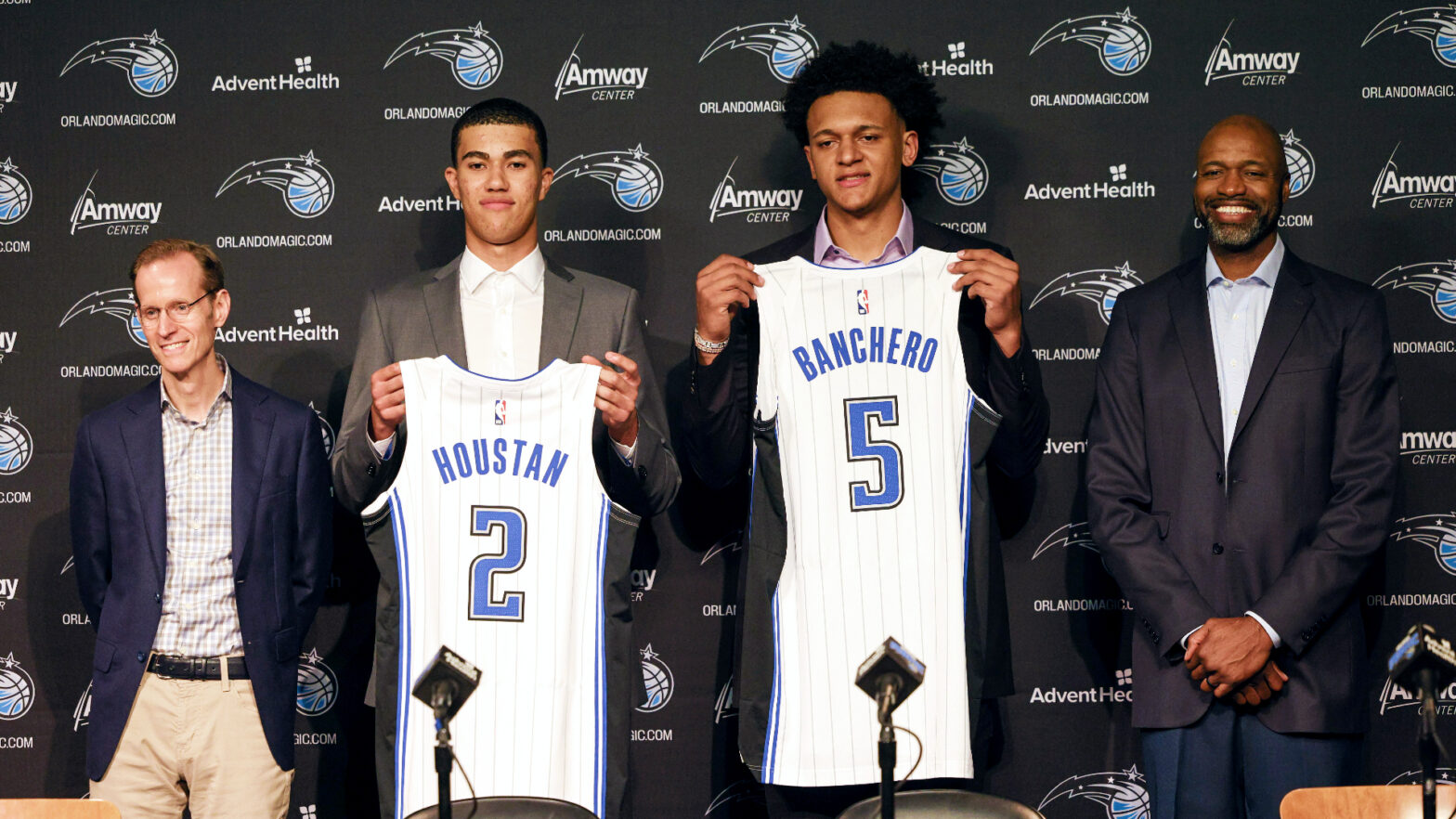


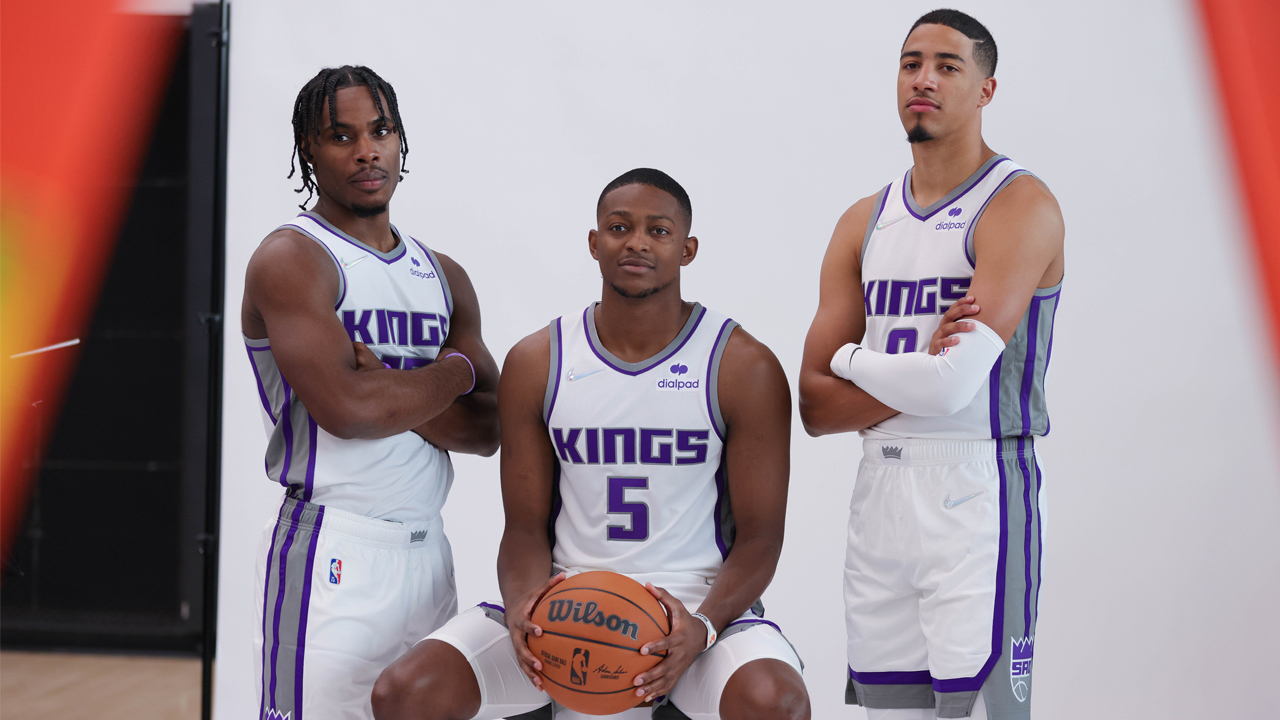
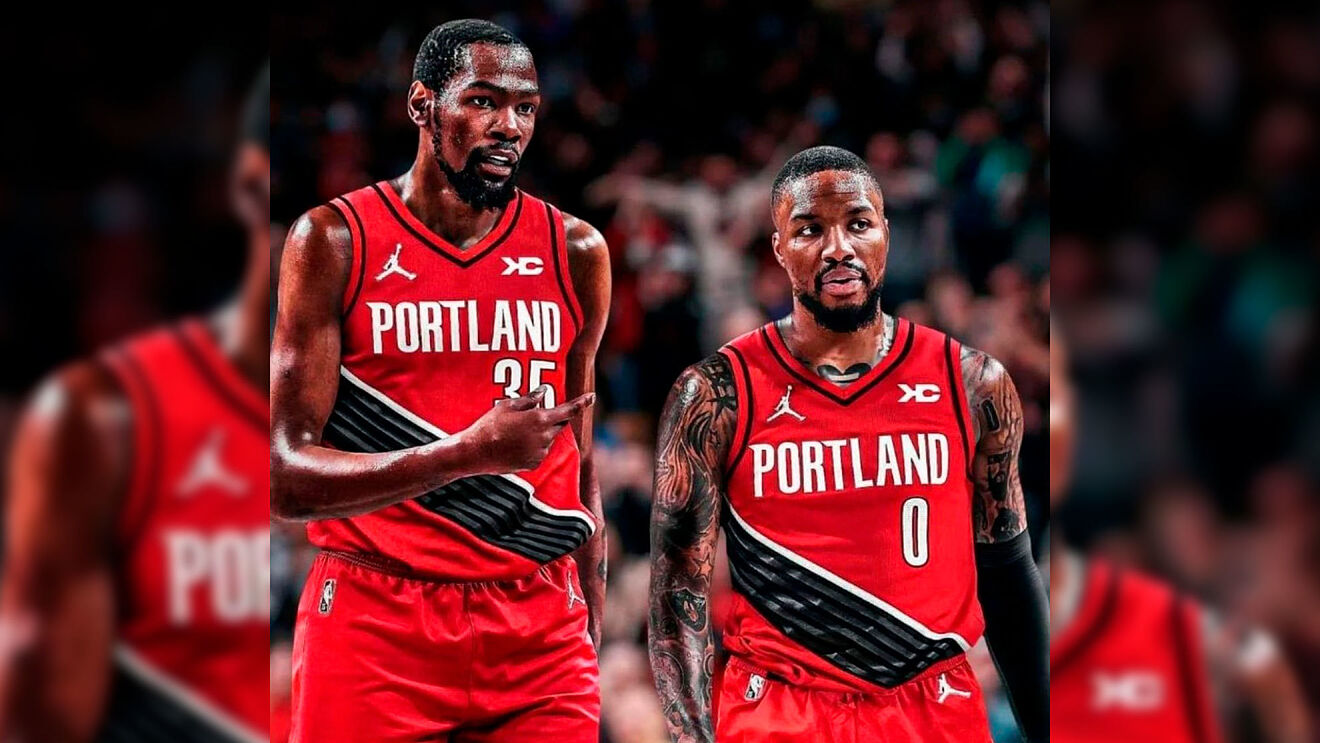


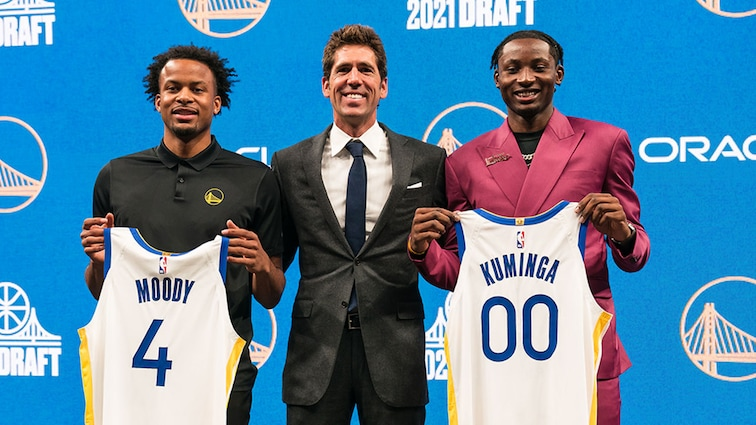

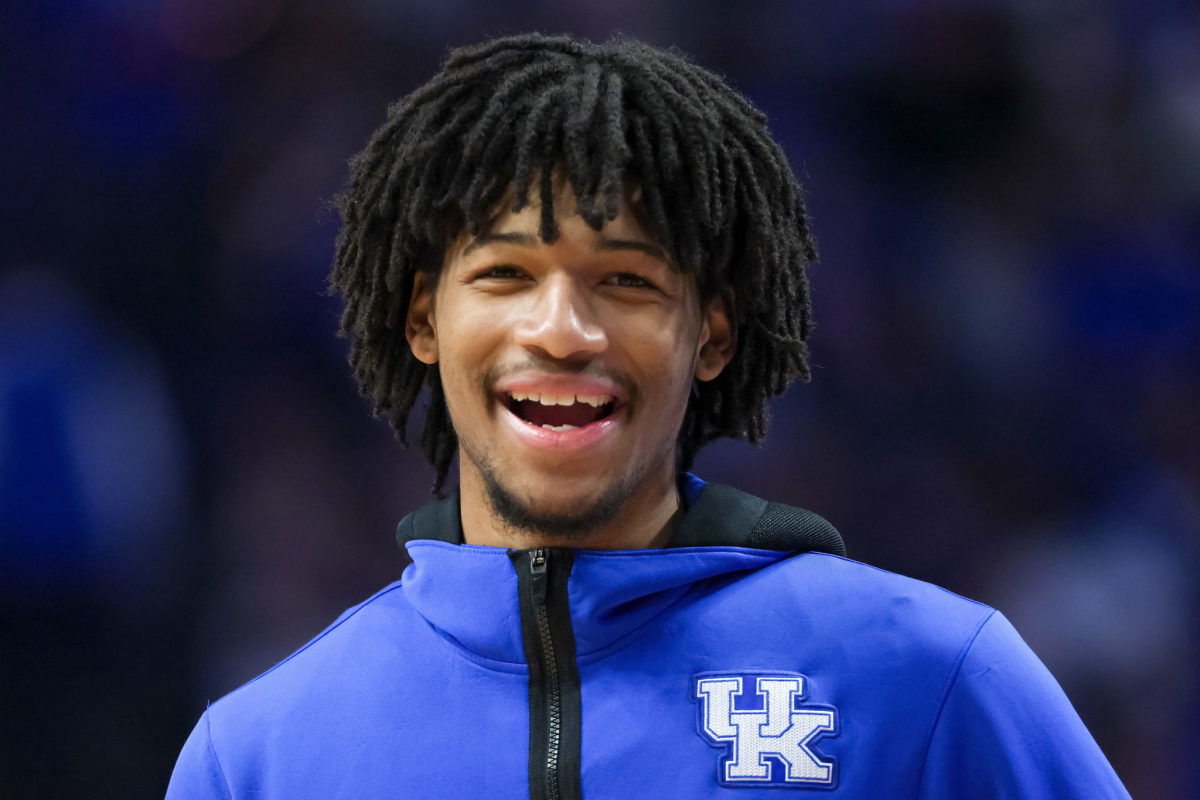
 Dean On Draft