Tags
aj griffin, bennedict mathurin, dyson daniels, jaden ivey, jalen duren, jeremy sochan, keegan murray, kendall brown, mark williams, Shaedon Sharpe, tari eason, trevor keels, walker kessler
Draft rankings are brutally difficult to execute with consistent accuracy. This year it was season long challenge for me to decide between Paolo and Jabari for #1, and even though I settled on Paolo and would take him in Orlando’s shoes, I still have no criticism for Orlando if they choose Smith at #1 as reported since he is an excellent wing prospect.
And even though I have been firm on Chet being #3, it also is not a clear mistake if OKC choose him over Paolo at #2. I would still take Paolo even if he is an odd fit with Shai + Giddey as it leaves too many offensive hubs who need the ball. You can always trade one of the three for 3 + D help down the road, and the main priority should be to try to hit on a future top 5 MVP candidate which Paolo has better odds of than Shai, Giddey, or Chet.
But if OKC chooses Chet, they are nevertheless left with an excellent trio of potentially 3 future all-stars, with Chet being a perfect 3 + D fit next to their guards. While Chet has less creation upside and a bit more weirdly skinny frame downside than Paolo, he still is an excellent player in his own rite and could be the best player in the draft long term.
That tier was challenging enough to rank, and then at #4 we are left with a much thicker tier of 13 guys to fill out the lottery (with a few underrated guys who will inevitably slide) that is even more challenging to parse through. I have expressed doubts that Jaden Ivey is the correct choice, and skimmed through some possibilities at #4 focusing on high upside molds.
But it is not clear that swinging for the fences with an Ivey, Sharpe, or Duren at #4 is necessarily the correct answer, as it is difficult to be confident that any of them are going to be good at all. Let’s discuss all other options, and try to estimate how closely they compare to one another.
Dyson Daniels
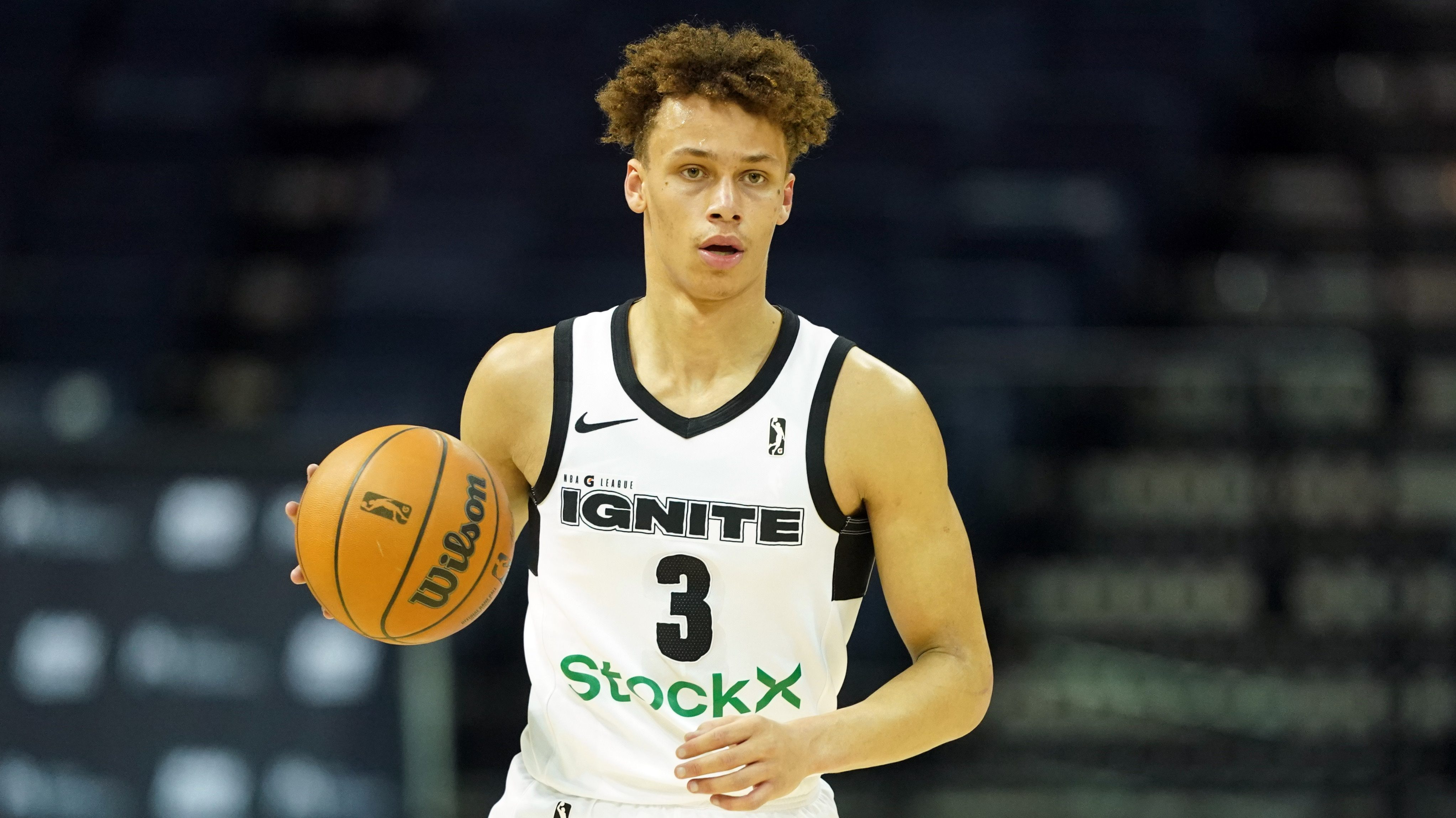
Last summer when Australia played USA in FIBA, Dyson Daniels was the clear 2nd best prospect on the floor behind Chet with 18 pts 5 rebounds 4 assists 1 turnover. Australia lost by 21 but was only -6 in Daniels’ 25 mins on the floor.
Since then Daniels has grown 1.5″ to solid SF size at 6’7.5 with 6’10.5 wingspan, and had a productive season for G League Ignite averaging 31.6 mins 11.6 pts 6.8 rebs 4.7 ast 2.7 tov 2 stl 0.7 blk with 53% 2P. His sole weakness was in his mediocre shooting at 30% 3P on 3.4 attempts/game and 53.3% FT on a small sample of 45 attempts.
But apparently he shot the lights out during his pro day. It is a slippery point to read too heavily into, but he is making a number without touching the rim and goes on a few long streaks without the camera cutting away. We should not expect him to be an actively good shooter based on this, but it does mitigate some concern raised by his G League shooting %’s.
He was already the non-top 3 prospect who had the highest odds of being a useful NBA player. And he isn’t lacking in upside– his passing and defense are both great for a young SF. If his shot creation and shooting progress well he can be an all-star.
If we want to turn optimism to the max, there is nothing disqualifying him from being a Scottie Pippen. It would require almost everything to go right, but it is more realistic than Jaden Ivey becoming Russell Westbrook.
A more common outcome would be something along the lines of Boris Diaw as a versatile role playing wing is more of a passer than a scorer. Diaw would not be a thrilling outcome for a top 5 pick, but it will be better than most of the guys who go outside of the top 3 this year, and there is still arguably as much (or more) upside for Daniels as there is for anybody else.
Hard to see him disappointing unless he simply cannot make an open 3, which is still of some concern. But collectively Daniels seems to have the highest odds of being decent of anybody outside the top 3, and he seems to have as much upside as anybody outside the top 3, and I would currently lean toward him being the correct choice at #4 overall.
Jeremy Sochan
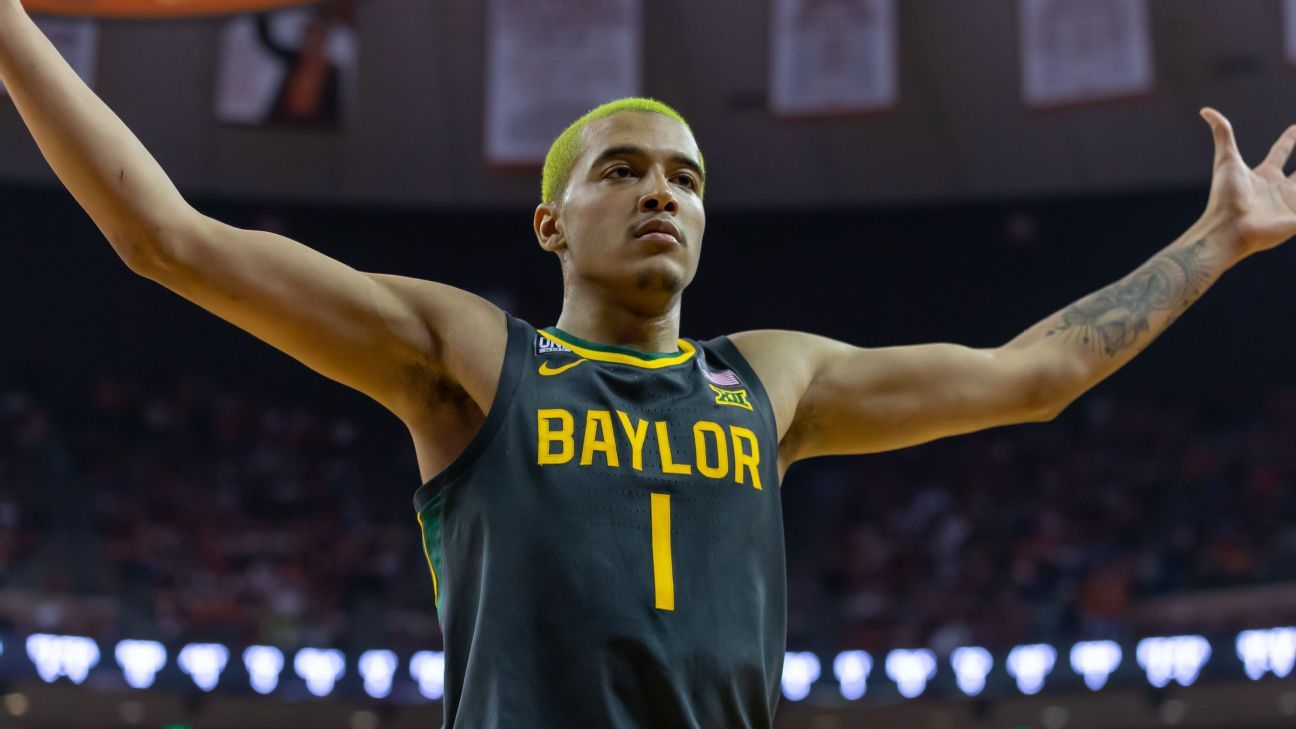
Sochan has been frequently compared to Dennis Rodman for changing his hair color, and his pest like approach to the game where he regularly irritates his opponents. But stylistically, his freshman numbers are more similar to another player with a colorful personality. Per 100 possessions:
| Age | Pts | Rebs | Ast | TOV | Stl | Blk | 2PA | 2P% | FT% | 3PA | |
| Sochan | 18.6 | 21.4 | 14.8 | 4.1 | 3.6 | 2.9 | 1.6 | 10.1 | 0.585 | 0.589 | 6.3 |
| Draymond | 18.8 | 17.4 | 17.4 | 4.4 | 3.5 | 3 | 1.3 | 11.4 | 0.563 | 0.615 | 0.1 |
Draymond was a bit better rebounding and passing, but Sochan 2.5 months younger and played a bigger freshman role averaging 25 mins/game compared to 11 mins for Draymond. Sochan also attempted substantially more 3PA, but that may be a product of the modern era more than anything.
Sochan didn’t get measured at the combine, but is listed at 1.5″ taller than Draymond at 6’9 vs 6’7.5 with less wingspan at 7′ vs 7’1.25″.
In all likeilhood Sochan will not be as good as Draymond, but anybody who is that similar at a young age is automatically interesting in this year’s lottery.
More commonly he will be a Rondae Hollis-Jefferson type who hopefully learns to make an open NBA 3 pointer in time. This may seem boring to most, but RHJ was legit good for a non-shooter, and at least Sochan believes in his shot enough to chuck up attempts at a moderate rate. RHJ with a competent outside shot would be a solid NBA role player.
Sochan has excellent wing dimensions, a great motor, his gets good rebound, assists, steals, and blocks, and he is a somewhat dirty player who gets under opponents’ skins. It seems like players like this are almost always good on defense, where he can possibly make a major impact.
Sochan’s lack of offense is likely getting in the way of him generating much draft hype, ranking 15th on ESPN’s latest big board and 18th on their most recent mock. But his positive assist:TOV ratio, efficiency inside the arc, and not completely hopeless shooting given his youth could sum up to a decent player offensively in time.
There is a decent case to be made that he is one of the top 5 prospects in this draft. Perhaps it is too much of a gamble on his dicey shooting ability and limited offensive package, but most everybody outside of the top 3 have major warts on at least one side of the ball.
Between him and Dyson Daniels, I would lean toward Daniels having the edge. Sochan is 1.5″ taller, but Daniels is a better passer and better bet to shoot.
If we are putting him against guys like Mathurin, Ivey, Sharpe, Duren, etc it becomes a fuzzier comparison but it just doesn’t seem that crazy to project Sochan a bit more valuable than all of those guys. You cannot have enough versatile defensive wings in the modern NBA, whereas there is a limit to how many bigs and chucking SG’s you can play at a time (one).
Bennedict Mathurin
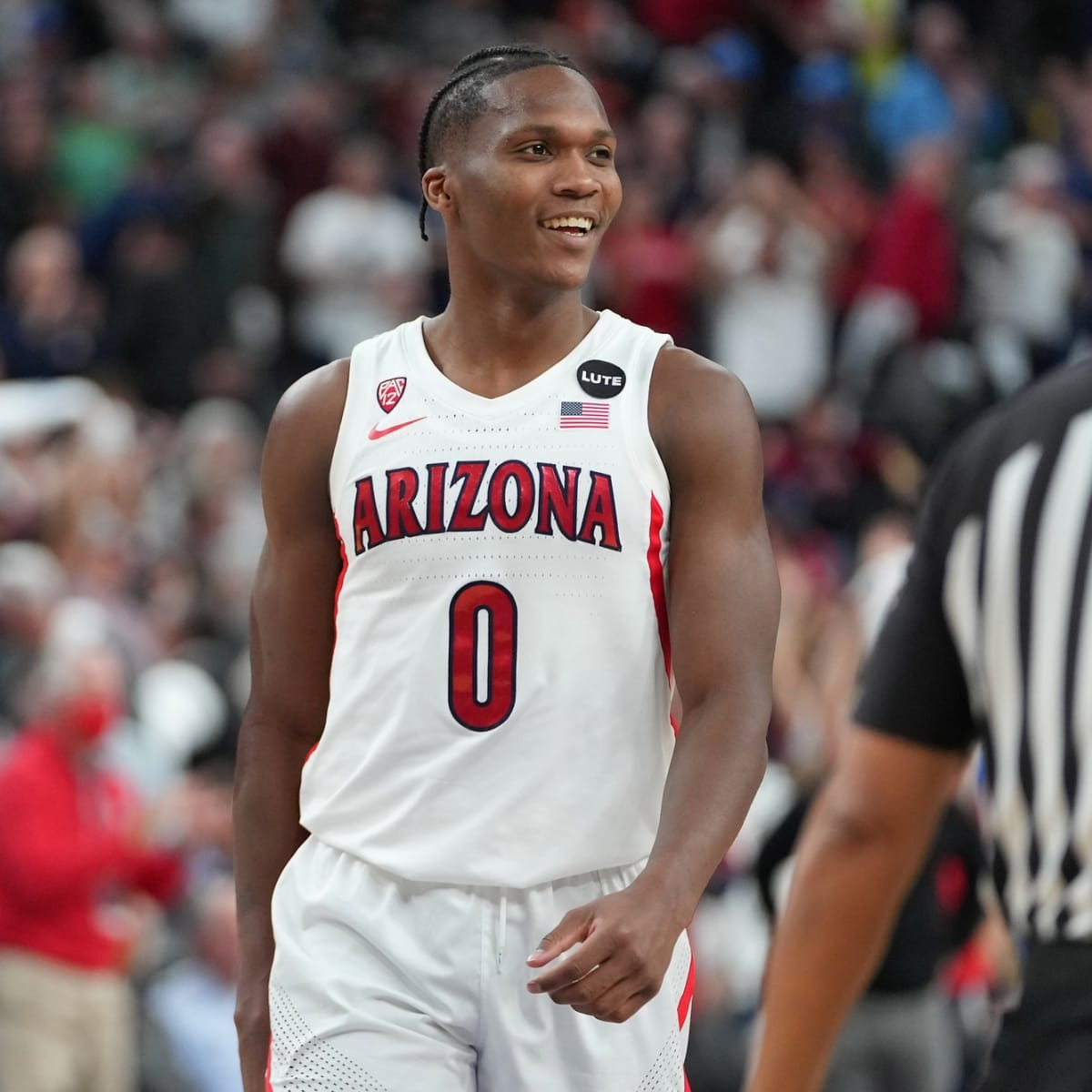
Mathurin makes for an easy comparison to Shaedon Sharpe and Jaden Ivey because they are all athletic SG’s. This is especially the case for Ivey since they have high major NCAA samples at a similar age. Per 100 possessions:
| Age | Pts | Rebs | Ast | TOV | Stl | Blk | Dunks | |
| Mathurin | 19.5 | 30 | 9.5 | 4.3 | 3 | 1.6 | 0.5 | 1.75 |
| Ivey | 19.9 | 33.1 | 9.3 | 5.8 | 5 | 1.7 | 1.1 | 1.50 |
Ivey is higher in the public eye because he is the more outlier elite athlete, and uses it more functionally to pressure the rim and create a high volume of offense. This led to a higher scoring and assist output than Mathurin. But he also turned it over much more, and Mathurin has the better assist:TOV ratio (1.42 to 1.17).
In spite of being the less explosive athlete who attacked the rim and scored in the paint less frequently, Mathurin dunked slightly more often than Ivey. This is likely in part to his 2″ height advantage, and that Mathurin is an excellent athlete in his own rite.
Based on sophomore shooting stats Mathurin is the slightly better shooter at 36.9% 3P 76.4% FT vs 35.8% 3P 74.4% FT for Ivey. But if you include freshman #’s the gap widens, with Mathurin 38.3% 3P 78.9% FT vs Ivey 32.2% 3P 73.9% FT.
Both players project to be defensive liabilities, but Mathurin seems slightly better on D. His 2″ height advantage is significant, his NCAA team defense was much better, and he eye tests as a bit better.
So if we sum everything up, is it really clear that Ivey is better? He has a bit more athleticism and potential for a high usage role offensively, but it’s not clear that he has the basketball IQ to merit a high usage role for an NBA team. And if you are drafting somebody to be a #2 or #3 guy, Mathurin is a better fit since he has an edge in both 3 and D and scores more within the flow of the offense with fewer turnovers.
That said, Mathurin is not a world beater, he could easily be just a Ben McLemore or Terrence Ross. In slightly more favorable outcomes, he may be a Kentavious Caldwell-Pope or Tim Hardaway Jr. His more exciting outcome would be Jason Richardson, and perhaps he has some small outs to be a Devin Booker, although his shooting and scoring would need to take some major leaps to get there.
But it still seems like he has an easier path to decency than Ivey, who will have some bad common outcomes like Jordan Crawford or Dennis Smith Jr.
If Ivey makes a big shooting leap and figures out how to navigate NBA defenses, he could be a Zach LaVine. His more common useful outcome would be a Jordan Clarkson type.
Westbrook comps are ridiculous– Russ was 9 months younger posting 7.9 assists vs 4.5 turnovers per 100 for UCLA sharing the PG duties with junior Darren Collison compared to Ivey’s 5.8 ast 5.0 tov as the primary perimeter ball handler for Purdue. Russ may be wild and make questionable decisions at times, but he is a far more natural PG as well as likely the most explosive athlete in NBA history.
To my eye, Ivey’s basketball intuition is a buck short of what it needs to be for him to place in the top of this tier. You can argue a number of players belong ahead of him, and Mathurin has a fairly solid case of 4 months younger, 2″ taller, better shooter, less bad D, and plays better within the flow of the team while being only slightly less athletic.
Mathurin vs Sharpe
We can extend the comparison to Sharpe, who is stylistically more similar to Mathurin than Ivey. He is slightly shorter than Mathurin at 6’5.25″ vs 6’6″, but has a solid length advantage at 6’11.5″ vs 6’9″. Dimensionally they are similar tier, with perhaps a tiny edge to Sharpe for his length.
Both Mathurin and Sharpe are guys who rely on shooting and athleticism to score a high volume without turning it over. Neither guy gets many steals or blocks defensively, and you are drafting them mostly for their offense and hoping their D is not too bad.
Sharpe has that mystery box upside, but Mathurin likely has a better floor for his proven performance at Arizona. One concern with Sharpe is that while he made 36.4% 3P on 6.4 attempts/game in 12 EYBL games, he only shot 33/52 (63.5%) FT. This is a slightly uncomfortable point given how much he needs to be able to shoot to succeed. Mathurin is likely the favorite to be the better shooter with his 78.9% FT in 2 years at Arizona. And even though Mathurin was 2 classes ahead of Sharpe in high school, he is only 11 months older, Sharpe does not have that much of a youth advantage.
The advantage for Sharpe is simply that he has more upside to be a big time scorer. Mathurin showed good scoring capability and his athleticism leaves room for it to grow, but he will be a medium usage complementary scorer more often than he is the go to guy in the NBA.
Sharpe has more potential to be that #1 scorer, but has lower FT%, and unlike Mathurin did not prove he can be a quality NCAA player as he was Pac-12 player of the year at age 19.
This makes it tricky to pick between these two. Sharpe has higher upside but based on his AAU stats, age, and the way scouts talk about him he is probably not going to be Vince Carter or Ray Allen. There’s a clear case to be made that Mathurin’s proven performance is worth more than Sharpe’s extra sliver of upside, since there are decent odds Sharpe would not have been as good as Mathurin if he stayed for a year of college.
AJ Griffin
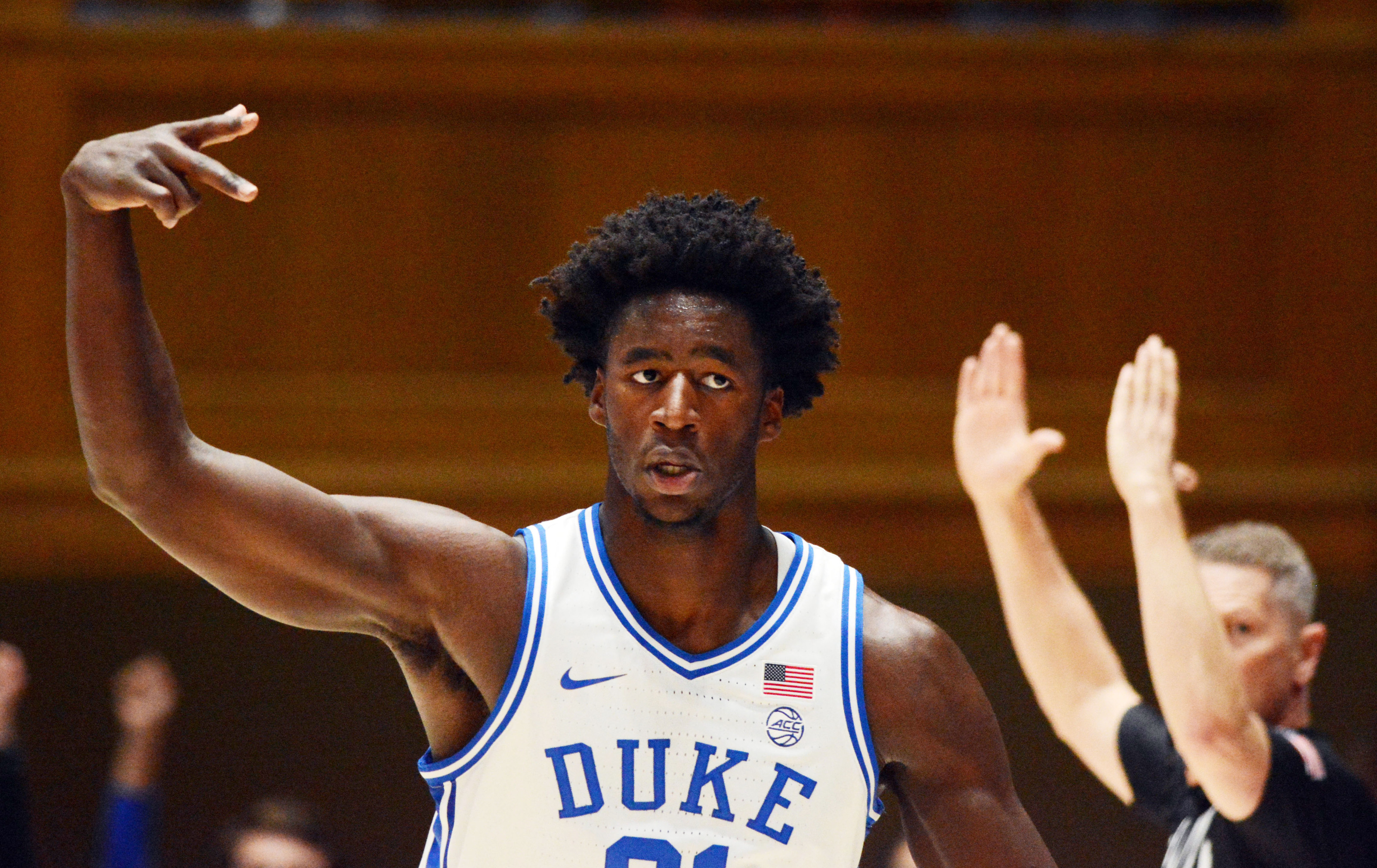
AJ Griffin is a close stylistic relative of Sharpe + Mathurin while trading athleticism for a bit of size. He is much less dunky with a mere 0.51 dunks per 100 possessions compared to Mathurin’s 1.75, and rarely creates his own shot at the rim.
He is presumed to be 6’6 with 7′ wingspan, although did not measure officially. He likely has a small dimensional advantage over Sharpe + Mathurin, and his main calling card is his efficient offensive play as he showed promising shooting making 44.7% 3P 79.2% FT with a microscopic turnover rate at the young age of 18. In spite of being a class ahead of Sharpe, he is actually 3 months younger.
But Griffin gets messy because there are a number of reasons to skew his projection in either direction. First his shooting just does not look that smooth, especially not relative to his #’s. On average I would trust the actual numbers over the eye test for shooting, but there have been guys who shot the lights out for small college samples that failed to do so in the NBA. For instance– Xavier Henry shot 41.8% 2P 78.3% FT on slightly more 3PA (165 vs 159) and solidly more FTA (115 vs 53) than Griffin and could not shoot a lick in the NBA. Aaron Nesmith made 52.2% 3P 82.5% FT as an NCAA sophomore, and has shot 31% 3P in 245 NBA attempts between regular season and playoffs.
Shooting is weird and difficult to predict, and for Griffin’s biggest selling point it is slightly uncomfortable that the eye test does not align with his relatively small statistical sample. His 3P%, FT%, and 3PA rate are all slightly better than Mathurin’s career numbers while Griffin is younger, but Mathurin has a bigger sample of attempts and looks smoother. Who is the favorite to be the better NBA shooter? It is not clear.
If Griffin’s shooting does prove to be a SSS ruse and he is average or worse shooting in the NBA, it is difficult to imagine him being a useful pro. He has an anemic steal rate considering his length, and he has mediocre defensive awareness and is often caught napping for backdoor cuts. Also for his size he is a mediocre rebounder and rarely gets to the line, and he seems to shy away from physicality a bit. He is physically capable of defending in the NBA, but he has clear risk of being a liability, and without official measurements he may be closer to a SG than a true wing size.
Another point for downside is that he missed large chunks of his last two high school seasons with injuries. Some people will argue that this gives him extra upside for future growth, but repetitions at ages 18-20 are not the same as repetitions from 15-17. It is difficult to see this as anything other than a flag that he might be made of glass.
So between his injury history and minor doubts regarding his shooting, there are a couple of ways that Griffin’s career can go sideways. But if he stays healthy and shoots as well as his freshman numbers imply, he is a nice offensive piece that can space the floor, avoid mistakes, and hopefully develop competent defense in time.
And having an NBA father in Adrian Griffin is a plus, as these prospects tend to work out with a higher success rate than average prospects. Tim Hardaway Jr and Gary Trent Jr are fellow NBA dad juniors with similar games who were not quite as strong as pre-draft, so there is no major obstacle that prevents him from being as good as those guys or even better.
If we are stacking him up against his fellow SGs in Mathurin, Sharpe, and Ivey we are left with more razor thin decisions. He is the youngest of the group, turns it over the least, has the best shooting %’s, and his NBA dad could easily propel him to be the best of the bunch. But he also is clearly the least athletic, has the lowest possibility of randomly expanding his offensive role in time, has the scariest injury history, and eye tests as a bit more wonky than that crew.
Analyzing the draft is really hard. Between Mathurin, Sharpe, and Griffin we could easily have one guy become a Michael Redd or Jason Richardson or even Devin Booker level hit, one could be a THJ or KCP type of kinda boring but kinda useful role player, and one could be a dud like Ben McLemore or Xavier Henry. But it’s really hard to know which ones are most or least likely to fall into each path, and most people will resort to ranking them based on some arbitrary heuristic and hope for the best.
Keegan Murray
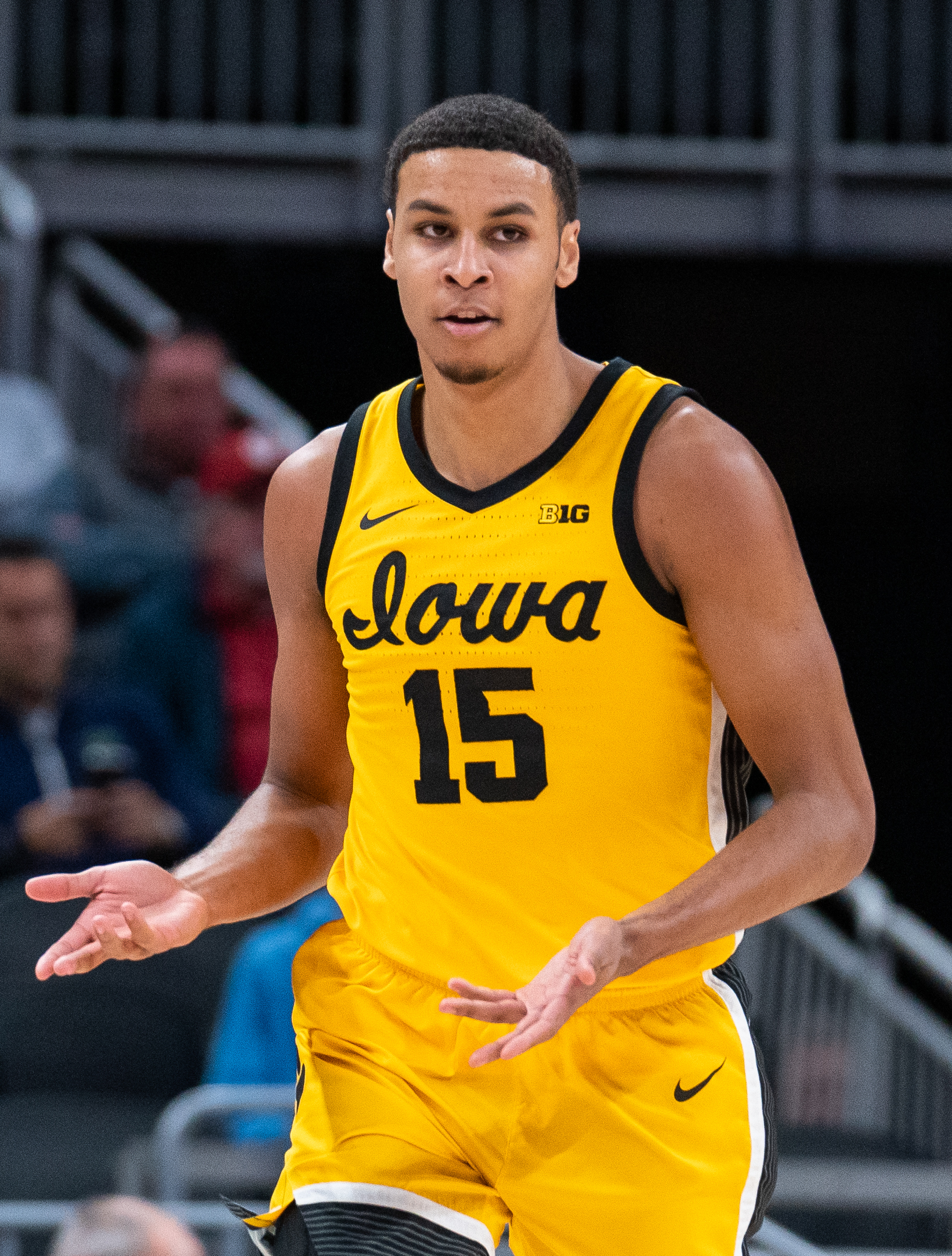
Murray absolutely stuffed the stat sheet for Iowa this past year, but you would hope so given that he is by far the oldest player in the lottery and projected #4 in ESPN’s latest mock.
Murray turns 22 shortly after the draft in August, and his biggest issue is that he is a 3 + D wing who may not be good at either 3s or D. He has solid rebound, steal, and block rates, but his D does not always look as good as his statistics imply. His lateral quickness is only OK, and he is prone to being beat off the dribble. In the NCAA tournament he was bullied in the paint for an easy bucket 3 times in a row by 6’7 Nathan Cayo who averaged 9.1 points for mid-major Richmond. This is not the best look for an older prospect.
But presumably at 6’8 with 6’11 height he has pretty good wing dimensions and at least does some things on defense, so he has potential to be either a positive or negative on this end. I would lean slightly toward the negative side, but he is decidedly a mixed bag.
Offensively he made 39.8% from 3 as a sophomore, but backed it up with an unspectacular 74.7% FT. Over his two seasons at Iowa he shot 37.3% 3P 74.9% FT on a middling rate of 3PA, which is fine but not great for an older prospect.
His main value is his ability to score a high volume of 2 pointers with a microscopic turnover rate. He is a difficult player to finger. He has a number of statistical parallels to Frank Kaminsky, but is smaller and closer to Kyle Kuzma stylistically.
He’s a pretty decent wing prospect, but he is just too old with too many blah points in his profile to be a compelling choice in the top 5. He is likely worth taking somewhere near the end of the lottery, but his weirdness makes him difficult to predict with precision.
Tari Eason

Eason is a fascinating weirdo who measured with dreamy dimensions for a wing at 6’8 with 7’2 wingspan.
He anchored LSU’s elite #6 defense, as he led the team in TRB%, STL%, and BLK%. He has a great motor and an excellent intuition for pressuring the ball on defense, and was able to use his length to force a boatload of turnovers for the Tigers.
Offensively he is a capable shooter making 80.3% FT and 35.9% 3P for LSU (32.7% 2P 75.7% FT for his 2 year career) and can create his own shot at the rim, making 56.4% 2P on high volume.
But he has major holes in his basketball IQ, as he is often sloppy and out of control. He only played 24.4 minutes per game for LSU because of foul trouble averaging 2.8 per game, and he had a poor 0.45 assist:turnover ratio. He frequently makes questionable decisions, and often attacks at bad times. This is exacerbated by being a relatively old sophomore, having turned 21 in May shortly before the combine.
This is a fairly significant wart, and puts him behind other wings with high defensive potential like Daniels and Sochan. But he also has bigger strengths than most of the prospects outside of the top 3, which makes for an interesting value proposition.
It is most interesting to compare him to Keegan Murray. Eason is 9 months younger and longer with clearly better defense, they are in a similar boat as shooters with perhaps a small edge to Keegan, and Keegan is far better at avoiding mistakes with drastically lower foul and turnover rates.
This is another close comparison. Perhaps it is wise to simply favor the guy who does not have bizarre warts for his age in Murray as consensus does. But Eason’s length + defense add enough sex appeal such that it’s crazy that one of these guys is projected inside the top 5 and the other out of the lottery. The sharp play is clearly to pass on Keegan earlier to take Eason later.
The Bigs: Jalen Duren, Mark Williams, and Walker Kessler

Duren is compelling for his physical tools and youth, and it is easy to get enthusiastic for his upside if he develops well. But he is so raw and his skill and decision making have a long way to go for him to sniff that upside, and he will have plenty of boring common outcomes like Derrick Favors or Andre Drummond. How much value can you place on hitting on a big like that when bigs are getting valued less and less?
So how high is it worth gambling on him hitting a big upside and becoming an Alonzo Mourning or Dwight Howard when most of the time he is not that interesting? And it is not even clear that he is a favorite to be better than Mark Williams who should be available later in the lottery.
Williams is a bit older and less strong and athletic, but has actual center dimensions and is much more efficient for Duke. There is a good case to be made that Williams has the higher median outcome while Duren has the higher upside, and it is not clear exactly who should have the higher draft value.
But the concern for Williams is that for a big who is largely a garbageman and rim protector– does he protect the rim at a high enough level? Duke’s defense was solid but far from elite at #49 in the nation, and it was slightly better with the 20 year old Williams off the floor.
Perhaps the galaxy brain take is that while Duren + Williams are perfectly solid prospects, it is pointless to take them lotto with Walker Kessler lingering in the 20’s. He is a bit weirder and less attractive as the not as athletic white guy, although you would never be able to tell by looking at the stats.
Kessler is only slightly behind Duren + Williams in dunks and rebounds, but dwarfs them in steals and blocks as he set the record for D1 block rate among players who played at least 400 minutes. He blocks almost everything, and is decently mobile for a 7′ rim protector. Offensively, he has the worst FT% of the 3, but is the only one of the group who regular attempts 3’s as he shot 10/50 as a sophomore, attempting 1.5 3P per game. Otherwise he is hyperefficient with an elite 70% 2P and microscopic TOV rate, much like Williams.
There is quite a bit of goodness in Kessler’s profile, and not really anything to strongly dislike. He seems to be getting the short end of the stick due to assumptions that he is a big white stiff, but he does not look stiff on the court and he has a unique intersection of strengths.
Ultimately I tend to agree with consensus ranking of Duren > Williams > Kessler, but disagree with the space between them in mock drafts. It seems pretty close to a three way coinflip between these guys, as any of them could be the best of the bunch or the worst.
Kessler being underrated should not be a huge knock on Duren and Williams, but he is indicative of the bigger trend that teams are averse to heavily investing in non-elite bigs, and it is an easier position to play moneyball since obviously good ones can fall through the cracks in the draft like Kessler. Duren + Williams both seem like reasonable top 10 picks, but given the market value of bigs, is it really necessary to draft them that high? It’s not clear.
The Weird Combo Guard: Trevor Keels

Keels is the one guy who is unique enough to be difficult to directly compare to anybody in this draft, because he ticks to his own beat as a prospect and it is tough to find a historical comparison for him.
On paper he seems extremely boring as an undersized SG at 6’4.75 with 6’7.25 wingspan. He also had some of the worst athletic testing for any non-big, as he graded similarly to the unathletic euro guards Hugo Besson and Matteo Spagnolo and well below any domestic guard. And he did little on the court as a Duke freshman to dispel any athletic doubts, as he finished the season with a mere 2 dunks and 2 blocks.
Let’s compare past NBA draft prospects who are somewhat similar to him with similarly low block and dunk numbers:
| Age | Pts | Rebs | Ast | TOV | Stl | Blk | 2PA | 2P% | FTA | FT% | 3PA | Dunks | |
| Keels | 18.4 | 22.3 | 6.7 | 5.3 | 2.4 | 2.4 | 0.1 | 9.6 | 0.522 | 5.2 | 0.67 | 9.3 | 0.11 |
| Pritchard | 18.9 | 15.1 | 6.9 | 7.4 | 2.9 | 2.4 | 0.2 | 5.3 | 0.455 | 3.3 | 0.73 | 7.5 | 0 |
| Herro | 18.9 | 25.6 | 8.2 | 4.5 | 3 | 2 | 0.6 | 11.5 | 0.538 | 4.6 | 0.935 | 8.3 | 0.2 |
| C Joseph | 19.4 | 19 | 6.5 | 5.5 | 2.7 | 1.9 | 0.6 | 9.9 | 0.429 | 3.7 | 0.699 | 6.4 | 0.05 |
| Brunson | 19.4 | 23.7 | 4.3 | 6.2 | 4.5 | 1.7 | 0 | 9.4 | 0.51 | 6.6 | 0.774 | 7.9 | 0 |
| T Ennis | 19.4 | 24 | 6.3 | 10.2 | 3.2 | 3.9 | 0.3 | 15 | 0.429 | 8.1 | 0.765 | 4.6 | 0.11 |
| A Rivers | 19.4 | 27.3 | 6 | 3.7 | 4.1 | 1.7 | 0.1 | 12.6 | 0.477 | 9.5 | 0.658 | 8.2 | 0.16 |
| Kennard | 19.5 | 25.9 | 7.8 | 3.3 | 1.7 | 2.1 | 0.4 | 9.9 | 0.528 | 6 | 0.889 | 10.5 | 0.12 |
Pritchard has largely succeeded in the NBA because he became a 41% shooter through his first two seasons, but at the same age Keels was not far behind as a shooter. He is confident in his shooting and takes a good volume of 3PA in spite of only making 31.2%, and given how young he is he has plenty of time to become decent to good at shooting.
And even if he does not shoot as well as Pritchard, he had a similar assist:TOV while scoring at a much higher rate, and his greater size gives him more potential on defense.
Herro and Kennard are not quite the same because they are such obviously better shooters, but they nevertheless have had NBA careers without being overall more productive than Keels.
Cory Joseph is a fairly juicy comparison. He was a role player who was never that valuable, but he provided a solidly above average return on a late 1st pick at #29 overall as he consistently has found significant minutes throughout his career. And when you put him side by side with Keels, it is not close. Keels was a much more efficient and productive scorer at a full year younger, and has similar potential to be a pesky defensive player with slightly more versatility given his extra 1.5″ of height and length. It does not seem right to let Keels go as late as Joseph did in a weak draft.
Jalen Brunson is fascinating comparison because not only did he have 0 dunks and 0 blocks as an NCAA freshman, but he was similar to Keels with less size, a year older, and far more turnovers. His only significant advantage was in shooting. It’s crazy how well Brunson has done in the NBA– there was no clear signal of his potential statistically or athletically. In fairness he did quite a bit better than Keels in athletic testing, but there was no evidence of any athletic prowess on the court for him.
Austin Rivers is also interesting to compare to Keels, because he was essentially better at nothing as a freshman while having nearly identical dimensions to Keels and being a full year older. Rivers had a bit more volume scoring on mediocre efficiency, but Keels had significant advantages in assists and turnovers as well as more rebounds and steals while being a full year younger.
Rivers was a subpar return on #10 overall as he has never quite been useful, but he has been close enough to useful to hang around the NBA for a long career. If Keels can be a Rivers but with better efficiency, passing, and defense, that is a decent NBA player.
The big cautionary tale on the list is Tyler Ennis, who crushed with assist:TOV ratio while scoring a high volume and completely flopped in the NBA. His low athleticism likely played a role, but he also racked up stats in a dumb Syracuse offense where they jacked up a bunch of mid-range shots and then offensive rebounded them at a huge 38.1% rate. This is reflected in his 42.9% 2P and his team having the 2nd worst 2P% in ACC– it is easier to generate a high volume of offense without turning it over if you are settling for lower quality shots.
Granted, this does not completely negate his offensive production, he still had a compelling amount of output and his limited athleticism likely played a significant role in him succeeding. But as somebody who saw potential in Ennis at the time, I believe I gave his statistical production a bit too much credit given how much it centered around mid-range chucking.
Perhaps I missed a good example or two to compare, but overall this seems to be hardly a death knell. Granted, most of these guys either skipped athletic testing or scored better than Keels, but on court athletic performance should typically trump combine testing for athleticism.
And in terms of on court performance relative to age, Keels seems like he is better than all of these guys. Perhaps you could make a case for Herro or Ennis having a small edge on draft day, but Keels clearly performed better than everybody else as a freshman. And this group collectively performed fairly well relative to draft stock.
There are no huge wins who became stars, which is a reason to somewhat temper enthusiasm for Keels. But there is also no clear signal that limited athleticism should place a major pessimistic skew for young productive guards, and it would seem that with an ESPN ranking of #27 the pessimism for Keels’ athletic limitations has gone too far.
The Tortoise and the Hare
| Age | Pts | Rebs | Ast | TOV | Stl | Blk | 2PA | 2P% | FTA | FT% | 3PA | Dunks | |
| Keels | 18.4 | 22.3 | 6.7 | 5.3 | 2.4 | 2.4 | 0.1 | 9.6 | 0.522 | 5.2 | 0.67 | 9.3 | 0.11 |
| Ivey | 19.9 | 33.1 | 9.3 | 5.8 | 5.0 | 1.7 | 1.1 | 13.9 | 0.531 | 11 | 0.744 | 9.5 | 1.5 |
It is interesting how similar these two prospects are outside of being on opposite ends of the athletic spectrum. They have similar dimensions, similar shooting, play similar roles, and the main difference is that one of these guys has a massive speed advantage and the other has a massive IQ advantage.
At a glance you may think that any IQ disparity is likely not that big. Ivey plays a significantly bigger offensive role, and his additional turnovers are not so bad given the higher scoring and slightly higher assist totals.
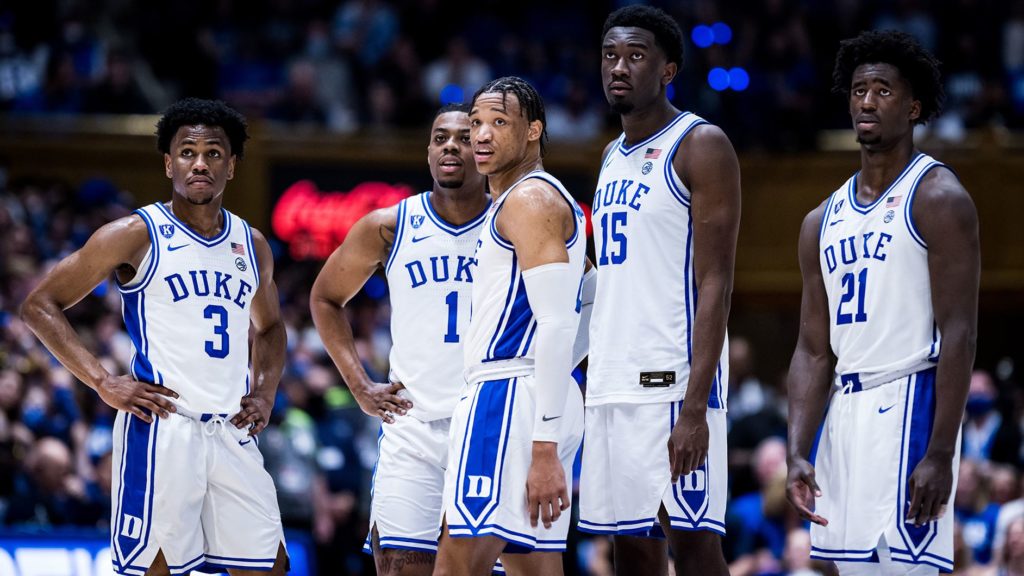
But consider that Keels is 1.5 years younger and needed to share the ball with four other first round caliber prospects at Duke. It is exceptionally rare for a guard that young to create as much offense as Keels did for himself and his teammates while turning it over so rarely.
With an extra year of experience and more ball handling duties, Keels could see a significant sophomore leap if he returned to school. This would be especially true if he played in a favorable situation like Ivey at Purdue where he was always playing with an elite big man and 3 shooters.
It is difficult to overstate how favorable of a situation Ivey was in this past season. Purdue returned everybody from a top 25 team last year, and gave Ivey a bigger offensive role in more minutes. The team had major upside, but hardly even improved.
Part of this is because of a significant regression in their defense. The defense has simply been dreadful whenever Ivey has played over the past two seasons, and he seems really bad on this end. Keels is not an elite stopper on defense, but he is solid and in spite of being much slower than Ivey is overall a solidly better defensive player. Athleticism certainly helps on defense, but it is secondary to intelligence and Ivey’s defensive IQ is ultra bad where Keels is good.
Offensively Ivey’s IQ is decent enough since he is able to score with high efficiency and post more assists than turnovers for the #2 NCAA offense behind Duke. But he still made a few too many questionable decisions for a 20 year old– especially in Purdue’s tournament loss to Saint Peter’s, which may be the worst tourney performance of all time for a projected lottery pick.
Intuitively, I have a difficult time buying that Ivey has the basketball IQ to be trusted as a lead guard for an NBA offense. He seems more like a microwave scorer for a bench unit.
Meanwhile there has to be something special about Keels’ basketball IQ to have such solid creation as an infant aged freshman while managing to avoid turnovers.
Granted, athleticism gets valued more in the draft for non-trivial reasons. One because a significant percentage of stars are high end athletes, and two because it is easier to discern than basketball IQ.
For instance, it is easy to underrate the basketball IQ of Russell Westbrook who is prone to playing out of control and making bad decisions at times. This makes it easy to overlook his excellent basketball intuition and that he showed rare floor general skills for such an elite athlete at a young age.
Conversely, it is easy to overrate the basketball IQ of guys like Doug McDermott or Jimmer Fredette when they have a common level of NCAA success as non-athletes at an old age.
And this is where the draft gets tricky…Ivey gets top 5 consideration because it is difficult to discern that his basketball intuition/IQ is levels below that of Westbrook, and if you pass on him and he turns out to have similar intelligence and athleticism then you are risking missing out on a big time star.
Intuitively I believe Ivey’s basketball IQ is simply not good enough to run an NBA offense, and that anybody who takes him top 5 will feel scammed in due time. But I cannot assess his BBIQ with perfect accuracy, and there is some wiggle room that needs to be left that his intelligence proves to be decent enough for him to be a good NBA player, even if he is never an MVP candidate like Westbrook.
But most of the athletes that get picked highly in the draft and fail are due to a poor basketball IQ, and most of the best steals who slide out of the top 20 are non-athletes who just know how to play.
While it is difficult to directly compare two prospects with such athletic and intelligence disparities, it would be highly unsurprising if Keels turned out to be the solidly better pro than Ivey. Does this necessarily mean he is the better prospect? I am not sure. There is a reasonable case to be made for it, but it is unclear.
What is clear is Keels’ path to be solidly better at a fraction of the cost based on current draft consensus makes him a drastically better value relative to draft slot.
Kendall Brown
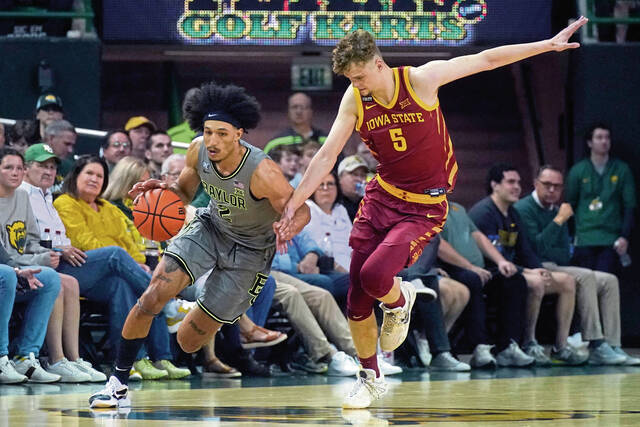
Brown is a curious case where I wonder what sort of terrible impression he must have made in interviews to be rated #28 on ESPN’s big board.
He has excellent physical tools for a wing as he is 6’7.5″ with 6’11” length and elite athleticism. He had the second highest max vertical leap in the combine behind Kennedy Chandler and 36% of his made FG this season were dunks.
He only turned 19 in May shortly before the combine, and has pretty decent statistical production for a young and toolsy prospect in the coveted mold of 3 + D wing.
Granted, he is not particularly good at either 3 or D. He made 34.1% 3P 68.9% FT which seems decent enough, except he sparsely attempted 3’s with just 1.2 attempts per game in 27 minutes.
His steal, rebound, and block rates are decent, but they nevertheless pale in comparison to fellow NBA prospect teammates Matthew Mayer and Jeremy Sochan. Baylor’s offense and defense were both solidly worse with him on the floor. While Brown has ideal physical tools to defend NBA wings, his defense is largely unrealized potential at this point.
He seems capable of scoring at a decent volume as well, as he has a basic ability to create off the dribble and finish as he converted an excellent 63.8% 2P. But he attacked oddly infrequently, and only averaged 9.7 points in 27 minutes for Baylor on the season.
You may be noticing a trend that Brown has significant potential across the board but his current output is underwhelming in all regards. He has this passive and floaty approach to the game which is frustrating– he should take more 3’s, he should attack the rim more, he should be more disruptive on D, but his mental approach cuts into all of this and leaves a mediocre imprint on the game.
It seems that draft consensus is so offput by this that he is at risk of sliding out of round 1, which seems a bit crazy. There have been floaty players in the past who were not nearly as punished for their limits:
| Age | Pts | Reb | Ast | TOV | Stl | Blk | 2PA | 2P% | FT | FT% | 3PA | Dunks | |
| H Barnes | 18.6 | 29.3 | 11 | 2.7 | 3.7 | 1.4 | 0.8 | 15.3 | 0.47 | 6.3 | 0.75 | 9.9 | 0.99 |
| Wiggins | 18.8 | 30.3 | 10.4 | 2.7 | 4.1 | 2.1 | 1.7 | 15 | 0.493 | 11.5 | 0.775 | 6.4 | 1.88 |
| K Brown | 18.6 | 20.9 | 10.5 | 4 | 3.7 | 2.2 | 0.8 | 11.8 | 0.638 | 4.7 | 0.689 | 2.6 | 2.78 |
| RJeff Fr | 18.5 | 22.6 | 9.6 | 5.7 | 4.9 | 1.3 | 0.8 | 12.7 | 0.52 | 8.9 | 0.776 | 2.3 | N/A |
| RJeff Jr | 20.5 | 23.2 | 11.1 | 5.5 | 6 | 1.5 | 1.7 | 12.6 | 0.535 | 6.5 | 0.655 | 5.2 | N/A |
You can see compared to Wiggins and Barnes that in spite of their floaty nature, they still scored considerably more than Brown and were better shooters, which likely played a role in help keeping their draft stock afloat.
But Brown was much more efficient inside the arc. He actually made slightly more 2P per 100 in spite of taking so many fewer attempts, and he had a better dunk rate than either. He also had a much better assist:TOV ratio, which is fairly important for predicting success for NCAA prospects to translate to NBA wing.
The main difference was really that Wiggins + Barnes were better shooters and shot far more frequently. But Brown’s shooting does not seem all that broken, he can close the gap by improving over time and simply pulling the trigger more often.
Richard Jefferson is an example of a prospect with a more similar distribution to Brown. They seemed pretty close as freshmen, but what is surprising about RJ is how his production barely improved over his three years at Arizona and in his final pre-draft season his production was essentially the same as his freshman year with more turnovers.
Perhaps there was some subtle nuanced advantage that drove Jefferson to be selected 13th overall while Brown likely falls to the end of round 1. Maybe Brown just doesn’t like basketball that much and it is apparent in his interviews with teams.
But it is odd that somebody with his physical profile, youth, and mold is getting such little love in the draft. He has a stench of mediocre underachieving that makes it difficult to have much faith in the guy, but prospects with his strengths are normally a lock for the lottery even with some nasty warts attached.
Personally I’m not sure what to exactly think about Brown, but it is difficult to see how he is valued appropriately in the late 20’s.
 Dean On Draft